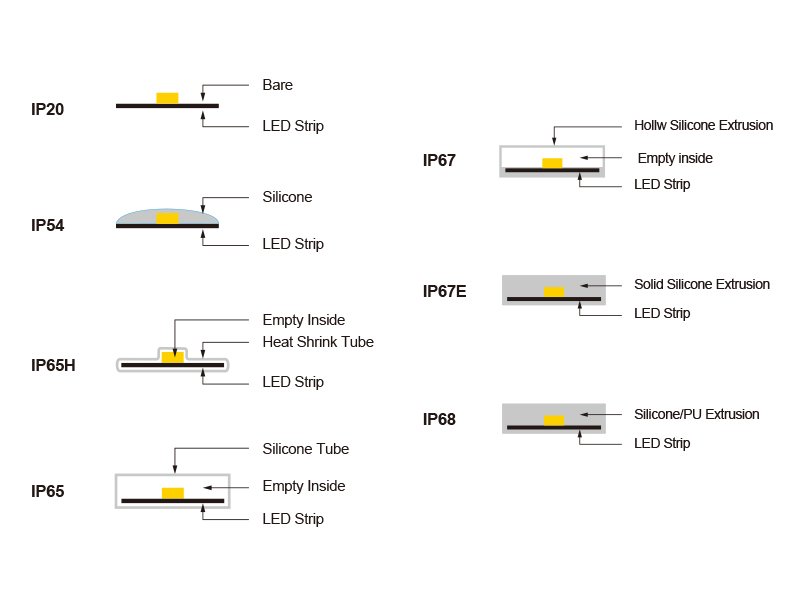
The LED strip passed its IP test.
It survived the required water exposure in the laboratory. No visible water entered the sample. The electrical test was normal, and the report showed “PASS.”
Six months after installation, several sections began flickering after rain.
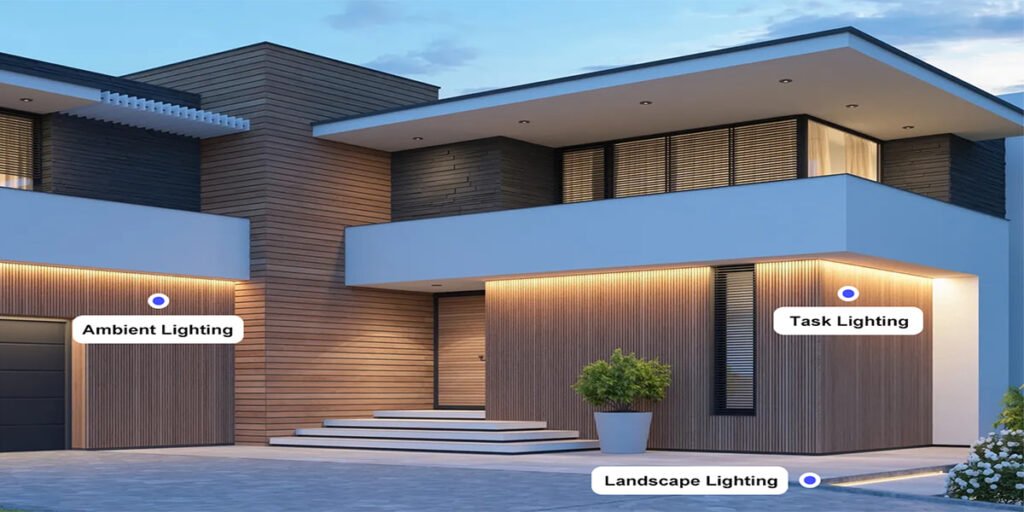
By the end of the first winter:
- One power entry had turned green from copper corrosion.
- Several sections showed internal condensation.
- The silicone had become harder near sun-facing corners.
- A field-installed end cap had separated slightly from the cable.
- Two drivers repeatedly entered protection mode.
The initial conclusion was predictable: the IP rating must have been false.
But that is not necessarily what happened.
The IP test may have answered its intended question correctly. The project failed because it asked the test to answer a much larger question:
Can this product survive several years of sunlight, temperature changes, condensation, movement, pollution and installation stress?
An IP test alone cannot answer that.
The Short Answer
Outdoor LED strips often fail after passing an IP test because the test evaluates water or dust ingress under defined conditions, usually on a new sample.
Real outdoor installations expose the product to a sequence of aging mechanisms:
- UV radiation changes the polymer.
- Heat expands the cable, seal and extrusion at different rates.
- Night cooling creates negative pressure inside small cavities.
- Humid air is drawn through microscopic gaps.
- Condensation forms inside the product.
- Electrical current accelerates corrosion.
- Corrosion increases resistance and produces flicker or local heating.
- The next thermal cycle opens the failure path further.
The failure is not caused by one dramatic rainstorm. It is often produced by hundreds of ordinary days and nights.
The IP Test Was Not Wrong. The Question Was Incomplete.
IEC 60529 classifies how an enclosure protects against access, solid objects, dust and water under specified tests.
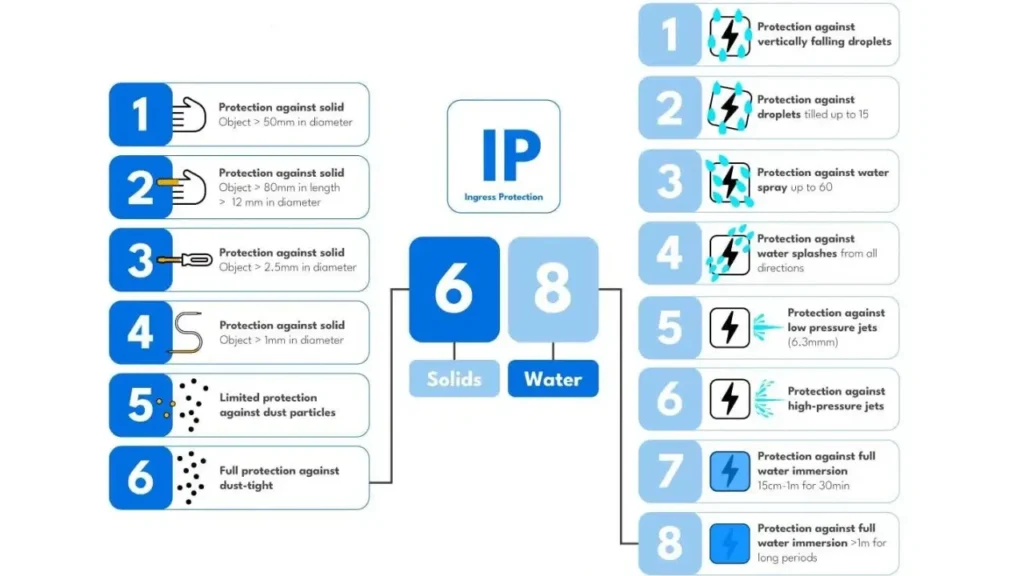
That information is valuable. It helps distinguish products designed for:
- Occasional splashing
- Water jets
- Temporary immersion
- Defined continuous-immersion conditions
But an IP rating does not automatically evaluate:
- Years of UV exposure
- Polymer yellowing
- Seal hardness after aging
- Daily temperature cycles
- Internal condensation
- Salt or industrial pollution
- Cable movement
- Adhesive aging
- Chemical exposure
- Installation damage
- Powered corrosion
- Manufacturing variation
- Maintenance access
A new product can pass IP67 or IP68 while its aged version would fail the same test.
That is the question many procurement specifications forget to ask:
Does the product remain waterproof after UV exposure, thermal cycling, bending, cable pulling and material aging?
A Failure Timeline: What Happened Between “Pass” and “Leak”?
A useful way to understand outdoor reliability is to follow the product through time.
Day 0: The sample is new
The extrusion is flexible. The cable-entry seal has strong adhesion. The end cap fits tightly. No cracks are visible.
The product passes its IP test.
Month 1: The sun-facing surface becomes hotter than expected
Solar radiation heats the housing even when the LEDs are off.
A dark mounting channel, façade or sign cabinet can make the local temperature much higher than the weather forecast.
The LED strip expands. The cable jacket, silicone, adhesive, copper PCB and mounting profile do not expand by exactly the same amount.
Nothing visibly fails yet.
Month 3: UV begins changing exposed materials
UV radiation can break polymer chains and alter additives, pigments and stabilizers.
Depending on the material formulation, the results may include:
- Yellowing
- Loss of transparency
- Chalking
- Hardening
- Softening
- Reduced elongation
- Surface cracking
- Lower adhesion
- Reduced tear strength
The strip may still work and remain apparently waterproof.
Month 6: The installation begins to “breathe”
During the day, the air and materials inside cavities warm and expand. At night, they cool and contract.
If the product is not perfectly hermetic—and most flexible lighting assemblies are not—the pressure change can move small amounts of air through:
- Cable entries
- End-cap interfaces
- Connector seals
- Microscopic extrusion defects
- Damaged surfaces
Moist air enters gradually.
First cold season: Condensation appears
When an internal surface falls below the dew point, water vapor becomes liquid water.
The rain does not need to pass directly through the wall of the extrusion. Moisture can enter as vapor or humid air and then condense inside.
A product can therefore contain water even when no obvious rainwater path is visible.
Next warm season: Corrosion accelerates
Moisture reaches:
- Copper pads
- Solder joints
- Component leads
- Conductive residues
- Damaged PCB edges
When the strip is energized, electrical potential can accelerate electrochemical corrosion and leakage.
The first symptoms may be intermittent:
- Flicker only after rain
- One color channel failing
- A section recovering after several dry days
- Driver protection operating unpredictably
- Gradual blackening or greening of copper
By the time permanent failure appears, the original moisture path may be difficult to find.
Outdoor Failure Is a Chain, Not a Single Event
The most important insight is that UV, condensation and temperature do not work independently.
They form a sequence:
UV weakens the material → thermal cycling stresses the interface → a microscopic gap develops → cooling draws in humid air → condensation wets the PCB → electrical operation accelerates corrosion
A strip may pass:
- An IP test by itself
- A UV test by itself
- A temperature test by itself
Yet still fail when those stresses occur in sequence.
This is why a stronger outdoor validation program tests the product after environmental aging—not only before it.
Failure Mechanism 1: UV Attacks the Waterproof System Before Water Does
“UV-resistant” is frequently treated as a yes-or-no material property.
It is not.
UV performance depends on:
- Polymer formulation
- UV stabilizers
- Pigments
- Extrusion quality
- Wall thickness
- Surface temperature
- Geographic location
- Installation direction
- Hours of direct sunlight
- Moisture
- Pollution
- Required service life
A product mounted under an eave in northern Europe does not receive the same exposure as a west-facing façade in the Middle East or a rooftop sign in Australia.
What UV damage looks like
UV degradation may appear as:
- Yellow or brown surface color
- Reduced lumen transmission
- Cloudiness
- Surface powder or chalk
- Fine cracks around bends
- Brittle end caps
- Loss of sealant adhesion
- Hardened cable jackets
- Uneven color between exposed and shaded sections
The LEDs can remain electrically functional while the housing loses optical or mechanical performance.
A UV-hour claim is incomplete
ASTM G154 is commonly used for accelerated fluorescent UV and moisture exposure of nonmetallic materials.
However, ASTM G154 explicitly requires the exposure conditions to be reported and warns that the practice alone does not define one universal result. It also does not reproduce every outdoor factor, such as biological attack, pollution or saltwater exposure.
Therefore, “tested for 1,000 hours under ASTM G154” is incomplete without:
- Lamp type
- Irradiance
- UV and condensation cycle
- Black-panel temperature
- Sample orientation
- Number of samples
- Control material
- Property measured before and after
- Acceptance limit
The number of chamber hours should not be converted casually into “five years outdoors.”
Accelerated testing is most reliable for comparing materials under the same defined conditions—not predicting an exact field lifetime everywhere in the world.
Failure Mechanism 2: The Product Breathes During Temperature Changes
A flexible LED product may look solid, but small internal cavities can exist around:
- Conductors
- End caps
- Connectors
- Hollow sleeves
- Solder joints
- Cable entries
When temperature changes, trapped air changes pressure.
For a simplified fixed-volume cavity, the ideal-gas relationship is:
P₁ ÷ T₁ = P₂ ÷ T₂
Temperatures must be expressed in kelvin.
If trapped air warms from 25°C to 55°C:
- 25°C = approximately 298K
- 55°C = approximately 328K
- 328 ÷ 298 = approximately 1.10
In a theoretical rigid, perfectly sealed cavity, that represents approximately a 10% pressure increase.
A real flexible light will deform, leak or equalize pressure, so the actual number will differ. But the direction of the process remains important:
- Heating pushes air outward.
- Cooling creates inward suction.
- Microscopic leak paths allow humid air to move.
- Repeated cycles transport moisture.
This is sometimes called pressure breathing.
A product may survive one hour of spraying but experience hundreds of breathing cycles during one year outdoors.
Failure Mechanism 3: Condensation Can Be More Dangerous Than Rain
Rain is visible. Condensation is hidden.
Assume the daytime air is:
- 30°C
- 80% relative humidity
The dew point is approximately 26°C.
If humid air enters the product and a clear night cools part of the extrusion below approximately 26°C, moisture can condense on the internal surface.
This can happen even when:
- It did not rain
- The product is installed under a roof
- The outside surface appears dry
- The IP-rated body has no visible puncture
The resulting water volume may be very small, but electronics do not require a visible pool of water to develop:
- Leakage current
- Electrochemical migration
- Copper corrosion
- Unstable data signals
- Intermittent flicker
Why sheltered installations can still fail
An LED strip under an eave may receive little direct rain but still experience:
- High humidity
- Night cooling
- Condensation
- Poor airflow
- Long drying time
A “protected” installation can therefore remain damp longer than an exposed surface that receives sun and wind after rain.
Protection from direct rain is useful, but it is not a substitute for condensation design.
Failure Mechanism 4: Thermal Cycling Pulls Materials Apart
An outdoor LED strip is a layered assembly.
It may include:
- Copper
- Flexible PCB
- Solder
- LED packages
- Silicone
- Polyurethane
- PVC cable
- Adhesive
- Aluminum
- Stainless-steel clips
- Sealant
These materials expand and contract differently when temperature changes.
The resulting stress concentrates at interfaces:
- Cable jacket to molded end
- End cap to extrusion
- PCB to encapsulant
- Solder joint to copper pad
- Strip to adhesive
- Silicone to rigid connector
- Profile to mounting screw
One cycle may cause no measurable damage. Hundreds or thousands of cycles can gradually produce:
- Delamination
- Cracking
- Loss of adhesion
- Broken copper traces
- Solder fatigue
- Seal separation
- Cable-entry movement
IEC 60068-2-14:2023 provides temperature-change test methods for analyzing the effects of specified ambient-temperature changes on components and equipment.
The correct test temperatures and transition rates should reflect the product and expected climate. Passing a mild cycle does not prove suitability for every outdoor installation.
Failure Mechanism 5: Condensation and Electricity Create a Corrosion Cell
Water alone is not the complete problem.
Outdoor moisture can contain:
- Salts
- Dust
- Flux residues
- Cleaning chemicals
- Industrial pollutants
- Metallic particles
When moisture bridges conductors at different electrical potentials, the powered PCB can behave like a small electrochemical system.
Possible effects include:
- Copper dissolution
- Dendritic growth
- Green copper compounds
- Blackened pads
- Increased contact resistance
- Leakage between signal lines
- Failure of addressable ICs
- Color-channel imbalance
This explains why some products fail only when powered in wet conditions.
A non-energized immersion test can provide useful ingress information, but powered damp-heat behavior may reveal additional risks.
The Six Locations a Waterproof Report Can Hide
A report may apply to an exact tested construction. The installed product may contain additional risk points.
1. Power cable entry
The cable entry combines flexible wire, insulation, sealant and extrusion. It also receives pulling and bending during installation.
2. Opposite end cap
The unpowered end is often treated as a minor detail. In real installations, it may face upward and collect water.
3. Field-cut section
Cutting opens the factory enclosure. Hand-applied sealant rarely reproduces a controlled injection-molding process.
4. Connector
A connector can pass an individual IP test while the connector-to-cable or connector-to-strip assembly fails.
5. Bend location
Bending stretches one side of the extrusion and compresses the other. Repeated movement or an undersized bend radius can form cracks.
6. Mounting damage
Screws, staples, sharp profile edges and forced clips can damage the waterproof body after the factory test is complete.
The correct question is not only, “Did the product pass IP67?”
It is:
Did the exact installed assembly—including cable entries, end caps, connectors, bends and mounting hardware—retain its ingress protection after installation and aging?
Why the Highest IP Rating Is Not Always the Best Outdoor Design
A higher IP number does not correct a poor installation architecture.
For an above-ground façade, a well-designed IP67 flexible luminaire with:
- UV-stable material
- Factory-molded ends
- Proper drainage
- Protected cable routing
- Replaceable sections
may be more reliable than a nominally IP68 product installed:
- With field-cut ends
- Inside a water-trapping channel
- With untested connectors
- Above its thermal limit
- Without service access
Higher sealing can also make heat dissipation more difficult.
The product must balance:
- Water protection
- Heat release
- Material flexibility
- Chemical resistance
- Repairability
- Optical stability
“Choose the highest IP rating” is not an outdoor engineering strategy.
Four Outdoor Climates, Four Different Failure Priorities
Hot, high-UV climate
Primary stresses:
- Polymer degradation
- High PCB temperature
- Sealant softening or hardening
- Large day-to-night temperature swing
Important evidence:
- UV exposure
- High-temperature operation
- Color and light-transmission retention
- Thermal cycling
- Cable and end-cap adhesion after aging
Tropical, humid climate
Primary stresses:
- Condensation
- Long time of wetness
- Mold and biological contamination
- Slow drying
- Corrosion
Important evidence:
- Cyclic damp heat
- Powered humidity exposure
- Ingress testing after humidity aging
- Corrosion inspection
- Drainage and cable-entry design
IEC 60068-2-30:2025 specifically addresses cyclic high humidity combined with temperature changes that generally produce condensation on the specimen.
Coastal climate
Primary stresses:
- Salt deposition
- Conductive moisture
- Metal corrosion
- Wind-driven rain
- UV exposure
Important evidence:
- Defined salt or corrosion test
- Mounting-hardware material
- Connector and conductor protection
- UV test
- Jet and ingress testing where appropriate
A salt-spray result must state the test method, concentration, duration and acceptance criteria. “Salt-spray tested” is not a complete specification.
Cold or freeze-thaw climate
Primary stresses:
- Low-temperature embrittlement
- Ice expansion
- Freeze-thaw movement
- Cable-jacket cracking
- Seal contraction
- Snowmelt entering small gaps
Important evidence:
- Low-temperature flexibility
- Temperature cycling
- Bend test after cold conditioning
- Ingress test after cycling
- Material and cable ratings
One global outdoor SKU may not be the best solution for all four climates.
Installation Can Turn a Good Product Into a Water Trap
Upward-facing channels
A U-shaped aluminum profile can become a gutter.
If water enters around the diffuser or mounting holes, it may remain in contact with the strip for days.
Provide drainage where the approved design permits it. Do not assume the profile is a waterproof enclosure.
Cable entries facing upward
An upward-facing cable entry allows water to collect around the most complicated seal interface.
Route entries downward or use an approved drip-loop and junction arrangement where possible.
No expansion allowance
A long façade run changes length with temperature.
If the installer stretches the neon flex tightly between fixed points, the thermal movement is transferred to:
- End caps
- Cable entries
- Solder joints
- Bends
Follow the specified mounting spacing and expansion guidance.
Too few mounting clips
Sparse clips allow heavy waterproof strips to sag and move in the wind. Repeated movement loads the PCB and terminations.
Field joints at low points
Water follows gravity. A joint placed at the lowest point of a run may spend more time wet than the strip body.
Sealing both ends of a wet cavity
Trying to make the surrounding channel “completely sealed” can trap construction moisture inside.
The lighting product, profile and building detail need a coordinated moisture strategy.
The Better Test Is a Sequence, Not a Logo Collection
Many buyers ask for separate reports:
- IP67
- UV
- Salt spray
- High temperature
- Low temperature
That is better than requesting only IP protection, but separate new samples can still miss the real failure chain.
A more revealing validation sequence might be:
- Record initial dimensions, hardness, color, light output and electrical data.
- Expose the finished construction to a defined UV/condensation cycle.
- Apply high/low temperature cycling.
- Bend the product to its rated minimum radius.
- Apply cable-pull and connector stress.
- Repeat the ingress test.
- Run the product under cyclic humidity while energized where the test plan permits.
- Recheck insulation, leakage, current, lumen output, color and seal condition.
- Cut samples open for internal inspection.
The exact sequence must be designed for the product and market. It is not presented as a substitute for applicable certification testing.
Its value is that it asks a more realistic question:
Does the product remain waterproof after the environment has aged and stressed it?
What Should Be Measured After Outdoor Aging?
A simple “PASS” can hide significant degradation.
A useful report may compare before-and-after values for:
- Luminous flux
- CCT and chromaticity
- Color difference
- Surface yellowing
- Optical transmission
- Material hardness
- Elongation or flexibility
- Seal adhesion
- Cable pull strength
- Insulation resistance
- Leakage current
- Operating current
- Connector resistance
- Visible cracks
- Water ingress
- Corrosion
- End-cap displacement
ASTM notes that accelerated weathering results must include the specific operating conditions and recommends comparison with known control materials. Test hours without measured property retention provide limited purchasing value.
Why a Passed IP Test Does Not Guarantee Five Outdoor Years
There is no universal conversion such as:
- 500 UV hours = 2 outdoor years
- 1,000 UV hours = 5 outdoor years
- 2,000 hours = permanent UV resistance
Real exposure depends on:
- Location
- Altitude
- Orientation
- Shade
- Temperature
- Rain
- Humidity
- Pollution
- Material color
- Surface temperature
- Maintenance
ASTM guidance notes that natural exposure results can vary significantly by location because UV radiation, time of wetness, temperature and pollutants differ.
Accelerated tests can:
- Compare materials
- Reveal weak formulations
- Verify property retention
- Support design decisions
- Improve supplier consistency
They cannot produce a universal outdoor lifespan without an appropriate correlation model and field evidence.
Outdoor Sample Approval Should Include Installation Parts
Do not test only a one-meter piece of perfect factory extrusion.
The sample should include:
- Production cable entry
- Production end cap
- Proposed connector
- Proposed cable length
- Minimum-radius bend
- Actual mounting clip
- Actual aluminum profile
- Diffuser where used
- Field joint if the project permits one
- Driver and controller
- Longest electrical run
Install at least one sample in the most unfavorable orientation expected on the project.
A south- or west-facing test section may reveal problems that a shaded sample cannot.
A Failure-First Outdoor RFQ
Instead of writing “IP67 outdoor LED strip required,” describe how the product could fail.
Provide the supplier with:
Climate
- Project city and country
- Minimum and maximum ambient temperature
- Direct-sun orientation
- Estimated sunlight exposure
- Relative humidity
- Coastal or industrial environment
- Freeze-thaw exposure
Water
- Rain, splash, jet or immersion
- Expected water direction
- Possibility of standing water
- Cleaning method
- Irrigation exposure
- Chemical exposure
Installation
- Horizontal, vertical or upward-facing
- Profile and diffuser
- Bend direction and radius
- Mounting clip spacing
- Cable-entry orientation
- Joint locations
- Drainage
- Driver location
- Maintenance access
Performance
- Watts per meter
- Total run length
- Operating hours
- Dimming level
- Color or RGB configuration
- Required warranty
- Acceptable color change
- Acceptable lumen depreciation
Evidence
- Required IP test
- UV exposure conditions
- Damp-heat cycle
- Temperature cycle
- Salt or chemical test
- Post-aging ingress retest
- Batch-level quality control
- Field sample requirement
This information is more useful than asking for “the best outdoor strip.”
A More Honest Definition of Outdoor-Grade
An outdoor-grade LED strip is not simply an indoor strip covered with silicone.
It is a complete lighting assembly whose:
- Polymer matches the climate
- Cable entry is designed for water and movement
- End caps are controlled
- Bend radius is documented
- Mounting prevents damage
- Thermal load is validated
- Electrical system is protected
- Environmental tests match the application
- Aged product retains its sealing performance
- Production can repeat the validated construction
- Installation permits inspection and replacement
The IP rating remains important. It is simply not the final answer.
From “What IP Rating?” to “What Climate?”
This is where a useful supplier conversation should begin.
If a buyer asks Xmart Lighting only for an IP67 LED strip, the factory can quote an IP67 construction. But that does not reveal whether the product will be installed:
- Under an eave in London
- On a hotel façade in Dubai
- Beside the sea in Florida
- Inside a humid sign box in Singapore
- On a freezing exterior stair in Canada
Those projects should not automatically receive the same validation plan.
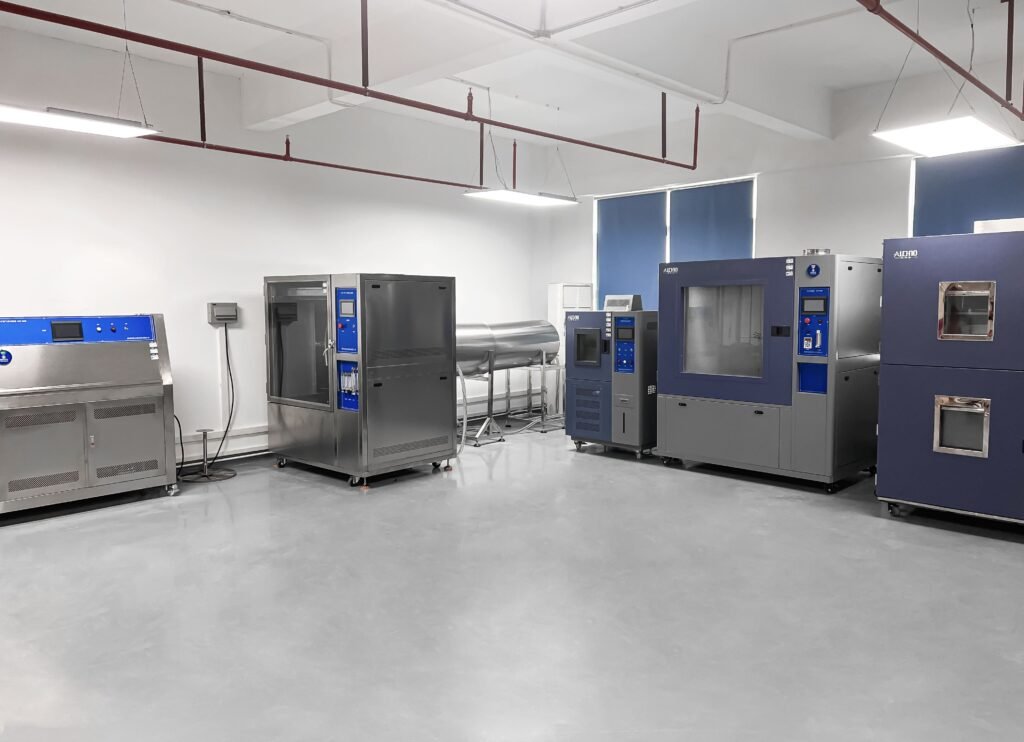
Xmart’s LED neon flex manufacturing platform includes silicone extrusion, molded end-cap options and different cable exits and mounting structures. Its manufacturing and laboratory capabilities include IP, UV, temperature-humidity and salt-spray testing, as shown in the Xmart manufacturing overview.
The valuable next step is not to request every test logo.
It is to agree on:
- The climate and installation failure risks
- The exact product and termination construction
- The test conditions that represent those risks
- The properties measured before and after aging
- The batch controls used to repeat the approved sample
For an outdoor OEM or project evaluation, send Xmart:
- Installation drawing
- Project location
- Sun orientation
- Temperature and humidity range
- Coastal distance
- Water exposure
- Cable-entry positions
- Bend requirements
- Joint plan
- Expected service period
These details can be submitted through the Xmart project quotation form.
The strongest outdoor proposal is not:
“Our strip passed IP67.”
It is:
“This exact construction was tested against the environmental sequence most likely to cause failure in your project—and the aged sample still met the agreed electrical, optical and sealing limits.”