
LED Strip, Neon Strip, Flex Wall Washer & AC LED Strip FAQ
Answers to the questions buyers, installers, and project teams ask most before choosing linear lighting products. Find technical clarifications and installation solutions.
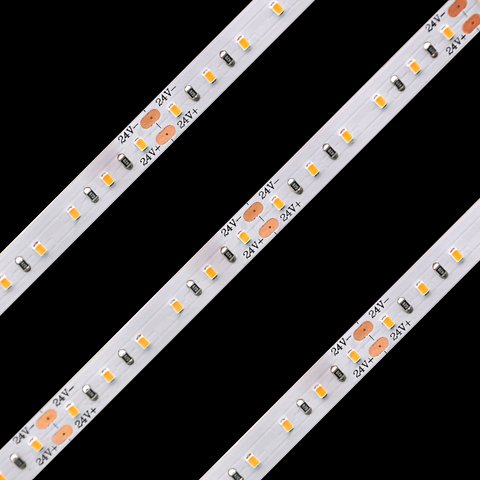
LED Strip FAQ
Voltage, cutting, and profiles.
Neon Strip FAQ
Bending, IP ratings, and outdoor.
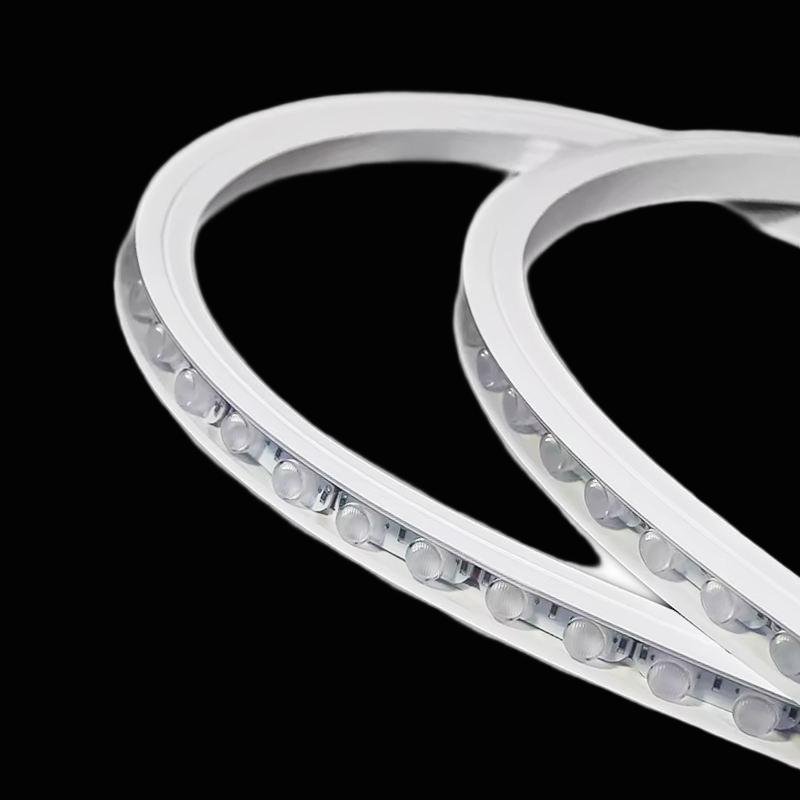
Flex Wall Washer FAQ
Optics, beam angles, and spacing.
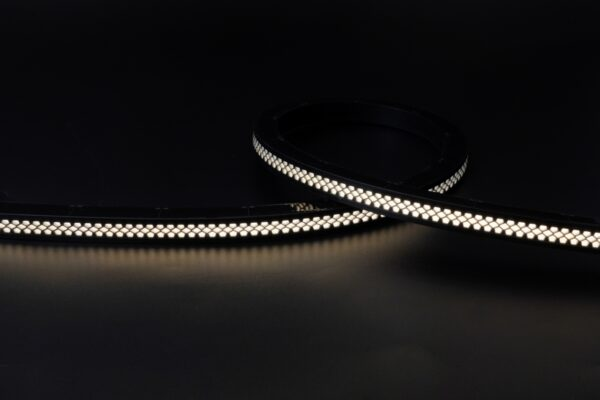
AC LED Strip FAQ
Long runs, safety, and intervals.
Find by product type
Check common installation issues
Go deeper with related guides
Popular Questions
The most frequently asked questions from buyers and project teams across all linear lighting categories.
LED Strip FAQ
Common questions regarding voltage drop, cutting intervals, dimming issues, and profile selection for standard DC LED strips.
Why do LED strip lights flicker or become dim at the end of the run?
Direct Answer: Far-end dimming and flickering are primarily caused by voltage drop along the flexible PCB.
Why it happens: As electrical current travels down the copper traces of the strip, natural resistance causes the voltage to decrease. If the voltage drops significantly below the LED's required forward voltage (e.g., dropping to 9V on a 12V strip), the LEDs at the far end will lose brightness and may begin to flicker, especially when connected to a dimmer.
What to do next: To resolve this, inject power at both ends of the strip, use thicker gauge feed wires, or upgrade to a 24V or 48V system for longer continuous runs. Constant Current (CC) strips are also an excellent solution for ultra-long runs without dimming.
Read LED Strip Voltage Drop GuideHow do I reduce voltage drop on long LED strip installations?
Direct Answer: Implement power injection, use higher voltage strips, or utilize thicker connecting wires.
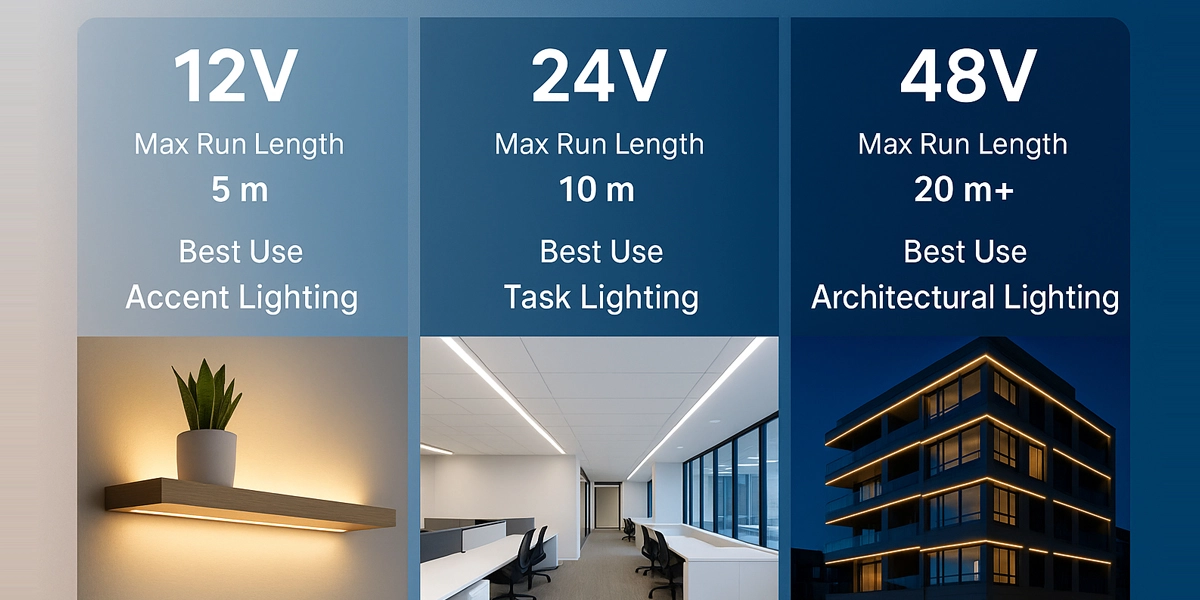
Why it happens: Voltage drop is a physical reality of low-voltage DC circuits. Exceeding the manufacturer's maximum run length (typically 5m for 12V, 10m for 24V) overloads the PCB's copper capacity.
What to do next: Plan your wiring topology. Use a "center feed" or "loop back" wiring method. If you must run 15 meters continuously, switch to a 24V or 48V Constant Current LED strip to ensure uniform brightness from start to finish without complex wiring.
Explore 24V & 48V LED StripsCan I cut LED strip lights anywhere?
Direct Answer: No, LED strips can only be cut at designated cut marks (usually indicated by a scissor icon or copper pads).
Why it happens: LED strips are built using multiple parallel circuits. Cutting outside the designated marks breaks the series circuit of that specific segment, causing the LEDs in that cut segment to fail permanently.
What to do next: Always measure carefully and cut precisely across the center of the copper pads. If you need highly specific lengths, look for high-density strips (like COB) or 5V/12V strips which offer much shorter cutting intervals (e.g., every 1-2 cm).
Which is better for long runs, 12V or 24V LED strip?
Direct Answer: 24V LED strips are significantly better for long runs.
Why it happens: A 24V system carries half the current of a 12V system for the same wattage. Lower current means less resistance and significantly less voltage drop over distance. 12V strips typically max out at 5 meters before dimming, while 24V can easily reach 10 meters continuously.
What to do next: For any architectural, commercial, or whole-room lighting project requiring runs over 5 meters, default to 24V or even 48V systems to ensure reliable performance and easier wiring.
Why does LED strip lighting flicker when dimmed?
Direct Answer: Dimming flicker is usually caused by an incompatible power supply, a low PWM frequency controller, or severe voltage drop.
Why it happens: If the dimming driver (e.g., TRIAC or 0-10V) is not perfectly matched with the control system, or if the PWM (Pulse Width Modulation) frequency of the controller is too low (under 1000Hz), the human eye or cameras will detect the rapid on/off switching as flicker.
What to do next: Ensure you are using a high-frequency PWM controller (ideally 2000Hz+) and a certified, compatible dimmable driver. Also, verify that voltage drop isn't starving the LEDs of power at low dimming levels.
Do I need aluminum profile for LED strip lights?
Direct Answer: While not always strictly mandatory, aluminum profiles are highly recommended for heat dissipation and optical diffusion.
Why it happens: High-output LED strips generate heat. If this heat isn't dissipated, the LEDs will degrade quickly, losing brightness and shifting color. Profiles act as a heat sink. Additionally, the bare diodes can cause harsh glare; a profile with a frosted cover diffuses the light into a spotless, continuous line.
What to do next: Always use aluminum channels for strips exceeding 10W/meter. Select deep profiles with milky diffusers if your goal is completely dot-free lighting.
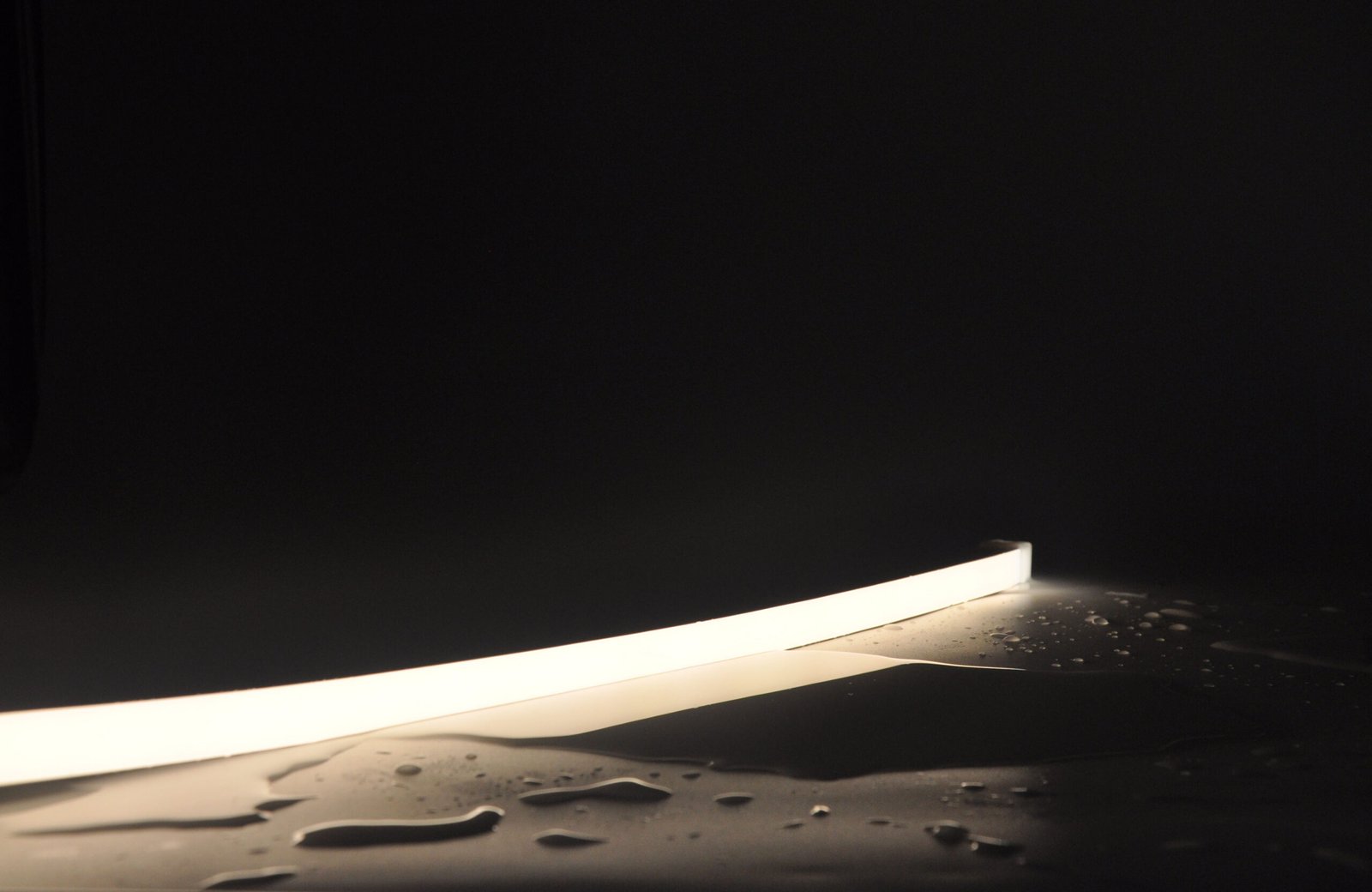
Neon Strip FAQ
Technical clarifications on bend radius, outdoor IP ratings, and installation techniques for silicone and PVC neon flex.
What is the minimum bend radius for neon strip?
Direct Answer: The minimum bend radius is typically between 30mm and 60mm, depending strictly on the profile size and bend direction.
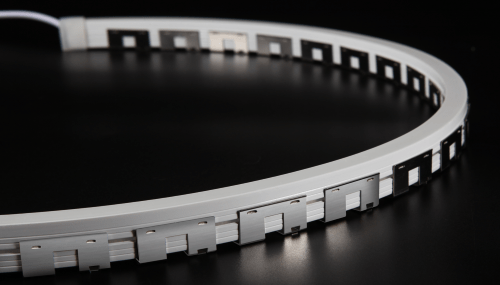
Why it happens: Neon flex contains an internal PCB. Forcing it to bend tighter than its engineered limit will snap the copper traces, break the solder joints, or tear the silicone casing, leading to immediate or premature failure.
What to do next: Always check the spec sheet for your specific model. Never bend a "Top Bend" neon flex side-to-side, and vice versa. Use pre-made corner accessories if you need sharp 90-degree turns.
View Neon Bending GuidelinesWhat is the difference between top bend and side bend neon flex?
Direct Answer: It defines the direction the strip can flex relative to its luminous surface.
Why it happens: The internal PCB is flat. Top Bend (Vertical Bend) flexes up and down like a roller coaster, while the light emits upward. Side Bend (Horizontal Bend) flexes left and right like a snake, while the light emits upward. The PCB orientation inside the silicone dictates this.
What to do next: Choose Top Bend for wrapping around pillars or creating arches. Choose Side Bend for tracing letters, logos, or following curved pathways on the ground.
Is IP65 enough for outdoor neon strip?
Direct Answer: No, IP65 is generally not sufficient for permanent, unprotected outdoor exposure.
Why it happens: IP65 protects against low-pressure water jets, but outdoor environments involve heavy rain, pooling water, and thermal expansion/contraction which can draw moisture in over time. Neon flex used outdoors requires robust protection.
What to do next: For outdoor architectural lighting, specify IP67 (injection-molded ends) or IP68 (submersible) neon flex. Ensure all end caps and power feeds are factory-sealed rather than DIY glued.
Read Outdoor Installation GuideCan neon strip make sharp 90-degree corners?
Direct Answer: No, continuous neon flex cannot be folded into a sharp 90-degree corner without damage.
Why it happens: The thick silicone extrusion and internal circuitry require a minimum radius to bend safely. Forcing a sharp crease will instantly destroy the PCB.
What to do next: To achieve a sharp corner, you must cut the neon flex, use a specialized 90-degree connector accessory, or solder jumper wires between the two cut segments, leaving a slight gap in the illumination.
Does waterproof neon strip still need protected connectors?
Direct Answer: Yes, the connection points are the most vulnerable part of any waterproof system.
Why it happens: While the silicone body is IP67/IP68, the point where the wire enters the strip, or where two strips join, is susceptible to capillary action drawing water directly into the PCB.
What to do next: Always use factory-molded injection end caps for outdoor projects. If modifying on-site, use appropriate silicone sealant and heat shrink, and house the power supply connections in an IP-rated junction box.
Flex Wall Washer FAQ
Expert insights on optical systems, beam spread, and achieving uniform wall grazing without scalloping.
How do I choose the right beam angle for flex wall washer?
Direct Answer: The beam angle depends directly on the height of the wall and how far the fixture is mounted from it.
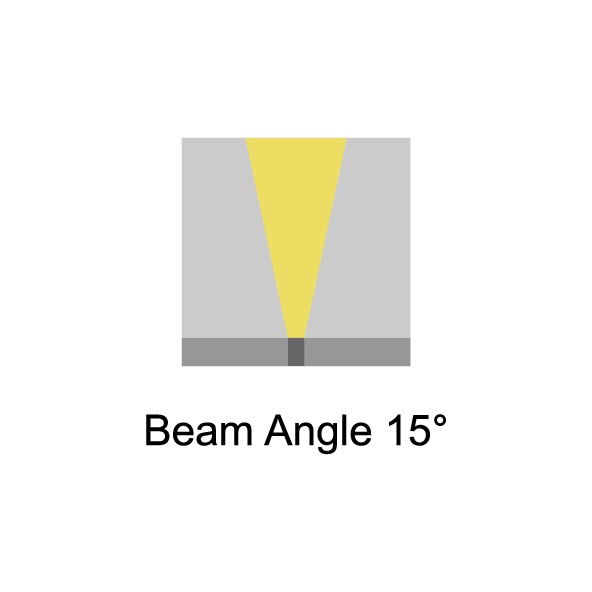
Why it happens: Narrow beam angles (e.g., 15°, 20°x45°) throw light higher up tall facades but require precise mounting. Wide beam angles (e.g., 45°, 60°) spread light quickly, making them suitable for shorter walls or when mounting very close to the surface.
What to do next: As a rule of thumb, use narrow optics for walls over 4 meters high. Use asymmetrical lenses (like 20°x45°) to push light up the wall while minimizing glare backward. Always run a DIALux simulation for large facades.
Read Flex Wall Washer Beam Angle GuideWhy does wall washing look uneven or scalloped?
Direct Answer: Scalloping occurs when fixtures are placed too close to the wall, spaced too far apart, or lack proper optical lenses.
Why it happens: True wall washing requires the light beams to overlap smoothly. If a standard LED strip (120° beam) is placed right against a wall, it creates a harsh, uneven hotspot at the bottom and fades quickly. Flex wall washers use internal lenses to focus and push the light.
What to do next: Ensure you are using a product with actual optical lenses, not just a silicone tube. Maintain a setback distance from the wall (typically 1/10th to 1/5th of the wall height) to allow the beam to open and wash uniformly.
Is flex wall washer better than LED strip for façade lighting?
Direct Answer: Yes, for illuminating vertical surfaces, flex wall washers are vastly superior to standard LED strips.
Why it happens: Standard LED strips emit light in a 120-degree flood pattern, which scatters light everywhere. Flex wall washers integrate micro-lenses over each LED to shape the light into a targeted beam, driving illumination up the architecture rather than wasting it in the air.
What to do next: Choose flex wall washers for exterior facades, tall interior feature walls, and grazing textured surfaces like stone or brick. Keep standard LED strips for coves, under-cabinets, and direct-view accents.
Can flex wall washer be used on curved surfaces?
Direct Answer: Yes, that is its primary advantage over rigid linear fixtures.
Why it happens: Traditional aluminum wall washers cannot conform to curved architecture. Flex wall washers combine the advanced optics of rigid fixtures with a flexible silicone body, allowing them to follow curved walls, circular pillars, or winding pathways.
What to do next: Verify the bend direction (Top Bend vs Side Bend) matches the curve of your architecture. Secure the fixture firmly using mounting clips or flexible profiles to maintain a consistent beam direction along the curve.
AC LED Strip FAQ
Understanding high-voltage (110V/220V) driverless LED strips, their cutting intervals, and safety requirements.
Can AC LED strip be cut to any length?
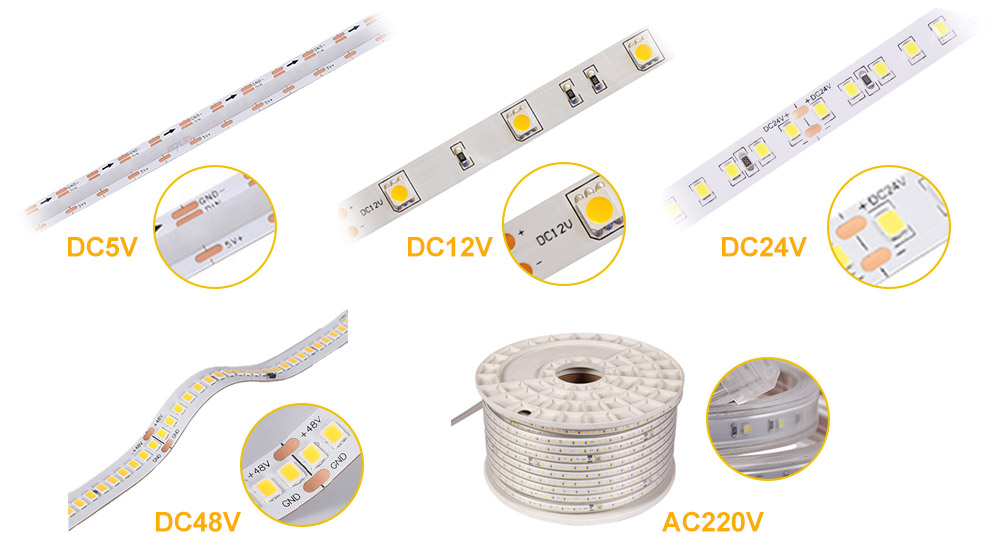
Direct Answer: No, AC LED strips have much longer cutting intervals than DC strips, typically every 0.5 meters or 1 meter.
Why it happens: Because they operate at high voltages (110V or 220V) without an external transformer, the internal circuitry requires a long series of LEDs to handle the voltage drop across the segment. You can only cut at these designated long intervals.
What to do next: Plan your installation lengths carefully to match the 0.5m or 1m increments. If you need precise lengths down to the centimeter, you must use a low-voltage DC strip instead.
Read AC vs DC LED Strip GuideIs AC LED strip better for long runs?
Direct Answer: Yes, for extreme lengths, AC strips are highly efficient.
Why it happens: High voltage means very low current. This drastically reduces voltage drop, allowing a single continuous AC strip to run up to 50 meters (164 feet) from a single plug, whereas standard 12V strips max out at 5 meters.
What to do next: Use AC strips for massive outdoor building outlines, long fences, or large scale commercial coves where installing multiple bulky power supplies is impractical.
Is AC LED strip safe for outdoor or architectural use?
Direct Answer: Yes, provided it is properly rated (IP65/IP67) and installed by a qualified professional.
Why it happens: AC strips carry dangerous mains voltage (110V/220V). If the PVC jacket is cut, damaged, or poorly sealed at the ends, it poses a severe shock hazard, especially in wet outdoor conditions.
What to do next: Never cut or splice AC strips outdoors unless using factory-approved sealing methods. Always ensure the end cap and power feed are completely watertight, and plug into a GFCI/RCD protected outlet.
What are the disadvantages of AC LED strip?
Direct Answer: Limited cut lengths, safety concerns with high voltage, and potential for visible flicker.
Why it happens: The 1m cut intervals make precise fitting impossible. The high voltage requires thicker, less flexible PVC casing. Additionally, some cheaper AC strips lack proper internal rectification, causing them to flicker at 50Hz/60Hz, which can cause eye strain.
What to do next: Weigh the convenience of "plug-and-play long runs" against the need for precision and safety. For indoor, touchable areas, always prefer low-voltage DC strips.
What buyers and installers ask most before placing an order
Beyond the spec sheet, these are the real-world operational concerns we solve for our partners every day.
Will it flicker in real use?
We match our strips with high-frequency PWM controllers and certified drivers to guarantee flicker-free performance, even on camera.
How far can I run it before voltage drop becomes visible?
Standard 24V strips run 10m flawlessly. For massive projects, our Constant Current (CC) strips run up to 30m from a single feed without dimming.
Is this IP rating enough for outdoor exposure?
For permanent outdoor use, we skip IP65 and mandate IP67/IP68 with factory-sealed injection end caps to prevent capillary water damage.
Can it bend around the corner I actually need?
We provide clear bend radius limits and specify Top Bend vs Side Bend variants so your design matches physical reality.
Why does the wall wash look patchy on site?
Patchiness is solved by proper lens selection and setback distance. We guide you to the right asymmetrical or narrow beam optics.
Can the strip still work after I cut it shorter?
Yes, DC strips work perfectly after cutting at designated marks. We provide accessories to easily reconnect or cap the remaining segments.
Related Guides
Go deeper into the technical specifications and installation best practices.
LED Strip Voltage Drop Guide
Learn how to calculate maximum run lengths and wire gauges to prevent far-end dimming.
Neon Strip Outdoor Installation
Best practices for sealing, mounting, and protecting neon flex in harsh weather conditions.
Flex Wall Washer Beam Angle Guide
How to select the perfect optics and setback distance for uniform facade grazing.
AC LED Strip vs DC LED Strip
A comprehensive comparison of high voltage and low voltage linear lighting solutions.
Still comparing options?
Tell us your run length, installation environment, control requirement, and project type. We can help narrow down the right LED strip, neon strip, flex wall washer, or AC LED strip solution.