Most buyers blame the LED chips when a flat panel turns yellow, starts flickering or develops dark areas.
That is often the wrong diagnosis.
LED panel light problems are usually system-level failures. The optical materials, LED layout, driver, dimming control, heat management, assembly and production consistency all affect what the buyer eventually sees on the ceiling.

For distributors and private-label brands, this distinction matters. Replacing one failed fixture is inconvenient. Managing the same defect across hundreds of installed panels is a warranty problem.
Quick Diagnosis
| Visible problem | More likely cause | What buyers should check |
|---|---|---|
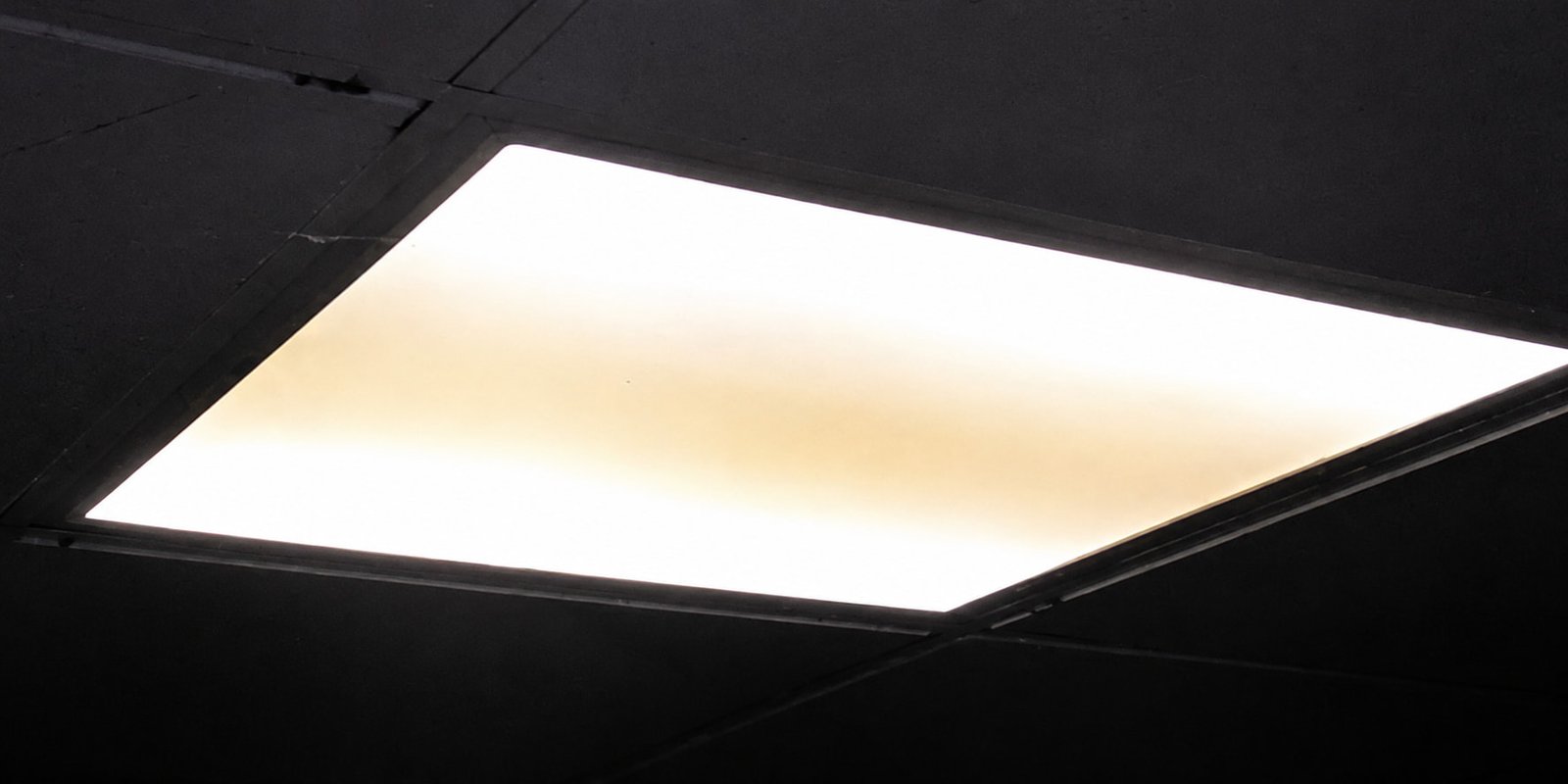
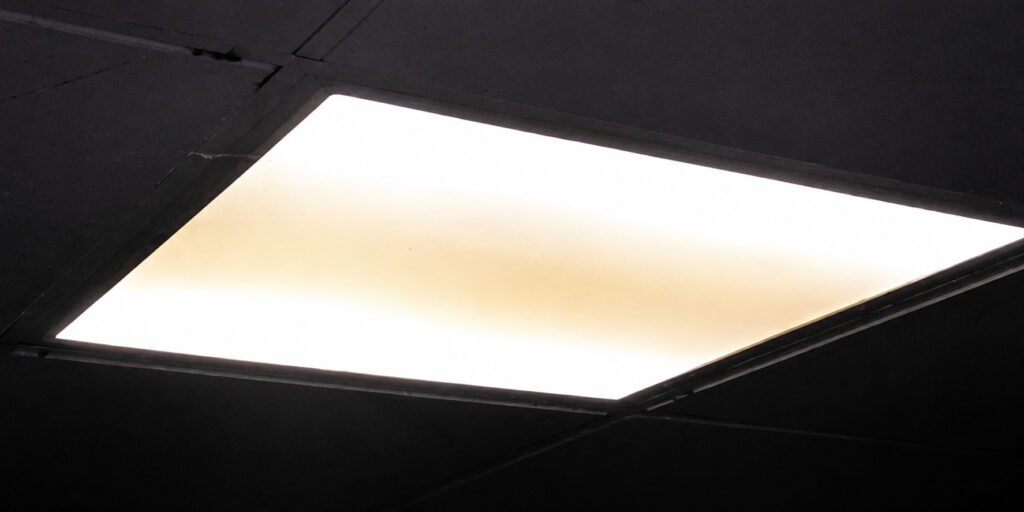
| The entire panel looks yellow | Diffuser or light guide plate aging, heat, UV or color shift | Optical material, operating temperature and aging data |
| Yellowing appears around the edges | Heat near edge-mounted LEDs or light guide plate degradation | Edge temperature, LGP grade and LED current |
| Yellow patches appear only when powered | LED color shift, bin inconsistency or localized heat | LED binning, CCT data and thermal design |
| One panel flickers | Driver, connection or internal component problem | Driver model, wiring and operating temperature |
| Several panels flicker together | Dimming control, voltage or building circuit issue | Dimmer compatibility and supply stability |
| Dark dots appear from the first day | LED spacing, diffuser distance or assembly problem | Optical layout and production inspection |
| Dark areas appear after months | Failed LEDs, solder joints, overheating or driver instability | PCB quality, thermal data and traceability |
The counterintuitive lesson is simple: the appearance of the defect does not always reveal the failed component.
Yellow Light Does Not Always Mean Yellow Plastic
When a panel looks yellow, many suppliers immediately blame the diffuser or light guide plate. That explanation is possible, but incomplete.
There are two different problems that can look similar.
The optical material has physically discolored
The diffuser, light guide plate, reflector, adhesive or another internal material may have changed color because of:
- Prolonged heat exposure
- UV exposure
- Oxidation
- Chemical contamination
- Poor material stability
- Excessive LED board temperature
- Unsuitable storage or operating conditions
The U.S. Department of Energy notes that lens oxidation can contribute to yellowing and that color shift in LED luminaires can involve the LEDs, optical materials and surrounding system—not one component alone.
The material still looks white, but the emitted light has shifted
In this case, the panel may look normal when switched off. The yellow appearance becomes visible only when it is operating.
Possible causes include:
- LED phosphor degradation
- Excessive junction temperature
- Mixed LED bins
- Driver current outside the intended range
- Uneven thermal conditions across the LED board
- Production substitutions between batches
A visual inspection is not enough to separate these causes. Buyers should compare initial and aged CCT, chromaticity and thermal data.
“PMMA Good, PS Bad” Is Too Simple
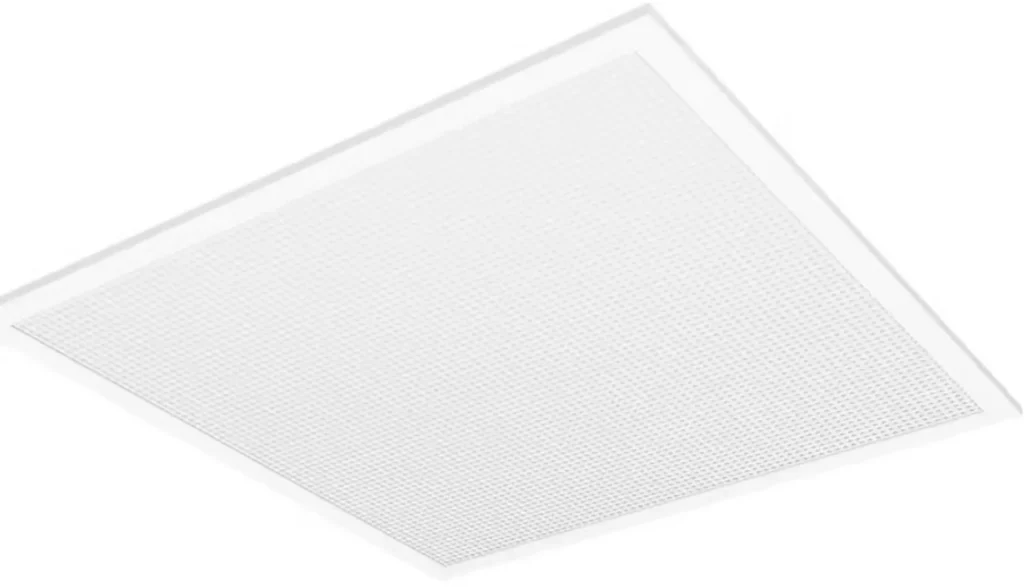
Many LED panel sales pages reduce material selection to one claim:
PMMA is good. PS is bad.
That is convenient marketing, not a complete engineering answer.
Material performance depends on the specific resin grade, optical formulation, UV stabilization, thickness, operating temperature and manufacturing process. A low-quality material can age poorly regardless of the acronym printed on the quotation.
B2B buyers should ask for:
- The actual optical material
- Material grade or supplier
- UV stabilization information
- Recommended operating temperature
- Initial light transmission
- Aging or environmental test conditions
- Changes in color or transmission after testing
A serious manufacturer should be able to discuss the material specification. “Premium diffuser” is not a specification.
Flicker Is Not Always a Defective Panel
A flickering fixture often leads to an immediate warranty claim. Sometimes the fixture is responsible. Sometimes it is not.
If one panel flickers while the others remain stable, likely causes include:
- A failing LED driver
- Degraded driver capacitors
- Excessive driver temperature
- A loose internal connector
- A poor solder joint
- An unstable selectable wattage switch
- A mismatch between the driver and LED load
If many panels flicker at the same time, the investigation should move outside the fixture. Common causes include:
- Voltage fluctuations
- Loose supply connections
- Incompatible dimming controls
- Incorrect 0–10V wiring
- Control-system instability
- Large electrical loads starting on the same system
LEDVANCE similarly identifies defective drivers, loose wiring, incompatible dimmers and voltage changes as common causes of LED flicker.
This difference is commercially important. Replacing an entire shipment will not solve a building-level control problem. At the same time, blaming the building should never be used to hide a weak driver.
A qualified supplier should help the buyer isolate the cause with driver data, compatibility information and controlled sample testing.
Dark Spots Do Not Automatically Mean Dead LEDs
A failed LED can create a dark area, but dark spots can also appear when every LED is still operating.
Common causes include:
- LED spacing that is too wide
- Insufficient distance between the LEDs and diffuser
- An unsuitable diffuser
- Incorrect optical lenses
- Reflector movement
- PCB deformation
- Internal contamination
- Uneven assembly pressure
- Poor soldering
- Localized thermal damage
The timing and pattern provide useful evidence.
Dark spots visible from the first use
This usually points toward optical design, LED spacing, assembly or component alignment.
Dark spots appearing after months
This more strongly suggests LED degradation, solder failure, thermal stress or driver instability.
The same dark pattern across many fixtures
This is likely a repeatable design or manufacturing problem.
Random dark spots across a batch
This may indicate component variation, soldering inconsistency, handling damage or uncontrolled production changes.
A single sample cannot reveal every one of these risks.
Backlit Panels Remove One Risk, Not Every Risk
Backlit construction removes the light guide plate used in an edge-lit panel. That eliminates one possible source of yellowing and optical loss.
It does not make the fixture immune to failure.
A backlit panel can still develop:
- Diffuser discoloration
- LED color shift
- Visible LED dots
- Uneven brightness
- Driver flicker
- Switch failures
- Reflector degradation
- Localized heat damage
Backlit performance depends heavily on LED spacing, the distance to the diffuser, driver stability and thermal control.
When evaluating a top LED flat panel manufacturer, buyers should therefore ask for evidence from the complete luminaire—not only an LM-80 report for the LED package or a certificate for the driver.
The Best Sample May Hide the Biggest Risk
Here is the most important sourcing lesson:
A perfect sample does not prove that a manufacturer can produce a consistent batch.
Samples are easy to control. Repeat orders are harder.
A sample may use one driver, one LED bin and one material supplier. Mass production may introduce different component lots, operators, assembly conditions or substitutions.
That is why experienced buyers should verify:
- Whether the approved BOM is locked
- Whether component substitutions require approval
- Whether the Golden Sample is retained
- Whether Driver and LED model numbers are recorded
- Whether CCT and wattage are checked at each selectable setting
- Whether production lots are traceable
- Whether final inspection data can be matched to the shipment
- Whether repeat orders use the same approved specification
The top manufacturer is not necessarily the factory that produces the brightest first sample. It is the factory that can reproduce the approved result across the order and the next reorder.
Selectable Panels Create More Quality-Control Points
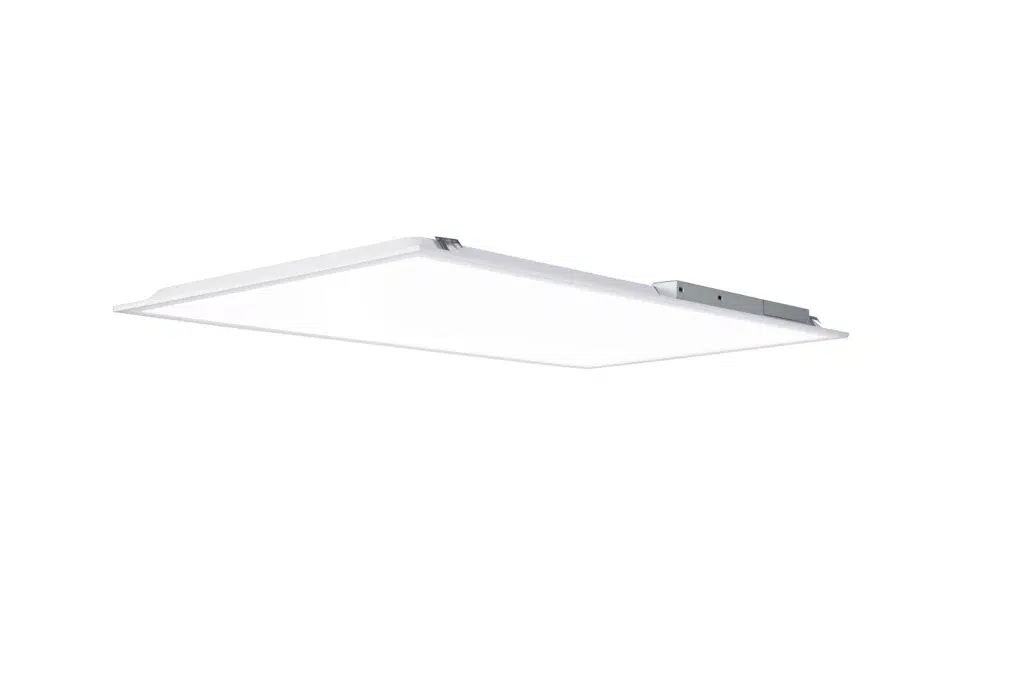
Selectable wattage and CCT reduce distributor SKU pressure. They also create additional failure points that fixed-output panels do not have.
Each switch position changes part of the electrical or optical operating condition. Manufacturers should therefore verify:
- Actual wattage at every setting
- Lumen output at every setting
- CCT at every setting
- Driver temperature at high wattage
- Label accuracy
- Switch durability
- Dimming behavior
- DLC-listed configurations where applicable
Testing only the default setting is not enough.
Xmart’s commercial backlit panel range includes selectable wattage and CCT configurations for distributors and commercial projects. Buyers can request model-specific specifications before approving a sample or bulk order.

What a Top LED Flat Panel Manufacturer Should Prove
Marketing claims are easy to publish. Manufacturing evidence is harder to produce.
Before placing a bulk order, ask the supplier for evidence in five areas.
1. Optical stability
Request:
- Diffuser and LGP material information
- LED layout
- Uniformity photos
- Initial photometric data
- Aging or environmental test conditions
2. Electrical stability
Request:
- Driver manufacturer and model
- Input voltage range
- Power factor and THD
- Dimming type and range
- Flicker test information
- Surge option where required
3. Thermal control
Request:
- LED board temperature
- Driver temperature
- Test ambient temperature
- Highest-wattage operating data
- Installation restrictions
4. Production consistency
Request:
- Approved BOM
- Golden Sample process
- Change-control policy
- Batch identification
- Final inspection records
5. Model-level compliance
A certification logo on a website does not prove that every model is covered.
Check:
- Certificate holder
- File number
- Exact model number
- Wattage and voltage
- Brand or private-label relationship
- Current DLC status where required
Buyers can review Xmart’s certificate and patent information and request the supporting file for the exact panel model under evaluation.
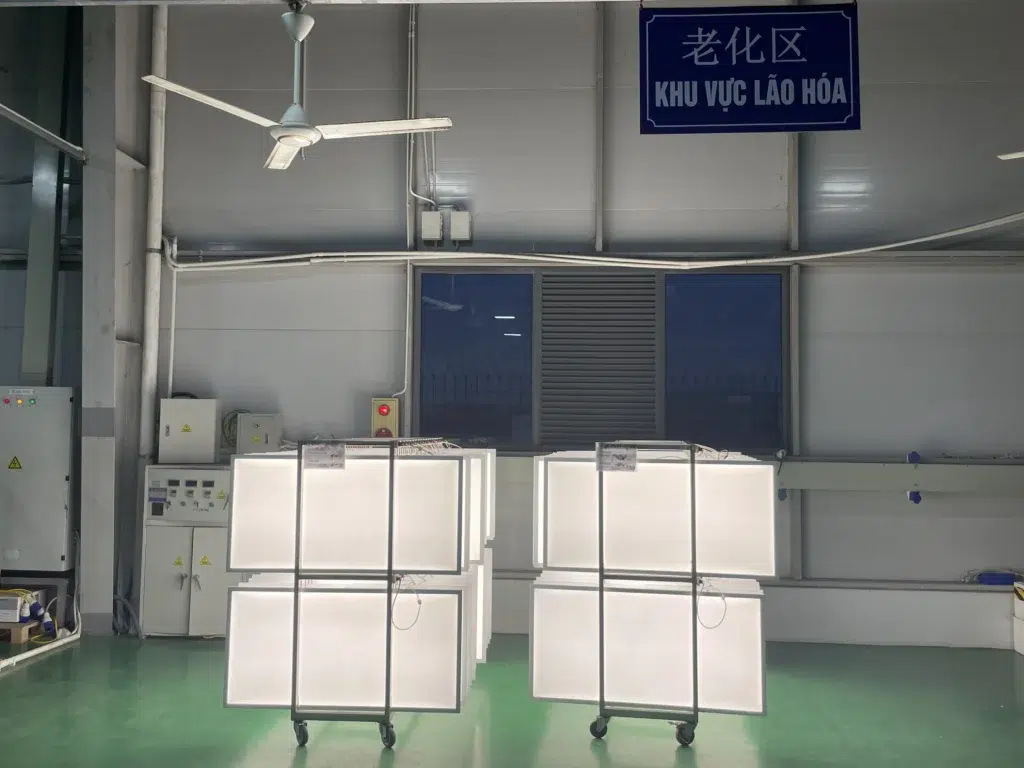
A Practical Bulk-Order Checklist
Before approving an LED flat panel order, confirm the following:
- Panel structure: backlit or edge-lit
- Optical material and grade
- LED manufacturer, model and binning method
- Driver manufacturer and model
- Actual wattage at each selectable setting
- CCT at each selectable setting
- Dimming and control compatibility
- Thermal test conditions
- Uniformity inspection
- Aging-test method
- UL or ETL model coverage
- DLC Product ID where applicable
- Approved BOM
- Golden Sample
- Component change policy
- Batch traceability
- Warranty claim procedure
This checklist will not eliminate every failure. It will reveal whether the supplier understands the failure mechanisms well enough to control them.
Frequently Asked Questions
Can a yellow LED panel be restored?
Not usually. Surface dirt may be cleaned, but material oxidation, phosphor degradation and permanent optical discoloration normally require component or fixture replacement.
Are backlit LED panels immune to yellowing?
No. Backlit panels eliminate the LGP-related risk found in edge-lit designs, but the diffuser, LEDs, reflector and other materials can still age or shift color.
Why does an LED panel flicker only at low brightness?
The driver may not operate stably at the requested dimming level, or the driver and control may be incompatible. Minimum dimming range and 0–10V control behavior should be checked.
Why do several LED panels flicker together?
When several fixtures flicker simultaneously, investigate the shared dimming control, wiring and supply voltage before assuming that every fixture has failed.
What causes dark spots in a new LED panel?
Dark spots in a new panel often indicate LED spacing, diffuser distance, lens selection, reflector alignment or assembly problems rather than LED aging.
What should distributors test before a bulk order?
Distributors should test optical uniformity, CCT, power, dimming, temperature and switch behavior using the intended configuration. They should also lock the BOM and retain an approved Golden Sample.
Final Takeaway
Yellowing, flicker and dark spots are not three versions of the same defect.
They are visible symptoms of different interactions between optics, electronics, heat, controls and manufacturing.
For B2B buyers, the goal is not to find a panel that looks good for ten minutes on a sample table. It is to find a manufacturer that can explain the risks, provide test evidence and repeat the approved result across every production batch.
If you are evaluating a 2×2, 2×4 or 1×4 commercial panel program, send Xmart your required wattage, CCT, voltage, dimming, certification and order quantity for a model review and sample recommendation.