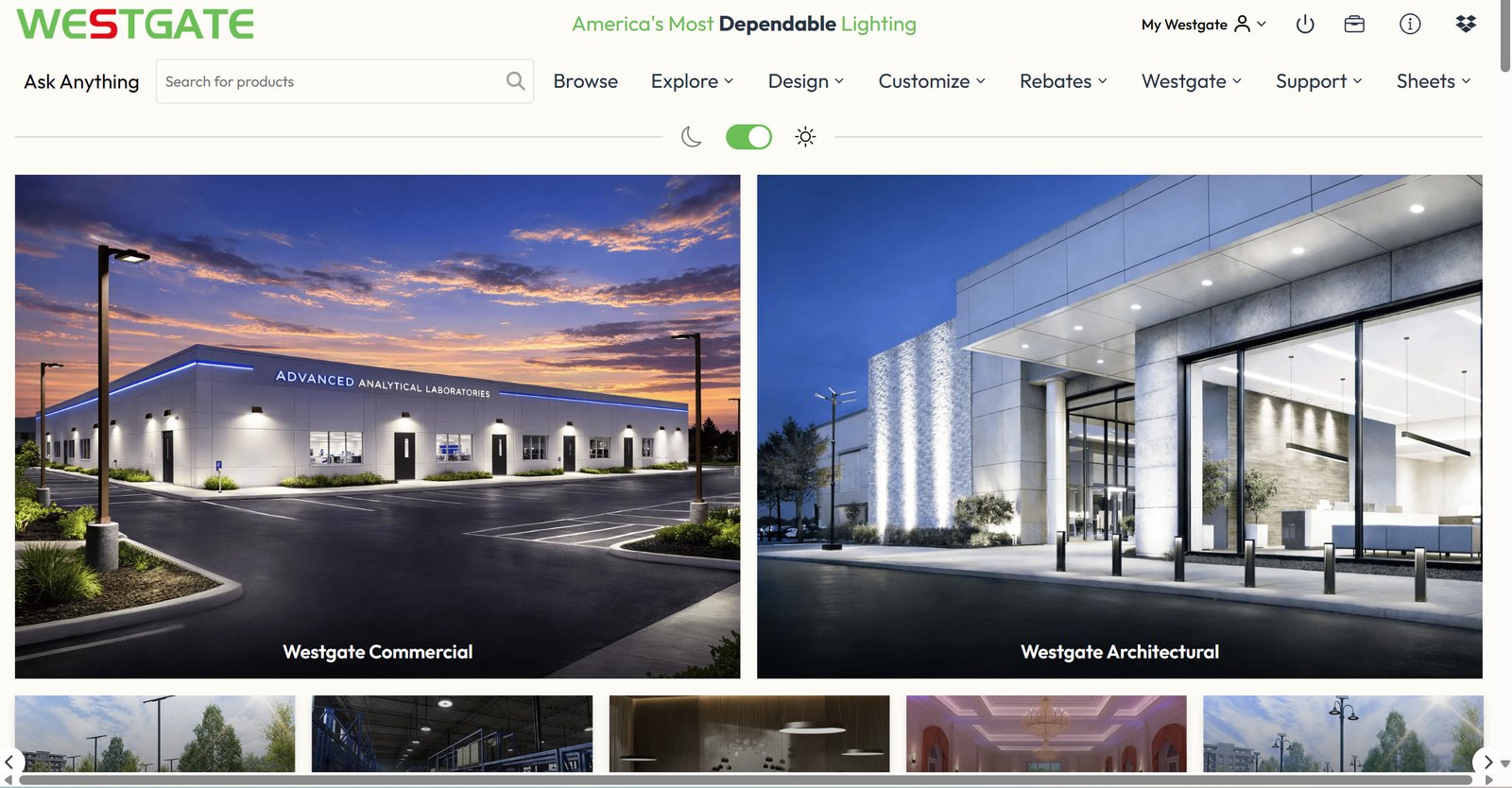
“America’s Most Dependable Lighting” sounds domestic.
It is a brand promise—not a country-of-origin declaration.
Westgate Manufacturing is based in Vernon, California, and serves the U.S. electrical distribution and specification markets. However, public product listings and import records show that its lighting supply chain extends well beyond the United States.
For LED flat panels, the available model-level evidence points primarily to China. Westgate also imports lighting products from other Asian countries, but that broader sourcing activity should not be used to assign Vietnam, Thailand or any other origin to a specific panel.
Procurement Verdict
Based on the public records reviewed:
- Westgate is a U.S.-based lighting company founded in 2008.
- Multiple Westgate LP-series panels are publicly identified as products of China.
- A distributor listing identifies an LPNP-series 2×2 panel as China origin.
- Westgate’s company-wide import history includes extensive China sourcing.
- Trade records also show some lighting imports associated with Vietnam and Thailand.
- No public evidence reviewed establishes U.S. manufacture for Westgate’s commercial LED panels.
- No model-level evidence was found proving that current LPNG or LPCR panels are made in Vietnam.
The defensible answer is:
Public records link several Westgate LED panel models to China, but buyers should not assign one country of origin to the entire Westgate panel portfolio without checking the exact SKU and production lot.
A California Address Does Not Mean “Made in USA”
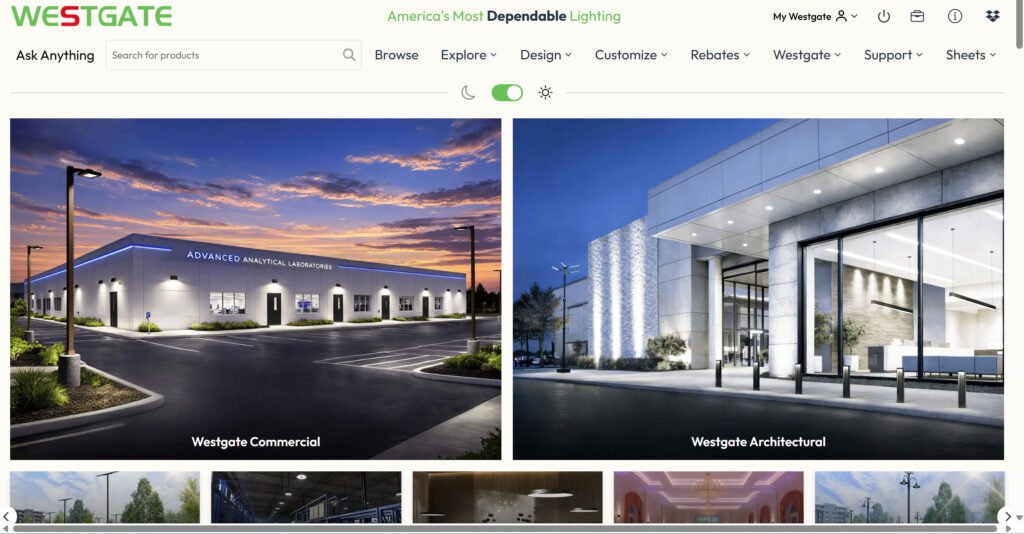
Westgate lists its headquarters at: 2462 E. 28th Street, Vernon, California 90058
Its website describes the company as a commercial, architectural, industrial and residential LED lighting manufacturer. The company also promotes a large catalog, U.S. inventory availability and support through electrical wholesale distributors.
These are commercially valuable capabilities, but they do not identify where a fixture was substantially transformed.
In B2B lighting, “manufacturer” may describe a company that controls:
- Product design and specifications
- Supplier qualification
- Certification
- Branding
- U.S. inventory
- Warranty support
- Sales and distribution
It does not necessarily mean that the company fabricates and assembles every luminaire in its U.S. facility.
Westgate’s U.S. presence and the legal origin of a Westgate panel are therefore two separate facts.
What the Model-Level Evidence Shows
| Westgate model | Product generation | Public origin evidence | Audit conclusion |
|---|---|---|---|
| LP-2X4-MW-40K-DS | Earlier LP panel | Distributor lists China | China evidence for this SKU |
| LP-2X4-60W-27K-DS | Earlier fixed-CCT LP panel | Distributor lists China | China evidence for this SKU |
| LP-2X4-72W-35K-D | Earlier high-output LP panel | Distributor lists China | China evidence for this SKU |
| LPNP-2X2-4KLM-MCTP | Premium selectable panel | Distributor lists China | China evidence for this SKU |
| LPNP-2X2-MCTP | Current selectable LPNP model | No official origin declaration located | Verify current lot |
| LPNG-2X2-MCTP4 | Current backlit panel | No model-level origin record located | Origin unconfirmed |
| LPCR-2X2-MCTP | Current cleanroom panel | No model-level origin record located | Origin unconfirmed |
Country-of-origin fields on distributor pages can become outdated. They should be treated as evidence for the listed SKU, not as a permanent declaration covering future production.
LP vs LPNG: The Product Name Reveals a Design Change
Westgate’s panel prefixes are not interchangeable.
Earlier LP Panels
Westgate describes certain LP models as second-generation LED panel lights using a PMMA light-guide panel.
That construction is associated with an edge-lit optical system. Light enters the guide plate from the edge and is distributed across the luminous surface.
Public listings connect several of these LP models to China.
Current LPNG Panels
Westgate explicitly describes LPNG as its LED backlit panel series. Current LPNG configurations include 2×2 and 2×4 sizes with selectable wattage and CCT options.
In a backlit fixture, LED modules illuminate the diffuser from behind. This removes the edge-lit light-guide plate and can reduce dependence on PMMA plate quality, printing consistency and long-term optical stability.
However, a change from LP to LPNG does not prove that the manufacturing country also changed.
“New generation” and “new country of origin” are different claims. Each requires separate evidence.
LPNP Is Not Just Another Name for LPNG
Westgate’s LPNP family is marketed as a premium flat-panel series.
The current 2×2 LPNP-2X2-MCTP provides:
- 19/25/32W selectable power
- 3500K/4000K/5000K selectable CCT
- Up to 4,000 lumens
- 125 lm/W efficacy
- 120–277V input
- 0–10V dimming
- External driver
- 50,000-hour rated life
- Five-year warranty
The 2×4 LPNP-2X4-MCTP uses 24/32/40W settings and is rated at up to 125 lm/W.
An older distributor record identifies LPNP-2X2-4KLM-MCTP as China origin. But Westgate’s current abbreviated model, LPNP-2X2-MCTP, should still be verified independently.
A removed lumen suffix may represent:
- A catalog-number simplification
- A product revision
- A different certification family
- A new driver or LED-board combination
- A change in factory
- Only a marketing update
The model change alone does not reveal which explanation is correct.
Current specifications: Westgate LPNP 2×2 and Westgate LPNP 2×4.
Company-Wide Vietnam Imports Do Not Prove a Vietnam-Made Panel
Westgate’s import history is dominated by numerous Chinese lighting suppliers. Public trade databases also show some LED-light shipments associated with Vietnam and a supplier identified as Bestwon Lighting Thailand.
That indicates supplier diversification at company level.
It does not answer which Westgate panel models, if any, were produced in those facilities.
Generic manifest descriptions such as:
- LED LIGHT
- LED FIXTURE
- LIGHTING FIXTURE
- LED LIGHT ACCESSORY
cannot be mapped reliably to an LPNG, LPNP or LPCR catalog number.
A buyer should not turn the statement “Westgate imports some lighting from Vietnam” into “this Westgate panel is made in Vietnam.”
That unsupported jump can distort:
- Section 301 exposure
- Landed-cost calculations
- Customer origin declarations
- Buy America or TAA reviews
- Project submittals
- Supplier-diversity claims
Does China Origin Automatically Make the Panel a Bad Buy?
No.
Country of origin does not by itself determine photometric performance, failure rate or project suitability.
A China-made panel can be properly engineered, certified and consistently manufactured. A panel assembled in another country can still suffer from weak driver protection, poor thermal management or uncontrolled component substitutions.
B2B buyers should separate three evaluations:
Product Compliance
Does the exact model have the required UL, DLC, emergency, wet-location or cleanroom documentation?
Manufacturing Control
Can the supplier control LED binning, drivers, diffusers, wiring, labeling and production revisions?
Trade Compliance
Can the importer support the declared origin, HTS classification and applicable tariff treatment?
A country name cannot replace any of these audits.
Cleanroom Panels Require a Different Review
Westgate’s LPCR series is designed for higher-control environments such as healthcare facilities, laboratories, pharmaceutical manufacturing and food processing.
Westgate lists the LPCR family with:
- IP66 protection
- NSF marking
- Testing associated with ISO 14644 cleanroom environments
- 120–277V input
- 0–10V dimming
- Selectable wattage and CCT
- Five-year warranty
- Standard and high-output configurations
These claims are more demanding than the requirements for a typical office panel.
Before approving LPCR for a regulated project, request the exact reports behind each claim. “Cleanroom panel” is a product category, not a substitute for documentation.
The project file should establish:
- Which ISO 14644 test was performed
- The tested mounting condition
- Whether the fixture is suitable for the project’s cleanroom class
- Which surfaces and materials are covered by the NSF listing
- Whether IP66 applies from the room side, plenum side or complete enclosure
- Whether field-installed options affect the rating
- Which model appears on the certification record
Review the Westgate LPCR cleanroom panel series.
What the Current U.S. Tariff Environment Changes
A China-origin Westgate panel may face China-specific Section 301 measures depending on its HTS classification. Other duties or temporary trade measures may also apply.
A Vietnam-origin product is not automatically duty-free. It must first qualify legally as a product of Vietnam, and any other applicable tariffs must still be considered.
For customs purposes, shipping from Vietnam is not the same as originating in Vietnam.
If major Chinese components are shipped to another country for minor assembly, relabeling or packing, Customs may still determine that China is the country of origin. The analysis depends on substantial transformation and the specific manufacturing operations.
Before using origin to compare suppliers, obtain:
- The proposed HTS code.
- The ordinary duty rate.
- Applicable Section 301 treatment.
- Other current surcharges or trade measures.
- Factory-level origin documentation.
- A calculation based on the expected entry date.
The USTR Section 301 search tool should be checked using the actual HTS classification. A customs broker should confirm the final calculation.
The Replacement Risk Hidden Inside Westgate’s Catalog
Westgate offers multiple panel architectures and product generations:
- Legacy LP edge-lit panels
- LPNG backlit panels
- LPNP premium panels
- LPS internal-driver surface/recessed panels
- LPCR cleanroom panels
- Retrofit panels for existing troffer housings
- Sensor-ready configurations
A distributor may describe all of them simply as “Westgate 2×2 panel.”
That creates specification drift.
A replacement panel can match the nominal size and still differ in:
- Depth
- Mounting method
- Driver location
- Emergency-driver compatibility
- Dimming behavior
- Maximum output
- CCT settings
- Sensor interface
- Certification status
- Country of origin
- Tariff exposure
Substitution approval should therefore be based on a model-to-model matrix, not a brand-level statement.
Documents B2B Buyers Should Request
For each Westgate panel purchase, request:
- Complete catalog number and UPC.
- Current specification sheet with revision date.
- Active UL or ETL certification record.
- Active DLC product ID where required.
- LM-79 report for the supplied configuration.
- Country-of-origin declaration for the exact model.
- Production-lot carton and fixture-label photographs.
- Manufacturing-facility name and address.
- Driver manufacturer and driver model.
- Written component-change notification policy.
- Warranty terms, including labor and freight exclusions.
- Confirmation that accessories are covered by the same listing.
For tariff-sensitive orders, add a description of the manufacturing operations and the origin of the principal components.
Comparing Westgate With a Direct OEM Program
Westgate’s strengths include its broad catalog, U.S. distribution presence and range of commercial configurations. A direct OEM program serves a different procurement objective: greater control over specifications, branding, component selection and production documentation.
A top LED flat panel manufacturer should be able to connect:
Factory → model → test report → certification → production lot → carton label
If one of those links is missing, a low unit price does not eliminate the buyer’s risk.
Buyers developing private-label or distributor-specific panels can review Xmart’s backlit LED flat panel platform and product certification capabilities.
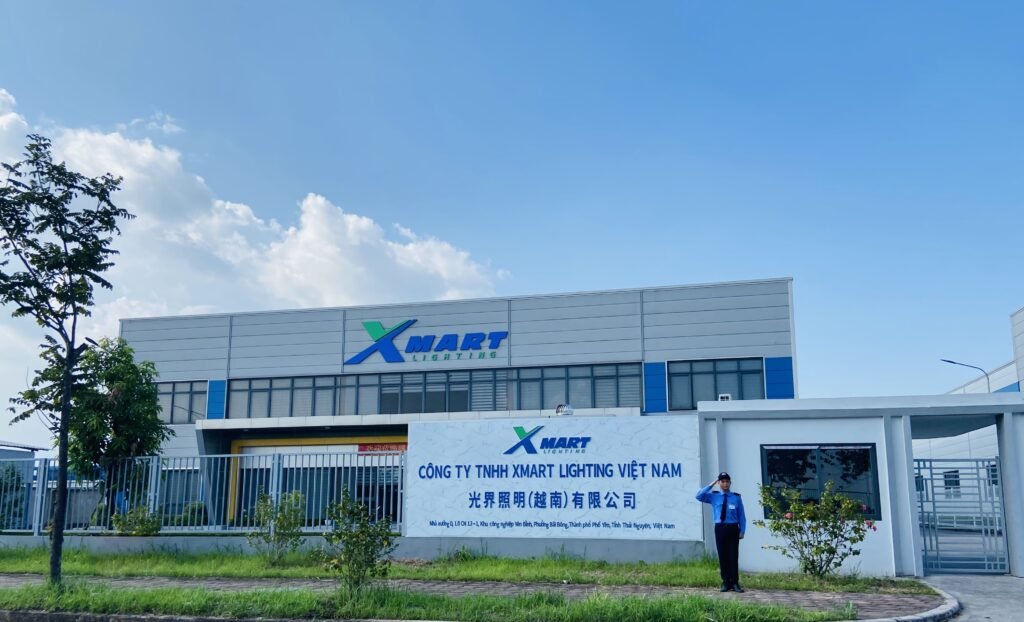
For companies comparing China and Vietnam supply routes, Xmart’s guide to the top commercial lighting manufacturers in Vietnam provides additional factory-screening context.
A project-specific specification can also be submitted through the Xmart quick-quote page.
Frequently Asked Questions
Are Westgate LED flat panels made in the USA?
No public evidence reviewed establishes U.S. manufacture for Westgate’s LED flat-panel range. Westgate is based in California, but several panel models are publicly listed as products of China.
Are all Westgate panels made in China?
That cannot be confirmed. China origin is documented for several LP and LPNP models, while the company also has a broader multi-country import network. Current LPNG, LPCR and revised LPNP models should be checked individually.
What is the difference between Westgate LP and LPNG panels?
Earlier LP models use a PMMA light-guide panel associated with an edge-lit design. LPNG is Westgate’s explicitly identified backlit panel series. The construction and product generation differ.
Is LPNP the same as LPNG?
No. Westgate markets them as separate panel families with different catalog numbers and specifications. They should not be combined in certification, replacement or country-of-origin reviews.
Are Westgate LED panels DLC listed?
Many Westgate commercial panels are promoted as DLC or DLC Premium listed. Qualification must be confirmed using the exact model number and current DLC record. A listing for one series does not cover every Westgate panel.
Do Westgate panels from Vietnam avoid Section 301 tariffs?
A legally Vietnam-origin panel would generally be evaluated differently from a China-origin panel for China Section 301 purposes. However, a Vietnam shipping route or supplier name does not by itself establish Vietnam origin, and other duties may apply.
Final Assessment
Westgate is an American lighting brand with a substantial U.S. catalog and distribution operation. That should not be confused with an across-the-board “Made in USA” claim.
The strongest public evidence links several older LP models and at least one LPNP model to China. Company-level import data shows that Westgate is exploring or using other Asian supply routes, but it does not prove that current LPNG or LPCR panels have moved out of China.
For procurement teams, the safest conclusion is simple:
Treat Westgate country of origin as a SKU-and-lot attribute—not a permanent brand attribute.
That approach produces more accurate tariff calculations, cleaner project submittals and fewer surprises when a familiar panel number is revised.