“U.S.-assembled” is one of the most commonly misread descriptions in commercial lighting.
Spring Lighting Group says its SLG products are assembled and shipped from its Houston-area facility. That confirms a real U.S. operation—but it does not prove that every LED panel is manufactured in the United States.
The Short Answer
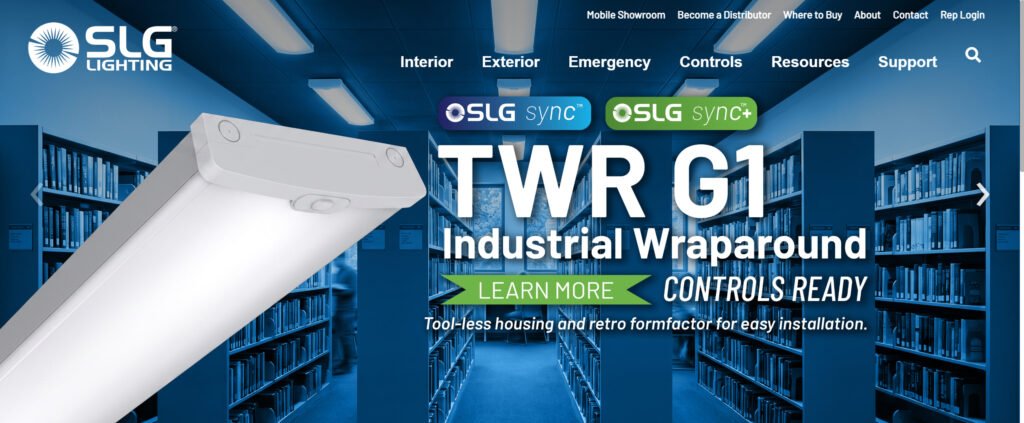
Spring Lighting Group is the U.S. arm of a global OEM lighting business. It operates a major warehouse and assembly facility in Stafford, Texas, while its supply chain includes manufacturers in China, Vietnam, Malaysia and other Asian locations.
SLG’s current LED panel specifications do not publicly identify a country of origin. They also do not advertise the panels as Made in USA, BAA compliant, BABA compliant or TAA compliant.
Therefore, buyers should not classify SLG flat panels as U.S.-made without model-specific documentation.
Three Facts Can Be True at the Same Time
SLG’s supply chain is easier to understand when these three facts are separated:
- Spring Lighting Group is a U.S.-based commercial lighting company.
- SLG performs assembly, stocking, configuration and distribution in Texas.
- Fixtures and components can still originate from overseas factories.
SLG describes itself as an original vertically integrated OEM that produced luminaires for other lighting brands before launching the SLG brand.
Its official company profile describes multiple locations, including operations in the United States and China, and states that the group manufactures housings, lenses, drivers, cases and LED modules.
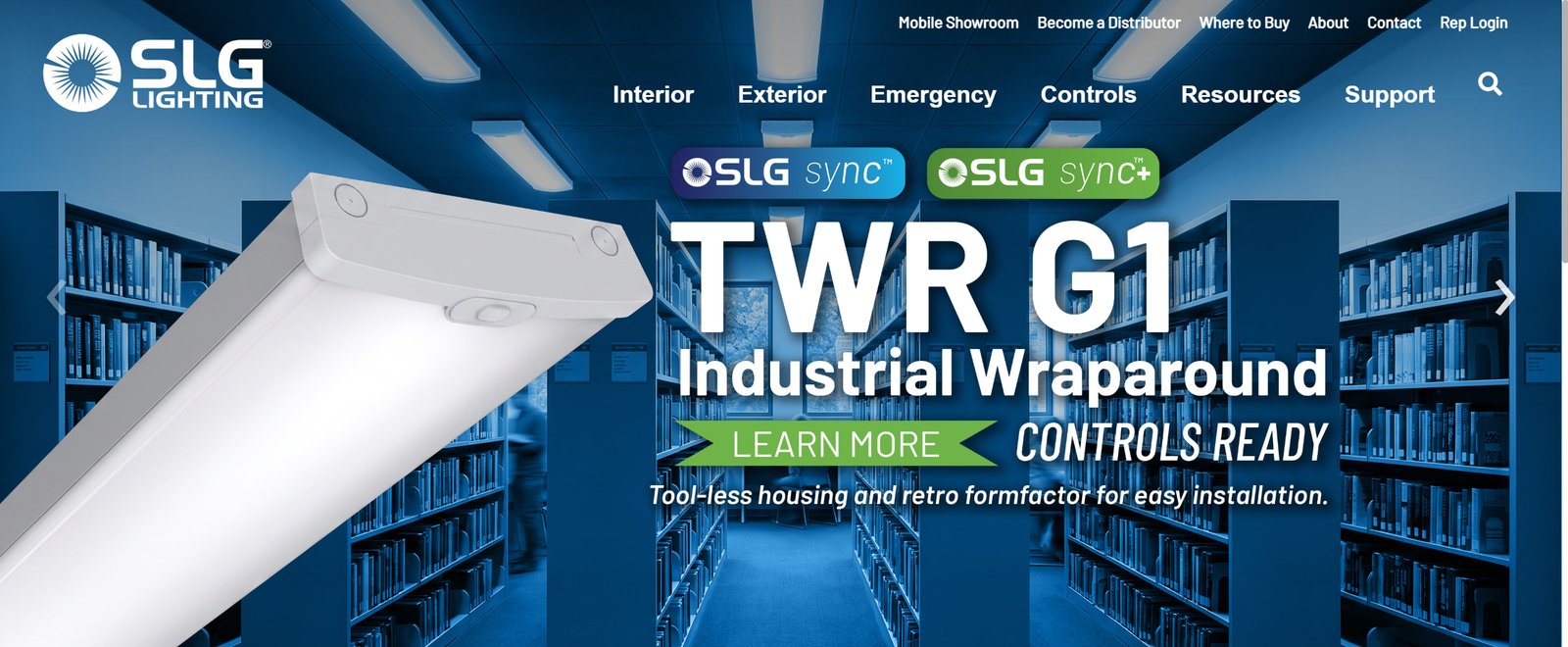
The current SLG company page says its products are assembled and shipped from its Houston-area facility.
These statements are not necessarily contradictory. They describe different stages of the same supply chain.
Which SLG LED Flat Panels Are Currently Available?
SLG offers several panel families rather than a single standard flat panel.
TPHE G1 High-Efficacy Panel
The current TPHE G1 specification includes:
- 1×4, 2×2 and 2×4 sizes
- Four selectable power levels
- Five selectable CCT settings from 2700K to 5000K
- Up to 150 lumens per watt
- 0–10V dimming
- Output options up to 10,000 lumens
- UL listing and IC rating
- DLC Premium qualification pending at the time of the specification
The document provides detailed performance and ordering information, but it does not state where the panel is manufactured.
TPSC G2 Controls-Ready Panel
The TPSC G2 panel is positioned as a contractor-oriented, controls-ready product.
Its features include:
- 1×4, 2×2 and 2×4 configurations
- Selectable wattage and lumen output
- 3500K, 4000K and 5000K selectable CCT
- 120–277V input
- 0–10V dimming
- Preinstalled sensor receptacle
- ETL and DLC-listed configurations
- Five-year warranty
Again, the specification does not contain a Made in USA, TAA, BAA or BABA statement.
TPL G2 Luxe Backlit Panel
The TPL G2 backlit panel adds architectural lens options and control compatibility. It is intended for projects where appearance and controls integration matter more than obtaining the lowest basic panel price.
Its public documentation also does not identify a specific manufacturing country.
Does “Assembled in Texas” Mean “Made in USA”?
Not automatically.
U.S. assembly might involve:
- Installing drivers
- Connecting LED modules
- Adding sensors or emergency batteries
- Configuring wattage and CCT options
- Testing completed fixtures
- Applying project-specific labels
- Packaging and shipping
These operations can provide real value. They may improve lead times, customization and quality control.
But they do not automatically establish U.S. country of origin.
The legal result depends on where the principal components were manufactured and whether the U.S. operations create a substantial transformation under the rule being applied.
A warehouse with an assembly floor is not, by itself, proof that a product qualifies as Made in USA or as a domestic manufactured product under a government procurement program.
What Do SLG’s Import Records Show?
Public shipment databases show a substantial international sourcing history connected to Spring Lighting Group.
The Spring Lighting Group import profile lists relationships with suppliers including:
- Mester LED Limited
- Jiangsu Ever-Tie Lighting
- Evertie Lighting Vietnam
- Evertie Lighting Malaysia
- TW Lights
- Hangzhou Lijiacheng Electric
- Sea Star Smart Tech
The associated manufacturing locations cover China, Vietnam, Malaysia and other Asian supply chains.
Some records are broadly described as LED lights or lighting fixtures. Public summaries usually do not reveal enough information to connect a container to a specific TPHE, TPSC or TPL catalog number.
The records support one conclusion: SLG uses an international manufacturing network.
They do not support claiming that every SLG panel comes from one particular country.
Why SLG’s Business Model Makes Sense
SLG is not simply a reseller receiving generic products from an unknown supplier.
Its model appears closer to a vertically connected lighting group with:
- Overseas component and fixture manufacturing
- U.S. product development
- Texas-based inventory
- Local assembly and configuration
- Domestic sales and technical support
- Private-label OEM experience
This structure can shorten delivery time while maintaining access to the cost advantages of Asian production.
For distributors, that may be more useful than a purely domestic or purely imported supply model. The risk arises only when “U.S.-assembled” is incorrectly treated as a verified country-of-origin statement.
Are SLG Panels Exempt From China Tariffs?
The Houston assembly statement cannot answer that question.
Section 301 exposure is determined by the product’s legal country of origin and HTS classification—not by the location of the U.S. warehouse.
If a panel is legally Chinese-origin, additional duties may apply even when final configuration or testing takes place in Texas.
If production moved to Vietnam or Malaysia, the product is not automatically exempt. Importers should verify that the declared country performed sufficient manufacturing and that the transaction is not simple transshipment.
The correct landed-cost review should include:
- Declared country of origin
- Manufacturing flowchart
- Factory name and address
- HTS classification
- Driver and LED module origin
- Substantial-transformation analysis
- Current duty and trade-remedy status
The official USTR Section 301 search tool should be checked using the final HTS subheading.
What Buyers Should Request From SLG
Before approving an SLG panel for a project or distributor program, request:
- Complete catalog number
- Current certificate of origin
- Factory name and manufacturing address
- Photo of the product and carton origin labels
- UL or ETL file number
- Exact DLC QPL model ID
- Driver brand and model
- Dimming range and dim-to-off behavior
- Emergency-driver compatibility
- Written confirmation of any U.S. assembly operations
- BAA, BABA or TAA declaration if required
- Advance notice of factory or component substitutions
Do not accept a general company statement when the project requires model-level compliance.
SLG Panel Supply vs Direct OEM Manufacturing
SLG’s advantage is its combination of local inventory, American project support and global production capacity.
Direct OEM sourcing gives the buyer more control over:
- Manufacturing country
- Driver selection
- CCT tolerances
- Private-label packaging
- Certification ownership
- Product exclusivity
- MOQ and production scheduling
- Factory-change approval
When evaluating a top LED flat panel manufacturer, buyers should compare the underlying factory, quality controls and certification ownership—not only the brand’s office location.
Importers considering alternative Asian production can also review this list of commercial lighting manufacturers in Vietnam. Vietnam can provide supply-chain diversification, but country of origin and tariff treatment still require transaction-specific verification.
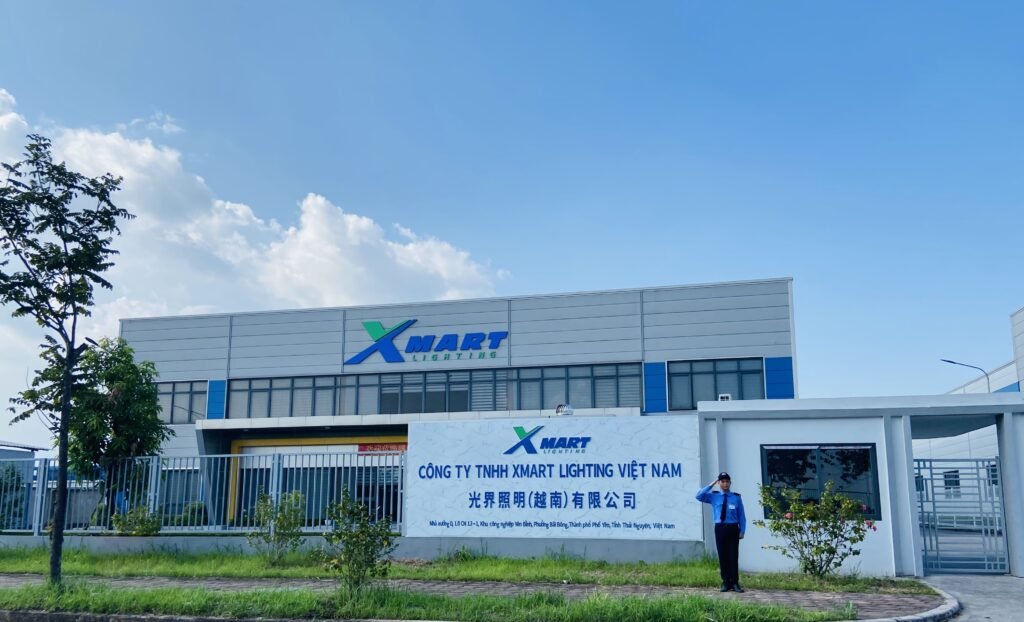
For a private-label program, Xmart can provide relevant LED panel certificates and compliance documentation for evaluation before production.
Final Verdict
Spring Lighting Group has genuine U.S. operations and a long OEM manufacturing background. Its Texas facility provides inventory, assembly, configuration and distribution capabilities.
However, the available evidence does not establish that SLG’s TPHE, TPSC or TPL LED panels are manufactured entirely in the United States.
The most accurate description is:
SLG LED panels are supplied through a global manufacturing network and supported, assembled or configured through the company’s Texas operation. The exact country of origin must be verified by model and shipment.
For B2B buyers, “assembled in Houston” is useful supply-chain information—but it is not a substitute for a certificate of origin.
To compare an SLG panel with a factory-direct private-label alternative, request a model-level quotation from Xmart.
Frequently Asked Questions
Is Spring Lighting Group a manufacturer or distributor?
SLG describes itself as a vertically integrated OEM manufacturer with overseas and U.S. operations. It also performs domestic stocking, assembly, sales and distribution.
Are SLG LED panels made in Texas?
SLG states that its products are assembled and shipped from its Texas facility. Its public panel specifications do not state that the complete fixtures are manufactured in Texas.
Where are SLG flat panels manufactured?
The exact country is not publicly identified for current TPHE, TPSC and TPL models. Trade data shows relationships with manufacturers across China, Vietnam, Malaysia and other Asian locations.
Are SLG panels BABA compliant?
The reviewed panel documents do not publish a BABA claim. Buyers should request a model-specific BABA certificate if the project uses federal financial assistance.
Does U.S. assembly remove Section 301 tariffs?
Not automatically. Tariffs depend on legal country of origin, HTS classification and applicable trade measures.