
A Cambodia-made LED panel can qualify for certain U.S. federal purchases.
It can also face U.S. import tariffs.
Both statements can be true because TAA compliance, Made-in-USA status and tariff treatment are three different tests.
That distinction is the most important fact B2B buyers should understand about RAB EZPAN LED panels.
Direct Answer
RAB’s official product pages identify multiple EZPAN models as products of Cambodia. RAB also states that these products qualify as designated-country end products under the Trade Agreements Act.
This means an applicable EZPAN may be acceptable for certain TAA-covered federal procurements. It does not mean the product is manufactured in the United States, qualifies automatically under BAA or BABA, or enters the United States without duty.
Model-Level Evidence
| RAB model | Product type | Public manufacturing statement |
|---|---|---|
EZPANFA2X2/D10 | 2×2 field-adjustable panel | Product of Cambodia; TAA compliant |
EZPAN2X4-40/D10 | 2×4 panel | Product of Cambodia; TAA compliant |
EZPANHE1X4-12/D10/LC | 1×4 high-efficacy Lightcloud panel | Product of Cambodia; TAA compliant |
EZPANHE2X4-30Y/D10/LC | 2×4 high-efficacy Lightcloud panel | Product of Cambodia; TAA compliant |
EZPANHE2X2-23YN/D10/LCB | 2×2 Lightcloud Blue panel | Product of Cambodia; TAA compliant |
For example, the official EZPANFA2X2/D10 product page states that the panel is a product of Cambodia and a designated-country end product under TAA.
The same language appears on RAB’s 2×4 EZPAN and several Lightcloud-enabled models.
The available evidence therefore points to Cambodia as an established manufacturing origin for the reviewed EZPAN family.
One Panel, Three Different Origin Questions
1. Where was it manufactured?
For the reviewed models, RAB’s answer is Cambodia.
This is the country-of-origin statement relevant to product marking and customs analysis.
2. Can it qualify under TAA?
RAB states that these Cambodia-origin models qualify as designated-country end products under the Trade Agreements Act.
Cambodia origin can therefore be commercially useful where TAA applies.
3. Is it Made in USA?
No. A Cambodia-origin product should not be represented as Made in USA.
TAA allows eligible products from designated countries to receive acceptable treatment in certain covered procurements. It does not convert their origin to the United States.
TAA Does Not Automatically Mean BAA or BABA
Buyers frequently use “government compliant” as if it were one universal status. It is not.
An EZPAN that is acceptable under TAA may still require a different analysis when the project specifies:
- Buy American Act
- Build America, Buy America
- FAR or DFARS clauses
- Federal Transit Administration rules
- Federal Highway Administration rules
- State or municipal domestic-content requirements
BABA, in particular, does not generally treat designated-country products the same way TAA may under qualifying federal procurements.
Before approving an EZPAN submittal, determine which regulation is actually written into the project specification.
“TAA compliant” is useful only when TAA is the relevant rule.
Cambodia Origin Is Not Automatically Tariff-Free
TAA compliance does not provide a general customs-duty exemption.
In July 2026, USTR imposed new Section 301 duties on products from 60 trading partners in connection with forced-labor import policies. The final USTR action identifies Cambodia among the economies subject to a 10% rate, with certain product exemptions.
The new duties became applicable on July 24, 2026.
For a Cambodia-made EZPAN, the importer should therefore check:
- Exact HTSUS classification
- Normal duty rate
- July 2026 Section 301 treatment
- Product-specific exemptions
- Other applicable Chapter 99 provisions
- Entry date
- Merchandise Processing Fee
- Current customs value
The total should be calculated by the importer or customs broker. A TAA certificate is not a tariff exemption certificate.
Why RAB’s Disclosure Is Useful
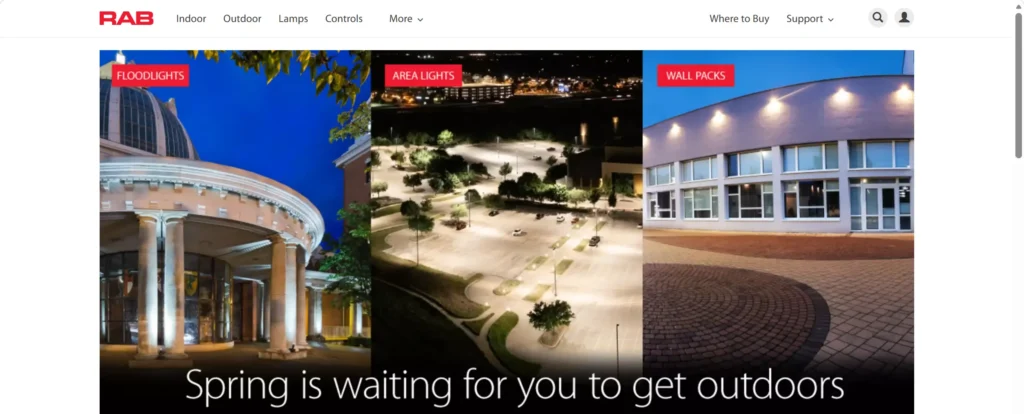
RAB does something many lighting brands do not: its product pages provide a direct country statement and connect that statement to TAA status.
That reduces ambiguity, but it does not remove the need for shipment-level verification.
Product pages can change. Product families can move between factories. Older EZPAN models may be discontinued while retaining indexed specification pages.
For each purchase order, request:
- Current country-of-origin confirmation.
- A photo of the product and carton labels.
- A TAA letter tied to the exact SKU.
- Confirmation that the origin will not change without notice.
- Current DLC status.
- Current safety listing information.
The website is evidence. The purchase-order documentation is the control.
DLC Status Must Also Be Checked by SKU
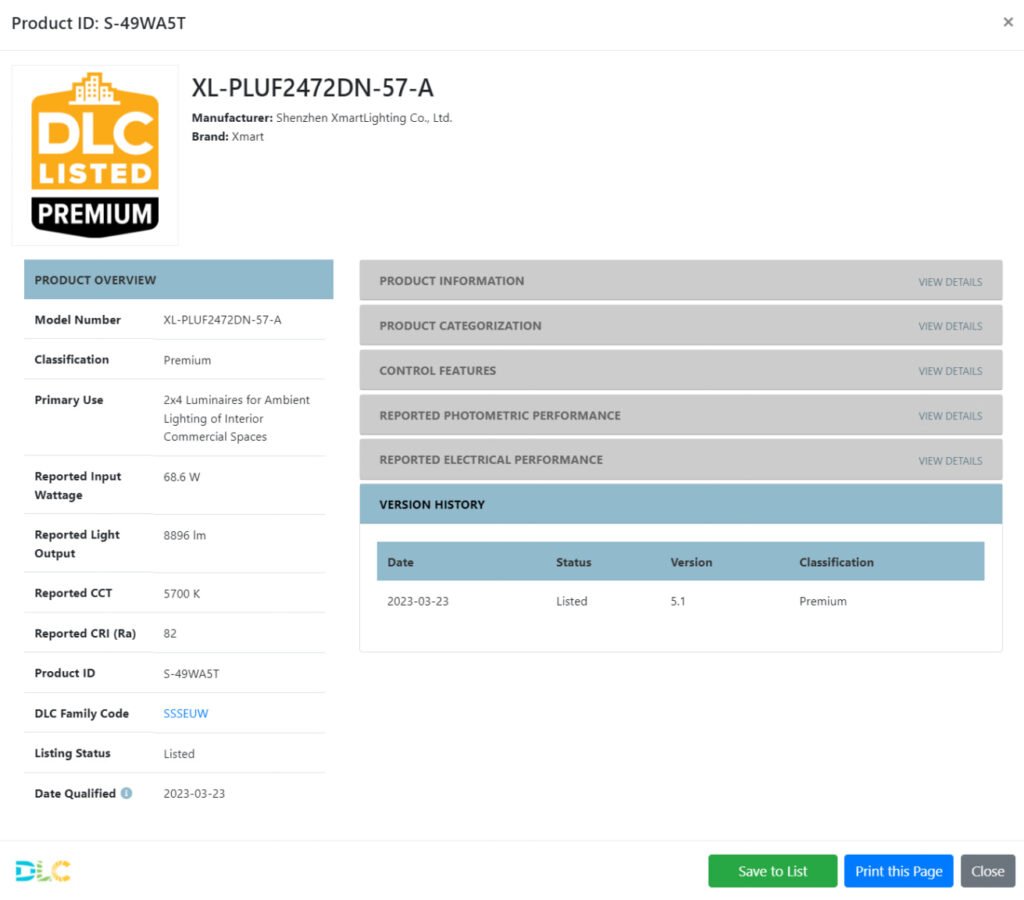
RAB notes that individual SKUs within an EZPAN family may carry DLC Standard or DLC Premium qualification.
A family-level DLC statement should not be applied automatically to every size, wattage, CCT or controls configuration.
This is especially important when the quotation includes:
- Emergency battery
- Lightcloud controls
- Field-adjustable wattage
- A different driver
- A discontinued model
- A replacement-generation product
The buyer should search the exact model in the current DLC Qualified Products List before calculating a utility rebate.
Country of origin, TAA status and DLC qualification should be three separate lines on the approval sheet.
What Private-Label Brands Can Learn From EZPAN
RAB’s model shows that origin can become part of the product strategy rather than a footnote.
A professional private-label panel program should define:
- Approved manufacturing country
- Alternate factory policy
- TAA or domestic-preference objective
- Certification ownership
- DLC model mapping
- Driver and LED change control
- Packaging origin marking
- Tariff review responsibility
Xmart’s commercial backlit LED panel program offers Vietnam production, 1×4, 2×2 and 2×4 formats, selectable wattage/CCT, 0–10V dimming and channel-specific packaging.
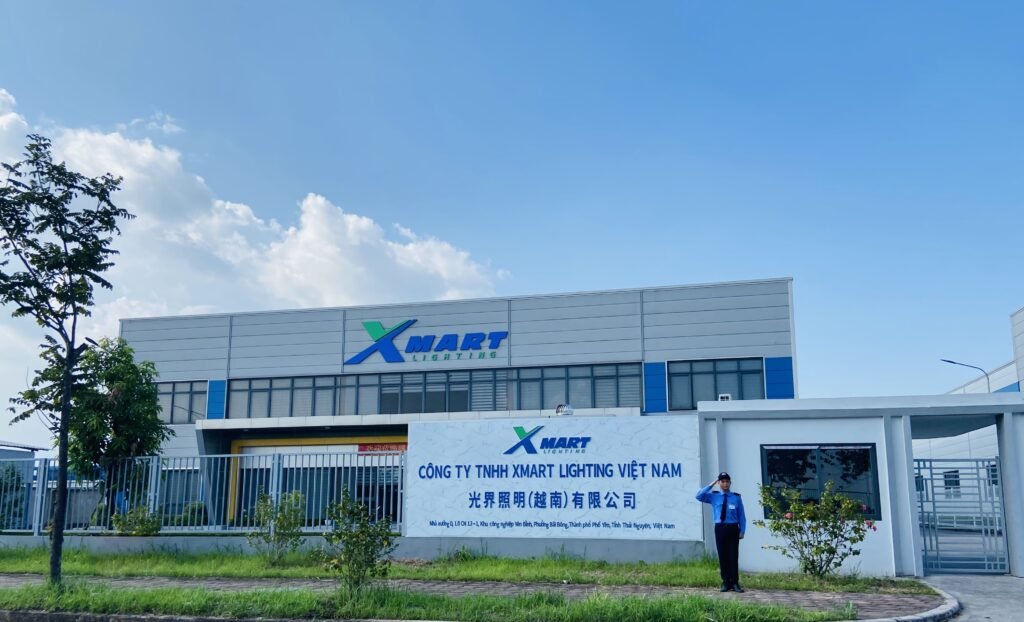
Vietnam production can reduce exposure to certain China-specific duties, but it should be evaluated using the same standard applied to RAB: exact origin, exact HTS classification and current tariff treatment. Buyers can review available certification documentation before approving a private-label configuration.
Six Questions to Ask Before Approving an EZPAN
- Is this exact SKU currently manufactured in Cambodia?
- Does the quoted product include a current TAA declaration?
- Which government procurement rule applies to the project?
- Is the exact SKU currently DLC listed?
- What HTS code and tariff assumptions are being used?
- Will RAB notify the buyer if the factory or country changes?
If the supplier cannot answer all six, the approval is incomplete.
Frequently Asked Questions
Are RAB EZPAN panels made in the USA?
The reviewed RAB product pages identify Cambodia as the country of origin. TAA compliance should not be interpreted as Made-in-USA status.
Are all RAB products made in Cambodia?
This audit covers selected EZPAN panel models only. It should not be applied to RAB’s entire lighting portfolio.
Are Cambodia-made EZPAN panels TAA compliant?
RAB states that the reviewed models are designated-country end products that comply with TAA. Buyers should still obtain a current letter for the exact SKU.
Does TAA compliance eliminate tariffs?
No. TAA is a government procurement framework, not a general customs-duty exemption.
Does a DLC-listed EZPAN automatically qualify for a rebate?
No. Rebate qualification depends on the exact model, current DLC status, utility program, installation and application.
Final Takeaway
The reviewed RAB EZPAN panels are made in Cambodia—not the United States—and RAB presents them as TAA-compliant designated-country products.
That can be valuable for the right federal procurement. But it does not establish BAA/BABA compliance or eliminate current import duties.
For B2B buyers, the correct approval formula is:
Exact SKU + confirmed origin + applicable procurement rule + current tariff treatment.
Brands or distributors building an origin-controlled private-label panel range can request an OEM review from Xmart.