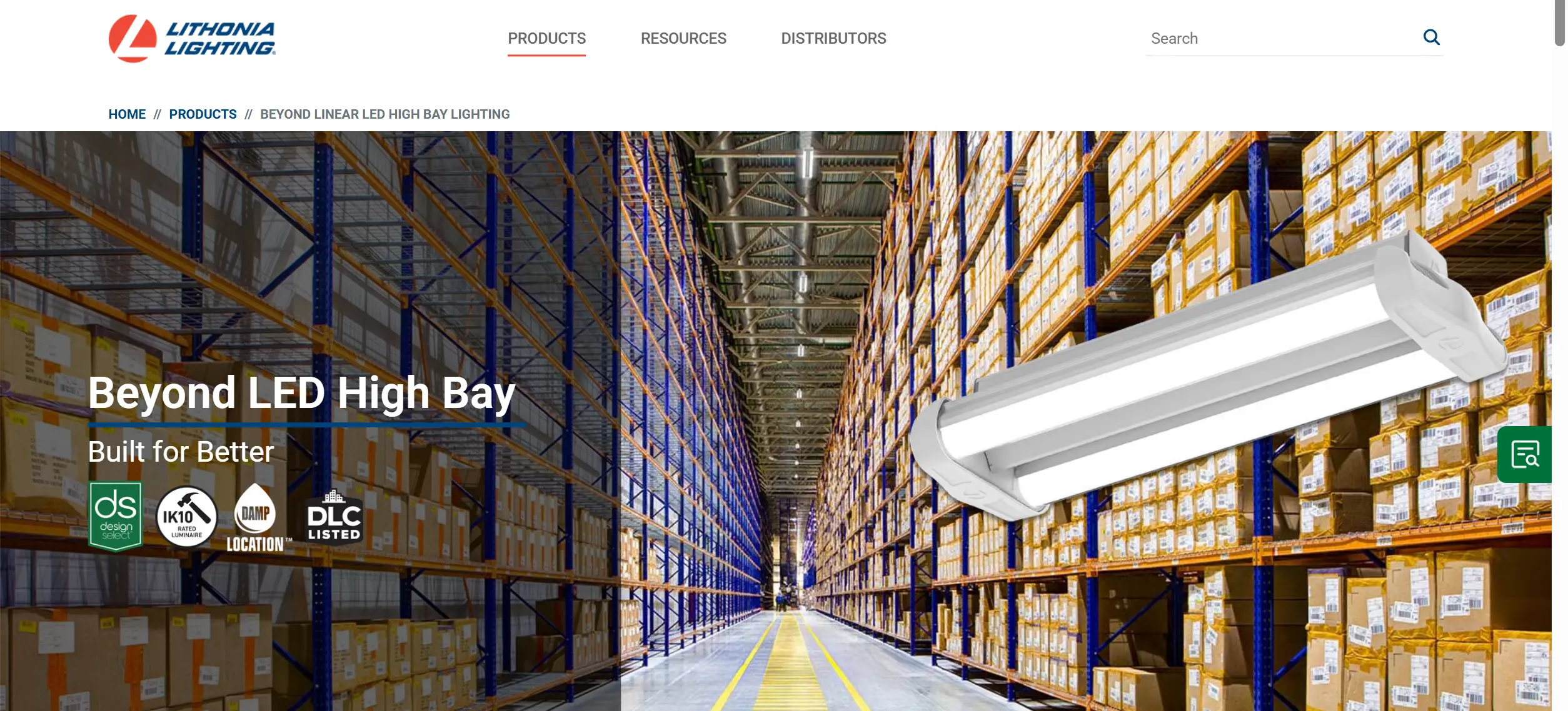
The Lithonia logo on the carton may be the least useful piece of origin information on the carton.
That sounds counterintuitive. Lithonia Lighting is a well-established U.S. lighting brand under Acuity Brands, headquartered in Georgia. But a U.S. brand address does not prove that every CPX, CPANL or other LED panel carrying that name was manufactured in the United States.
For distributors, contractors, importers and project buyers, the correct question is not simply:
“Where are Lithonia LED panels made?”
It is: “Where was this exact catalog number manufactured, under this specific configuration and purchase order?”
That distinction now affects tariffs, government procurement eligibility, project documentation, lead time and replacement consistency.
Quick Answer
Some historical Lithonia CPANL fixtures were explicitly documented as manufactured in China. Current Lithonia CPX panels are available with Buy America(n) options, and Acuity identifies CPX as available for BAA/BABA-compliant procurement.
However, this does not prove that every standard CPX or current CPANL SKU is manufactured in the United States. Country of origin must be verified at the model and purchase-order level using the product label, carton marking and a current manufacturer declaration.
Lithonia LED Panel Origin: What the Public Evidence Shows
| Product family | Public origin evidence | What B2B buyers can conclude |
|---|---|---|
| Historical CPANL units associated with the 2020 CFMK recall | Official recall records state “Manufactured in China” | China origin is confirmed for the affected historical units only |
| Current CPANL configurations | Current product page lists specifications but does not publicly state country of origin | Origin cannot be confirmed from the product page alone |
| Standard CPX configurations | Current product page shows a Buy America(n) option but does not assign one origin to every CPX SKU | Do not assume that every standard CPX is U.S.-made |
| CPX ordered and certified under the applicable BAA/BABA program | Acuity lists CPX among its BAA/BABA lighting solutions | The correctly configured product may qualify, but the exact catalog number and compliance letter must be verified |
| Discontinued EPANL stocking SKUs | Acuity has announced discontinuation of certain non-configurable EPANL SKUs | Old EPANL documents should not be used to establish the origin of current products |
This is not evidence that Lithonia is hiding its manufacturing base. It demonstrates how modern commercial lighting supply chains actually work: product families, configurations and generations may not share one universal country of origin.
Historical CPANL Evidence: China Origin Was Publicly Documented
The strongest public country-of-origin evidence relates to certain historical CPANL fixtures used with CFMK surface-mount brackets.
A 2020 U.S. Consumer Product Safety Commission recall notice identified the affected CPANL LED fixture system and stated that it was manufactured in China.
A related Health Canada recall document also identified China as the place of origin and listed Xiamen Guangpu Electronics and Lextar Electronics in its manufacturer information.
This is valuable evidence, but it has a strict limit:
A country-of-origin record for a recalled historical product does not establish the origin of every CPANL manufactured before or after that period.
The affected products were sold from 2018 to 2020. The current CPANL product family has since evolved, including newer switchable-lumen and switchable-CCT configurations.
Therefore, the correct finding is:
- Some historical CPANL units are officially confirmed as China-made.
- The origin of a current CPANL SKU must be verified separately.
- The historical manufacturer names should not automatically be assigned to present production.
That last point matters. Supply chains can change without changing the family name printed on the specification sheet.
What About Current CPANL Panels?
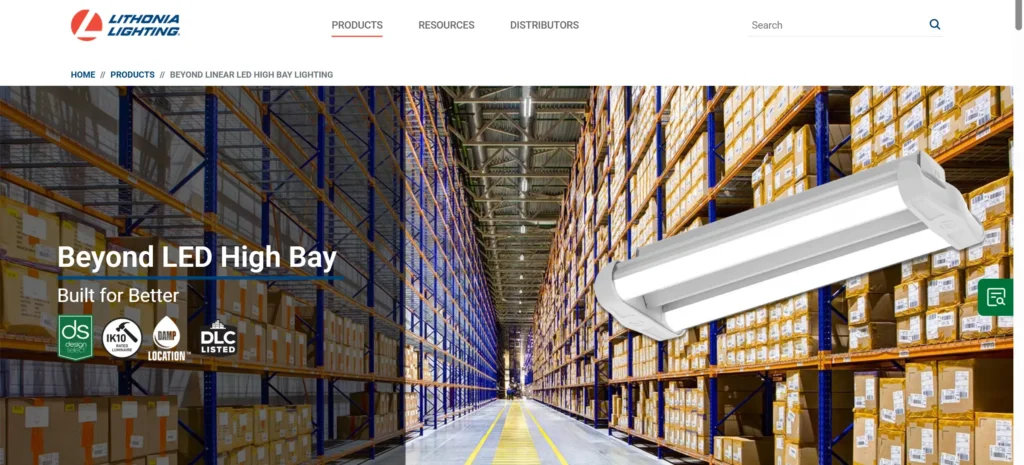
The current Lithonia CPANL product page lists 1×4, 2×2 and 2×4 configurations, switchable lumen packages, switchable CCT and 0–10V dimming.
What it does not provide is a universal country-of-origin declaration covering every current CPANL catalog number.
The absence of a public origin statement should not be interpreted in either direction. It does not prove U.S. manufacture, but it also does not prove that current units are made by the same Chinese suppliers identified in the earlier recall.
For a current CPANL quotation, the buyer should request:
- The complete catalog number.
- A photo of the current fixture rating label.
- A photo of the master-carton country marking.
- A signed country-of-origin declaration tied to the quoted SKU.
- Confirmation that the declared origin will remain unchanged for the full purchase order.
- A notification requirement for future factory or component-source changes.
“CPANL” alone is not a sufficiently precise purchasing description.
CPX: Buy America(n) Available Does Not Mean Every CPX Is U.S.-Made
The current Lithonia CPX product page displays a Buy America(n) option and offers multiple configurations, including 1×4, 2×2 and 2×4 panels, selectable outputs, different controls and configurable voltage options.
Acuity also includes CPX in its Lithonia BAA/BABA lighting guide.
This is commercially important, but the wording matters:
“Buy America(n) option available” is not the same statement as “every CPX panel is made in the USA.”
Acuity explains that where a normally foreign-manufactured product requires a BAA option, the applicable ordering designation can cause it to be manufactured in the United States for qualifying procurement requirements. Its guidance also states that products carrying the relevant BAA designation are manufactured in the United States and evaluated under the applicable domestic-content rules.
A B2B buyer should therefore verify:
- Whether the quoted CPX includes the required BAA designation.
- Whether the project is governed by BAA, BABA, a DOT rule, FAR, DFARS or another requirement.
- Whether a trade-agreement waiver applies.
- Whether Acuity will provide a project-specific compliance letter.
- Whether the certification applies to the exact catalog number rather than the general product family.
Buying a standard stocked CPX and assuming it has the same origin and compliance status as a specially designated CPX can create a serious submittal problem.
BAA, BABA, TAA and Customs Origin Are Different Tests
One of the most expensive B2B mistakes is treating these four concepts as interchangeable.
Customs Country of Origin
Customs origin determines marking, duty treatment and the application of country-specific tariffs. It generally depends on where the product was made or substantially transformed.
Buy American Act
The Buy American Act applies to certain federal procurement. It uses domestic end-product and component-content rules, subject to thresholds, waivers and applicable trade agreements.
Build America, Buy America
BABA applies to federally funded infrastructure projects and has its own rules for manufactured products, iron, steel and construction materials.
Trade Agreements Act
TAA may allow products from designated countries to receive procurement treatment comparable to domestic products when the applicable procurement and value thresholds are met.
A product may qualify for one procurement pathway without carrying the same conclusion under customs marking rules.
For example, procurement eligibility does not automatically erase duties on an imported standard SKU. Likewise, a product carrying a U.S. brand name does not automatically qualify under BAA or BABA.
The applicable regulation must be identified before the product is ordered—not after the submittal is rejected.
Why Country of Origin Matters More Under Current U.S. Tariff Policy
Country of origin is no longer a secondary line on the commercial invoice. It can materially change landed cost.
Many base-metal commercial LED ceiling fixtures may be classified within HTSUS 9405.11.60, which currently carries a general duty rate. The final classification, however, depends on the fixture’s construction and intended use and should be confirmed by a licensed customs broker.
For China-origin LED panels, buyers may need to evaluate:
- The normal HTSUS duty.
- Applicable China Section 301 duties.
- Current Chapter 99 tariff measures.
- Product-specific exclusions.
- Entry date and in-transit provisions.
- Merchandise Processing Fee and other import costs.
The USTR Section 301 lookup tool requires buyers to check the exact eight-digit HTS subheading rather than relying on a general description such as “LED light.”
As of this article’s August 2026 review, the United States is also maintaining a 10% reciprocal tariff on many Chinese goods until November 10, 2026 under the current U.S.–China tariff arrangement.
In addition, USTR’s July 2026 forced-labor Section 301 action introduced further duties on products from numerous trading partners. The final USTR notice states that additional duties became applicable on July 24, 2026, subject to country- and product-specific exemptions.
Because multiple measures may interact, a responsible supplier should not quote one permanent “tariff rate” without identifying:
- HTS classification
- country of origin
- entry date
- applicable Chapter 99 provisions
- exclusions
- importer-of-record assumptions
Tariff calculations should be updated at the time of entry.
Another Counterintuitive Point: Vietnam Origin Is Not Automatically Tariff-Free
Moving production from China to Vietnam can reduce exposure to China-specific Section 301 measures—but it does not automatically make an LED panel duty-free.
The July 2026 USTR action identifies Vietnam among the investigated economies and imposes a 12.5% duty on Vietnam-origin products unless a product-specific exemption applies.
Therefore, “Made in Vietnam” should be treated as an origin fact, not a blanket tariff promise.
For legitimate Vietnam origin, buyers should verify:
- Where the metal housing is formed.
- Where the LED boards and driver are assembled.
- Where final fixture assembly takes place.
- Where programming, testing and labeling occur.
- Whether the Vietnam processing constitutes substantial transformation.
- Whether Chinese components remain traceable in the bill of materials.
- Whether the Certificate of Origin matches the actual manufacturing process.
- Which current U.S. duties apply to the entered product.
This does not eliminate the strategic value of Vietnam manufacturing. It means the value must be calculated accurately rather than marketed as automatically “tariff-free.”
What Distributors and Private-Label Brands Should Learn From Lithonia
Lithonia’s portfolio illustrates a broader supply-chain lesson.
A professional lighting brand may operate multiple product strategies at the same time:
- Standard stocked products optimized for price and availability.
- Configurable products optimized for project specifications.
- Domestically compliant options for government procurement.
- Different factories for different generations or configurations.
- Multiple component suppliers inside one product family.
This flexibility is useful, but it makes model-level documentation essential.
When qualifying a top LED flat panel manufacturer, buyers should evaluate documentation control as seriously as efficacy, wattage and unit price.
A supplier that cannot lock the factory, origin, driver, LED bin and certification identity for the duration of an order exposes the buyer to:
- Unexpected tariff changes
- Customs marking problems
- Certification inconsistencies
- Mixed CCT between production batches
- Driver compatibility changes
- Warranty disputes
- Failed project submittals
- Unplanned SKU proliferation
How to Compare a U.S. Brand SKU With a Private-Label Panel Program
A branded Lithonia product and an OEM panel program solve different procurement problems.
A U.S. brand may offer established specifications, distribution availability, controls integration and strong project recognition.
A private-label program may provide more control over:
- Wattage and CCT combinations
- Driver selection
- Packaging
- Branding
- Batch color consistency
- Factory location
- Documentation
- Replacement continuity
- Channel exclusivity
For distributors and commercial lighting brands developing an alternative panel platform, Xmart offers a commercial backlit LED panel manufacturing program covering 1×4, 2×2 and 2×4 configurations, 120–277V input, 0–10V dimming, selectable wattage/CCT options and channel-specific packaging.
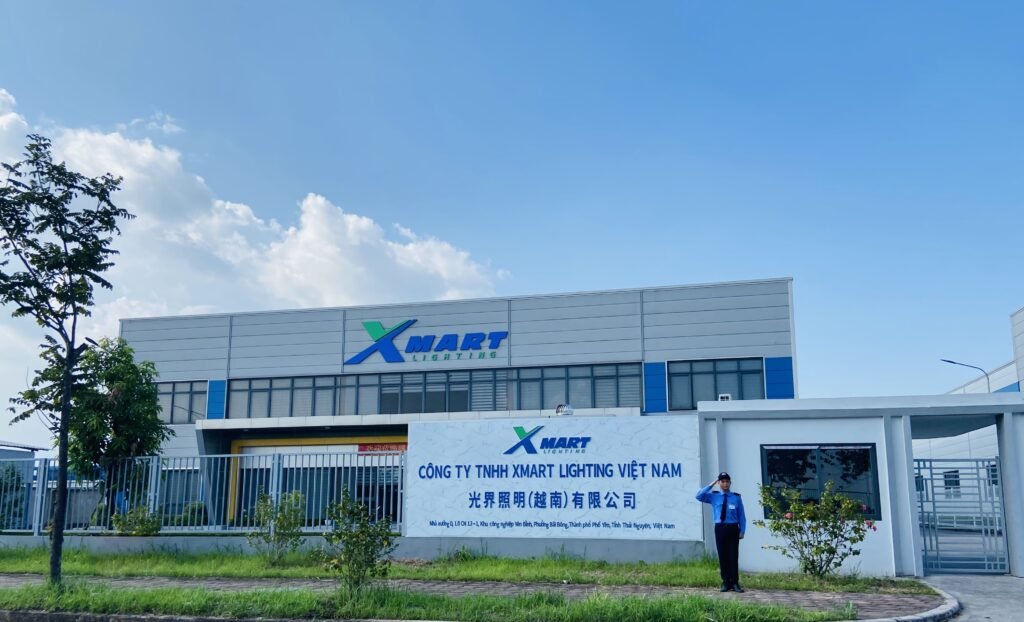
The correct commercial comparison is not simply “Lithonia versus factory price.” It is:
Which supply model gives the buyer the required origin, certification, specification control, landed cost and long-term replacement continuity?
Exact safety and performance documentation should always be checked by model. Buyers can review Xmart’s available certification documentation before requesting a sample or quotation.
Xmart is not affiliated with Lithonia Lighting or Acuity Brands and does not claim to manufacture Lithonia products.
A Practical Origin-Verification Request for Your RFQ
B2B buyers can add the following wording to an RFQ:
Please confirm the current country of origin for the exact catalog number quoted. Provide a photo of the fixture label and master-carton marking, the applicable safety certification file, DLC model ID where required, Certificate of Origin support, and the HTS classification used for recent U.S. entries. Identify any BAA, BABA or TAA claim separately and provide a project-specific compliance letter. Notify us before changing the manufacturing country, factory, driver, LED package or certification identity.
This one paragraph can prevent much larger problems after production.
B2B Country-of-Origin Checklist
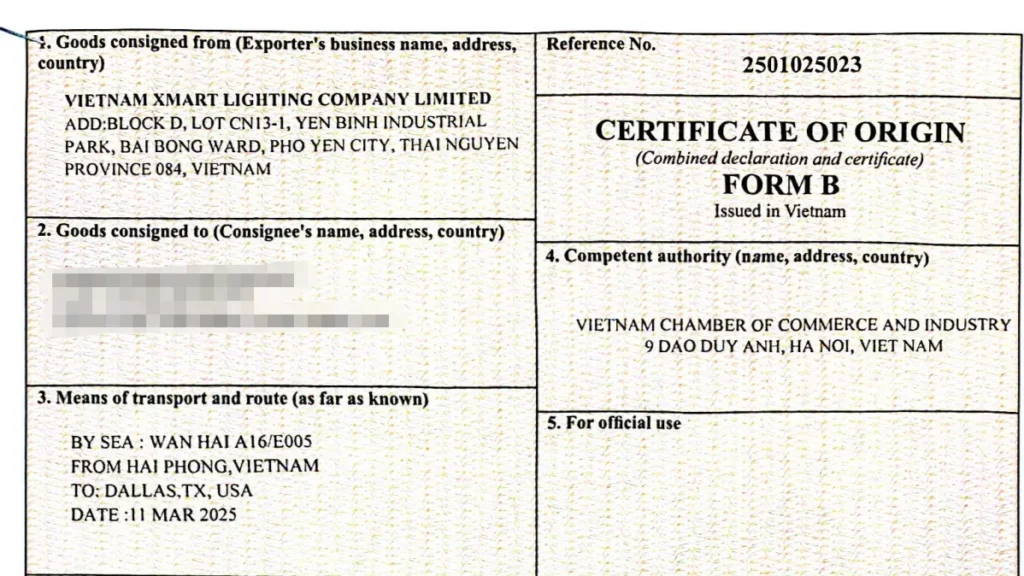
Before approving a Lithonia panel—or any private-label LED panel—verify all of the following:
- Complete catalog number and option string
- Physical country-of-origin marking
- Master-carton origin marking
- Current manufacturer declaration
- Safety certification applicant and model family
- DLC listing identity and version
- HTS classification
- Applicable Chapter 99 duties
- BAA/BABA/TAA documentation where required
- Factory and major-component change-control policy
- Lot and date-code traceability
- Replacement compatibility commitment
- Tariff-change clause in the purchase agreement
A distributor should not approve production using only a brand brochure and generic specification sheet.
Frequently Asked Questions
Are Lithonia LED flat panels made in the USA?
Some Lithonia panel configurations, including qualifying CPX options, are available for BAA/BABA-compliant procurement. This does not prove that every standard Lithonia panel SKU is manufactured in the United States. Verify the exact catalog number and compliance documentation.
Are Lithonia CPANL panels made in China?
Official recall records confirm that certain historical CPANL units associated with the 2020 CFMK recall were manufactured in China. Those records should not be used to assign China origin to every current CPANL configuration.
Does the Buy America(n) icon mean every CPX panel is U.S.-made?
No. It indicates that an applicable compliant option is available. Buyers should confirm the required catalog designation and obtain a project-specific compliance letter.
Does a BAA-compliant LED panel avoid import tariffs?
A genuinely U.S.-manufactured configuration may not be imported as a finished foreign product. However, BAA compliance is a procurement test, not a general tariff exemption. Customs origin and import duty must be analyzed separately.
Are Vietnam-made LED panels exempt from China Section 301 tariffs?
A legitimately Vietnam-origin product is generally not treated as China-origin solely because it contains Chinese components. However, substantial transformation and origin documentation must be valid. Vietnam-origin goods may also face other current U.S. duties, so they should not be described as automatically tariff-free.
What is the best way to confirm LED panel origin?
Use the full catalog number and obtain the current product label, carton marking, manufacturer declaration, certification records, Certificate of Origin and customs classification. Do not rely only on the brand’s office address.
Final Conclusion
There is no single responsible answer to “Where are Lithonia LED flat panels manufactured?”
The available evidence supports three narrower conclusions:
- Certain historical CPANL fixtures were officially documented as manufactured in China.
- CPX is available through BAA/BABA-compliant procurement options.
- The origin of a current standard panel must still be confirmed by exact model and order configuration.
For B2B buyers, the brand name is the beginning of the audit—not the conclusion.
If you are developing a distributor, project or private-label panel program and need model-level specification, origin and packaging support, submit your requirements for an OEM evaluation.