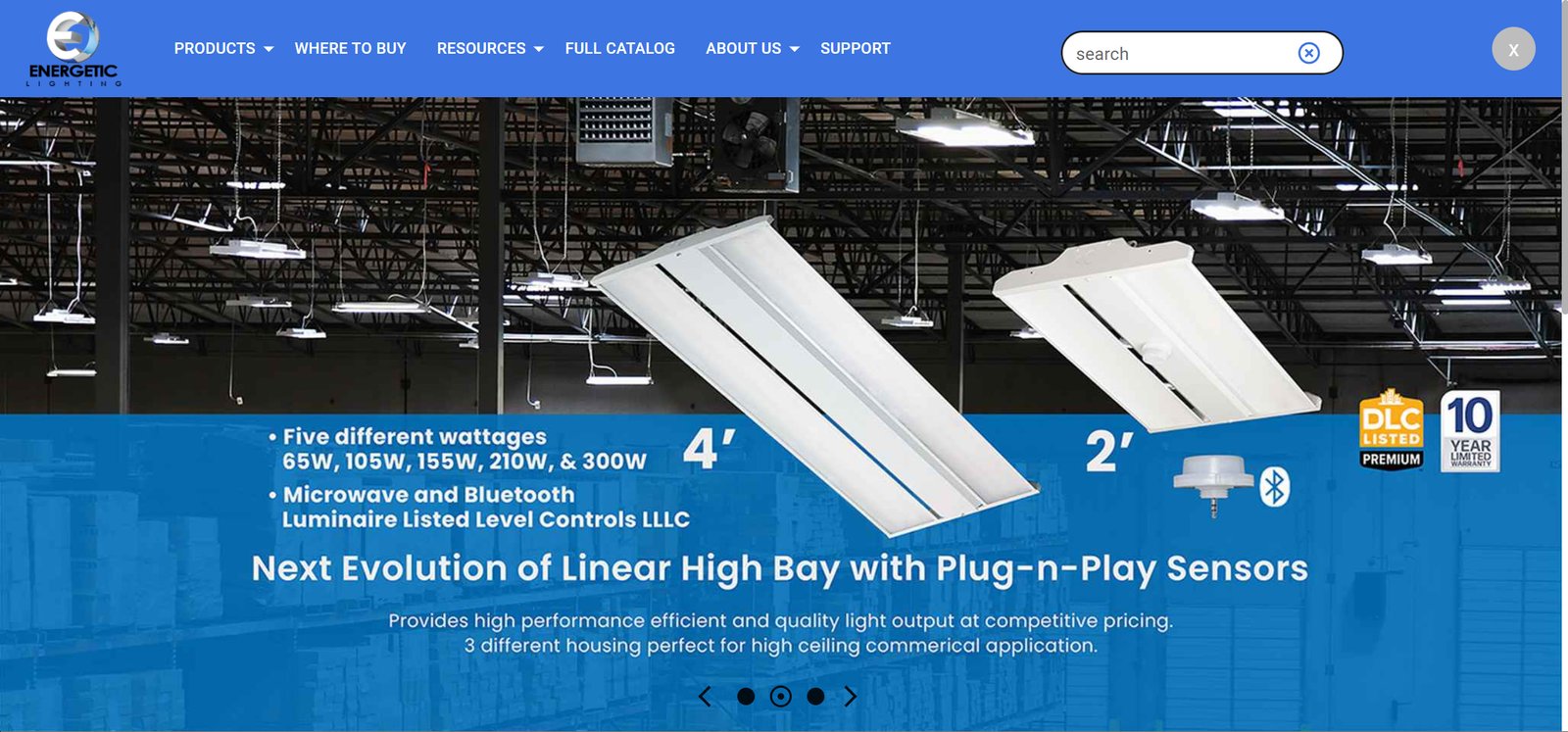
Energetic Lighting is not simply a California lighting brand buying anonymous products from unrelated factories.
The less obvious answer is that Energetic Lighting is directly connected to Yankon, one of China’s largest established lighting manufacturers. That gives the brand considerably more manufacturing depth than many private-label competitors.
But it also creates a common purchasing mistake:
Knowing who owns the brand does not prove where the exact LED panel in your quotation was manufactured.
Public product and distribution records identify multiple Energetic LED flat panel models as made in China. More recent shipping records also show Energetic receiving lighting fixtures from a Yankon facility in Thailand.
Therefore, Energetic Lighting should be treated as a multi-factory manufacturing program—not as a permanently single-origin brand.
Procurement Verdict
| Question | Finding |
|---|---|
| Is Energetic Lighting a U.S. company? | It has U.S. operations and a Chino, California address, but trades as Yankon Industries, Inc. d/b/a Energetic Lighting |
| Is it connected to a real manufacturer? | Yes. It is directly connected to the China-based Yankon Lighting Group |
| Are Energetic flat panels made in China? | Multiple identifiable E1BPL, E2BPL and BPL panel products are listed as China-origin |
| Are all current models made in China? | Not proven. Recent records show other Energetic fixtures supplied from Yankon Thailand |
| Does a Thailand shipment remove China tariffs? | Only if the product legally qualifies as Thailand-origin |
| Are the panels made in California? | No supporting manufacturing evidence was found |
The evidence-supported conclusion is:
China is the established origin for multiple Energetic LED panel models, but buyers must verify the current SKU and production lot because the wider supply chain is changing.
Finding 1: Energetic Lighting Is Part of a Manufacturing Group
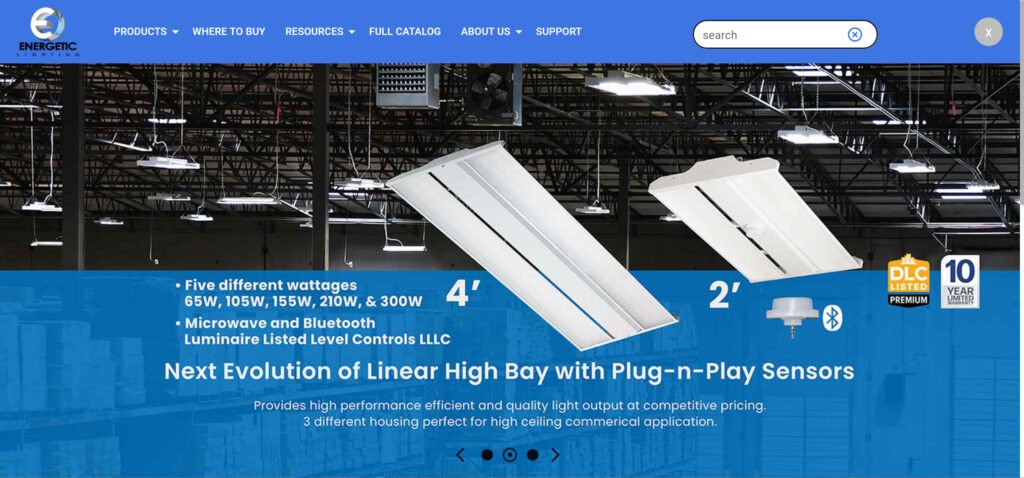
Energetic Lighting products are marketed through a U.S. business located in Chino, California. Certification records identify the operating company as Yankon Industries, Inc. d/b/a Energetic Lighting.
This is more significant than a normal supplier relationship.
The Yankon Group was founded in 1975 and operates major lighting production bases in Zhejiang, Jiangxi, Fujian and Anhui, China. Its portfolio covers commercial, residential, outdoor and smart lighting.
The group also identifies Xiamen Yankon as an important LED manufacturing base.
Energetic therefore has access to:
- Large-scale lighting production
- In-house product engineering
- Testing and certification capabilities
- Established component supply chains
- OEM manufacturing experience
- North American sales and distribution
This makes Energetic more vertically connected than many American lighting brands.
However, vertical integration does not eliminate country-of-origin risk. It can simply move production between related factories more easily.
Finding 2: The Current Panel Family Is the E2BPL Series
Energetic’s current product directory lists three primary E2BPL backlit panel formats:
E2BPL1-H2130D-83550— 1×4E2BPL2-H2130D-83550— 2×2E2BPL4-H3645D-83550— 2×4
The published E2BPL specification describes a thin-profile backlit panel designed for commercial T-grid ceilings.
2×2 configuration
Model E2BPL2-H2130D-83550 offers:
- 21W, 25W or 30W selectable
- 2,625 to 3,750 lumens
- 3500K, 4000K or 5000K selectable
- 120–347V
- 0–10V dimming
- DLC 5.1 Premium configuration
- Damp-location and Type IC applications
2×4 configuration
Model E2BPL4-H3645D-83550 offers:
- 36W, 40W or 45W selectable
- 4,500 to 5,625 lumens
- 3500K, 4000K or 5000K selectable
- 120–347V
- 0–10V dimming
- DLC 5.1 Premium configuration
The product design is commercially logical: three wattages and three CCTs reduce the number of separate distributor SKUs.
But selectable switches do not reveal manufacturing origin. The same housing platform can be produced at different factories or revised without changing its public-facing product name.
Finding 3: China-Origin Evidence Exists at the Product Level
Several distributor records explicitly identify Energetic backlit panels as made in China.
Examples include:
E1BPL4-H36D-840, a 2×4 backlit panel listed by Zoro with China as the country of originE2BPL4-H36D-840-2P, another 2×4 backlit panel listed with China origin- A 2×2 selectable Energetic backlit panel listed by LightUp as made in China
- A selectable 2×4 backlit panel also listed with China origin
These sources create a consistent historical pattern.
They do not, however, establish that every current E2BPL4-H3645D-83550 production lot must still come from China. Some listings concern fixed-output or earlier-generation variants, and several are now marked discontinued.
The correct conclusion is not “every Energetic panel is Chinese.”
It is:
China origin is well supported across the Energetic backlit panel family, while the current selectable SKU still requires lot-specific confirmation.
Finding 4: Thailand Sourcing Changes the Question
Recent records show lighting fixtures shipped to Energetic Lighting and Yankon Industries by Yankon Lighting Thailand Co., Ltd.
Public shipping data includes 2025 and 2026 consignments described as lighting fixtures or lighting accessories arriving from the Thai operation.
This does not prove that the current E2BPL panel is made in Thailand. The shipment descriptions do not expose enough model information.
But it does prove something strategically important:
Yankon has started using a production network outside mainland China for products supplied to its U.S. operations.
A buyer should therefore ask two separate questions:
- Does Energetic have non-China production capacity?
- Is my quoted LED panel actually produced there?
The answer to the first may be yes. The answer to the second remains unverified until a model-specific document is provided.
Three Origin Myths That Fail Under Audit
Myth 1: The parent company is Chinese, so every fixture is Chinese-origin
Company ownership does not determine customs origin.
A Chinese-owned factory in Thailand can produce Thailand-origin goods if the manufacturing operations satisfy the relevant origin rules.
Myth 2: Shipping from Thailand means made in Thailand
The port of export is not sufficient evidence.
Goods may be consolidated, repacked or transshipped through another country. The importer still needs to know where the meaningful manufacturing operations occurred.
Myth 3: Final assembly in Thailand removes Section 301 tariffs
Not automatically.
If China-origin components are sent to Thailand for simple assembly, labeling or packing, the finished fixture may not undergo a sufficient substantial transformation.
The manufacturing sequence matters more than the address on the final invoice.
Why LED Flat Panel Construction Matters to Origin
An LED backlit panel contains more than a steel enclosure and diffuser.
Important production stages may include:
- Stamping and coating the back plate
- Producing the LED PCB
- Mounting LEDs through SMT
- Manufacturing or configuring the driver
- Installing lenses or optical components
- Wiring the selectable wattage and CCT switches
- Final assembly
- Electrical safety testing
- Photometric inspection
- Packaging and labeling
For customs analysis, the location of the LED light-engine and PCBA production can be especially important.
CBP evaluates substantial transformation using the complete manufacturing facts. In one recent LED lighting origin ruling, CBP placed significant weight on where the LED PCBAs were produced through SMT operations. The ruling was specific to the products and process presented, but it illustrates why final assembly alone may not determine origin.
What This Means for U.S. Tariff Exposure
A China-origin Energetic panel may be affected by:
- The normal duty assigned to its HTS classification
- China-specific Section 301 measures
- Other trade measures effective on the entry date
- Customs value and importer-of-record responsibilities
A legitimate Thailand-origin version would not become subject to China Section 301 duties merely because Yankon is a Chinese group.
It could still be subject to other applicable U.S. duties or country-specific trade measures.
There is no responsible universal tariff percentage for “LED flat panel lights.” Buyers must first confirm:
- Exact HTS subheading
- Legal country of origin
- Entry date
- Manufacturing process
- Applicable exclusions or additional tariffs
- Incoterm and importer of record
A product described commercially as an “LED panel,” “troffer panel” or “ceiling luminaire” may also be classified differently depending on its design.
The Overlooked Risk: Model Churn
Energetic’s distribution records include several generations:
- E1PL
- E2PL
- E1BPL
- E2BPL
- BPL
- E5T troffers
Some remain in distributor inventory after being discontinued or replaced.
This creates a B2B risk that has little to do with nominal product performance.
A distributor may receive a quotation based on a current product page while the stock being offered belongs to an older generation with a different:
- Driver
- Efficacy
- DLC listing
- Warranty
- Order code
- Country of origin
- Replacement compatibility
The buyer should never approve the product using “Energetic 2×4 panel” as the complete description.
The PO should identify the full model, order number, revision and approved substitute rules.
A Ten-Year Warranty Does Not Guarantee a Ten-Year SKU
Some Energetic panel materials advertise a ten-year limited warranty, while other records show five-year coverage.
Even when a ten-year warranty applies, the original model may be discontinued before the warranty expires. A replacement may have different dimensions, photometrics, CCT tolerances or control behavior.
Before relying on a long warranty, ask:
- Is labor covered?
- Is return freight covered?
- Will failed units be replaced with the same model?
- What happens if the model is discontinued?
- Is the warranty prorated?
- Does the warranty require registration?
- Is the driver covered separately?
- Is the warranty valid for the proposed operating hours?
For a distributor, replacement compatibility may be more valuable than the advertised warranty length.
What to Put in the RFQ
A professional RFQ for an Energetic panel program should request:
Product identity
- Full model number
- Order code
- UPC
- Spec-sheet revision
- Product and carton label artwork
Origin control
- Current country of origin
- Factory name and address
- Production flowchart
- LED SMT location
- COO declaration connected to the PO
- Written notice before any factory change
Compliance control
- UL or ETL file number
- DLC product ID
- Current listing status
- LM-79 report
- Driver model and safety certification
- 0–10V dimming range
- Emergency-driver compatibility
Commercial control
- MOQ and pallet quantity
- Current inventory status
- Production lead time
- Warranty exclusions
- Approved replacement model
- Tariff responsibility
- Change-notification period
A useful purchase-order clause should require advance written approval before changing the factory, driver, LED package, optical system or country of origin.
Energetic Lighting vs. Factory-Direct OEM
Energetic can offer buyers the advantages of an established U.S. channel:
- Domestic inventory
- Recognized product line
- Distributor availability
- North American support
- Existing certifications
A factory-direct OEM program offers a different type of control:
- Private-label ownership
- Customized wattage and CCT
- Packaging control
- Factory and origin transparency
- Certification planning
- Longer-term SKU control
- Negotiated change-management rules
Neither route is automatically better. The decision depends on volume, inventory strategy, certification ownership and acceptable tariff exposure.
A buyer searching for a top LED flat panel manufacturer should compare more than price and lumens. Xmart’s backlit panel program publishes Vietnam manufacturing, selectable configurations, 2×2, 2×4 and 1×4 sizes, 0–10V dimming and COO documentation support.
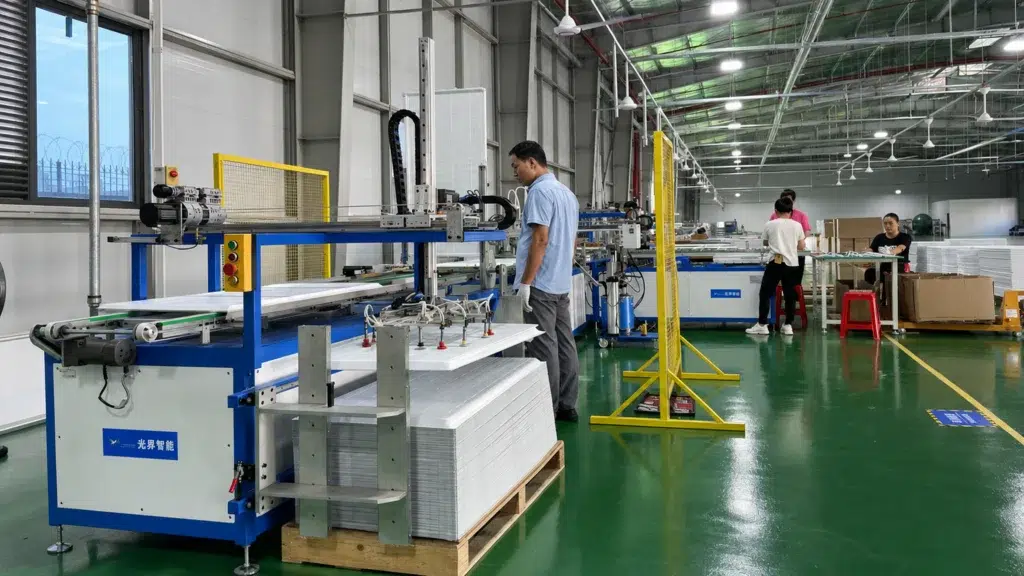
Buyers can review Xmart’s certification capabilities and its independent guide to commercial lighting manufacturers in Vietnam when evaluating alternative supply chains.
The same rule should apply to every supplier: verify the exact SKU, certification and production factory before ordering.
Final Assessment
Energetic Lighting is more than a U.S. marketing label. It is connected to Yankon, a large and experienced lighting manufacturing group with substantial Chinese production capacity.
That manufacturing connection is a strength.
It also makes the simplistic answer—“Energetic panels are made in China”—incomplete.
The available evidence supports the following:
- Multiple Energetic backlit panel models have China origin.
- The current product portfolio still includes E2BPL 1×4, 2×2 and 2×4 panels.
- Yankon now supplies some U.S. lighting products from Thailand.
- Public records do not yet prove that the current E2BPL panels have moved to Thailand.
- The exact origin must be confirmed by model and production lot.
For B2B buyers, the most important question is not:
“Where is Energetic Lighting based?”
It is:
“Which factory will manufacture the exact model on our purchase order, and what documents prove it?”
Frequently Asked Questions
Is Energetic Lighting owned by Yankon?
Energetic operates through Yankon Industries, Inc. and is directly connected to the Yankon Lighting Group.
Are Energetic LED flat panels made in China?
Multiple E1BPL, E2BPL and BPL panel products have been listed with China as their country of origin. Current lots should still be verified individually.
Does Energetic manufacture lighting in the United States?
Energetic has U.S. sales and distribution operations, but no evidence reviewed for this audit showed U.S. production of its LED flat panels.
Does Energetic manufacture products in Thailand?
Recent shipping records show fixtures supplied by Yankon Lighting Thailand to Energetic and Yankon’s U.S. operations. The records do not prove that the current E2BPL panel family is made there.
Are Energetic panels subject to Section 301 tariffs?
China-origin panels may be subject to applicable China Section 301 measures. Treatment depends on the final HTS classification, entry date and current tariff rules.
Is a Thailand-made Energetic panel automatically tariff-free?
No. Valid Thailand origin may avoid China-specific Section 301 duties, but other duties and trade measures may still apply.