Barron Lighting Group advertises “friendly U.S.-based support” from its Arizona headquarters.
That is not the same as U.S.-made lighting.
The current Trace-Lite LPX-24-CP4 flat panel is publicly listed as a product of China. At the same time, 2026 import records show Barron receiving large quantities of Trace-Lite-branded fixtures from Southeast Asia.
This creates a common B2B sourcing trap:
A brand can diversify its overall supply chain without changing the origin of the specific product you are buying.
Direct Answer
Based on public information reviewed in August 2026:
- Barron Lighting Group is headquartered in Glendale, Arizona.
- Trace-Lite is Barron’s commercial and industrial lighting brand.
- The current LPX-24-CP4 LED flat panel is listed as China origin.
- An earlier LPX-22-40-4K panel is also listed as China origin.
- Barron imports Trace-Lite-branded lighting fixtures from Vietnam and other Southeast Asian locations.
- No model-level evidence reviewed establishes Vietnam origin for the LPX-CP4 panel series.
- No evidence reviewed supports a Made-in-USA claim for Trace-Lite flat panels.
The responsible conclusion is:
Current model-level evidence points to China for Trace-Lite LPX panels. Barron’s wider Vietnam sourcing should not be applied to a flat-panel SKU without a factory and lot-specific declaration.
Barron, Trace-Lite and LPX Are Not the Same Entity
Three names appear in the purchasing process.
Barron Lighting Group
Barron is the parent company. It states that it has operated in the lighting industry for more than 50 years and is based in Glendale, Arizona.
Its headquarters, U.S. employees, warehouses and technical support establish a significant American commercial operation.
Trace-Lite
Trace-Lite is Barron’s commercial and industrial lighting division. Barron acquired the Trace-Lite brand in 1992 and relaunched it for commercial and industrial lighting in 2008.
Trace-Lite is the brand shown on panel literature and product listings.
LPX
LPX is the LED flat-panel product family.
The manufacturing origin must be determined from the LPX model and production lot—not from Barron’s corporate location or Trace-Lite’s brand history.
The Current LPX-24-CP4 Is Listed as China Origin
A current distributor listing identifies:
Model: LPX-24-CP4
Brand: Trace-Lite
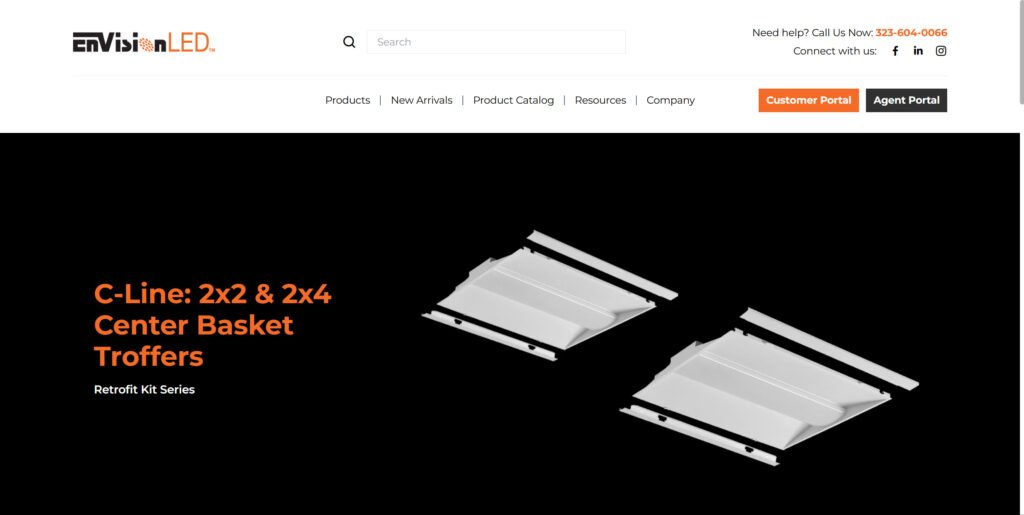
Product: 2×4 backlit, power- and CCT-selectable LED flat panel
Country of origin: China
The panel provides:
- 30/40/50W selectable power
- 3000K/3500K/4000K/5000K selectable CCT
- 120–277V input
- 0–10V dimming
- Up to approximately 5,800 lumens, depending on setting
- PMMA optical lens
- Multiple mounting and emergency options
The matching 2×2 configuration is LPX-22-CP4.
This is not merely evidence from a discontinued product. The LPX-24-CP4 remains offered through lighting distributors and appears in Barron’s current technical documentation.
Older LPX Panels Also Point to China
The fixed-CCT model LPX-22-40-4K is publicly listed as China origin.
This earlier 2×2 panel used a dedicated wattage and CCT rather than the wider field-selectable configuration of the CP4 generation.
The two model-level records therefore create a consistent pattern:
| Trace-Lite model | Product type | Public origin |
|---|---|---|
| LPX-22-40-4K | Earlier fixed-CCT 2×2 panel | China |
| LPX-24-CP4 | Current selectable 2×4 panel | China |
That evidence is more reliable for a panel-origin audit than company-wide import data describing unidentified “lighting fixtures.”
LPX vs LPX-CP4: What Changed?
The change is not simply a longer model number.
LPX Fixed-CCT Models
Earlier LPX models were ordered around a fixed wattage and color temperature. This required distributors to maintain more SKUs for different projects.
LPX-CP and LPX-CP4 Models
LPX-CP introduced selectable wattage and CCT. The current CP4 generation adds four field-selectable color temperatures:
- 3000K
- 3500K
- 4000K
- 5000K
The 2×2 version offers 20/30/40W, while the 2×4 version offers 30/40/50W.
This reduces distributor inventory but expands the number of possible operating configurations.
The origin evidence suggests that the commercial upgrade from fixed-CCT LPX to selectable LPX-CP4 did not automatically move production out of China.
Why Barron’s Vietnam Imports Do Not Change the LPX Answer
Barron’s 2026 import records show active sourcing from Vietnam.
Identified Vietnamese suppliers include:
- Evertie Lighting Vietnam
- Vietnam Torshare
- SNC Electronics Vietnam
- Dong Minh Electronics Vina
- Dong Tai Vietnam
One recent shipment from Southeast Asia was marked TRACE LIGHT and described as “LED fixtures and related accessories.” Other Vietnam shipments included lighting fixtures and LED luminaires.
This shows that Trace-Lite products are being supplied through Southeast Asian manufacturing routes.
But the public descriptions do not identify LPX-22-CP4 or LPX-24-CP4.
The shipments could contain:
- Wall packs
- Area lights
- Emergency products
- Troffers
- High bays
- Drivers or accessories
- Other Trace-Lite product families
Until the cargo record, factory declaration or carton label names an LPX model, it cannot override the China origin attached to the exact panel SKU.
A Vietnam Supplier Name Is Not Always a Vietnam-Origin Declaration
A factory’s address and a fixture’s legal origin are related, but they are not identical.
For example, a Vietnamese company could:
- Manufacture a complete fixture in Vietnam
- Assemble imported components into a new product
- Perform only final assembly
- Pack a substantially completed fixture
- Act as an exporter for another factory
The country-of-origin analysis depends on the actual operations.
For Trace-Lite products, buyers should request a manufacturing flow covering:
- Metal fabrication
- Surface treatment
- LED-board production
- Driver production
- Optical-component production
- Final assembly
- Electrical and photometric testing
- Labeling and packing
“Shipped from Vietnam” is a logistics fact. “Product of Vietnam” is a legal origin claim.
Does the Arizona Facility Make Barron Panels Domestic?
Not according to the current LPX evidence.
Barron’s company history refers to its large Arizona facility and U.S. operations. That facility may support warehousing, product development, customization, quality control, assembly or other functions.
However, a U.S. facility does not make every product in the company’s catalog a domestic end product.
For a Made-in-USA or Buy American claim, the relevant question is what manufacturing occurred in the United States for the exact product.
The current model-level listing identifies LPX-24-CP4 as China origin. A buyer should therefore treat it as a foreign end product unless Barron supplies updated, legally supportable documentation for the purchased lot.
Buy American and TAA Are Not Interchangeable
Federal procurement language is often used too loosely in lighting quotations.
Buy American
The Buy American rules examine whether an end product was manufactured in the United States and whether the applicable domestic-content requirements are satisfied.
Trade Agreements Act
TAA-covered acquisitions use a different origin test based on whether the product is made or substantially transformed in the United States or a designated country.
The Federal Acquisition Regulation explicitly states that the Buy American and trade-agreement origin tests are different.
A China-origin LPX panel should not be represented as TAA compliant without a specific and supportable manufacturer certification.
Barron’s:
- U.S. headquarters
- U.S. support
- U.S. warehouse inventory
- American brand ownership
- UL or DLC documentation
do not independently establish Buy American or TAA compliance.
UL and DLC Do Not Establish Country of Origin
Trace-Lite promotes LPX-CP panels as DLC qualified and suitable for utility-rebate applications. Relevant models also carry electrical safety certifications.
Those certifications answer performance or safety questions.
They do not determine:
- Manufacturing country
- Section 301 treatment
- TAA eligibility
- Buy American status
- Factory ownership
- Domestic-content percentage
A panel can be UL listed and DLC qualified while being manufactured in China.
For a public project, the submittal should contain separate evidence for:
- Safety certification
- Energy-performance qualification
- Country of origin
- Domestic-preference compliance
- Tariff classification
Does the LPX-CP4 Face China Section 301 Tariffs?
Possibly, depending on its final HTS classification and the measures in force on the entry date.
The public China origin listing means the panel cannot use Barron’s unrelated Vietnam imports to avoid China-specific duty analysis.
Importers should verify:
- The appropriate HTS classification
- Ordinary duty
- Applicable Section 301 rate
- Any active exclusions
- Additional Chapter 99 duties
- Other current import surcharges
The country stated on a distributor webpage is useful for sourcing research, but the importer still needs formal entry documentation.
The CP4 Suffix Creates a Submittal-Control Problem
Barron documentation contains LPX-CP and LPX-CP4 references. Lumen tables and available CCT settings can vary between document revisions.
For example, earlier LPX-CP literature shows three CCT settings:
- 3500K
- 4000K
- 5000K
Newer CP4 documentation includes 3000K as a fourth setting.
If the specification says only “LPX-24-CP,” the contractor could quote or deliver a different generation from the one used in the lighting calculation.
A complete submittal should lock:
- Full model suffix
- Document revision
- Wattage setting
- CCT setting
- Lumen output
- DLC product ID
- Driver
- Controls compatibility
- Country of origin
- Emergency configuration
The missing “4” is small. Its commercial impact may not be.
What Buyers Should Request Before Issuing a PO
Request the following for each Trace-Lite panel order:
- Complete LPX model number.
- UPC and carton quantity.
- Current specification sheet and revision.
- Active UL certification record.
- Active DLC product ID.
- LM-79 report for the selected configuration.
- Country-of-origin declaration.
- Carton and fixture-label photographs.
- Factory name and address.
- HTS classification used for import.
- TAA or Buy American certification, if required.
- Written confirmation of any factory change.
- Driver and emergency-equipment compatibility.
- Warranty coverage for labor, freight and accessories.
Do not accept a general letter stating that Barron “sources globally.” The declaration should name the exact model.
Comparing Trace-Lite With a Direct OEM Program
Trace-Lite offers U.S. distribution support, established specifications and a broad commercial product portfolio.
A direct OEM program is more suitable when the buyer needs control over:
- Factory selection
- Private labeling
- Driver choice
- LED binning
- Origin documentation
- Packaging
- Certification ownership
- Production-change approval
- Landed-cost planning
A top LED flat panel manufacturer should disclose the relationship between the quotation, certified model, factory and final origin label before mass production.
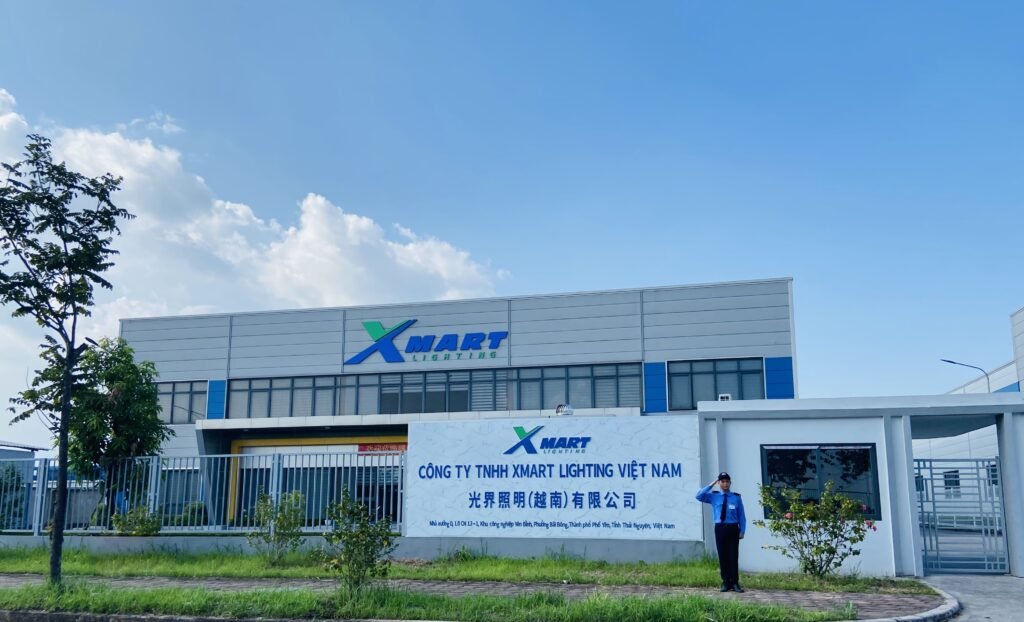
Buyers can review Xmart’s backlit LED panel products and certification capabilities when developing a project-specific or private-label alternative.
For supply-chain diversification, Xmart’s comparison of the top commercial lighting manufacturers in Vietnam provides a starting point for factory due diligence.
Project requirements can be submitted through the Xmart quick-quote page.
Frequently Asked Questions
Is Trace-Lite an American company?
Trace-Lite is a brand of Barron Lighting Group, which is headquartered in Glendale, Arizona.
Are Trace-Lite LED panels made in the USA?
No public evidence reviewed supports U.S. manufacture of the LPX panel series. The current LPX-24-CP4 is publicly listed as China origin.
Are current Trace-Lite LPX panels made in China?
Model-level distributor records identify both an earlier LPX panel and the current LPX-24-CP4 as products of China. Buyers should still verify the supplied production lot.
Does Barron manufacture lighting in Vietnam?
Barron imports Trace-Lite-branded fixtures from Vietnam and works with multiple Vietnamese suppliers. Public records do not prove that the LPX-CP4 panel is among those Vietnam-made products.
What is the difference between LPX and LPX-CP4?
Earlier LPX models used fixed configurations. LPX-CP4 provides selectable power and four selectable CCT settings, including 3000K.
Is LPX-24-CP4 TAA compliant?
Its public country-of-origin listing is China. Buyers should not represent it as TAA compliant without an exact-model certification from Barron that satisfies the applicable procurement requirements.
Does DLC qualification prove U.S. origin?
No. DLC qualification relates to energy performance and product eligibility. It does not establish manufacturing origin or domestic procurement compliance.
Final Assessment
Barron Lighting Group is a long-established American lighting company, and Trace-Lite is a recognized commercial lighting brand.
The current public evidence nevertheless identifies the LPX-24-CP4 panel as a product of China.
Barron’s expanding Vietnam supply chain is commercially important, but it does not establish a Vietnam origin for LPX panels. Until model-level documentation says otherwise, buyers should keep those two conclusions separate.
The correct procurement rule is:
Follow the exact catalog number, not the corporate address—and follow the production lot, not the company-wide import trend.
That rule improves tariff estimates, prevents inaccurate TAA claims and protects commercial lighting submittals from silent product-generation changes.