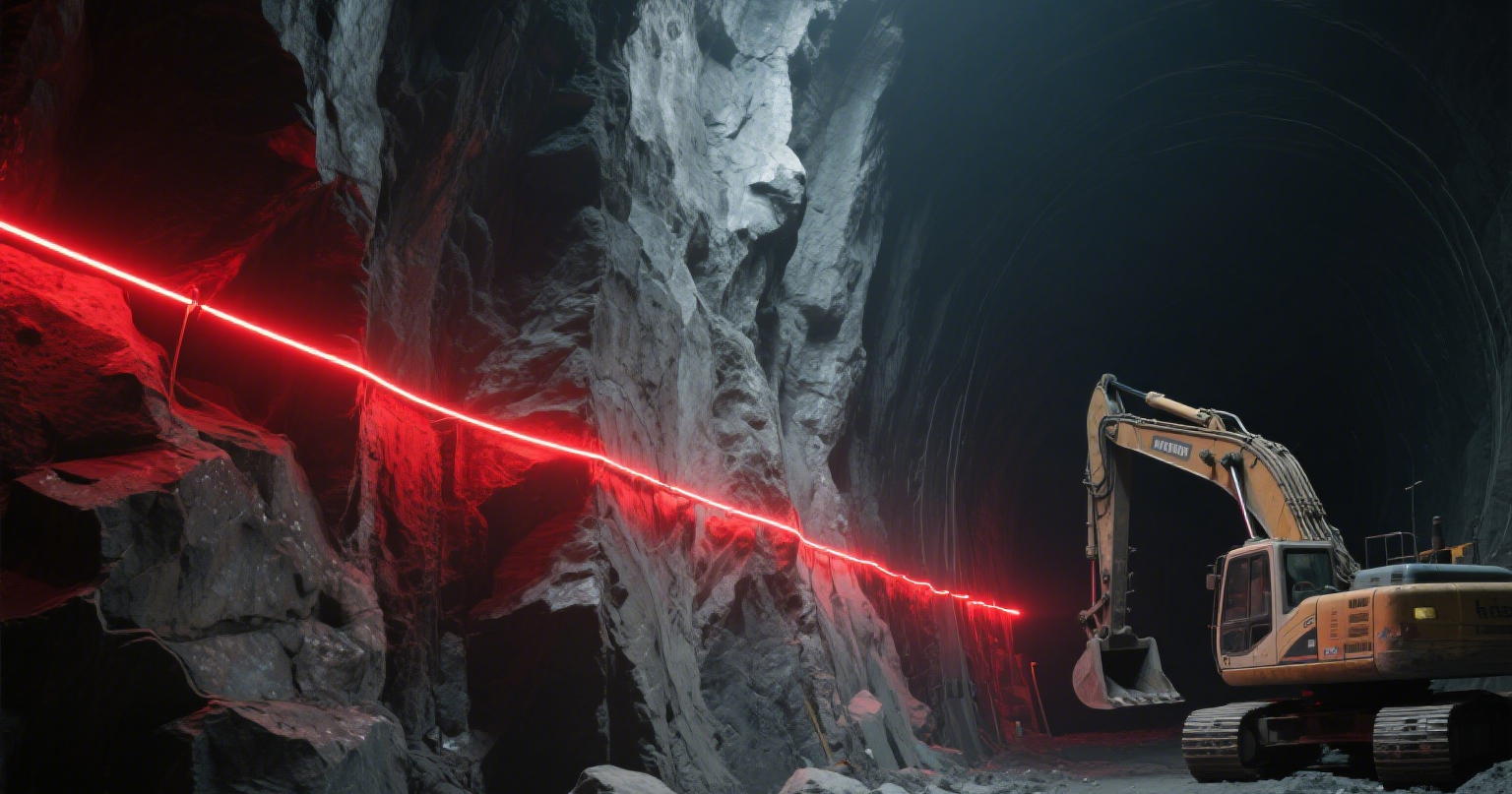
The brightest mine is not always the safest mine. High-intensity fixtures can create reflected glare, sharp shadows and uneven visibility when they are installed without considering dust, vehicle movement and the worker’s field of view.
Brazilian projects also punish weak system design. Humidity, heat, vibration, chemicals, long conveyor routes and limited maintenance access often cause connectors, drivers and seals to fail before the LED source reaches the end of its rated life.
This guide compares 10 specialist manufacturers and suppliers serving Brazil’s mining and tunnel sectors. It includes Brazilian companies, international mining-lighting brands and an OEM industrial LED strip manufacturer. Companies are ranked by application relevance, technical specialization and suitability for the Brazilian market—not by sales volume.
Quick comparison
| Rank | Company | Company type | Best for |
|---|---|---|---|
| 1 | Schréder Brazil | Tunnel and infrastructure specialist | Road tunnels, controls and primary illumination |
| 2 | Conexled | Brazilian industrial-lighting company | Underground mining and industrial projects |
| 3 | RacLite | Brazilian mining-lighting supplier | Portable, temporary and site lighting |
| 4 | Xmart Lighting | OEM/ODM LED strip manufacturer | Custom 24V, 36V and 48V long-run systems |
| 5 | Phoenix Lighting | Heavy-industry lighting manufacturer | Mobile mining equipment and low-voltage fixtures |
| 6 | TYRI | Mining vehicle-lighting specialist | Haul trucks and heavy mobile equipment |
| 7 | Dialight | Hazardous industrial LED manufacturer | Processing plants and certified fixed lighting |
| 8 | R. STAHL | Explosion-protection specialist | Classified and explosive-atmosphere locations |
| 9 | MineGlow | Mining and tunnelling strip specialist | Long-distance, hazardous and emergency systems |
| 10 | x-Glo | Industrial mining LED strip brand | Underground mines, tunnels and hazardous areas |
How the companies were selected
Each company needed verifiable evidence of at least one of the following:
- A dedicated mining, conveyor or underground-lighting application;
- A road-tunnel luminaire or tunnel-control system;
- Hazardous-location lighting suitable for industrial or mining sites;
- Lighting designed for mine vehicles or heavy mobile equipment;
- Industrial continuous strip systems developed for tunnels or underground routes.
General decorative LED strip sellers were excluded. The list distinguishes flexible strip, fixed tunnel luminaires, mobile equipment lights and hazardous-area products because they cannot be specified as interchangeable equipment.
1. Schréder Brazil
Schréder is the strongest tunnel-lighting specialist in this Brazil-focused comparison.
The company supplies road and infrastructure luminaires, tunnel products and intelligent controls. Its Brazilian project evidence includes the Tamoios tunnel system, where controlled tunnel luminaires and a hybrid control architecture were used to support driver safety and visual comfort.
Schréder is not a flexible mining-strip manufacturer. Its strength is primary road-tunnel illumination, including entrance, transition and interior zones that require controlled luminance and adaptation.
Best for: Road tunnels, tunnel entrances, primary traffic lighting and intelligent controls.
Market role: International infrastructure specialist with Brazilian operations
2. Conexled
Conexled is a Brazilian industrial-lighting company serving demanding facilities and customized projects.
The company publishes specific guidance on LED lighting in underground mining, addressing visibility, energy efficiency and durability in harsh conditions. Its wider positioning includes industrial luminaires and professional lighting engineering.
Conexled is most relevant to buyers that want a Brazilian technical partner for a complete industrial-lighting study rather than only a reel of LED strip.
Best for: Underground mine areas, industrial facilities, lighting studies and locally supported projects.
Company location: Brazil
3. RacLite
RacLite is a Brazilian supplier of professional energy and lighting equipment with a dedicated mining segment.
Its mining offering covers portable lights, lanterns, temporary lighting and equipment intended for demanding work areas. This makes the company useful during maintenance, extraction, construction and emergency activities where fixed illumination is not enough.
RacLite is not presented as a flexible tunnel-strip manufacturer. Its value is local supply, mining-market knowledge and portable or temporary lighting support.
Best for: Mine maintenance, temporary work areas, portable lighting and local procurement.
Company location: Brazil
4. Xmart Lighting
Xmart Lighting manufactures configurable tunnel and mining LED strip systems through its China and Vietnam production bases.
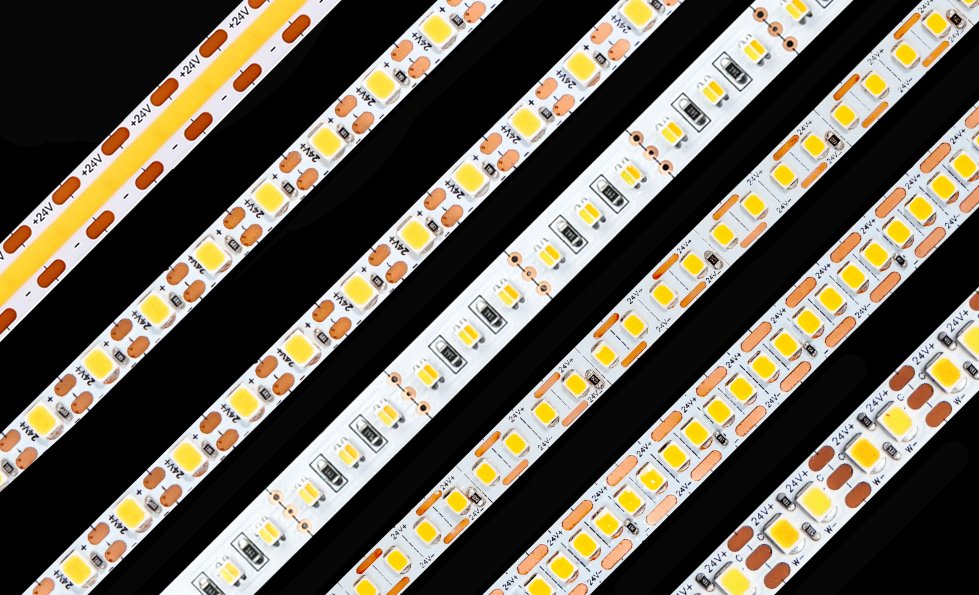
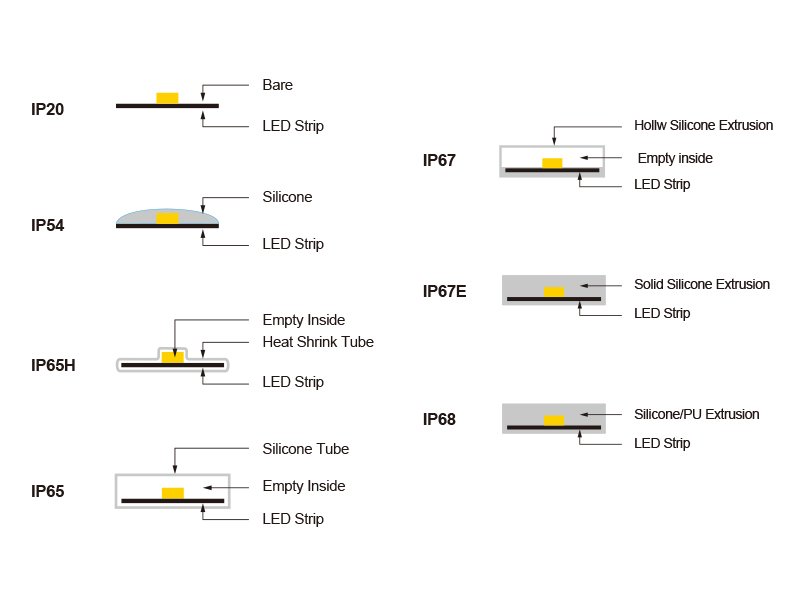
The Tunnel & Mining LED Strip range includes 24V, 36V and 48V versions. Published product features include IP67 sealing, IK10 impact resistance, silicone extrusion and pre-terminated reels.
The different voltages allow the circuit to be matched to the application. A short service passage may suit 24V, while an extended conveyor or utility tunnel may benefit from 36V or 48V to reduce current, voltage drop and the number of feed points.
Xmart’s main value for Brazilian buyers is OEM flexibility. Power, CCT, reel length, connectors, packaging and private-label branding can be adapted for distributors and project contractors. Classified mines and explosive atmospheres require appropriate model-specific certification; IP67 or IP68 alone is not sufficient.
Best for: OEM programmes, non-classified service routes, conveyors and custom long-run industrial strip.
Company location: China and Vietnam
Product page: View Xmart tunnel and mining LED strip systems
5. Phoenix Lighting
Phoenix Lighting develops heavy-duty LED products for mining, ports and other severe industrial applications.
Its mining range includes lighting for haul trucks, shovels, draglines and fixed work areas. The company also offers low-voltage equipment suited to mobile machinery and demanding operating conditions.
Phoenix is not a flexible strip supplier. It is included because mine vehicle lighting and fixed route lighting must be planned together to reduce blind areas and uncontrolled glare.
Best for: Mobile mining equipment, large machines, low-voltage work lights and severe-duty installations.
Company location: United States; serves international mining operations
6. TYRI
TYRI specializes in lighting for heavy vehicles and mobile machinery, with a dedicated mining sector and Brazilian-market presence.
Its work lights incorporate features such as thermal management, overvoltage protection and reverse-polarity protection. These safeguards are important on mining equipment exposed to vibration, heat and unstable electrical systems.
TYRI solves a different problem from tunnel strip lighting. It belongs on the shortlist for haul trucks, loaders, excavators and other machines operating inside or around mine routes.
Best for: Haul trucks, loaders, excavators and heavy mobile mining equipment.
Market role: International vehicle-lighting specialist serving Brazil
7. Dialight
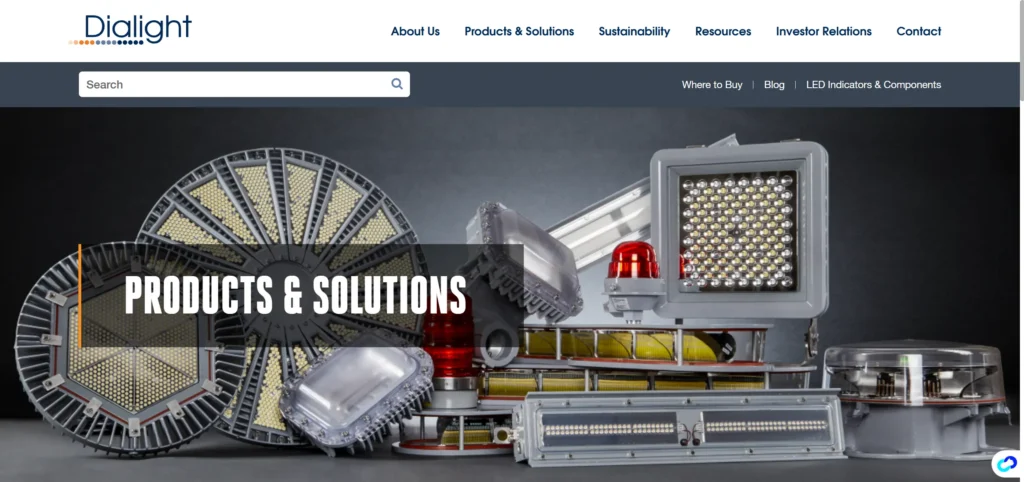
Dialight manufactures industrial and hazardous-location LED lighting for mining, energy and processing facilities.
Its range includes linear luminaires, high bays, floodlights, bulkheads, area lights and emergency products. These products are relevant to crushing plants, maintenance buildings, processing areas and classified industrial locations.
Dialight is included as a certified fixed-lighting alternative rather than a flexible strip manufacturer. In many hazardous areas, a formally approved rigid luminaire is the correct solution.
Best for: Processing plants, classified industrial areas, fixed linears and high-maintenance facilities.
Market role: International industrial manufacturer serving Brazil
8. R. STAHL
R. STAHL specializes in electrical equipment and lighting for explosive atmospheres.
Its portfolio includes explosion-protected linear luminaires, emergency products, floodlights and complete electrical systems. The company is relevant to classified mining, chemical, oil and gas environments where the certification boundary extends beyond the luminaire itself.
R. STAHL is not a mining LED strip producer. It is included because waterproof commercial strip must never be treated as a substitute for approved explosion-protected equipment.
Best for: Explosive atmospheres, classified process areas and complete hazardous-location electrical systems.
Market role: International explosion-protection specialist with Brazilian operations
9. MineGlow
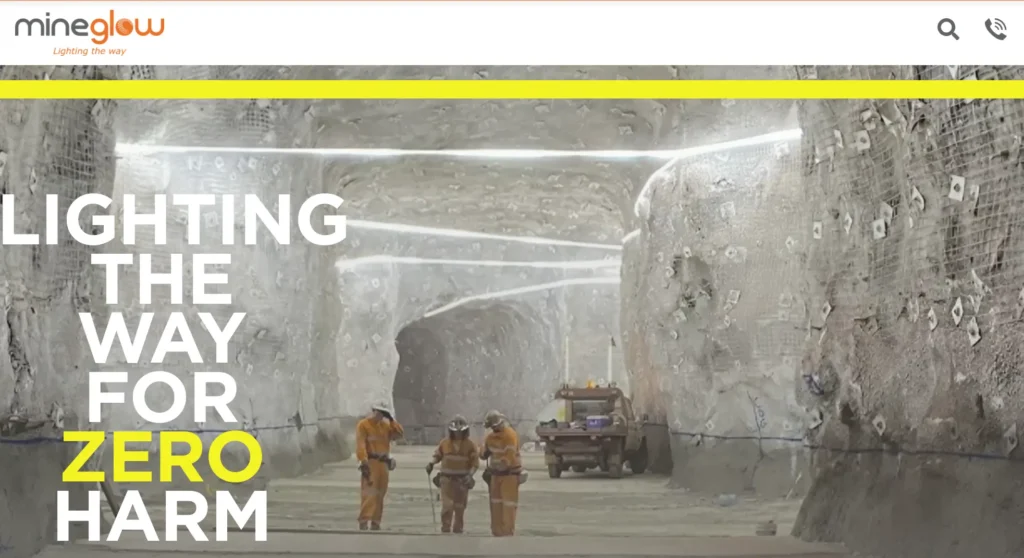
MineGlow supplies industrial LED strip systems for mining, tunnelling, conveyors, emergency guidance and hazardous locations.
Its portfolio includes 24V and 36V products, a 48V tunnel range, explosion-protected options and emergency systems. It also supplies connectors, mounting channels, repair kits and power equipment.
This complete-system approach is relevant to Brazil because long routes, humidity and difficult access make the connection and maintenance design as important as nominal light output.
Best for: Long-distance strip systems, conveyor routes, emergency guidance and hazardous applications.
Company location: Australia; serves international mining projects
10. x-Glo
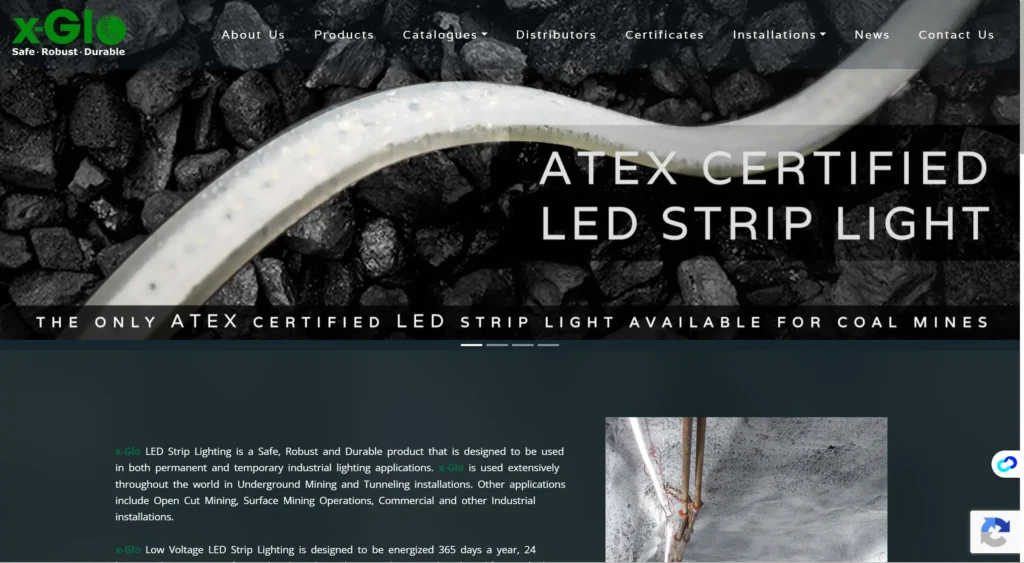
x-Glo is a specialist industrial LED strip brand used in underground mining, tunnelling and other harsh environments.
Its range includes low-voltage continuous systems and ATEX/IECEx Exm products for hazardous locations. The products are intended for humid, corrosive, vibration-prone and high-impact environments.
x-Glo is relevant as a mature specialist benchmark for Brazilian mines evaluating industrial strip rather than decorative fita LED.
Best for: Underground mine routes, tunnelling and projects requiring an explosion-protected strip option.
Market role: International mining-lighting specialist
What Brazilian mining projects often get wrong
Many lighting enquiries begin with the price per fixture or watts per metre. Those numbers do not reveal whether the installation will remain reliable through heat, humidity, vibration and chemical exposure.
The more useful starting questions are:
- Is the project underground, open-pit, road-tunnel or processing-plant lighting?
- Is the area classified as an explosive atmosphere?
- How long is each electrical route?
- Where can power supplies and isolation points be installed?
- Will the product face wash-down, ore dust, salt or chemicals?
- Can one damaged section be replaced without removing the full route?
- Which Brazilian conformity and project requirements apply?
The lowest initial price can produce the highest lifecycle cost when a repair interrupts production.
Seven factors to compare
1. Humidity and thermal cycling
Ingress can occur through connectors, cable entries and pressure changes. Ask for complete-assembly evidence rather than relying only on the enclosure or strip-body rating.
2. Corrosion and chemicals
Iron ore dust, cleaning chemicals, oil, salt and industrial atmosphere can attack housings, seals and mounting hardware. Material compatibility needs to be checked for the actual site.
3. Long-run electrical performance
Long conveyor and service routes need voltage-drop calculations. Buyers can compare Xmart’s 24V, 36V and 48V options according to route length, cable size, power and available feed points.
4. Replaceable sections
A local impact or cut should not require replacing a very long continuous line. Confirm serviceable section length, connector availability and the underground repair method.
5. Glare and uniformity
More lumens do not guarantee better visibility. Uniform illumination, mounting position and controlled intensity may reveal hazards more effectively than isolated high-output sources.
6. Certification scope
INMETRO, IECEx and other requirements depend on the product and installation. IP67, IP68 and IK ratings do not prove explosion protection or suitability for an explosive atmosphere.
7. Local support versus OEM supply
Brazilian suppliers provide language, local service and familiarity with project requirements. OEM production offers private labels and custom voltage, length, connectors or packaging. Buyers can contact Xmart when a catalogue product does not match a long-run or distribution programme.
When flexible industrial strip is appropriate
Industrial strip can work well in non-classified conveyor walkways, service tunnels, cable routes, construction passages and evacuation guidance. Its continuous light can reduce dark gaps and make direction easier to understand.
It is not automatically the right choice for a road tunnel, explosive atmosphere, high-bay processing plant or location exposed to direct heavy impact. Those areas may require engineered fixed luminaires.
Portuguese SEO terms buyers actually use
A Brazilian Portuguese version should use application language rather than translating “LED strip” repeatedly:
- iluminação LED para mineração;
- luminária LED para túnel;
- iluminação para mineração subterrânea;
- iluminação para correia transportadora;
- fita LED industrial IP67 or IP68;
- iluminação para área classificada;
- iluminação para rota de fuga.
“Fita LED” without an industrial modifier attracts decorative and residential traffic. “Luminária linear industrial” and application-specific phrases often carry stronger B2B intent.
Final recommendation
Choose Schréder for primary road-tunnel illumination and controls. Conexled offers a Brazilian industrial-lighting route, while RacLite is more relevant to portable, temporary and mining-site equipment.
Phoenix and TYRI specialize in heavy mobile machinery. Dialight and R. STAHL are better aligned with fixed hazardous or processing locations. MineGlow and x-Glo offer established specialist strip systems.
Xmart is best suited to Brazilian importers, contractors and distributors that need a configurable OEM product. For a project review, send Xmart the route length, operating voltage, target illuminance, environment, area classification and estimated quantity.
Frequently asked questions
Who supplies mining LED lighting in Brazil?
Brazilian and international companies serve different parts of the market. Schréder focuses on tunnels, Conexled on industrial projects, RacLite on mining-site equipment, and international brands cover mobile, hazardous and continuous lighting.
Can a normal waterproof LED strip be used in an underground mine?
Not automatically. The full system must meet the project’s electrical, mechanical, fire, environmental and certification requirements.
What voltage is suitable for a long conveyor route?
It depends on power, length, cable size and feed locations. A 36V or 48V design may reduce current and voltage drop compared with 24V, but must comply with site rules.
Does IP68 mean a product is approved for an explosive atmosphere?
No. Ingress protection and explosion protection are separate requirements.
Can industrial strip replace road-tunnel luminaires?
Usually not for primary traffic lighting. Road tunnels require controlled luminance, entrance adaptation and an engineered optical design.
Is Xmart a Brazilian company?
No. Xmart manufactures in China and Vietnam and supplies international OEM and project customers. It is included as a custom manufacturing option for Brazilian importers and distributors.
What information should be included in an enquiry?
Include the application, route drawing, voltage, run length, target lux level, environmental exposure, area classification, connector requirements, quantity and project schedule.