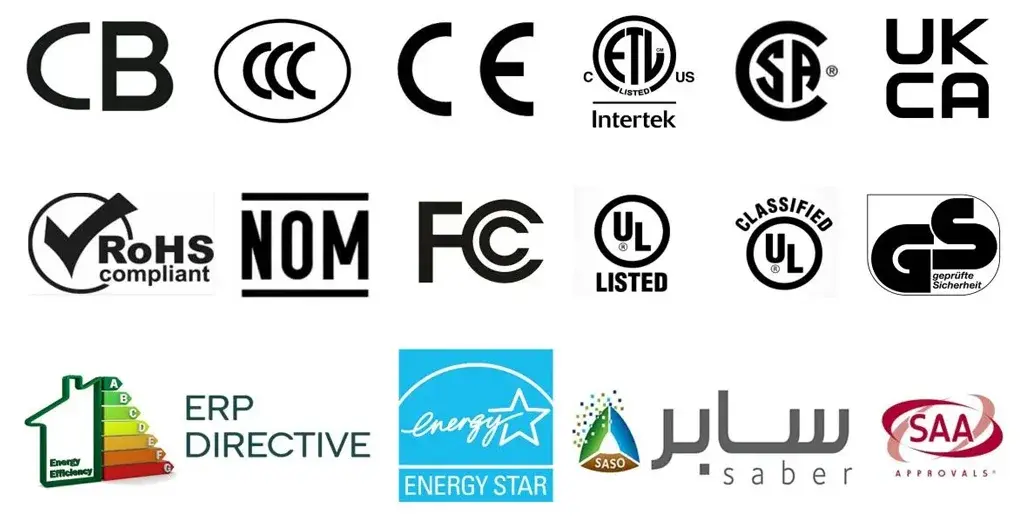
UL Listed, UL Recognized, ETL, CE, CB and RoHS do not mean the same thing.
They answer different questions:
- UL Listed generally evaluates a complete product for an intended installation.
- UL Recognized applies to a component intended to be built into another product.
- ETL Listed is a North American third-party product certification issued through Intertek.
- CE marking is the manufacturer’s declaration that a product complies with applicable EU legislation.
- CB is an international test-certificate and test-report system designed to support national approvals.
- RoHS restricts hazardous substances; it does not prove electrical safety.
The most important rule for LED strip buyers is:
A certificate is valid only for the models, constructions, ratings, factories and conditions covered by its scope.
A supplier saying “we have UL, CE and RoHS” is not enough. Buyers must verify whether the exact LED strip being purchased is covered.
Quick Certification Comparison
| Mark or scheme | Main purpose | Typical market | Third-party certification? | Does it prove electrical safety? |
|---|---|---|---|---|
| UL Listed | Complete-product safety evaluation | United States/Canada, depending on mark | Yes | Yes, within the evaluated scope |
| UL Recognized | Component evaluation for use inside another product | United States/Canada | Yes | Only within defined conditions |
| ETL Listed | Product safety evaluation by Intertek | United States/Canada, depending on mark | Yes | Yes, within the evaluated scope |
| CE | Declaration of compliance with applicable EU legislation | EEA and relevant CE markets | Not always | Depends on applicable legislation |
| CB | IEC-based test certificate and report supporting national approval | Participating international markets | Yes | Usually safety within the tested standard |
| RoHS | Hazardous-substance restriction | EU and markets using similar requirements | Testing may support the declaration | No |
These Marks Are Not a Certification Ranking
The marks cannot be arranged from “lowest” to “highest.”
For example:
- ETL is not a lower grade of UL.
- UL Recognized is not a cheaper version of UL Listed.
- CE is not the European equivalent of UL Listing.
- CB is not a worldwide installation approval.
- RoHS does not replace electrical safety testing.
A product may legitimately need several forms of compliance because each addresses a different legal or technical question.
A complete LED strip system can include:
- LED strip
- Power supply
- Dimmer
- Controller
- Connector
- Cable
- Aluminum profile
- Waterproof enclosure
- Finished luminaire
Different parts of that system may have different certification statuses.
What Does UL Listed Mean?
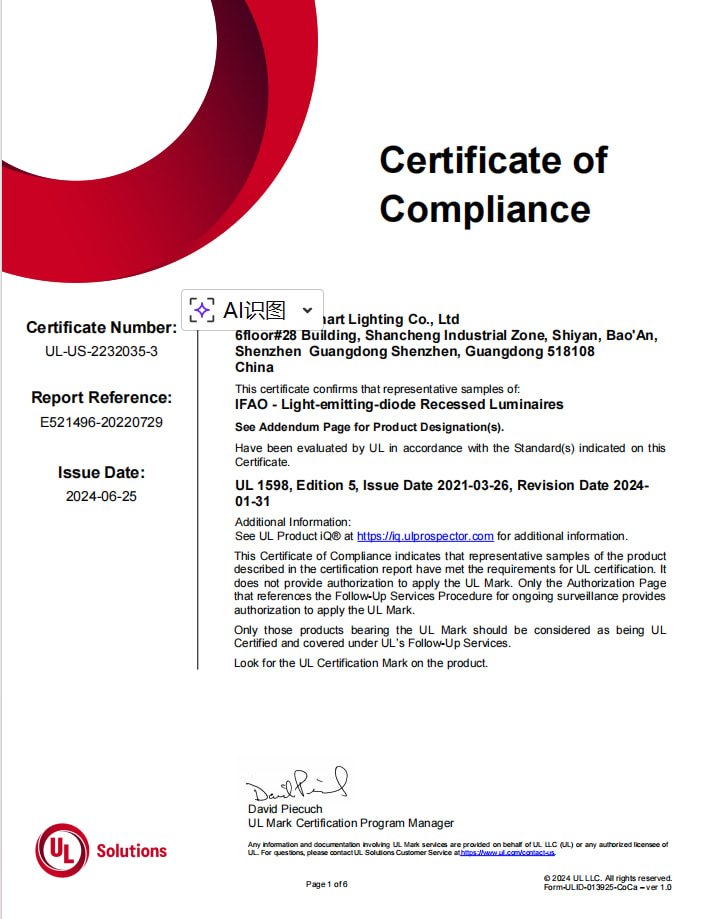
UL Listed generally applies to a complete product or system intended for field installation according to its instructions and evaluated application.
UL Solutions describes Listing as applying to complete products and equipment investigated against applicable construction and performance requirements.
The evaluation may cover items such as:
- Electrical insulation
- Temperature
- Abnormal operation
- Fire risk
- Strain relief
- Wiring
- Enclosures
- Spacings
- Markings
- Installation instructions
- Component suitability
For LED lighting, the relevant standard and product category depend on the construction and intended use. Examples of lighting-related standards include UL 8750 for LED equipment used in lighting products and UL 1598 for luminaires, but these are not automatically the correct standards for every LED strip.
The certification body determines the applicable category and standard.
Read UL Solutions’ explanation of Listed and Recognized products.
Does UL Listed mean the product is approved everywhere?
No.
UL Listing indicates that a product was evaluated within the certification scope. Installation acceptance is still affected by:
- Local electrical code
- Intended use
- Installation instructions
- Environmental conditions
- Accessories
- Power supply
- Field modifications
- The Authority Having Jurisdiction, or AHJ
A Listed dry-location system does not become suitable for a swimming pool because the strip has been placed inside a waterproof tube.
Check the complete mark
A North American mark may indicate:
- United States only
- Canada only
- Both the United States and Canada
Do not assume that a U.S. mark automatically covers Canada.
What Does UL Recognized Mean?
UL Recognized applies to components and subassemblies intended to be integrated into a larger end product.
Examples can include:
- LED modules
- Power supplies
- Wire
- Connectors
- Printed circuit boards
- Plastics
- Switches
- Cable assemblies
The UL Recognized Component Mark is different from the UL Listed Mark. It normally contains the familiar reversed “UR” symbol rather than the word “LISTED.”
According to UL Solutions, Recognized Components are evaluated under specific Conditions of Acceptability. These conditions define how the component may be used in the final product. See UL’s official explanation of Component Recognition.
Conditions may include:
- Maximum voltage
- Maximum current
- Temperature limits
- Required enclosure
- Required insulation
- Mounting method
- Required spacing
- Permitted wire
- Indoor or outdoor use
- Required upstream protection
- Maximum strip length
Why Recognized does not mean Listed
A Recognized LED strip may be suitable for integration into a Listed luminaire.
It does not automatically mean that the strip can be installed as a complete standalone lighting system in any location.
The final luminaire manufacturer still has to evaluate:
- How the strip is mounted
- Which power supply is used
- Whether the enclosure is suitable
- Connector temperature
- Wire strain relief
- Accessible live parts
- Installation instructions
- Final product temperature
When is UL Recognized useful?
UL Recognized components are particularly valuable for:
- Luminaire manufacturers
- Cabinet-lighting brands
- Sign manufacturers
- Appliance manufacturers
- OEM fixture developers
- Companies pursuing a final UL or ETL Listing
Using an appropriate Recognized Component can simplify end-product evaluation, but it does not remove the need to certify the final product.
What Does ETL Listed Mean?
The ETL Listed Mark is a North American product-certification mark issued through Intertek.
Intertek is recognized by the U.S. Occupational Safety and Health Administration as a Nationally Recognized Testing Laboratory, or NRTL.
An NRTL can test and certify products to standards within its recognized scope. OSHA recognizes multiple NRTLs, including UL and Intertek. See OSHA’s NRTL program.
Is ETL less valid than UL?
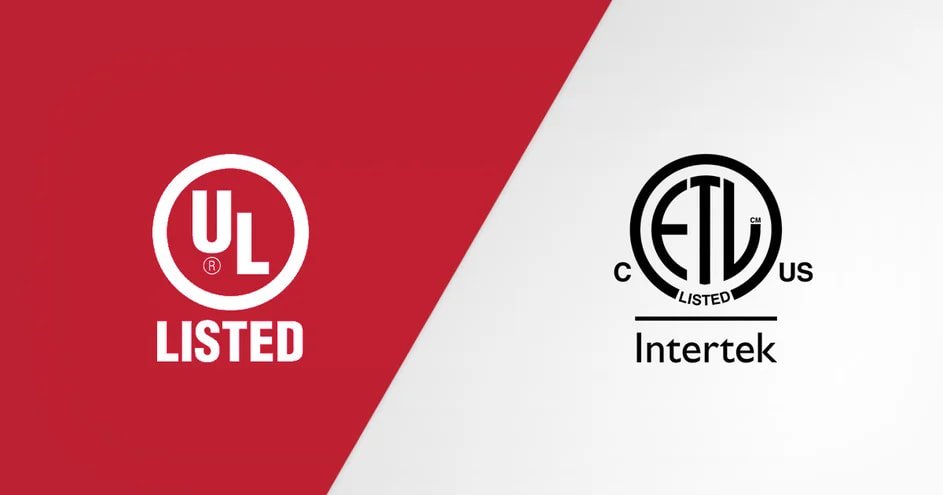
No.
ETL is not a lower safety level simply because the certification body is different.
A product carrying an ETL Listed Mark has been evaluated by Intertek to the applicable safety standard identified in the certification.
The important questions are:
- Which standard was used?
- Which models are covered?
- Is the mark for the U.S., Canada or both?
- Is the listing active?
- Does the product match the directory entry?
- Is the application within the evaluated scope?
Intertek provides an ETL Listed Mark directory for verification.
UL standards versus UL certification
A common misunderstanding is:
If a product is tested to a UL standard, it must carry a UL mark.
That is incorrect.
A recognized NRTL may certify a product to an applicable consensus safety standard within its scope. The standard and the certification organization are not the same thing.
For example, Intertek may evaluate a product against an applicable UL safety standard and authorize the ETL Mark.
UL Listed vs ETL Listed
| Question | UL Listed | ETL Listed |
| Certification organization | UL Solutions | Intertek |
| OSHA-recognized NRTL | Yes, within recognized scope | Yes, within recognized scope |
| Can evaluate to applicable North American standards | Yes | Yes |
| U.S. and Canadian mark versions | Available | Available |
| Online verification directory | UL Product iQ | Intertek ETL Directory |
| Factory follow-up or surveillance | Required by certification program | Required by certification program |
| Automatically accepted for every installation | No | No |
| Final authority | Applicable code and AHJ | Applicable code and AHJ |
The better choice often depends on:
- Customer specification
- Retailer requirements
- Project specification
- Certification schedule
- Existing component files
- Market familiarity
- Cost
- Laboratory availability
“UL Approved” Is Not a Formal UL Certification Term
Suppliers frequently describe products as:
- UL approved
- UL compliant
- Designed to UL
- Built with UL parts
- UL pending
These statements do not mean UL Listed or UL Recognized.
UL Solutions states that “UL Approved” is not a formal UL designation. The recognized certification types include UL Listed, UL Classified and UL Recognized Component. See UL’s lighting certification guidance.
Always ask for:
- Exact mark type
- File number
- Product category
- Covered model
- Certification status
What Does CE Marking Mean?
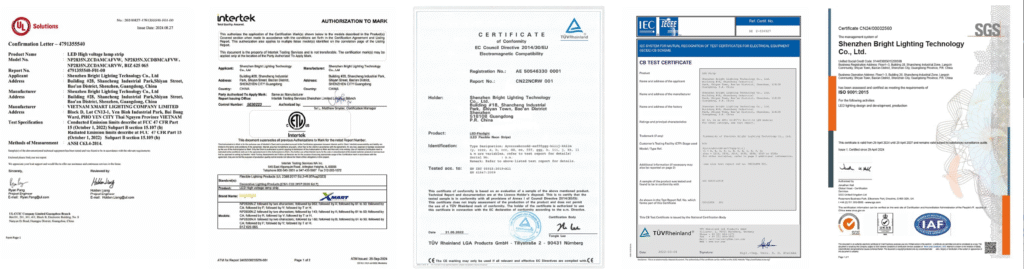
CE marking indicates that the manufacturer declares the product complies with all applicable EU legislation requiring CE marking.
The manufacturer is responsible for:
- Identifying the applicable legislation.
- Identifying relevant requirements and standards.
- Completing the conformity-assessment procedure.
- Preparing technical documentation.
- Signing the EU Declaration of Conformity.
- Affixing the CE marking correctly.
The European Commission states that the manufacturer is responsible for conformity assessment, technical documentation, the EU Declaration of Conformity and affixing the CE mark. See the European Commission’s CE guidance.
Is CE a third-party certification?
Not necessarily.
For many electrical products, the manufacturer can complete the applicable conformity-assessment procedure without a notified body.
An independent laboratory may produce test reports supporting the technical file, but the manufacturer still takes legal responsibility for the Declaration of Conformity.
Therefore, the phrase “CE certificate” can be misleading.
Buyers should request:
- EU Declaration of Conformity
- Applicable legislation
- Applied standards
- Product identification
- Manufacturer identification
- Test reports
- Technical-file availability
- Authorized signature
CE marking is not a quality award
CE does not mean:
- Premium quality
- Long lifetime
- High efficiency
- Good color consistency
- Waterproof reliability
- Successful installation in every EU country
It indicates declared conformity with applicable EU legal requirements.
Not every product may carry CE
The EU states that CE marking should be used only when the product falls within legislation requiring it. It should not be added simply because a customer requests a CE logo. See the EU’s CE marking guidance.
Which EU Requirements Can Apply to LED Strip Systems?
The applicable legislation depends on how the product is designed and placed on the market.
Potential areas include:
- Low-voltage electrical safety
- Electromagnetic compatibility
- Radio equipment
- RoHS
- Ecodesign
- Energy labelling
- General product safety
- Waste and producer-responsibility obligations
Not every requirement applies to every strip.
Low Voltage Directive
The EU Low Voltage Directive applies to equipment designed for use between:
- 50V and 1,000V AC
- 75V and 1,500V DC
Most 12V, 24V, 36V and 48V DC strips fall below the LVD’s 75V DC lower boundary.
That does not automatically mean the product needs no CE documentation.
Other EU legislation may still apply. For example:
- RoHS can apply to electrical and electronic equipment.
- EMC may apply to finished apparatus.
- A wireless controller may fall under radio-equipment rules.
- The mains-powered driver may fall within LVD scope.
The compliance analysis must consider the complete product boundary.
Electromagnetic Compatibility
The EMC Directive addresses whether equipment creates excessive electromagnetic disturbance and whether it can operate adequately in its electromagnetic environment.
A passive strip and an addressable strip containing switching ICs may require different analysis.
A complete system containing a driver, PWM controller and wireless interface cannot be assessed from the strip alone. See the EU EMC Directive.
What Is the IECEE CB Scheme?
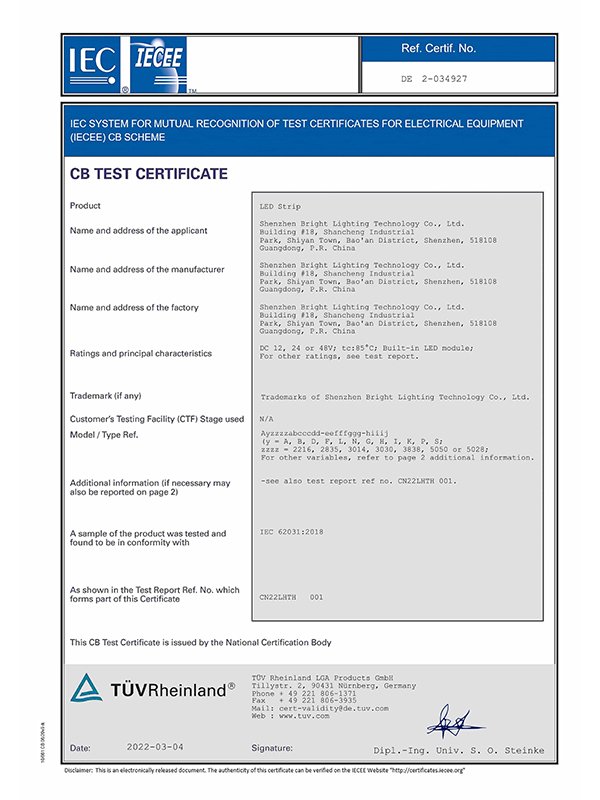
The IECEE CB Scheme is an international system for the mutual recognition of test certificates and reports for electrotechnical equipment and components tested to IEC standards.
A CB package normally includes:
- CB Test Certificate
- CB Test Report
- Product description
- Model identification
- Ratings
- Applied IEC standard
- Test results
- National differences where applicable
- Factory information
The IEC describes the CB Scheme as a multilateral agreement supporting acceptance of test reports among participating national certification bodies. See the IEC explanation.
Is CB a global safety approval?
No.
A CB Test Certificate is valuable evidence, but it is not a universal installation approval.
A manufacturer may use the CB certificate and report to apply for national marks or approvals. The receiving certification body may still require:
- National deviations
- Additional samples
- Document review
- Factory inspection
- Local-language information
- Additional testing
- Local certification fees
Is there a CB product mark?
The CB Scheme does not create a normal consumer product mark comparable to UL Listed or ETL Listed.
Buyers should ask for the CB Test Certificate and associated Test Report—not simply a CB logo on a brochure.
What does CB not automatically cover?
The answer depends on the certificate scope and standard, but CB does not automatically prove:
- EMC compliance
- Radio compliance
- RoHS compliance
- Energy efficiency
- Local installation approval
- Chemical resistance
- IP durability
- Market access in every country
Always read the standard and scope shown on the certificate.
What Does RoHS Mean?
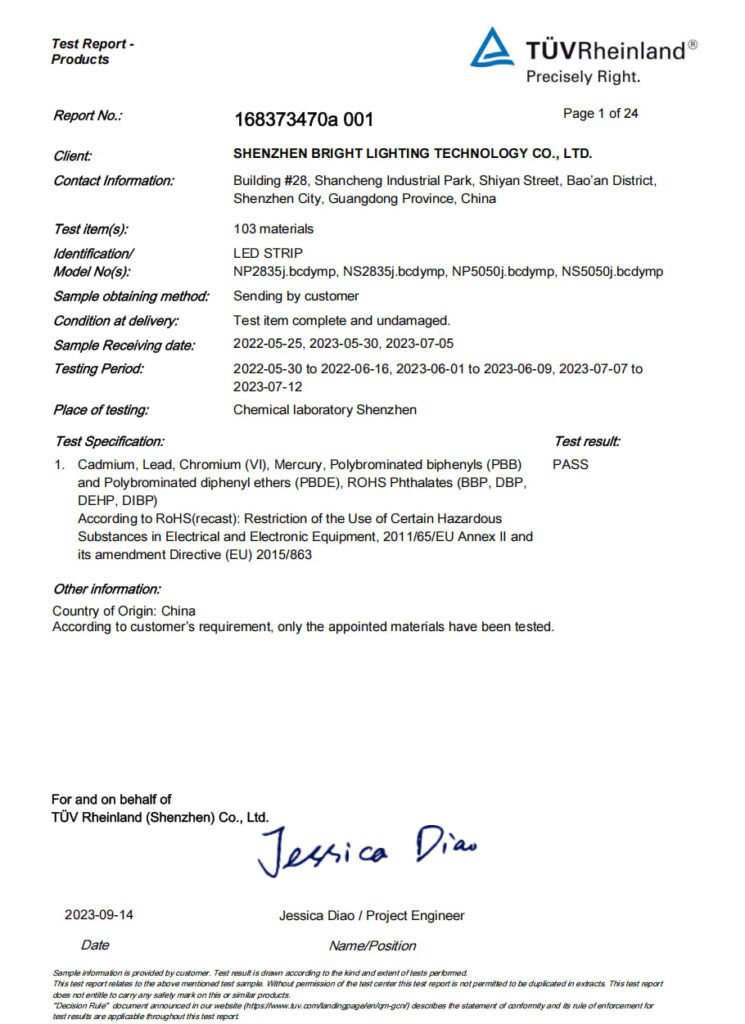
RoHS stands for Restriction of Hazardous Substances.
The EU RoHS Directive restricts hazardous substances in electrical and electronic equipment.
The current list contains ten restricted substances:
- Lead
- Mercury
- Cadmium
- Hexavalent chromium
- Polybrominated biphenyls
- Polybrominated diphenyl ethers
- DEHP
- BBP
- DBP
- DIBP
The European Commission maintains the official RoHS information and current substance list. See the European Commission’s RoHS page.
Does RoHS mean lead-free?
Not absolutely.
RoHS uses concentration limits in homogeneous materials and includes exemptions for defined applications.
In general, the maximum concentration is:
- 0.1% by weight for most listed substances
- 0.01% for cadmium
The analysis applies to homogeneous materials, not only the average weight of the complete product.
An LED strip may contain different homogeneous materials, including:
- Copper conductor
- Solder
- PCB substrate
- LED package materials
- Resistor materials
- Silicone
- PVC
- Adhesive
- Wire insulation
- Connector plastic
- Metal terminals
A single test on the finished strip may not identify the risk in every material.
Does RoHS prove electrical safety?
No.
RoHS does not prove:
- Insulation safety
- Temperature safety
- Fire resistance
- Short-circuit protection
- Connector current capacity
- Waterproofing
- Driver safety
- Product lifetime
RoHS is a substance-restriction requirement.
Compliance Belongs to the Model—not the Company
This is one of the most important purchasing rules.
A factory may hold a valid UL, ETL, CB or CE document for one product series while selling many other products outside that scope.
For example, a certificate may cover:
- 24V single-color IP20 strip
- 8mm PCB
- Defined wattage range
- Specific LED package
- Named factory
- Specific model codes
It may not cover:
- 48V version
- RGBW version
- IP67 silicone extrusion
- Different PCB width
- Higher wattage
- Different production factory
- Modified model number
- Another brand name
The existence of a certificate does not prove that every item in a catalog is certified.
Xmart maintains a certificate and compliance center covering different LED strip and lighting categories. Buyers should still request the documents for the exact model, construction, market and production location being ordered.
Certification Does Not Automatically Transfer Across a System
Consider this combination:
- UL Recognized LED strip
- CE-marked power supply
- Unlisted controller
- Generic connector
- Custom aluminum profile
- Field-installed waterproof enclosure
This combination is not automatically a UL Listed lighting system.
Likewise:
- A CE-marked driver
- RoHS-compliant strip
- CE-marked controller
does not automatically prove that the assembled finished luminaire complies with all EU requirements.
The manufacturer or system integrator must assess the final product.
What Documents Should Buyers Request?
| Claim | Documents to request |
| UL Listed | Listing file, model scope, mark type, rating, category and database entry |
| UL Recognized | Recognition file, model scope and Conditions of Acceptability |
| ETL Listed | ETL directory entry, control number, model scope, standard and mark version |
| CE | EU Declaration of Conformity, applicable legislation, standards and supporting reports |
| CB | CB Test Certificate and complete CB Test Report |
| RoHS | Declaration, BOM/material evidence, supplier declarations and relevant test reports |
| IP rating | Test report showing exact construction, joints and test conditions |
| Fire rating | Material and product reports with covered thickness and construction |
| EMC | Test report for the actual driver/controller/system configuration |
A 12-Point Certificate Verification Checklist
1. Verify the certificate holder
Does the company name match the manufacturer or authorized certificate holder?
2. Verify the factory
Does the production location match the factory making your order?
3. Verify the exact model number
Do not accept “similar model” without evidence that it belongs to the certified series.
4. Verify electrical ratings
Check:
- Voltage
- Current
- Wattage
- Frequency
- Channel count
5. Verify the construction
Check whether the certificate covers:
- PCB width
- LED type
- Waterproofing
- Connector
- Cable
- Enclosure
- Product length
6. Verify the intended environment
Confirm:
- Dry
- Damp
- Wet
- Outdoor
- Indoor
- High-temperature
- Submersible
7. Verify the certification mark
Look for the correct Listed, Recognized, U.S., Canadian or combined version.
8. Verify the standard
The report must identify the standard used for evaluation.
9. Verify the online directory
Search the relevant UL Product iQ or ETL directory where applicable.
10. Verify the certificate status
Check whether it is active, withdrawn, superseded or limited.
11. Verify the label on the product
A PDF certificate does not replace required product marking.
12. Verify production change control
Ask whether changes to LEDs, PCB, silicone, wire, connector or factory require certification review.
Common Certificate Red Flags
Be cautious when:
- The supplier uses the phrase “UL Approved.”
- The certificate belongs to another company.
- The purchased model is missing.
- The voltage or wattage does not match.
- The factory address differs.
- Only the first page of a report is provided.
- A test report is described as a Listing.
- A CE logo is supplied without a Declaration of Conformity.
- A CB logo appears on the product without a CB certificate and report.
- One RoHS test is used for products with different materials.
- The certificate covers IP20 but the supplier claims it covers IP67.
- A Recognized Component is marketed as a complete Listed system.
- The mark cannot be found in the certification directory.
- The product label has been digitally added to a photograph.
Why BOM Changes Matter
Certification evaluates a defined construction.
Changes that may affect compliance include:
- Different LED package
- Different PCB supplier
- Different copper thickness
- Different resistor
- Different current-regulating IC
- Different wire
- Different connector
- Different silicone
- Different adhesive
- Different driver
- Different factory
- Increased wattage
- Added waterproofing
A component may look equivalent but behave differently during:
- Abnormal-operation testing
- Temperature testing
- Flame testing
- Dielectric testing
- Moisture testing
- EMC testing
- RoHS assessment
Certification control must continue after the first sample is approved.
How Xmart Supports Model-Specific Compliance
Xmart’s compliance process should begin with the destination market—not after the product has been selected.
Step 1: Define the product boundary
Confirm whether the buyer is purchasing:
- Bare LED strip
- Strip kit
- Strip with power supply
- Strip with controller
- Finished luminaire
- OEM component
- Private-label retail product
Step 2: Define the market
Examples include:
- United States
- Canada
- European Union
- United Kingdom
- Middle East
- Australia/New Zealand
- Multiple international markets
Step 3: Match an existing certified model or plan a new evaluation
The exact voltage, wattage, PCB, IP construction and controller must be compared with the certificate scope.
Step 4: Prepare the document package
Depending on the project, this may include:
- UL or ETL listing information
- Conditions of Acceptability
- CE Declaration of Conformity
- CB certificate and report
- RoHS documentation
- IP report
- Photometric report
- Product label
- Installation instructions
Step 5: Freeze the approved construction
The final BOM, materials, model number and markings must match the approved sample and relevant certification file.
Step 6: Control mass production
Xmart operates engineering and supply-chain support in China together with a Vietnam production and export base. For regulated products, certification scope, factory location and production change control should be confirmed before the order enters mass production. Learn more about Xmart’s manufacturing structure.
Step 7: Recheck before shipment
The final product, reel label, carton, instructions and certificate references should all identify the correct model.
Which Certification Does Your LED Strip Project Need?
North American field-installed lighting
Start by determining whether the complete system needs a Listing from an OSHA-recognized NRTL.
Check:
- Local code
- Project specification
- AHJ requirements
- Wet/dry location
- Power-supply status
- Installation method
OEM luminaire manufacturing
A UL Recognized LED component may support development of a final Listed luminaire, subject to its Conditions of Acceptability.
EU low-voltage LED strip
Identify whether RoHS, EMC, product-safety and other EU requirements apply.
Do not assume a 24V strip falls under the Low Voltage Directive merely because it is described as “low voltage.” The LVD has defined voltage boundaries.
Mains-voltage LED strip
High-voltage strip introduces a different safety scope from 12V or 24V strip. The strip, rectifier, connector, end cap and installation instructions must be evaluated as a system.
Wireless RGB or smart strip
Radio-equipment, EMC, cybersecurity or ecosystem requirements may apply to the controller even if the strip itself is passive.
Multi-country product launch
A CB certificate and report may reduce duplicated testing, but national approvals and deviations still need to be planned.
Frequently Asked Questions
Is UL Listed better than UL Recognized?
They serve different purposes. Listed generally applies to complete products, while Recognized applies to components used within another product.
Can I install a UL Recognized LED strip directly?
Only if the installation complies with the component’s Conditions of Acceptability and all applicable final-system requirements. Recognition alone does not make it a standalone Listed system.
Is ETL accepted instead of UL?
ETL is an NRTL certification mark issued by Intertek. Acceptance still depends on the standard, certification scope, code and AHJ.
Is ETL tested to lower standards?
No. The certification body may differ, but products are evaluated to the applicable standards within the NRTL’s scope.
Is CE the European version of UL?
No. CE is a legal conformity marking system. UL Listing is third-party product certification. Their structures and purposes are different.
Is CE always self-certified?
The required conformity-assessment route depends on the applicable EU legislation. Many products can be manufacturer-declared, while some categories require notified-body involvement.
Does a 24V strip need CE marking?
The answer depends on how the product is placed on the EU market and which legislation applies. It may fall below the LVD voltage threshold while still being affected by RoHS or other requirements.
Is CB accepted everywhere?
No. CB reports support applications to participating certification bodies, but national requirements may remain.
Is RoHS a safety certification?
No. RoHS restricts hazardous substances. It does not prove electrical, thermal or fire safety.
Does RoHS mean zero lead?
No. RoHS uses concentration limits in homogeneous materials and includes defined exemptions.
Does one certificate cover every waterproof version?
Not necessarily. Adding silicone coating, tubing, extrusion, cables or end caps can change the evaluated construction.
Can I change the LED chip after certification?
A component change may require review by the certification body. Do not assume it is allowed because the electrical rating looks similar.
How can I verify an LED strip certificate?
Match the certificate holder, factory, model, ratings, construction and mark against the product, then verify the listing in the appropriate online directory.
Final Takeaway
The correct question is not:
Which certification logos does the supplier have?
It is:
Which documents cover the exact model, construction, production factory and intended market of my order?
Remember:
- UL Listed generally addresses a complete product.
- UL Recognized addresses a component and its conditions of use.
- ETL is a valid NRTL product-certification pathway.
- CE is a manufacturer’s declaration of conformity with applicable EU legislation.
- CB supports international recognition of IEC test results.
- RoHS restricts hazardous substances but does not prove safety.
- None of these automatically covers every product made by the same company.
When contacting Xmart, provide:
- Destination country
- Product type
- Voltage
- Wattage
- IP construction
- Required length
- Driver and controller
- Installation environment
- Customer or project certification requirement
- Whether the product will be sold as a component or finished system
Xmart can then check whether an existing model and document set matches the project or whether additional testing and certification planning are required.