High-voltage AC LED strips are usually better for long, continuous runs where reducing power supplies and feed points is more important than short cutting intervals or touch safety.
Low-voltage DC LED strips are usually better for furniture, cabinets, detailed architectural lighting, wet or accessible locations, complex dimming systems and projects requiring precise lengths.
The most important difference is not brightness or energy consumption. It is the electrical architecture:
High-voltage AC reduces current and simplifies long-distance power distribution, but increases shock risk and termination requirements. Low-voltage DC improves installation flexibility and accessibility, but requires drivers, heavier low-voltage wiring and more power-feed planning.
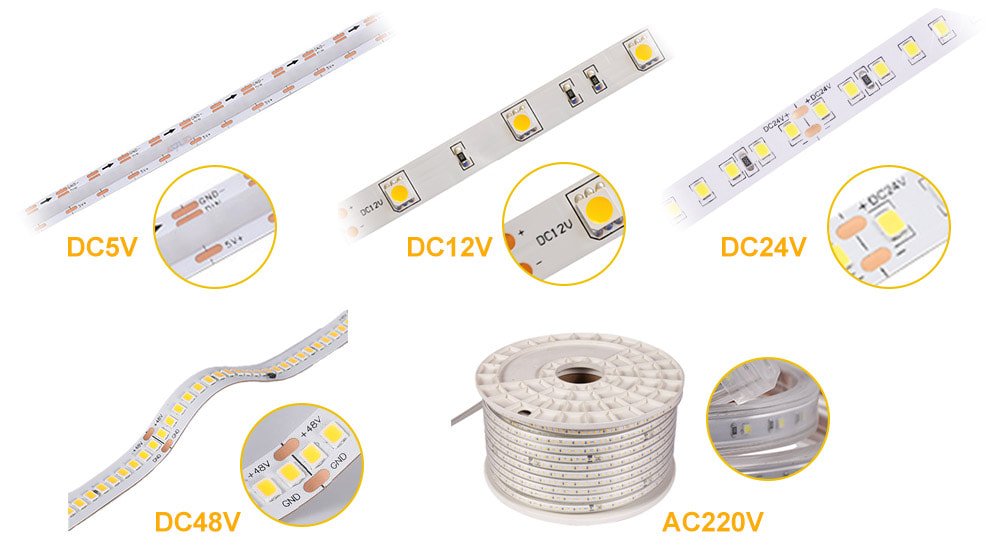
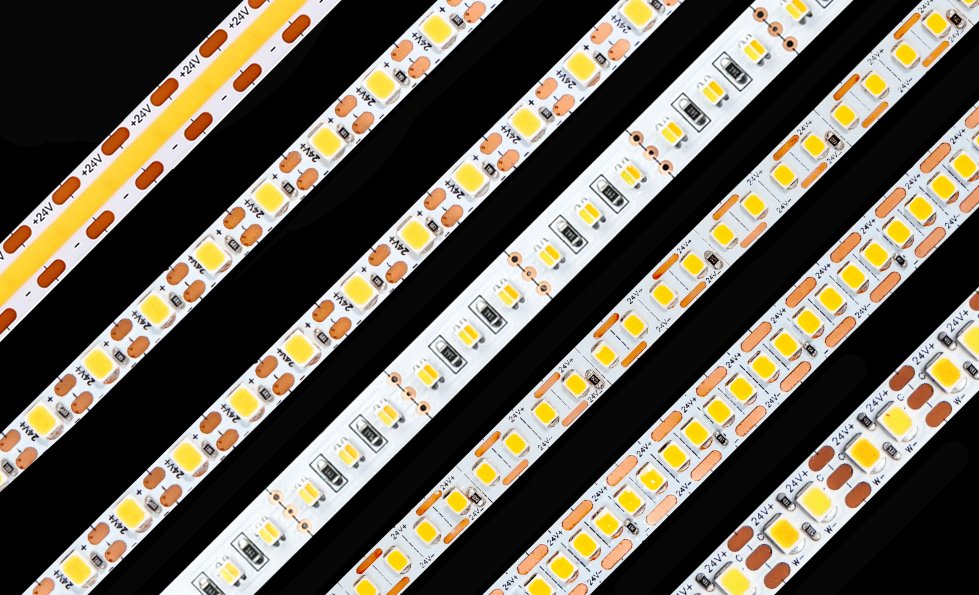
24v vs 48v vs 220v led strip
Neither system is universally cheaper, safer or more efficient.
AC vs DC LED Strip: Quick Comparison
Factor
High-voltage AC strip
Low-voltage DC strip
Typical input
110–120V AC or 220–240V AC
5V, 12V, 24V, 36V or 48V DC
External power supply
Usually no external low-voltage driver
Required
Electrical current
Lower for the same power
Higher for the same power
Continuous run length
Usually longer
Usually shorter unless engineered for long runs
Power injection
Less frequent
Often required on standard products
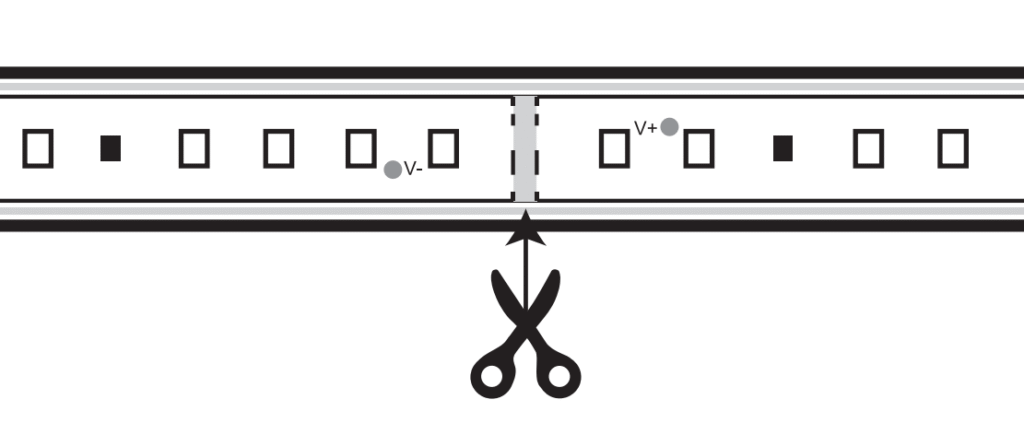
Cut length
Usually longer
Usually shorter and more precise
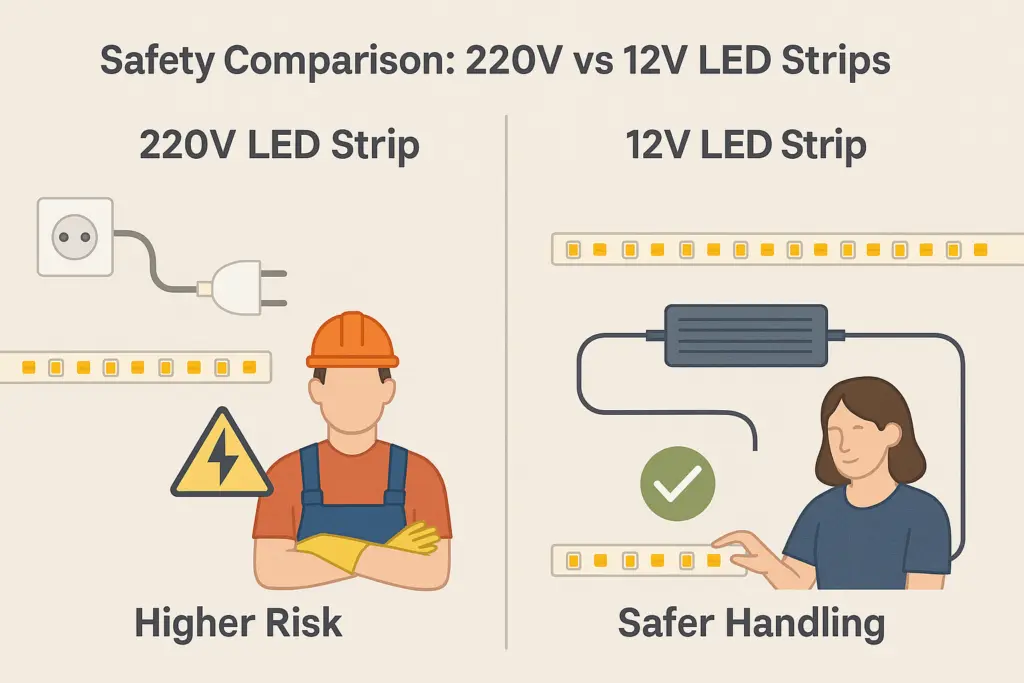
Shock risk
Line-voltage hazard
Lower at the strip, depending on system
Field handling
Qualified installation normally required
Easier, but not automatically risk-free
Dimming
Product-specific TRIAC, DALI or 0–10V interface
PWM, DALI, 0–10V, DMX and smart control options
Flicker risk
Can follow rectified mains waveform
Depends on driver and controller
Waterproof joints
Safety-critical
Important, but generally lower shock consequence
Best application
Long façades, outlines and continuous commercial runs
Cabinets, furniture, coves and detailed lighting
Maintenance
Fewer feeds but higher-voltage isolation
More drivers and feeds but safer section work
Project cost
Can be lower on long simple runs
Can be lower on short or complex installations
First: High Voltage Does Not Mean Higher Power Consumption
A common misconception is that a 230V strip consumes more electricity than a 24V strip simply because its voltage is higher.
Power is calculated as:
Power = voltage × current
For the same 100W lighting load:
System
Voltage
Approximate current
Low-voltage DC
12V
8.33A
Low-voltage DC
24V
4.17A
Low-voltage DC
48V
2.08A
High-voltage AC
120V
0.83A before power-factor considerations
High-voltage AC
230V
0.43A before power-factor considerations
Higher voltage reduces current for the same nominal power.
It does not automatically reduce the watts consumed by the LEDs.
A 10W/m AC strip and a 10W/m DC strip both have a nominal input of 10W per meter. Their actual efficiency depends on the LEDs, resistors, current regulation, rectification, operating temperature, power factor and optical construction.
What Is a High-Voltage AC LED Strip?
A high-voltage AC LED strip operates from mains-level voltage, commonly:
110V
120V
220-240V
These products are often called:
High-voltage LED strip
Mains-voltage LED strip
Driverless AC LED strip
Direct-to-mains LED strip
110V or 220V LED tape
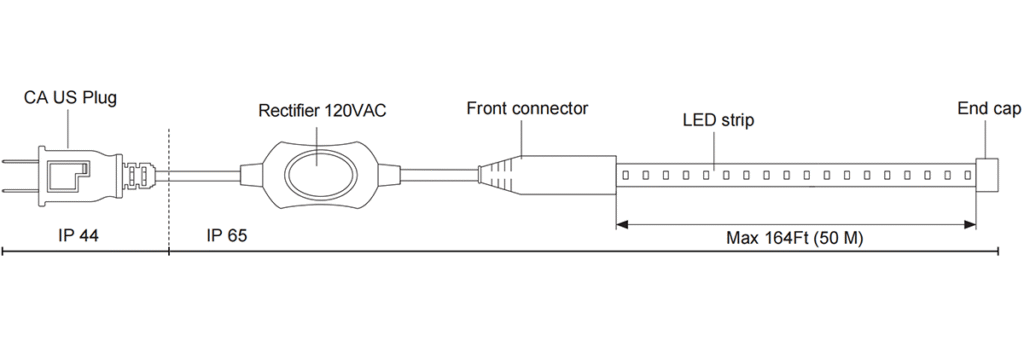
The strip normally contains or uses:
Rectification
Current-limiting components
Series LED circuits
Surge-control components
A mains-rated power connector
Insulated housing
End caps
Mechanical and electrical seals
Xmart’s driverless AC LED strip range is designed for long continuous lighting where reducing external power supplies and feed points can simplify the project.
“Driverless” Does Not Mean There Are No Electronics
LEDs cannot simply be connected to alternating current without a suitable electrical circuit.
A so-called driverless strip still requires a method to:
Rectify the AC waveform
Limit LED current
Protect LED strings
Manage reverse voltage
Handle mains transients
Connect safely to the electrical supply
“Driverless” normally means that there is no separate bulky AC-to-low-voltage DC power supply.
It does not mean:
No rectifier
No current-regulation circuit
No surge risk
No flicker risk
No safety components
No certification requirement
For buyer specifications, “integrated AC drive architecture” is often more accurate than “no driver.”
What Is a Low-Voltage DC LED Strip?
A low-voltage strip operates from a DC supply, commonly:
5V
12V
24V
36V
48V DC
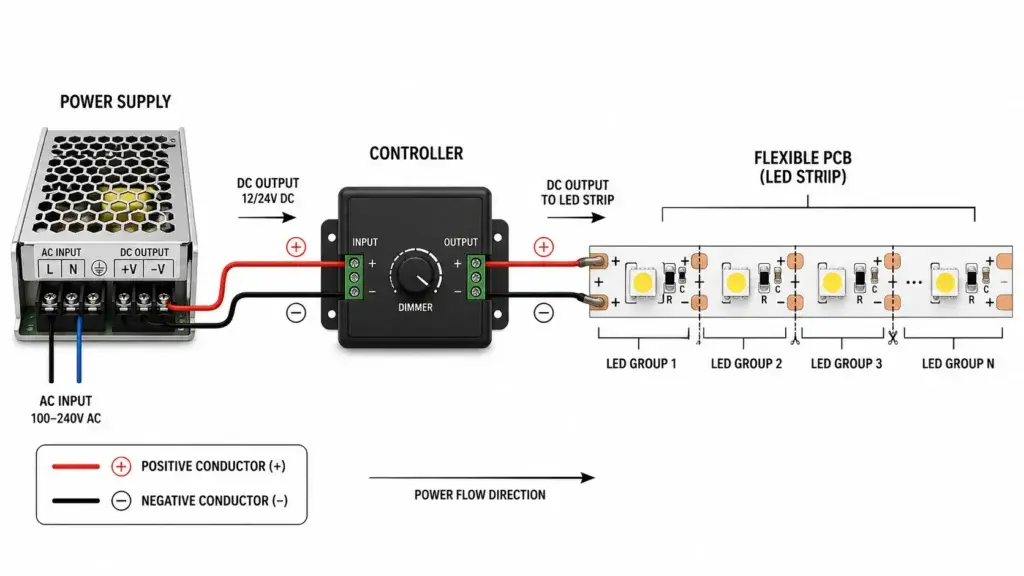
The system normally includes:
AC mains input
AC-to-DC power supply
Optional dimmer or controller
Low-voltage cable
LED strip
Connectors and power-injection points
The LED strip operates at lower voltage, but the power supply still connects to mains electricity.
Low voltage therefore moves the mains-voltage boundary away from the strip. It does not remove mains power from the complete installation.
Safety: AC and DC Are Not Equivalent
High-voltage AC strip
A 110V or 230V strip operates at a potentially lethal voltage.
Important risks include:
Direct contact with live conductors
Damaged insulation
Poorly sealed cut ends
Incorrect connectors
Water ingress
Unprotected cable entry
Field-cut sections with inadequate end caps
Mismatched voltage
Unsafe plug modifications
High-voltage strip should normally be installed, modified and tested by qualified personnel according to local electrical rules.
Low-voltage DC strip
A 12V or 24V strip presents a lower shock risk at the strip itself.
However, low voltage does not automatically mean:
SELV
PELV
Class 2
Touch-safe under every condition
Suitable for pools
Suitable for wet areas
Safe from fire risk
The classification depends on the power supply, isolation, power limits, grounding and applicable standards.
A powerful 24V supply can deliver enough current to overheat wires, connectors and PCB traces during a short circuit.
Class 2 is not another word for 24V
In North America, a Class 2 lighting system must meet applicable voltage and power limitations and use an appropriate power source.
A generic 24V power supply is not automatically a Class 2 supply.
UL identifies UL 2108 as a standard for low-voltage lighting systems and UL 8750 as a standard for LED equipment used in lighting products. See UL’s lighting safety guidance.
European Voltage Classification
The EU Low Voltage Directive applies to electrical equipment designed for use between:
50V and 1,000V AC
75V and 1,500V DC
Therefore:
A 110V or 230V AC strip is within the LVD voltage range.
A 12V, 24V, 36V or 48V DC strip is below the LVD’s 75V DC lower boundary.
The mains-powered driver used by a DC system can still fall within LVD scope.
Being below the LVD boundary does not mean the DC strip has no EU compliance requirements. RoHS, EMC, general safety or other requirements may still apply depending on how the product is placed on the market.
Wet Locations Change the Decision
Water reduces skin resistance and increases electrical risk.
For wet, accessible or conductive locations, do not select a voltage from the IP rating alone.
The design must consider:
Local electrical zones
Permitted voltage
Isolation
Ground-fault protection
Driver location
Cable entry
Connector position
Maintenance access
Corrosion
Water chemistry
Condensation
OSHA notes that GFCI protection can quickly interrupt ground-fault current, but it does not protect against every form of direct line contact. See OSHA’s GFCI guidance.
A GFCI or RCD is an additional protective measure. It does not turn an exposed 120V or 230V conductor into a safe conductor.
For pools, spas, fountains and similar locations, low-voltage isolated systems are generally the appropriate starting point, subject to local regulations and the complete product approval.
Why High-Voltage AC Strips Run Farther
The main reason is lower current.
Resistive power loss is related to:
Power loss = current² × resistance
If current is reduced by half, resistive loss becomes approximately one-quarter for the same resistance.
Consider a 50m installation at 10W/m:
Total nominal power = 50m × 10W/m = 500W
Approximate current:
System voltage
Approximate current
12V DC
41.7A
24V DC
20.8A
48V DC
10.4A
120V AC
4.17A before power-factor considerations
230V AC
2.17A before power-factor considerations
A standard 24V strip cannot normally carry 20.8A through one small PCB feed. The installation must be divided into shorter branches with multiple feeds and appropriate drivers.
A high-voltage strip can carry the equivalent power at much lower current, allowing longer continuous runs.
Long Run Does Not Mean Zero Voltage Drop
All conductors have resistance.
High-voltage strip still experiences:
Conductor loss
Component loss
End-of-run variation
Temperature rise
Power-factor effects
Voltage fluctuation
Connector loss
The percentage voltage drop may be smaller because the system voltage is higher, but it is not zero.
A professional long-run specification should define:
Maximum powered length
Test voltage
Watts per meter
Beginning current
End voltage
Beginning and end brightness
Ambient temperature
Stabilization time
Acceptable brightness difference
Do not accept “50m with no voltage drop” as a complete test result.
48V DC Changes the Comparison
The choice is not limited to 24V DC or mains-voltage AC.
A 36V or 48V DC strip can provide a middle option:
Lower current than 12V or 24V
Longer runs
External isolated power supply
More flexible dimming
Lower voltage at the strip
Shorter cut intervals than many AC strips
Easier integration with controls
Xmart’s 36V and 48V long-run LED strip systems are intended for projects where standard 24V runs require too many feed points but line-voltage strip is undesirable.
This is especially relevant for:
Hotels
Long corridors
Architectural coves
Commercial façades
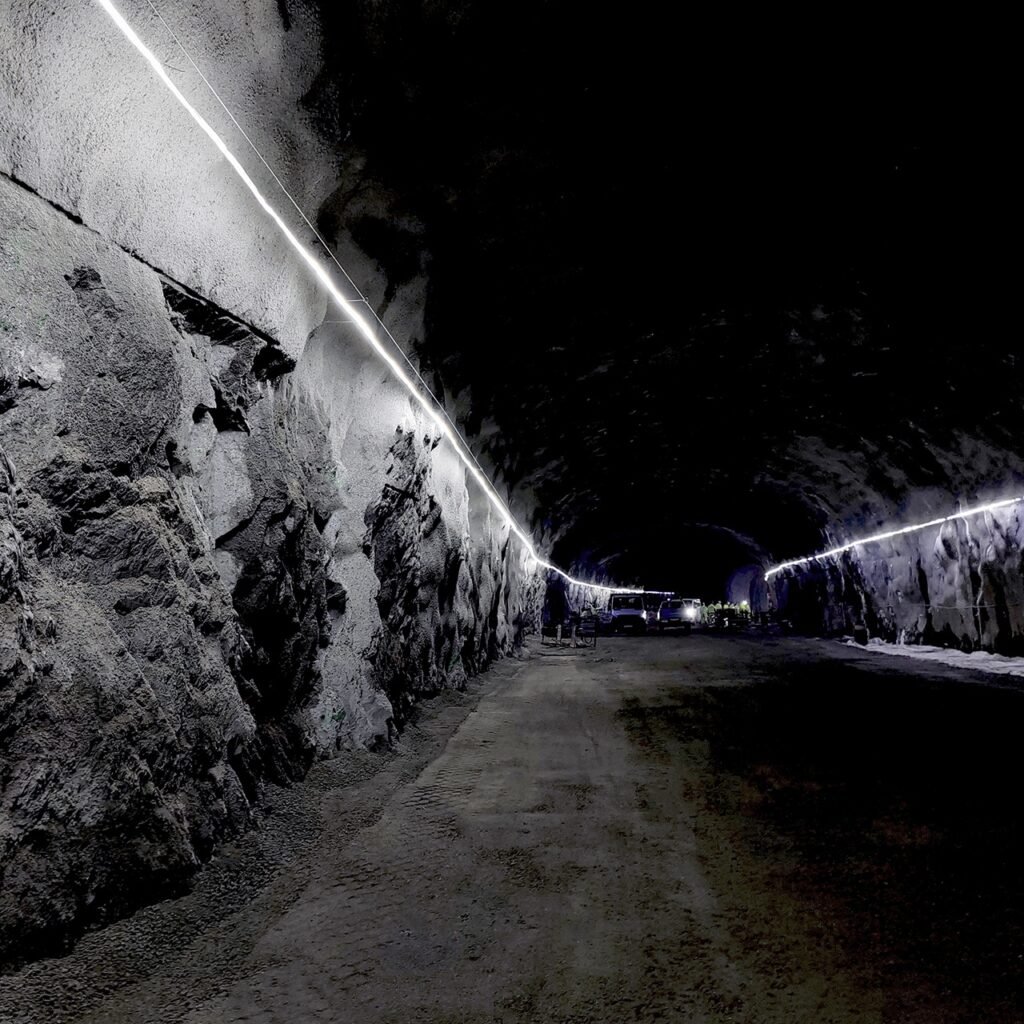
Tunnels
Mining routes
Large retail spaces
The best long-run comparison is often:
Standard 24V vs current-regulated 48V vs high-voltage AC
—not simply 24V vs 230V.
Cut Length and Design Precision
Low-voltage DC strip
DC strip typically offers shorter cutting intervals because fewer LEDs are connected within each electrical segment.
Depending on the circuit, cut lengths may range from a few millimeters to 100mm or more.
This makes DC strip suitable for:
Cabinets
Shelves
Furniture
Display cases
Small coves
Short profiles
Detailed architectural dimensions
High-voltage AC strip
AC strip generally connects more LEDs in series to operate from the higher voltage.
Traditional products may use cut intervals such as:
0.5m
1m
Some newer circuit designs offer shorter intervals, but the specific value must be confirmed from the actual model and certification file.
Why cut length affects project cost
If the required line is 3.7m and the AC strip cuts every 1m, the installer may have to choose between:
Ending at 3m
Extending to 4m
Redesigning the detail
Hiding an unlit or excess section
A 24V strip with a 50mm cut interval can fit the space much more accurately.
A cheaper strip can become more expensive when it cannot match the architecture.
Installation Comparison
High-voltage AC installation requires
Correct regional voltage
Mains-rated plug or junction
Compatible rectifier or power entry
Approved connector
Approved end cap
Mechanical strain relief
Correct fuse or circuit protection
Ground-fault protection where required
Suitable insulation
Controlled field cutting
Qualified installation
Safe isolation for maintenance
Low-voltage DC installation requires
Correct constant-voltage driver
Driver access and ventilation
Cable-size calculation
Controller capacity
Power-injection planning
Multiple branches where required
Correct polarity
Low-voltage connector ratings
Fusing for high-current branches
Voltage-drop verification
High-voltage AC can reduce the number of components, but every connection carries greater electrical consequence.
Low-voltage DC uses more components, but the strip-side installation is generally easier to handle and divide into zones.
High Voltage Is Not Automatically Easier to Install
A 50m AC reel may appear simpler because it needs only one power entry.
But the complete installation may still require:
Protected junction boxes
Qualified labor
Mains-rated cable
Isolation points
Factory-sealed custom lengths
Specialized repair kits
Electrical inspection
Access restrictions
Replacement planning
If the project contains many corners, branches or exact cut lengths, DC can be faster even though it uses more power supplies.
The shape of the project matters as much as its total length.
Dimming and Control
Low-voltage DC systems
DC strips are widely compatible with:
PWM
0–10V
DALI
DMX512
KNX
Casambi
Zigbee
Bluetooth
Wi-Fi
Matter-compatible controllers
The building-control protocol may operate the driver or controller, which then provides the appropriate DC output to the strip.
High-voltage AC systems
AC strips may support:
TRIAC or phase-cut dimming
Specialized DALI interfaces
0–10V-controlled devices
Proprietary dimmers
Compatibility must be verified for the exact circuit.
A product being connected to AC does not automatically make it compatible with a standard wall dimmer.
Test:
Minimum load
Maximum load
Minimum brightness
Flicker
Audible noise
Restart behavior
Pop-on and dropout
Full-length operation
Flicker: AC Can Have a Hidden Disadvantage
A basic AC LED circuit may follow the rectified mains waveform.
Depending on the design:
50Hz mains can produce modulation at 100Hz after full-wave rectification.
60Hz mains can produce modulation at 120Hz.
Improved circuits can reduce this modulation, so high-voltage AC strip should not automatically be described as flickering.
For offices, hotels, retail, schools, machinery areas or camera-sensitive projects, request:
Optical waveform
Modulation frequency
Modulation depth
PstLM
SVM
Performance at full output
Performance when dimmed
Camera test where relevant
A smartphone video is useful for screening but not for certification.
Power Factor, Harmonics and Surge
These factors become more important when many meters of AC strip are connected directly to the electrical supply.
Power factor
At the same real power, poor power factor can increase RMS current and electrical-system loading.
The simple calculation of watts divided by voltage may not equal the actual RMS input current of a nonlinear AC product.
Harmonic current
Rectifiers and switching circuits can distort the input-current waveform. Large installations should consider applicable EMC and power-quality requirements.
Surge
Outdoor façades, long cable routes and industrial sites can be exposed to switching or lightning-related transients.
A high-voltage strip’s integrated electronics must be evaluated for the expected surge environment.
DC systems have a different boundary
In a DC system, much of the power-factor, harmonic and surge performance is handled by the external driver.
This allows the designer to select a driver according to:
Input range
Surge rating
Power factor
Harmonic performance
Dimming
Protection
Warranty
Replacement strategy
AC strip integrates more of that electrical behavior into the product itself.
Is High Voltage Brighter or More Efficient?
Not automatically.
Brightness depends on:
Lumens per meter
Watts per meter
LED efficacy
Optical construction
Operating temperature
Voltage regulation
End-of-run performance
Efficiency should be compared using:
Luminous efficacy = stabilized lumens per meter ÷ actual watts per meter
For AC products, measure true input power with an appropriate power analyzer. Do not calculate watts using voltage multiplied by a simple current reading without considering power factor and waveform.
Low-voltage strips are not inherently dimmer, and high-voltage strips are not inherently brighter.
Heat and Fire Risk
At the same useful light output, neither voltage category automatically runs cooler.
Temperature depends on:
Actual watts per meter
LED efficacy
Circuit losses
PCB or conductor construction
Encapsulation
Mounting surface
Ambient temperature
Profile
Airflow
Installation duration
Higher voltage reduces resistive distribution loss by reducing current. It does not remove the heat generated by the LEDs and current-control components.
Low-voltage fire risks
Overloaded power supplies
Undersized wires
Overloaded connectors
Unfused high-current branches
Short circuits
Poor ventilation
Strip powered while coiled
High-voltage fire and shock risks
Damaged insulation
Poor terminations
Water ingress
Incorrect end caps
Excessive run length
Mismatched voltage
Inadequate surge protection
Unapproved field repairs
Incorrect circuit protection
Waterproof Does Not Mean Electrically Safe
An IP rating describes protection against dust and water under defined test conditions.
It does not prove:
Touch safety
Electrical-zone compliance
Chlorine resistance
Salt resistance
UV resistance
Cable-entry reliability
Long-term outdoor aging
Safe field-cut joints
This distinction is especially important for high-voltage AC strip.
Every:
Power entry
End cap
Intermediate joint
Cable transition
Repair point
must maintain both electrical insulation and environmental protection.
For outdoor projects, factory-prepared and factory-sealed lengths are generally more controllable than improvised field terminations.
Reliability and Maintenance
High-voltage AC advantages
Fewer external power supplies
Fewer feed points
Less low-voltage cable
Long continuous runs
Simpler large-scale material layout
High-voltage AC maintenance risks
Mains isolation required
Specialized connectors and seals
Longer cut sections
Less flexible local repair
Greater consequence of insulation damage
Replacement product must match regional voltage
Low-voltage DC advantages
Safer strip-side maintenance
Smaller replaceable zones
More precise cuts
Easy control integration
Driver can be replaced separately
Flexible zoning
Low-voltage DC maintenance risks
More drivers
More feed points
More connectors
More possible failure locations
Difficult driver access
More voltage-drop-related faults
The better architecture is the one that minimizes lifecycle risk for the specific project—not merely the number of components.
Project Cost: Compare the Complete System
Do not compare only price per meter.
Use:
Total project cost = strip + power supplies + control + cable + connectors + protection + labor + testing + maintenance access + expected replacement
High-voltage AC cost items
AC strip
Power entry
Plug or junction box
Circuit protection
GFCI/RCD where required
Mains-rated connectors
End caps
Factory sealing
Qualified installation
Inspection
Maintenance isolation
Low-voltage DC cost items
DC strip
Power supplies
Controllers
Low-voltage cable
Power injection
Distribution boxes
Fuses
Connectors
Driver access
Additional installation labor
Three Project Cost Examples
Project 1: Eight meters of kitchen cabinets
Requirements:
Multiple cabinet sections
Many cable gaps
Exact lengths
Accessible lighting
Low-level dimming
Best starting point: 24V DC
Why:
Short cut intervals
Safer accessible voltage
Easier zoning
Better dimming flexibility
AC’s long-run advantage provides little value
Project 2: Fifty-meter building outline
Requirements:
Mostly continuous line
Few corners
Limited power-supply locations
Outdoor construction
Qualified electrical installation
Best starting point: High-voltage AC or engineered 48V DC comparison
High-voltage AC may reduce:
Drivers
Feed points
Low-voltage cable
Distribution boxes
But 48V DC may be preferred if:
Safer maintenance is required.
Advanced dimming is needed.
Mains voltage is not permitted along the line.
The project requires more precise cutting.
Project 3: Eighty-meter tunnel route
Requirements:
Continuous visibility
Harsh environment
Maintenance isolation
Long cable routes
Industrial compliance
Best starting point: Engineered 48V DC or certified high-voltage system
The final decision depends on:
Permitted voltage
Emergency-lighting strategy
Cable protection
Feed accessibility
Required redundancy
Certification
Maintenance procedure
Maximum run length alone should not decide the system.
Cost Comparison Worksheet
Before choosing, calculate:
Cost item
AC system
DC system
Strip cost
Number of power entries
Number of drivers
Feed-wire length
Distribution boxes
Controllers
Connectors and end caps
Protection devices
Installation hours
Commissioning hours
Replacement stock
Five-year maintenance estimate
Total
The cheapest strip can produce the most expensive installation.
When Should You Choose High-Voltage AC Strip?
Choose high-voltage AC as a starting point when:
Runs are long and continuous.
Few precise cuts are required.
Power-supply locations are limited.
Qualified installation is available.
Mains voltage is permitted in the installation zone.
The product has market-appropriate certification.
Connectors and end caps can be controlled.
Advanced pixel or multichannel control is not required.
The long-run saving exceeds the additional safety cost.
Typical applications include:
Building outlines
Long façades
Signage
Large commercial contours
Long corridors
Landscape boundaries
Temporary decorative structures, where specifically approved
Xmart supplies 110V/230V high-voltage LED strip systems with market-specific voltage, plug, connector and sealing options. The selected configuration must match the destination market and covered certification.
When Should You Choose Low-Voltage DC Strip?
Choose low-voltage DC when:
The strip is accessible.
Precise cutting is important.
The application involves furniture.
Wet-area rules favor isolated low voltage.
DALI, 0–10V, PWM or smart control is required.
Several lighting zones are needed.
Drivers can remain accessible.
Local section replacement is important.
Run lengths are short or medium.
The project uses RGBW, RGBCCT or addressable effects.
Typical applications include:
Cabinets
Shelves
Furniture
Retail displays
Hotel rooms
Residential coves
Mirrors
Museums
Smart-home lighting
Detailed architectural profiles
When Should You Choose 48V DC?
Choose 48V DC when:
Standard 24V requires too many feeds.
Mains voltage along the strip is undesirable.
Advanced low-voltage control is required.
Runs are long but not suitable for AC strip.
The project needs a balance of safety and distance.
Maintenance teams prefer isolated DC systems.
48V DC is not automatically SELV, Class 2 or suitable for every wet location. The power source and complete system still have to meet applicable requirements.
Xmart does not select voltage only from the requested length.
The project should first define:
Destination market
Installation environment
Total length
Longest continuous section
Required cut accuracy
Available power locations
Dimming and control
Accessibility
IP requirement
Maintenance method
Certification requirement
Target installed cost
Xmart can then compare:
Standard 12V/24V DC
Current-regulated 24V
36V/48V long-run DC
110V/120V AC
220V/230V/240V AC
The engineering team can develop the product and connection specification, while Xmart’s Vietnam manufacturing base supports factory-prepared lengths, plugs, connectors, end caps, labels and project packaging.
Certification must be confirmed for the exact model and destination market rather than inferred from the company’s overall certificate portfolio.
Frequently Asked Questions
Are high-voltage LED strips dangerous?
They operate at potentially lethal mains voltage. Safe use depends on certified construction, correct installation, insulation, protection, connectors, end caps and maintenance procedures.
Are 24V LED strips completely safe?
They present a lower shock risk at the strip, but high-current faults can still cause overheating or fire. The mains-powered driver also remains part of the system.
Is a 24V LED strip automatically Class 2?
No. Class 2 status depends on the power source, voltage, power limits and evaluated system—not the voltage label alone.
Do AC LED strips need a driver?
They usually do not require an external low-voltage driver, but they still use rectification and current-control electronics.
Can one AC strip work on both 110V and 230V?
Only if the specific product is designed, rated and certified for that input range. Never connect a 110V-only strip to 230V.
Do AC LED strips flicker?
Some designs can show mains-related temporal light modulation. Improved circuits can reduce it, so test the actual product.
Are high-voltage strips brighter?
Not automatically. Compare stabilized lumens per meter and luminous efficacy.
Do high-voltage strips use more electricity?
Not because of voltage alone. Compare actual watts per meter and system efficiency.
How far can an AC LED strip run?
Some products support 30m, 50m or more from one power entry. The value depends on voltage, wattage, conductor design and certification.
How far can a 24V strip run?
There is no universal distance. It depends on watts per meter, PCB resistance, allowable voltage drop and feed method.
Is 48V better than 230V?
48V provides a middle option with lower current than 24V and lower strip-side voltage than mains AC. The best choice depends on run length, controls, safety and cost.
Can high-voltage strip be used outdoors?
Only when the complete product, power entry, end cap and connections are approved for the environment. An IP rating alone does not settle electrical suitability.
Which strip is cheaper?
AC is often cheaper for long, simple runs. DC is often cheaper for short, complex or precisely cut installations. Calculate total installed cost.
Final Verdict
Choose high-voltage AC LED strip when the project has long, simple, continuous runs and the reduction in drivers, cable and feed points justifies the additional safety and installation controls.
Choose low-voltage DC LED strip when safety at the light source, precise cutting, flexible controls and detailed installation are more important than maximum single-feed distance.
Choose 36V or 48V DC when standard 24V is too difficult to distribute but mains voltage is not the preferred solution.
The right question is not:
Which voltage is better?
It is:
Which electrical architecture delivers the required run length, safety, control, maintenance and installed cost for this specific project?
To compare AC, 24V DC and 48V DC for a project, provide:
Quick answers related to LED project implementation and OEM processes.
What are the standard lead times for OEM LED projects?
Our Vietnam factory typically processes standard OEM/ODM orders within 4-6 weeks, depending on the complexity of customization and raw material availability. Expedited options are available for urgent project timelines.
Which certifications do Xmart lighting products hold?
All our core product lines are fully certified for international markets, including UL, ETL, CE, CB, and RoHS compliance, ensuring complete safety and regulatory adherence for your local market requirements.
Can I request custom lengths and specific color temperatures?
Absolutely. We specialize in deep customization. You can specify exact cutting lengths, binning requirements, CCT (ranging from 1800K to 6500K), and specialized IP ratings (IP20 to IP68) suited for your specific application.