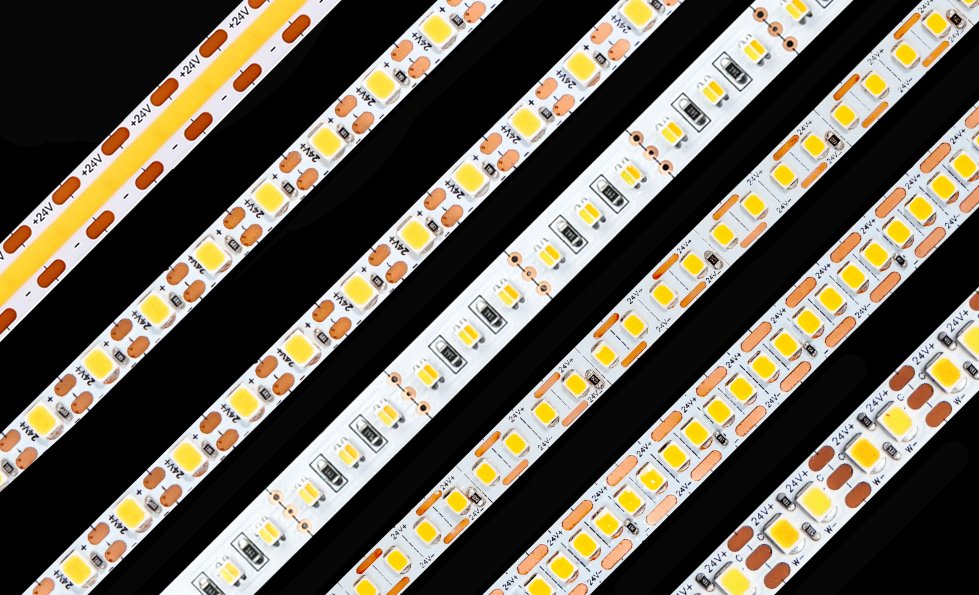
Most standard LED strips can run approximately:
- 12V LED strip: about 3–5m from one end at medium or high power
- 24V LED strip: about 5–10m from one end
- 48V LED strip: about 15–30m for conventional designs, with longer distances possible using purpose-built current-regulated circuits
- 110V/230V AC LED strip: commonly 25–50m, depending on the exact product
These are planning ranges—not universal limits.
The actual maximum run length depends on wattage per meter, PCB copper, strip width, circuit architecture, feed method, temperature, connectors and the amount of brightness or color variation the project will accept.
The most important distinction is this:
The maximum length that can light up is not necessarily the maximum length that can provide uniform, specification-compliant light.
Quick LED Strip Maximum Run Length Guide
The following table provides preliminary planning ranges for conventional constant-voltage strips. Always confirm the exact product datasheet and test report.
| Strip type | Typical power | Indicative one-end feed | Possible engineered feed arrangement |
|---|---|---|---|
| 12V low-power strip | 4.8–9.6W/m | 5–8m | 8–12m with center or multiple feeds |
| 12V high-power strip | 12–20W/m | 3–5m | Divide into 3–5m parallel sections |
| 24V low-power strip | 4.8–9.6W/m | 8–15m | 15–25m with planned feeds |
| 24V high-power strip | 12–20W/m | 5–8m | Divide into 5–8m sections |
| 48V conventional strip | 8–15W/m | 15–30m | Product-specific |
| 36V/48V regulated long-run strip | Product-specific | 20–50m or more | Product-specific one-end or two-end feed |
| 110V/230V AC strip | Product-specific | 25–50m | Model-specific maximum reel length |
These values should not be used as final electrical specifications. A narrow 24V COB strip, a wide 24V SMD strip and a current-regulated 24V strip can have very different maximum lengths even if all three consume 10W/m.
What Does “Maximum Run Length” Actually Mean?
The phrase is often used for three different things.
1. Maximum single-feed strip length
This is the longest continuous strip that can be powered from one feed point while remaining within the manufacturer’s electrical, thermal and optical limits.
This is usually the number shown on a professional product datasheet.
2. Maximum continuous physical length
A 30m lighting line may be physically continuous but electrically divided into several shorter sections, each supplied by its own branch or injection point.
It looks like one continuous installation, but it is not one electrical run.
3. Maximum total system length
A project can contain hundreds or thousands of meters of LED strip when divided among correctly sized drivers, controllers, branches and protection devices.
There is no universal maximum total project length. The limitation applies to each electrical segment—not the entire building.
When discussing a project with a supplier, specify whether “30m run” means:
- One 30m reel powered from one end
- One continuous 30m light line with multiple feed points
- Several shorter strips totaling 30m
- A driver located 30m away from the strip
These are four different electrical problems.
The Real Maximum Run Length Is the Smallest of Five Limits
A reliable maximum length is determined by the first system limit reached.
It can be expressed as:
Maximum usable run length = the lowest of:
- Manufacturer’s tested strip run length
- Acceptable voltage-drop length
- Power-supply capacity limit
- Connector or controller current limit
- Thermal and compliance limit
A larger driver can solve only the third limitation. It cannot change the resistance of the flexible PCB or increase the current rating of a small connector.
This is why replacing a 100W driver with a 200W driver does not automatically make the same strip run farther.
Why LED Strips Become Dimmer Over Long Runs
A flexible LED strip is also a long, thin circuit board.
Copper tracks carry current from the input to every downstream LED section. The first part of the strip carries the combined current required by everything after it. As the strip becomes longer:
- PCB resistance increases
- Voltage falls along the strip
- Resistive power is converted into heat
- Downstream LEDs receive less voltage
- Brightness may decrease
- White or RGB color may shift
- Actual strip power may become lower than the rated calculation
The power relationship is:
Power = voltage × current
Therefore:
Current = power ÷ voltage
For the same 120W load:
| Voltage | Current |
| 12V | 10A |
| 24V | 5A |
| 48V | 2.5A |
Higher system voltage reduces current for the same power. Because conductor loss follows I²R, halving the current can reduce resistive loss to approximately one-quarter when the conductor and load assumptions remain the same.
However, voltage is only one part of the strip design.
How Long Can a 12V LED Strip Run?
For conventional constant-voltage strips, approximately 3–5m is a reasonable starting assumption for a medium- or high-power 12V strip powered from one end.
Some lower-power 12V strips may reach 8–10m, but this must be confirmed by test data.
Why 12V strips have shorter runs
At equal wattage, a 12V strip draws twice the current of a 24V strip. The higher current produces:
- Greater voltage drop along the PCB
- Higher connector loading
- More heat at the input section
- Greater sensitivity to cable resistance
- More frequent need for power injection
When 12V is still the right choice
12V remains useful for:
- Short cabinet sections
- Automotive and battery-powered systems
- Marine systems designed around 12V
- Displays with short individual branches
- Projects that require short cut increments
- Existing 12V control equipment
The mistake is not choosing 12V. The mistake is treating multiple short 12V sections as one long daisy-chained strip.
For example, six 1m cabinet strips can work well as six parallel branches. Connecting all six in one 6m series path may produce a different result.
How Long Can a 24V LED Strip Run?
A conventional 24V strip commonly supports about 5–10m from one end, depending on wattage and PCB construction.
Low-power, wide-PCB or current-regulated models may run farther. High-power, narrow or multi-channel strips may require shorter feed distances.
Why 24V is widely used
Compared with an equivalent 12V design, 24V provides:
- Approximately half the current
- Lower PCB and feed-wire losses
- Lower current through connectors
- Longer practical feed sections
- Broad driver and controller availability
- A useful balance between cut length and run length
This makes 24V a common choice for coves, hotels, retail displays, furniture, offices and architectural profiles.
Why not every 24V strip reaches 10m
A “24V” label says nothing about:
- Watts per meter
- PCB width
- Copper thickness
- LED circuit layout
- Number of channels
- Waterproof construction
- Operating temperature
- Accepted end-to-end light variation
A 24V strip rated at 20W/m should not be expected to behave like a 24V strip rated at 4.8W/m.
How Long Can a 48V LED Strip Run?
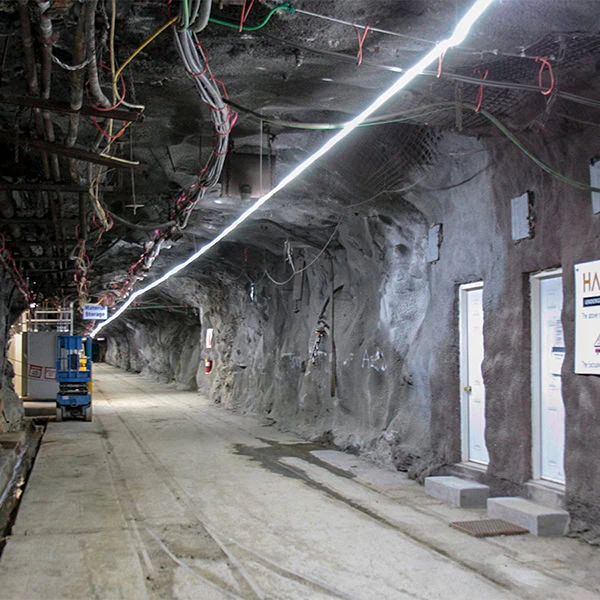
A conventional 48V LED strip may support approximately 15–30m, while specially designed long-run products can support longer distances.
The final length depends heavily on the circuit architecture.
Why 48V helps
At equal power:
- A 48V strip draws half the current of a 24V strip.
- It draws one-quarter of the current of a 12V strip.
- Lower current reduces conductor and connector losses.
- Fewer injection points may be required.
- Feed wiring may become simpler.
Why 48V is not automatically a 50m strip
Simply changing the nominal voltage does not guarantee a specific run length.
A long-run 48V product may also require:
- Wider or heavier copper PCB
- Distributed current-regulation ICs
- Controlled power per circuit section
- Compatible 48V driver
- Defined one-end or two-end feed method
- Longer cut intervals
- Specific PWM controllers
- Thermal validation
Xmart’s 36V and 48V ultra-long LED strip range combines higher voltage with onboard current regulation for extended architectural runs. Xmart also supplies 24V and 48V long-run COB strips where a continuous dotless appearance is required.
Maximum run length should still be confirmed for the selected model, wattage, color, IP construction and feed configuration. A product described as “ultra-long” does not eliminate the need for driver, cable and temperature calculations.
Is a 110V or 230V LED Strip Better for Long Runs?
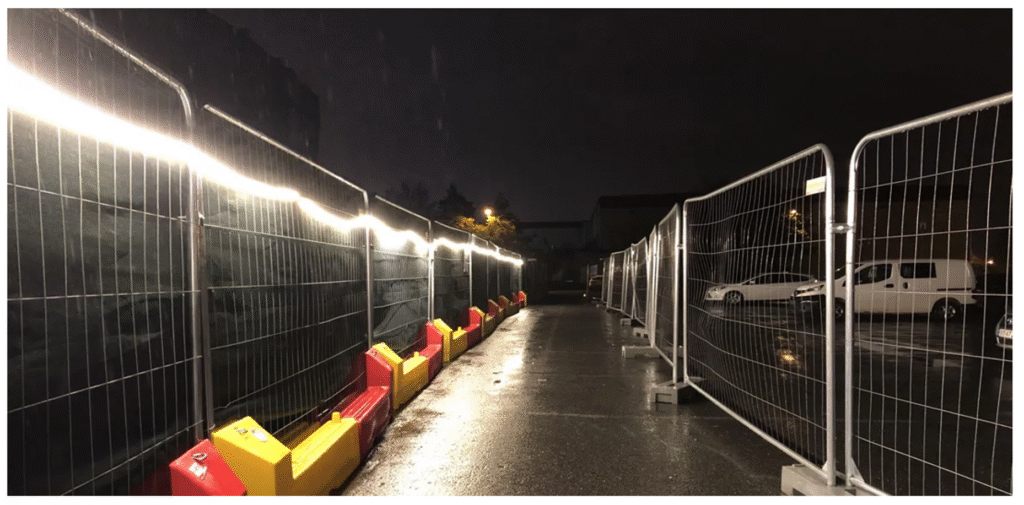
High-voltage AC LED strips can commonly run 25–50m from one connection because the operating current is much lower than in a comparable 12V or 24V system.
However, maximum length is only one decision factor.
Direct-to-mains strips involve:
- Higher electrical shock risk
- Model-specific cutting intervals
- Rectification and current-regulation electronics
- Stricter termination and sealing requirements
- Local electrical-code requirements
- Professional installation
- Potential flicker, power-factor and surge considerations
- More limited field modification
For accessible furniture, short coves and highly controllable lighting, low-voltage DC usually remains more practical. For long façades or large continuous outlines, certified AC strips or engineered 48V systems may reduce installation complexity.
See the complete comparison in High-Voltage AC vs Low-Voltage DC LED Strips.
How Wattage per Meter Changes Maximum Length
Voltage alone cannot predict run length. Wattage determines how much current must pass through the PCB.
Consider two 24V strips:
| Specification | Strip A | Strip B |
| Power | 4.8W/m | 19.2W/m |
| Length | 10m | 10m |
| Total power | 48W | 192W |
| Input current | 2A | 8A |
Both are 24V and 10m long, but Strip B requires four times the current.
The higher current increases:
- Voltage drop in the first PCB sections
- Connector temperature
- Cable requirements
- Controller loading
- The likelihood that multiple feed points will be needed
This leads to a useful rule:
Higher voltage generally increases possible run length, while higher watts per meter generally reduces it—unless the strip uses a circuit specifically engineered to regulate long-run performance.
Why More LEDs per Meter Does Not Always Mean a Shorter Run
LED density and power are related, but they are not the same specification.
A strip with 240 LEDs/m can consume less power than a strip with 60 LEDs/m if each LED is driven at a lower current.
Therefore, do not estimate run length from LED quantity alone. Check:
- Actual or rated W/m
- Current per meter
- PCB design
- Copper weight
- Driver current
- Thermal performance
A high-density, low-current strip may produce a smooth light line without being a high-power strip.
How PCB Width and Copper Weight Affect Run Length
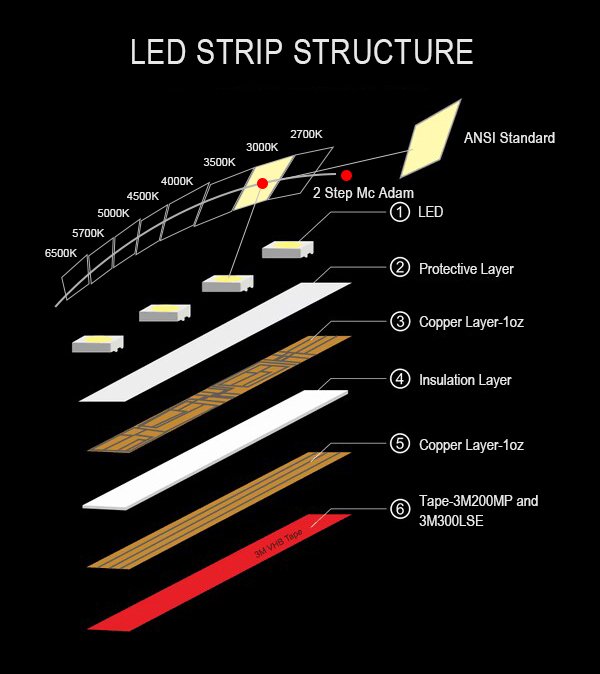
Two LED strips with the same voltage and wattage can have different maximum runs because their conductive paths are different.
Wider PCB
A wider PCB may provide more space for broader copper tracks, but only if the circuit layout uses that width effectively.
Heavier copper
Copper weight is commonly described as 1oz, 2oz or 3oz. Greater copper cross-section can reduce resistance and support more current, although actual track width and layout still matter.
Ultra-narrow strips
A 3mm or 5mm PCB has limited space for both electrical conductors and thermal dissipation. An ultra-narrow strip may require shorter sections, lower power or more injection points than a standard-width product.
Multi-channel strips
RGB, RGBW and RGBCCT strips need several conductive tracks. The available PCB width must be divided among the channels and common conductor, which can affect current capacity.
“2oz copper” by itself is therefore not proof of a long maximum run. Ask for measured end-to-end performance.
COB vs SMD Maximum Run Length
COB is not automatically better than SMD for long runs.
The dotless surface of a COB strip describes its optical appearance, not its electrical distribution performance.
A COB strip can still have:
- Thin PCB conductors
- High watts per meter
- Significant voltage drop
- Restricted heat dissipation
- Long cut sections at higher voltage
Similarly, a well-designed SMD strip with wider copper tracks or current-regulation ICs may maintain brightness over a longer distance.
Judge maximum length by electrical and optical test results—not by whether the LEDs are COB or SMD.
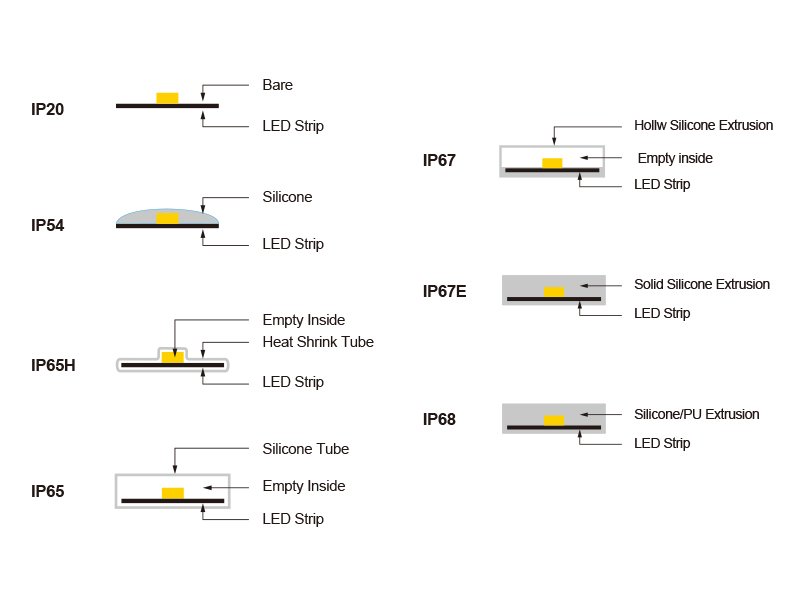
Waterproof LED Strips May Have a Shorter Practical Run
Waterproof encapsulation can change thermal behavior.
Silicone coatings, sleeves or fully extruded structures may make it harder for heat to escape from the PCB. As conductor temperature rises, resistance also increases.
A waterproof version of a strip may therefore require different:
- Maximum run length
- Power limit
- Aluminum profile
- Ambient-temperature allowance
- Installation surface
- Driver loading
Do not automatically apply the IP20 model’s maximum run length to the IP67 or IP68 version unless the datasheet confirms it.
Addressable LED Strips Have Two Maximum Distances
Digital LED installations must consider both power and data.
Power distance
This is limited by strip voltage, current, PCB resistance and injection layout.
Data distance
This is limited by the controller, IC protocol, signal voltage, cable type, interference and signal regeneration.
A 20m addressable strip may have adequate power injection but unstable data. Conversely, its data signal may be reliable while the LEDs at the far end suffer color shift from low voltage.
Addressable projects may require:
- Power injection
- Data repeaters
- Pixel amplifiers
- Correct signal reference
- Multiple controller outputs
- Protocol-specific termination
- Segmented power supplies
Do not use the power maximum as the data maximum.
How Feed Method Changes the Usable Length
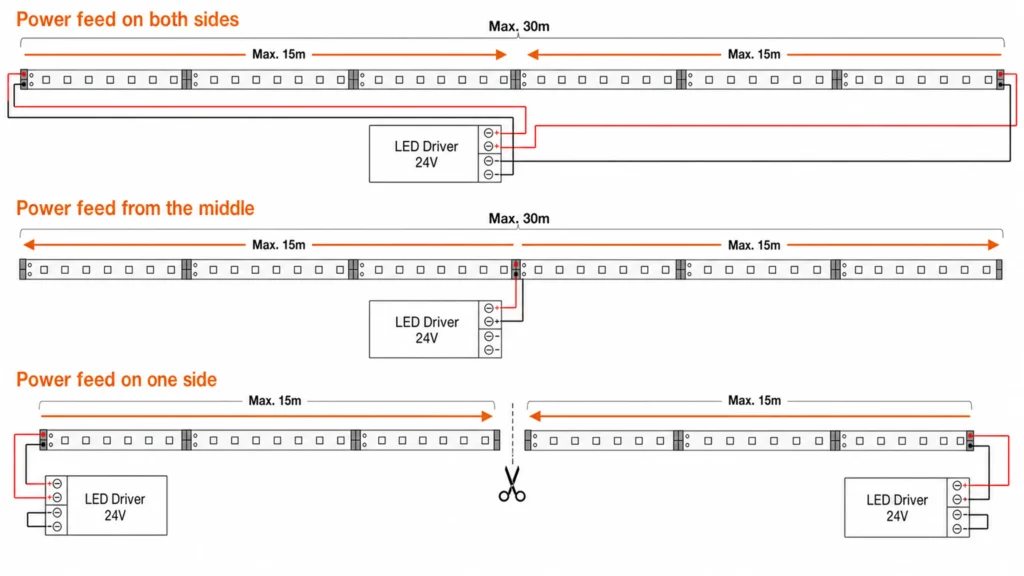
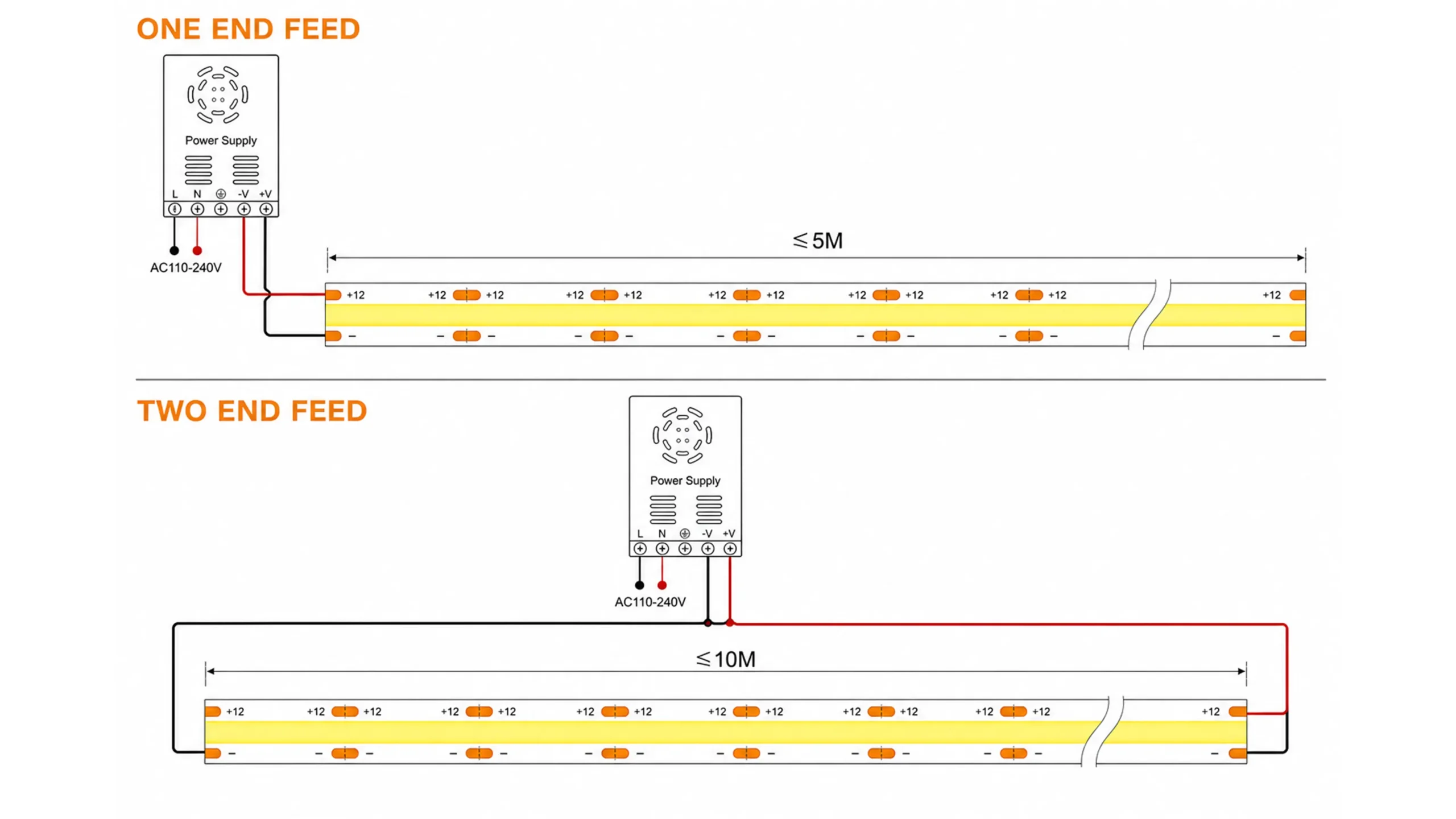
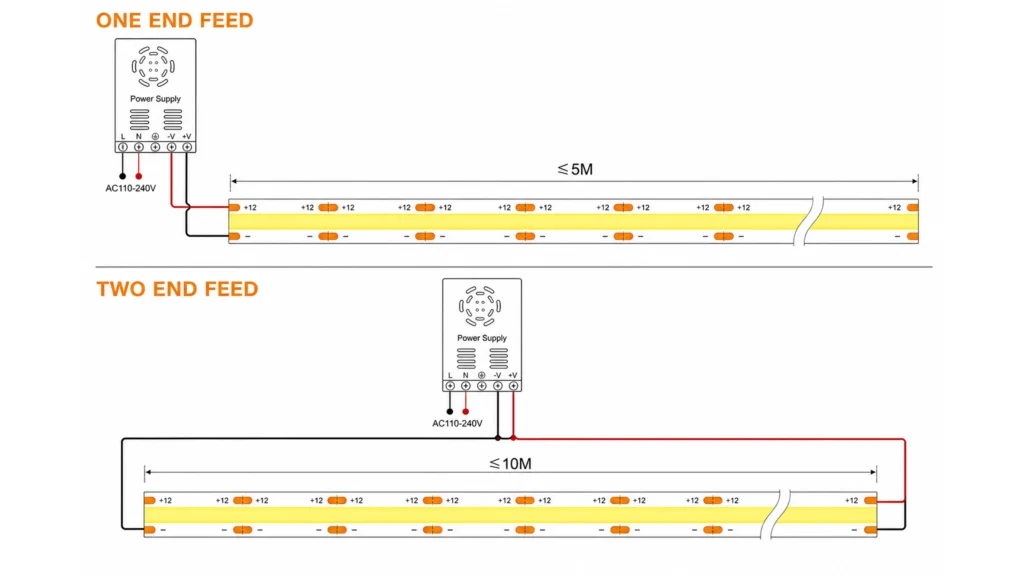
One-end feed
Power enters at one end and travels through the complete strip.
Advantages:
- Simple wiring
- Fewer connections
- Easy installation
Limitations:
- Highest input current through the first PCB section
- Greatest end-to-end voltage difference
- Shortest practical run for a conventional strip
Two-end feed
The same compatible power source supplies both ends of the strip.
Advantages:
- Current reaches the strip from two directions
- Maximum current path can be reduced
- Better end-to-end consistency may be possible
Limitations:
- Requires additional feed cable
- Does not automatically double the approved length
- Must follow the manufacturer’s wiring method
- Connections and polarity must be controlled
Center feed
Power enters near the middle and travels in two directions.
A 10m strip becomes two 5m electrical paths, although the central cable carries their combined current.
Center feeding is often an efficient solution for room coves and symmetrical installations.
Multiple parallel feeds
The installation is divided into shorter electrical sections supplied from a common distribution point or multiple compatible drivers.
This is usually more predictable than daisy-chaining several reels. Each branch must still be checked for cable drop, current rating and protection.
Does Powering Both Ends Double the Run Length?
Not necessarily.
If a strip is approved for 5m from one end, feeding a 10m section from both ends may improve its performance because no point is more than approximately 5m from a feed.
However, real behavior depends on:
- PCB resistance
- Load distribution
- Connection resistance
- Whether both feeds come from the same supply
- Voltage difference between feed points
- Strip architecture
- Thermal behavior
A two-end feed should be treated as a tested configuration—not as a universal multiplication rule.
Can You Keep Adding Strips If the Driver Is Large Enough?
Not in one continuous daisy chain.
Suppose a 24V driver provides 300W and the strip consumes 10W/m. The driver theoretically has enough wattage for 30m, but that does not mean 30m can be powered through the input pads and PCB of the first reel.
The correct arrangement may be:
- Six parallel 5m branches
- Three center-fed 10m physical sections
- Multiple injection points
- Several smaller drivers placed closer to the load
- A purpose-built 48V long-run product
Power-supply capacity and strip run length are separate specifications.
A More Accurate Maximum-Length Formula
For preliminary planning:
Power-limited length = usable driver output ÷ strip watts per meter
For example:
- Driver usable output: 180W
- Strip load: 12W/m
- Power-limited length: 15m
But if the strip manufacturer approves only 5m from one end, the maximum single-feed length is still 5m.
A practical decision formula is:
Maximum single-feed length = the lowest of:
- Power-limited length
- Strip datasheet maximum
- Voltage-drop limit
- Connector current limit
- Controller-channel limit
- Thermal limit
- Applicable regulatory limit
Use the LED Strip Voltage Drop and Power Injection Calculator to check current, feeder-cable loss and possible injection requirements.
Worked Example 1: 8m of 12V Strip
Project:
- 12V
- 14.4W/m
- 8m total
- 115.2W
- 9.6A calculated current
Feeding the complete 8m from one end forces almost 10A through the input cable, connection and first PCB section.
Better options include:
- Divide it into two parallel 4m branches
- Center-feed the 8m strip as two 4m directions
- Change to a compatible 24V strip
- Use several properly sized power feeds
A bigger 12V driver alone does not solve the PCB voltage drop.
Worked Example 2: 15m of 24V Strip
Project:
- 24V
- 9.6W/m
- 15m total
- 144W
- 6A calculated current
Possible designs include:
- Three parallel 5m branches
- Center-feed two 7.5m sections if the product test permits
- Feed an approved continuous run from both ends
- Select a regulated 24V or 48V long-run strip
The best method depends on feed access and the acceptable number of site connections.
Worked Example 3: 40m Hotel Corridor
Project:
- 40m continuous light line
- Limited ceiling access
- High labor cost
- Uniform brightness required
A conventional 24V design may require several branch cables or distributed drivers.
A 36V or 48V regulated strip could reduce:
- Circuit current
- Number of injection points
- Cable size
- Installation time
- Connection-related failure points
However, the comparison should include the complete installed system—not only the strip price.
A more expensive long-run strip may produce a lower project cost if it removes multiple drivers, cables, access panels and labor operations.
How to Verify the Real Maximum Run Length
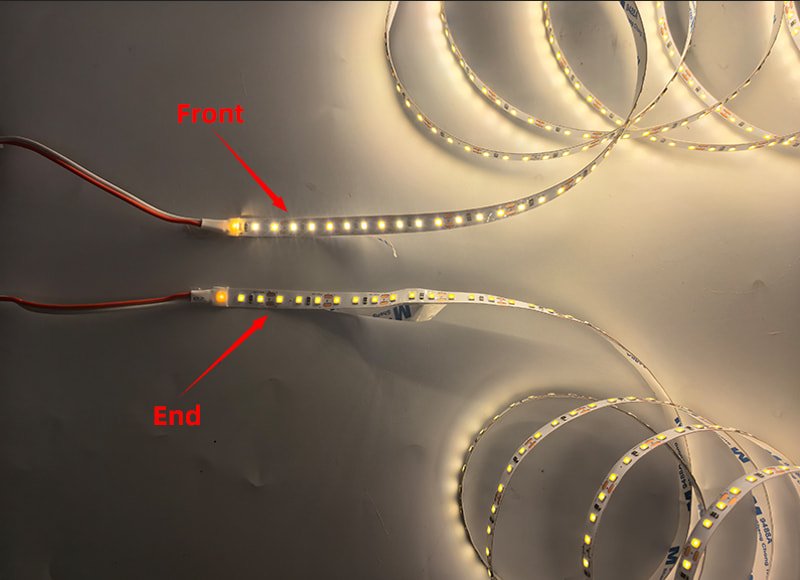
Ask the supplier to test the exact configuration after thermal stabilization.
Record:
- Power-supply terminal voltage
- Voltage at the strip input
- Voltage at 25%, 50%, 75% and 100% of the run
- Total input current
- Actual watts per meter
- Illuminance or luminous flux along the run
- CCT or color-coordinate variation
- PCB temperature
- Ambient temperature
- Feed method
- Profile or mounting surface
- IP construction
For high-specification projects, voltage alone is not enough. A strip can show an acceptable electrical percentage while its visible color or brightness variation exceeds the project requirement.
What Is an Acceptable End-to-End Difference?
There is no universal percentage that suits every strip and application.
A concealed residential cove may tolerate more variation than:
- A hotel corridor
- A luxury retail display
- A continuous wall wash
- A camera or studio installation
- A backlit translucent material
- Two parallel strips visible in the same field of view
A professional acceptance specification can define:
- Maximum voltage variation
- Maximum illuminance or lumen variation
- Maximum CCT or chromaticity variation
- Test ambient temperature
- Measurement positions
- Required dimming level during the test
“Looks acceptable” is difficult to enforce after hundreds of meters have been installed.
Information to Include in an LED Strip RFQ
To receive a meaningful maximum-run recommendation, provide:
- Voltage preference
- Watts per meter
- Required total length
- Length of each continuous line
- Number and position of available power feeds
- Driver-to-strip cable distance
- White, tunable white, RGB, RGBW or addressable type
- Required lumen output and CRI
- PCB width restrictions
- IP rating and environmental exposure
- Aluminum profile or mounting surface
- Dimming and control protocol
- Certification market
- Required end-to-end uniformity
- Project drawing
“Please quote 500 meters of LED strip” is not enough information to design a reliable 500-meter system.
Xmart provides 12V, 24V and long-run 36V/48V configurations with project-specific PCB, wattage, color, waterproofing, driver and control options. For commercial or OEM projects, submit the run schedule and drawings through the Xmart project quotation form.
Maximum Run Length Checklist
Before approving the product, confirm:
- Maximum length refers to one-end, two-end or center feed
- Tested wattage matches the quoted product
- Tested voltage matches the project
- PCB width and copper specification are documented
- IP20 and waterproof versions have been evaluated separately
- Driver capacity is sufficient
- Feed-cable voltage drop has been calculated
- Connector current ratings are sufficient
- Controller total and per-channel limits are sufficient
- End-to-end light variation is acceptable
- Ambient and profile temperatures are considered
- Sample results can be repeated in mass production
Frequently Asked Questions
What is the longest distance for 12V LED strip lights?
A medium- or high-power conventional 12V strip is commonly limited to approximately 3–5m from one end. Lower-power products may run farther, while high-power or narrow strips may require shorter sections.
What is the longest distance for 24V LED strip lights?
Approximately 5–10m from one end is common for conventional 24V strips. Low-power, wider-PCB or regulated products may support longer runs.
Can a 24V LED strip run 20 meters?
Possibly, but not necessarily from one end. A 20m installation may require center feeding, double-ended feeding, multiple parallel branches or a purpose-built long-run strip.
Can a 48V LED strip run 50 meters?
Some engineered 48V products can support approximately 50m or more under defined feed and operating conditions. This should be verified for the exact wattage, strip architecture, feed method and acceptable light variation.
How many LED strip reels can I connect together?
Physical connectors may allow several reels to be joined, but the combined continuous length must not exceed the strip’s electrical run limit. Multiple reels are usually better connected as parallel electrical branches rather than one long daisy chain.
Does a higher-wattage driver increase LED strip run length?
It increases the total load the driver can supply, but it does not reduce resistance in the strip PCB. A larger driver does not automatically increase the maximum single-feed length.
Does dimming allow a longer LED strip run?
The strip may show less voltage drop while dimmed because average power is lower. However, an installation should normally be designed for its maximum permitted output unless the control system permanently limits that output.
Can I increase the driver voltage to compensate for voltage drop?
Do not exceed the strip manufacturer’s permitted input range. Raising voltage can overdrive the first LED sections while attempting to improve the far end. Use proper cable sizing, additional feeds or a different strip architecture.
Is COB better for long runs than SMD?
Not automatically. COB describes how the LED chips are mounted and how the light appears. Long-run performance depends on voltage, power, copper design and current regulation.
Is a 48V strip always safer than a high-voltage AC strip?
A 48V DC system generally reduces direct-to-mains exposure along the strip, but 48V does not automatically mean Class 2, SELV or compliance with every project requirement. The complete driver and lighting system must be evaluated.
Final Answer
For initial planning, assume approximately 3–5m for a medium- or high-power 12V strip, 5–10m for a conventional 24V strip and 15–30m for a conventional 48V strip from one end.
Then replace the assumption with actual product data.
The correct maximum run is not the longest strip that turns on. It is the longest validated section that maintains acceptable voltage, brightness, color and temperature under the project’s real installation conditions.
When the required distance exceeds that limit, do not simply install a larger power supply. Redesign the feed method, divide the system into parallel branches, add planned power injection or select a strip engineered for longer runs.