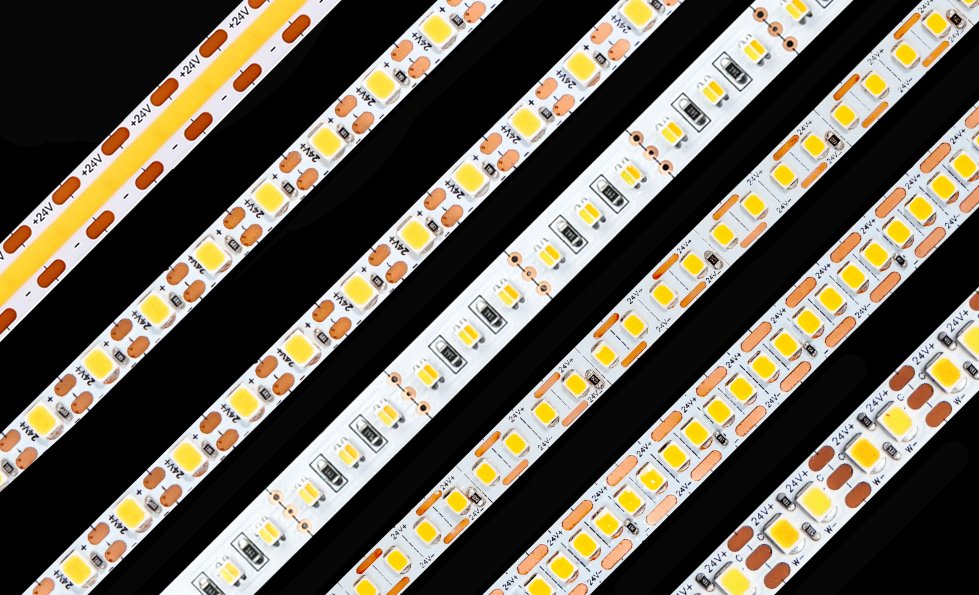
COB LED strips are usually marketed as smoother, newer and more premium than SMD LED strips.
That description is partly correct—but incomplete.
COB can produce an almost continuous line of light, making it an excellent choice for shallow profiles, illuminated shelves and direct-view architectural details. However, a dotless appearance does not prove that the strip is brighter, more efficient, cooler, more reliable or less expensive to install.
In many projects, a high-efficiency SMD strip is still the better engineering choice.
Quick Answer: Is COB Better Than SMD?
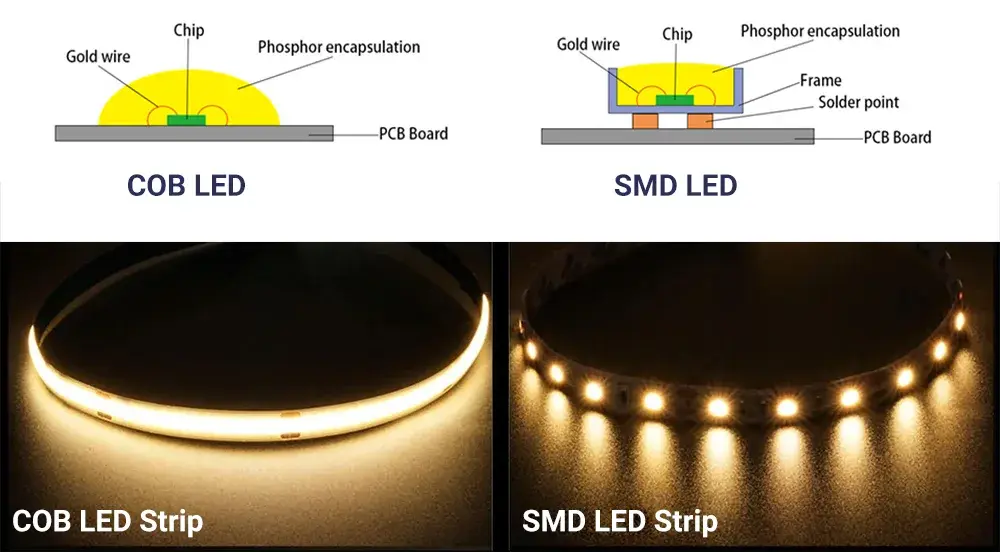
COB is usually better when the strip, its diffuser or its reflection is directly visible and a continuous light line is important.
SMD is often better when the strip is hidden, maximum lumens per watt or high output is required, precise replacement matters or the project needs a mature range of controllers, connectors and standard products.
The simplest way to understand the difference is:
COB primarily solves an optical-uniformity problem. It does not automatically solve efficiency, heat, voltage drop, color quality or lifetime problems.
COB vs SMD LED Strip at a Glance
| Comparison | COB LED strip | SMD LED strip |
|---|---|---|
| Light appearance | Continuous or nearly dotless | Individual light points may be visible |
| Direct-view applications | Excellent | Depends on density, profile and diffuser |
| Shallow aluminum profiles | Usually better | May require higher density or more optical depth |
| Bare-strip efficacy | Product-specific | Very high-efficiency options are widely available |
| Installed-system efficacy | Can benefit from a clearer diffuser | Can be reduced by a heavy diffuser |
| Maximum output | High-output versions available | Very broad high-output selection |
| Color consistency | Depends on die and encapsulation control | Depends heavily on LED package binning |
| RGB color mixing | Excellent at short mixing distances | Depends on package type, pitch and profile |
| Cutting interval | Depends on circuit design | Depends on circuit design |
| Connectors | Specialized COB connectors may be required | Mature connector ecosystem |
| Field inspection | Components are hidden by coating | Packages and joints are easier to inspect |
| Product price | Often higher | Usually lower for standard products |
| Best application | Visible, shallow or reflective linear lighting | Hidden, high-output or efficiency-focused lighting |
These are general tendencies, not universal performance ratings. The final decision should be based on the datasheets and samples of the exact products being compared.
What Is a COB LED Strip?
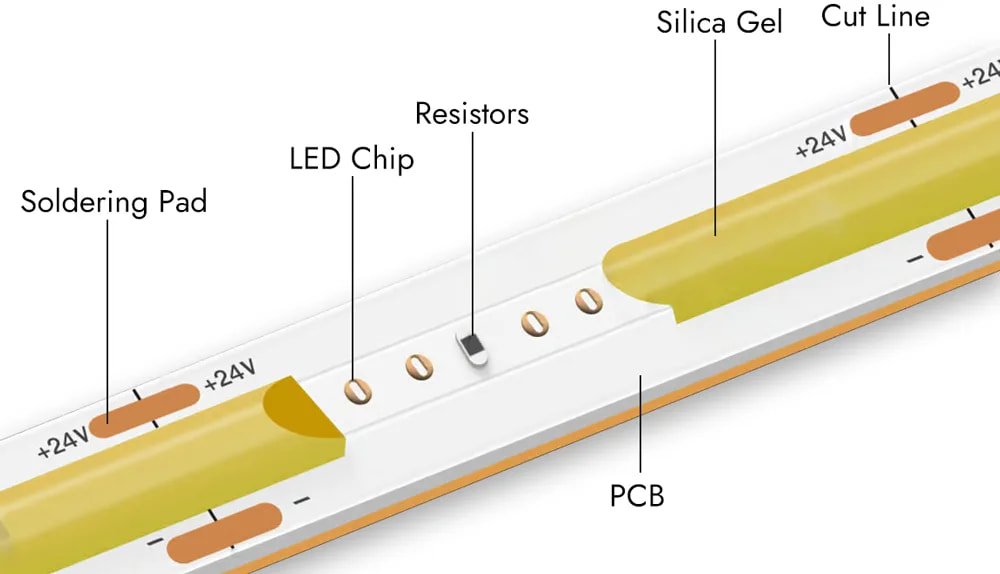
COB means Chip on Board.
In a flexible COB LED strip, many small LED dies are mounted directly onto a flexible printed circuit board. They are then covered by a continuous light-conversion or diffusing material.
In a white COB strip, this layer normally includes phosphor that converts part of the blue LED emission into white light.
Because the dies are positioned close together and covered by a continuous optical layer, the individual light points visually blend into a smooth line.
COB strips are available in several configurations, including:
- Single color
- Tunable white
- RGB
- RGBW
- RGBCCT
- Addressable SPI
- Long-run 48V designs
Xmart’s COB LED strip range includes single-color, tunable-white, RGB, RGBW, RGBCCT, addressable and 48V product architectures for OEM and project applications.
What Is an SMD LED Strip?
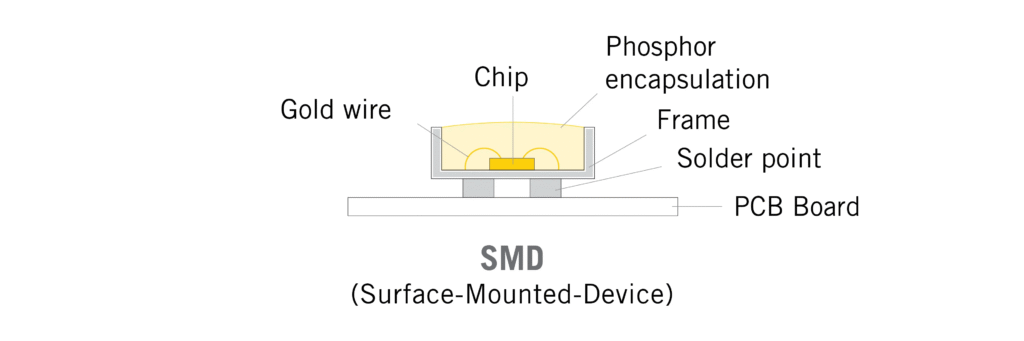
SMD means Surface-Mounted Device.
An SMD LED strip uses separately packaged LEDs soldered onto a flexible PCB at defined intervals.
Common SMD package formats include:
- 2216
- 2835
- 3014
- 3528
- 5050
- 5630
- 5730
An SMD package can contain one or several LED dies. For example, a 5050 package may contain red, green and blue dies for RGB lighting or additional white channels for RGBW and RGBCCT applications.
Because the packages are physically separated, the strip can show individual light dots when it is installed close to a surface or inside a shallow profile.
That does not mean SMD is outdated. High-efficiency SMD platforms remain among the best solutions for commercial projects where lumens per watt, output and standardized sourcing are more important than a visible continuous line.
The Most Important Difference: Optical Uniformity
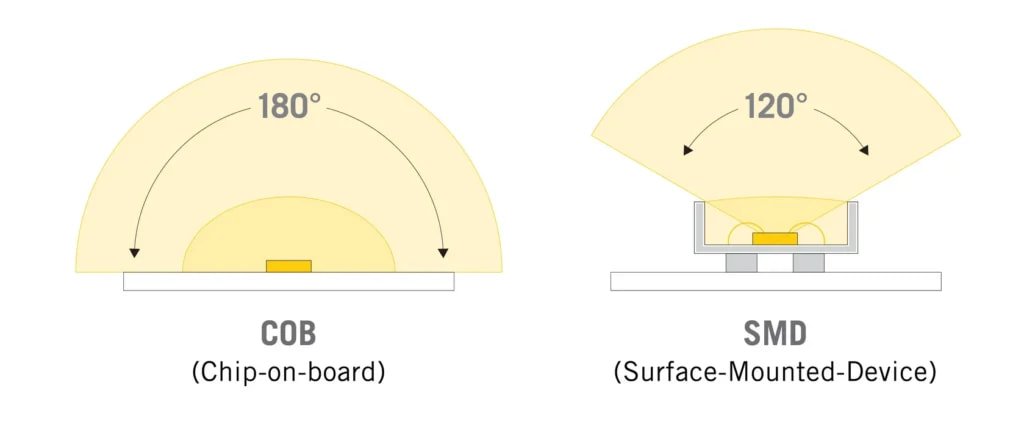
COB and SMD describe how the light sources are constructed. Their most obvious practical difference is how the light appears.
An SMD strip produces a row of separate light sources. A COB strip uses closely spaced dies and a continuous optical layer to make those sources appear as one luminous surface.
COB therefore has an optical advantage when:
- The strip is directly visible.
- The strip is close to the illuminated surface.
- The light is reflected by polished metal, glass, stone or lacquer.
- The aluminum profile is very shallow.
- The design requires a continuous decorative line.
- Multiple shadows from separated LEDs are unacceptable.
However, if an SMD strip is hidden inside a deep ceiling cove and the observer sees only reflected light, the LED dots may already be invisible.
In that application, switching to COB might not produce a noticeable improvement.
Is COB LED Strip Completely Dotless?
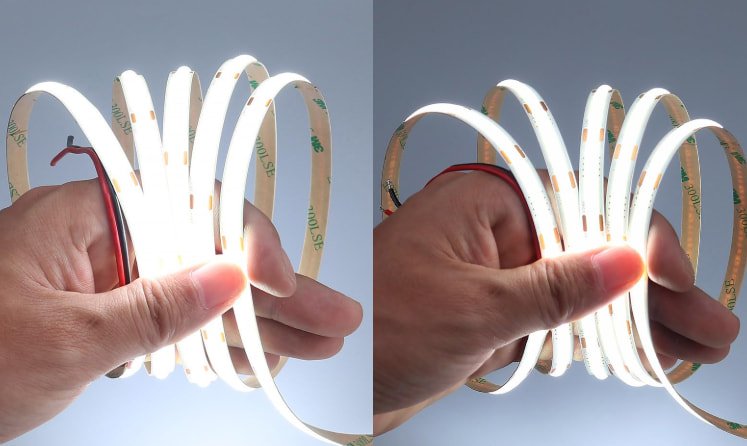
A well-designed COB strip can appear completely dotless under normal viewing conditions, but “dotless” is not an absolute technical specification.
The result depends on:
- Die pitch
- Encapsulant uniformity
- Power per meter
- Dimming level
- Viewing distance
- Viewing angle
- Profile dimensions
- Diffuser material
- Distance to the illuminated surface
- Surface reflectance
- Color-channel arrangement
A single-color COB strip may look perfectly continuous while a multichannel COB strip shows subtle segmentation when only one color channel is active.
For example, an RGBW or tunable-white COB strip should be evaluated with:
- Red only
- Green only
- Blue only
- White only
- Warm white only
- Cool white only
- Mixed colors
- Low-level dimming
- Full output
If the red, green, blue or white dies are arranged at different positions, color separation may still be visible at very short viewing distances.
The correct procurement question is not simply:
“Is this COB?”
It is:
“Does this exact strip remain visually uniform in our profile, at our viewing distance and in every required operating mode?”
Why LED Pitch and Profile Depth Matter
For an SMD strip, approximate LED pitch can be calculated as:
LED pitch = 1,000mm ÷ LEDs per meter
| LED density | Approximate pitch |
| 60 LEDs/m | 16.7mm |
| 120 LEDs/m | 8.3mm |
| 168 LEDs/m | 6.0mm |
| 180 LEDs/m | 5.6mm |
| 240 LEDs/m | 4.2mm |
Smaller pitch generally makes it easier for the diffuser to blend the individual LEDs.
Another useful concept is the relationship between optical depth and emitter pitch:
Optical mixing ratio = Distance from LED to diffuser ÷ LED pitch
A larger ratio normally provides more space for the light from adjacent emitters to overlap before reaching the diffuser.
However, there is no universal ratio that guarantees a dotless result. Diffuser haze, transmission, profile width, LED beam pattern and viewing angle also affect the result.
Xmart’s LED aluminum profile range includes shallow furniture channels and larger architectural profiles designed for different strip widths and diffusion requirements.
As a practical starting point:
- Very shallow profiles usually benefit from COB, CSP or high-density SMD.
- Deeper profiles can often achieve a smooth line with a more economical SMD strip.
- The final combination should be approved using the actual strip, profile and diffuser.
Dotless Is an Optical Result, Not an LED Category
COB is not the only way to produce a continuous light line.
A project can also use:
- High-density SMD
- CSP LED strip
- Silicone neon flex
- A deeper aluminum profile
- A higher-haze diffuser
- A larger distance between the strip and illuminated surface
CSP, or Chip Scale Package, sits between conventional SMD and COB in many practical comparisons. It uses very small packaged emitters rather than covering the complete strip with one continuous phosphor layer.
A high-density CSP LED strip may provide a clean light line while offering different bending, color-channel and material characteristics from COB.
The best solution should be selected by the required optical effect, not by assuming that the newest construction is automatically superior.
Is COB More Efficient Than SMD?
Not automatically.
LED strip efficiency is usually expressed as luminous efficacy:
Luminous efficacy = Luminous flux ÷ electrical power
Or:
lm/W = lumens ÷ watts
For example:
- A strip producing 1,500 lumens at 10W has an efficacy of 150 lm/W.
- A strip producing 1,500 lumens at 15W has an efficacy of 100 lm/W.
COB and SMD are manufacturing architectures, not efficiency ratings.
The efficacy of an LED strip depends on:
- LED die performance
- CCT
- CRI and spectral design
- Current density
- Resistor or IC losses
- PCB resistance
- Phosphor and encapsulant losses
- Operating temperature
- Voltage-drop performance
- Test conditions
Some high-efficiency SMD strips produce more lumens per watt than standard COB strips. Optimized COB products can also outperform older or lower-quality SMD products.
Xmart’s high-efficiency SMD LED strip series uses an optimized SMD2835 platform for commercial projects where maximum luminous efficacy is a primary specification.
For projects requiring both a dotless appearance and improved energy performance, Xmart also develops high-efficiency COB strips, with wattage, PCB width, CCT, CRI and test data selected according to the application.
The only reliable comparison is measured performance from the exact products.
Bare-Strip Efficacy vs Installed-System Efficacy
Comparing only bare-strip lumens per watt can lead to the wrong decision.
An SMD strip may have higher bare-strip efficacy but require a deeper profile or more heavily diffused cover to hide the LED dots. The diffuser absorbs part of the light.
A COB strip may have lower bare-strip efficacy but achieve the required uniformity with a clearer cover or shallower optical system.
The relevant calculation is:
Installed-system efficacy = Lumens leaving the completed profile ÷ total electrical watts
Consider this hypothetical example:
| Product | Bare-strip power | Bare-strip efficacy | Bare-strip output |
| COB strip | 10W/m | 120 lm/W | 1,200 lm/m |
| SMD strip | 8W/m | 160 lm/W | 1,280 lm/m |
The SMD strip is clearly more efficient before the optical system is added.
Now assume:
- The COB profile and clear frosted cover transmit 90% of the light.
- The SMD profile requires a denser diffuser that transmits 75%.
The approximate installed output becomes:
| Product | Bare output | Optical transmission | Installed output |
| COB system | 1,200 lm/m | 90% | 1,080 lm/m |
| SMD system | 1,280 lm/m | 75% | 960 lm/m |
Installed-system efficacy would then be:
- COB: 1,080 ÷ 10W = 108 lm/W
- SMD: 960 ÷ 8W = 120 lm/W
The SMD system remains more energy efficient, but the COB system delivers more installed lumens per meter and may provide a smoother light line.
This example is illustrative, not a universal COB-to-SMD ratio. Actual diffuser transmission must be obtained from test data.
It demonstrates why a professional comparison should evaluate both:
- Bare-strip performance
- Completed-profile performance
Does COB Look Brighter?
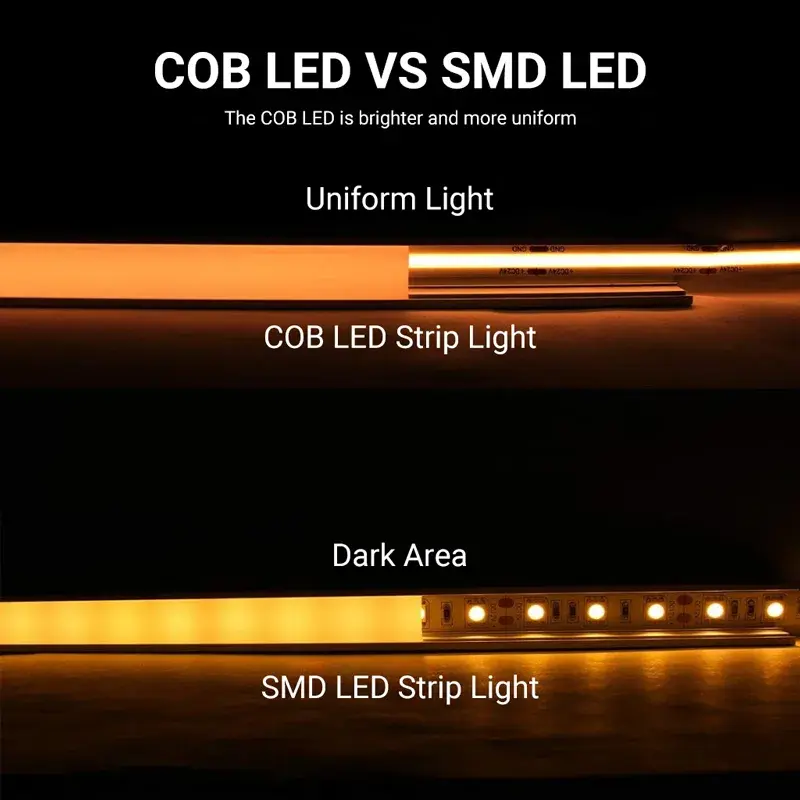
A smoother line can appear brighter or more substantial, even if it does not produce more measured lumens.
SMD concentrates light into separate bright points. COB distributes the light over a larger emitting surface.
Perceived brightness is affected by:
- Emitting-surface size
- Contrast
- Beam distribution
- Diffuser brightness
- Background color
- Viewing distance
- Surface reflection
- Ambient illumination
Do not use phone photographs as the primary brightness comparison. Automatic exposure and image processing can make different outputs look almost identical.
Use:
- Integrating-sphere lumens
- Lux measurements on the target surface
- Controlled exposure photography
- Side-by-side visual evaluation
- Completed-profile measurements
Does COB Have a Wider Beam Angle?
COB strips commonly have a very wide light distribution because their emitting surface is close to the PCB and does not have the same package walls as a conventional SMD LED.
This can improve optical blending in:
- Shallow profiles
- Shelves
- Display cases
- Mirror lighting
- Close wall-grazing applications
However, a wider beam does not automatically mean more useful light.
Some of the additional wide-angle light may:
- Enter the sides of the profile
- Be absorbed by internal surfaces
- Miss the intended task area
- Increase glare in an exposed installation
Beam angle must be evaluated together with the aluminum profile, diffuser and target surface.
COB Is Not Automatically Better at Heat Dissipation
A common marketing claim is that COB dissipates heat better because its dies are mounted directly onto the PCB.
That is only part of the thermal path.
Complete thermal performance depends on:
- Watts per meter
- Current per die
- Die-attach material
- PCB width
- PCB copper weight
- Flexible PCB dielectric layer
- Encapsulant
- Adhesive tape
- Aluminum profile
- Ambient temperature
- Airflow
- Waterproof construction
Direct die attachment may reduce some package-level thermal resistance. However, the heat must still pass through the flexible PCB, adhesive and mounting surface before it reaches the surrounding air.
An SMD package with a properly designed thermal pad, wide PCB and suitable aluminum profile can also provide excellent thermal performance.
A 15W/m COB strip will not automatically run cooler than a 10W/m SMD strip.
How to Compare COB and SMD Temperature Correctly
Temperature comparisons are often inaccurate because the samples are tested under different conditions.
Use the same:
- Aluminum profile
- Profile length
- Mounting surface
- Ambient temperature
- Input voltage
- Operating time
- Wattage per meter where possible
- Measurement location
- Measurement method
Allow both samples to reach a stable temperature. Depending on the profile and power, this may require 30–90 minutes.
Record at least:
- Ambient temperature
- Input voltage
- Input current
- Actual watts per meter
- PCB or solder-point temperature
- Aluminum-profile temperature
- Driver temperature
Be careful when using a thermal camera. Shiny aluminum, white PCB, black components and silicone surfaces have different emissivity values and can display misleading apparent temperatures.
For a controlled comparison, use:
- A contact thermocouple
- The same sensor location
- The same attachment method
- The same thermal stabilization time
Temperature should be reported as a rise above ambient:
Temperature rise = Measured temperature − ambient temperature
This makes different test sessions easier to compare.
More Chips per Meter Does Not Mean More Heat
COB strips are often marketed by chip density, such as 320, 480, 528, 840 or more chips per meter.
Chip density influences optical continuity, but it does not directly determine total heat.
Total thermal load is driven mainly by:
- Electrical watts per meter
- Optical efficiency
- Electrical losses
- Thermal resistance
A 480-chip/m strip operating at 8W/m may run cooler than a 320-chip/m strip operating at 15W/m.
Using more dies can allow the electrical load to be shared at a lower current per die. This may improve efficacy and reduce stress, but only when supported by the circuit design.
For procurement, always compare:
- Chips or LEDs per meter
- Watts per meter
- Lumens per meter
- Lumens per watt
- Stabilized temperature
Chip density alone is not a brightness, efficiency or lifetime specification.
COB vs SMD Color Consistency
Color consistency has at least three different meanings.
1. Uniformity along one strip
This describes whether different positions along a single strip look like the same color.
COB can perform well because the continuous optical layer blends the output of adjacent dies.
SMD depends more heavily on package binning, density and optical mixing.
2. Uniformity between reels
Two reels with the same nominal 3000K label can still look different when installed next to each other.
Reel-to-reel consistency depends on:
- LED die or package binning
- Phosphor formulation
- Coating thickness
- Production process
- Measurement and sorting
- PCB temperature
- Production batch control
3. Color stability over time
The strip can maintain its lumen output but still undergo an unacceptable color shift.
In COB products, the continuous silicone-phosphor light-emitting surface is an important part of long-term performance. Independent research from the U.S. Department of Energy found that COB products can show different chromaticity-shift behaviors depending on construction and manufacturer.
This means “COB” alone cannot guarantee better long-term color stability.
For professional projects, specify:
- Target CCT
- SDCM
- Duv tolerance
- CRI
- R9
- TM-30 values where required
- Production-bin policy
- Repeat-order color-matching policy
CRI 90 alone is not a complete color-quality specification.
Why COB Phosphor and Encapsulant Quality Matter

The continuous optical layer creates COB’s smooth appearance, but it is also a critical material.
Its formulation and manufacturing process influence:
- CCT
- Duv
- CRI
- Luminous efficacy
- Spatial uniformity
- Adhesion
- Flexibility
- Moisture resistance
- UV stability
- Long-term color shift
Possible manufacturing or aging problems include:
- Uneven coating thickness
- Bubbles
- Contamination
- Phosphor settlement
- Dark or bright zones
- Cracking after bending
- Delamination from the PCB
- Yellowing or darkening
- Local blue-light leakage
Two COB strips can have the same voltage, wattage, PCB width and chip density while producing very different results because their materials and production control are different.
COB vs SMD: CRI, R9 and Spectrum
Neither COB nor SMD automatically provides better color rendering.
Both technologies can be manufactured with:
- CRI 80
- CRI 90
- CRI 95+
- High R9
- Full-spectrum options
- Different TM-30 performance
Higher CRI may reduce luminous efficacy because a broader or more balanced spectrum can require additional phosphor conversion.
When comparing two products, make sure they have similar:
- CCT
- CRI
- R9
- Spectral power distribution
- Duv
A CRI 80 SMD strip should not be compared with a CRI 95 COB strip and then used to conclude that one construction is more efficient.
COB vs SMD for Tunable White
Tunable-white strips contain warm-white and cool-white channels whose outputs are mixed to create intermediate color temperatures.
COB can improve visual mixing when the strip is:
- Close to the diffuser
- Close to the illuminated surface
- Directly visible
- Installed in a shallow profile
However, good tunable-white performance also depends on:
- Warm and cool channel arrangement
- Maximum combined power
- Controller behavior
- PWM frequency
- Dimming curve
- CCT calibration
- Channel-to-channel voltage drop
Xmart offers both SMD and COB architectures in its tunable-white LED strip range, allowing the optical construction to be matched to the profile and control requirements.
COB vs SMD for RGB, RGBW and RGBCCT
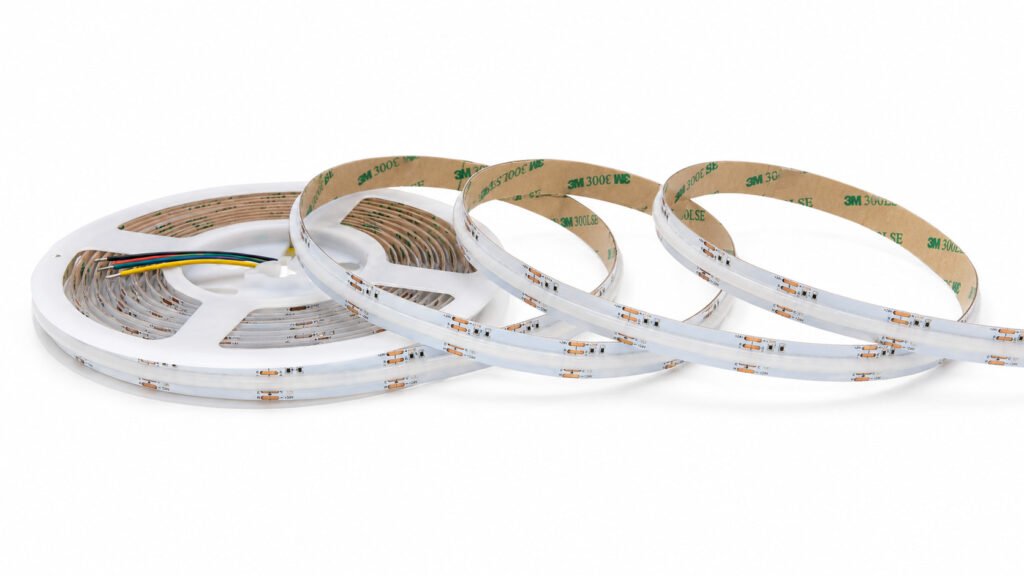
COB can provide smoother near-source color mixing because the different colored dies are closely spaced beneath a continuous diffusing layer.
This is useful for:
- Visible decorative lines
- Reflective surfaces
- Shallow profiles
- Short distance to the target
- Applications where colored shadows are unacceptable
SMD still offers important advantages:
- Broader controller compatibility
- Mature addressable IC options
- High-output RGB packages
- Wide connector availability
- Easier global sourcing
- More standardized replacement options
Xmart’s RGB, RGBW and RGBCCT LED strip range includes multiple SMD and COB structures for static color mixing, functional white light and dynamic effects.
Do not evaluate a multichannel strip using mixed white alone. Test every individual color channel and all important mixed scenes.
COB vs SMD Cutting Length
COB does not automatically provide a shorter cutting interval.
Cut length is determined by:
- Operating voltage
- Number of dies in each electrical segment
- Series-parallel architecture
- Resistor or current-regulating IC design
- Copper-pad layout
Before selecting a strip, confirm:
- Cut interval in millimeters
- Number of LEDs or dies per cut
- Copper-pad dimensions
- Front or rear cut marks
- Connector compatibility
- Minimum reusable segment
- Waterproof re-sealing method
When precise length is more important than the COB or SMD label, a dedicated mini-cut LED strip may be a more appropriate solution. Xmart’s mini-cut platform is designed for short cutting intervals in profiles, cabinets and retail displays where end-of-run dark areas must be minimized.
Which Is Easier to Connect?
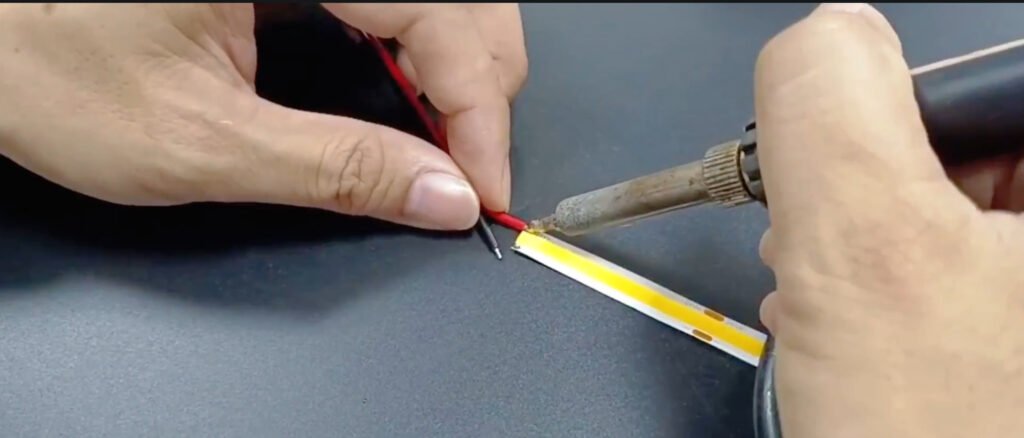
SMD generally has the more mature connector ecosystem. Its copper pads are usually exposed and easy to inspect.
COB requires connectors designed for:
- The exact PCB width
- The number of channels
- Copper-pad position
- Encapsulant structure
- Strip current
- Waterproof construction
Some COB connectors use contacts designed to pierce or pass through the surface coating and reach the copper pads. If the connector and strip are not properly matched, possible problems include:
- Intermittent contact
- Excessive contact resistance
- Local heating
- Damage to the coating
- Wrong channel alignment
- Incomplete waterproof sealing
Xmart’s LED strip connector range includes dedicated options for COB, SMD, single-color, tunable-white and multichannel strips.
For permanent high-current or inaccessible installations, properly executed soldering or factory-installed cables may still provide the most reliable connection.
For practical installation instructions, see Xmart’s guide on how to cut, connect and power COB LED strip.
Which Is Easier to Repair?
Most LED strips are repaired by replacing a cuttable section rather than replacing an individual LED.
COB can be more difficult to inspect because the dies and electrical interconnections are hidden under the optical coating. Die-level field repair is normally impractical.
SMD packages and solder joints are easier to inspect visually, but replacing an individual SMD package still requires appropriate rework equipment.
The more important serviceability questions are:
- Can the failed section be accessed?
- Can it be removed without damaging the profile?
- Is a compatible replacement batch available?
- Can the section be reconnected?
- Can the waterproof seal be restored?
- Will the replacement match the original CCT?
- Are spare reels stored for the project?
A serviceable installation design is usually more important than whether the strip is COB or SMD.
Is COB More Flexible Than SMD?
COB may feel smoother and more flexible because there are no large packages above the PCB.
That does not mean it can be sharply folded or repeatedly twisted.
Possible COB damage includes:
- Cracked encapsulant
- Damaged die interconnections
- Copper-trace fatigue
- Coating separation
- Local color change
Possible SMD damage includes:
- Cracked solder joints
- Detached packages
- Damaged components
- Broken PCB traces
For both technologies:
- Observe the specified minimum bend radius.
- Bend only in the permitted direction.
- Do not fold the strip.
- Do not bend directly at solder joints or connectors.
- Avoid repeated flexing.
- Do not twist a standard strip around its longitudinal axis.
- Use a purpose-built side-bending or zigzag strip for complex shapes.
A product that feels soft in the hand is not necessarily rated for a tighter installation radius.
Does COB Last Longer Than SMD?
COB does not automatically have a longer lifetime.
A complete LED strip can fail or become unacceptable because of:
- LED die degradation
- Phosphor or encapsulant aging
- SMD package degradation
- Interconnection failure
- Solder-joint cracking
- PCB damage
- Resistor or IC failure
- Connector heating
- Adhesive failure
- Moisture or chemical exposure
- Power-supply failure
- Excessive operating temperature
A strip may also continue emitting light while suffering unacceptable:
- Lumen depreciation
- CCT shift
- Duv shift
- Dark spots
- Surface cracking
- End-to-end inconsistency
What Does “50,000 Hours” Really Mean?
A 50,000-hour statement can refer to different things:
- LED die data
- LED package LM-80 data
- A TM-21 lumen-maintenance projection
- A complete product design target
- A warranty or marketing claim
LM-80 data applies to the tested LED source, array or module under defined current and temperature conditions. It does not automatically prove that the complete flexible strip, connector, adhesive, waterproof material and power supply will last for the same period.
Before accepting a lifetime claim, ask:
- What component was tested?
- At what temperature?
- At what operating current?
- Is there an LM-80 report?
- Was a TM-21 projection used?
- Does the waterproof version use the same construction?
- What is the maximum permitted PCB temperature?
- What does the warranty cover?
- What constitutes end of life: failure, lumen loss or color shift?
Lifetime should be evaluated as a system specification, not a number inherited from the LED chip.
COB vs SMD for Waterproof Applications

Waterproofing can change the optical and thermal behavior of either strip.
A silicone coating, hollow sleeve, solid extrusion or PU encapsulation can affect:
- Light transmission
- CCT
- Beam distribution
- Surface appearance
- Heat transfer
- PCB temperature
- Strip dimensions
- Flexibility
- Cut and connection methods
- Chemical resistance
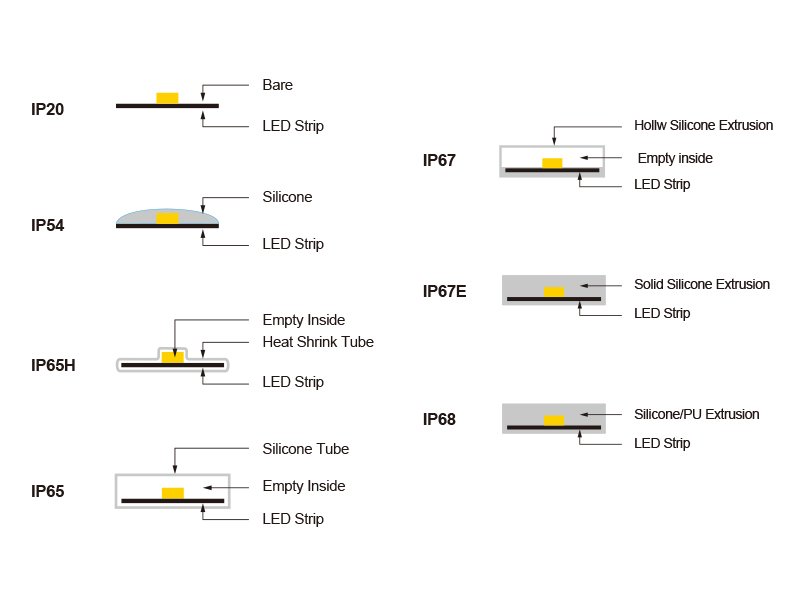
A bare IP20 COB strip that looks completely uniform may look different after waterproof encapsulation.
A high-output SMD strip may also operate at a higher temperature after being sealed inside a waterproof structure.
Always approve the exact IP version intended for the project.
An IP rating does not automatically prove resistance to:
- Chlorine
- Saltwater
- UV radiation
- Cleaning chemicals
- High temperature
- Thermal cycling
- Long-term immersion
COB vs SMD Total Project Cost
COB often costs more per meter than standard SMD strip, but strip price is only part of the system.
Use:
Total project cost = Strip + profile + diffuser + driver + controller + connectors + installation + energy + maintenance
COB may reduce total cost when it allows:
- A shallower profile
- A clearer diffuser
- Less optical mixing distance
- Fewer visual mock-up revisions
- A premium result without a custom lens
- Better near-source color mixing
SMD may reduce total cost when:
- The strip is hidden
- An existing profile already eliminates visible dots
- Maximum efficacy reduces energy consumption
- Standard replacement stock is required
- A mature connector and controller system is already specified
- High output per meter is more important than a visible light line
The correct economic question is:
Which complete lighting system produces the required result at the lowest verified life-cycle cost?
When COB Is the Better Choice
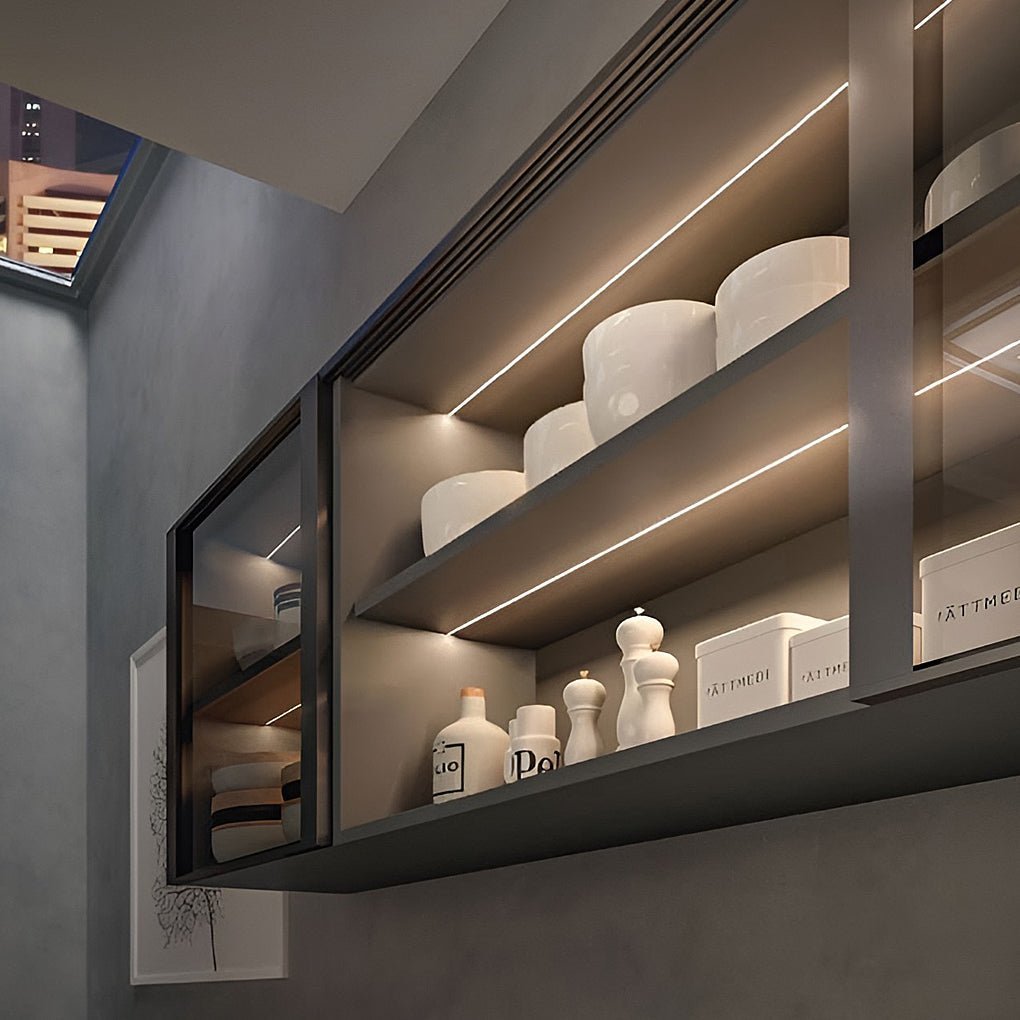
Start with COB when:
- The light source is directly visible.
- The strip reflects from glass, metal, polished stone or lacquer.
- The aluminum profile is shallow.
- The target surface is close to the strip.
- A continuous luminous line is part of the design.
- Smooth RGB or tunable-white mixing is essential.
- Multiple shadows are unacceptable.
- A premium decorative appearance justifies a higher material cost.
Typical applications include:
- Retail shelves
- Display cabinets
- Furniture lighting
- Wine cabinets
- Mirror lighting
- Handrails
- Shallow recessed profiles
- Hotel feature lighting
- Direct-view architectural details
When SMD Is the Better Choice
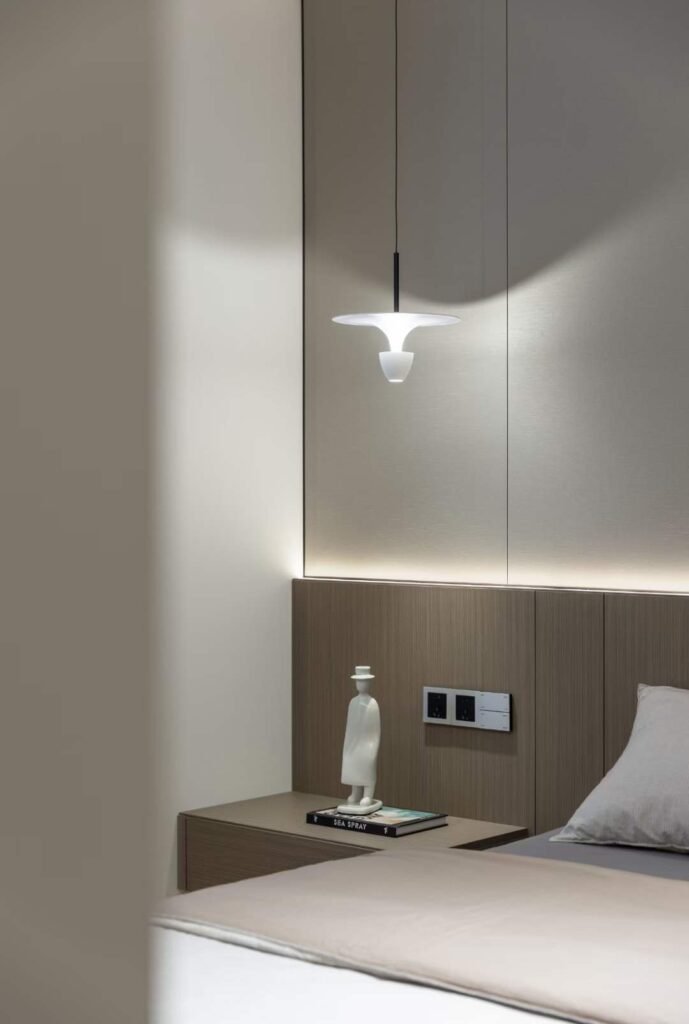
Start with SMD when:
- The strip is hidden inside a deep cove.
- Light reaches the room mainly by reflection.
- Maximum luminous efficacy is required.
- High output per meter is the priority.
- Standardized replacement availability matters.
- The project uses established addressable ICs.
- Cost per meter is tightly controlled.
- The existing profile already produces a smooth line.
- Local access to controllers and connectors is important.
Typical applications include:
- Ceiling coves
- General indirect lighting
- Commercial energy-saving projects
- Light boxes
- Backlighting
- High-output task lighting
- Standard RGB systems
- Industrial and utility linear lighting
When CSP or High-Density SMD May Be Better Than Both
COB and conventional SMD are not the only options.
Consider CSP or high-density SMD when the project requires:
- A clean light line
- A compact emitting surface
- High-density multichannel layouts
- No continuous COB encapsulant
- Different bending characteristics
- A compromise between optical uniformity and packaged-emitter construction
A high-density SMD strip can also be the most economical solution when the selected profile has enough optical depth to blend the LEDs.
The choice should remain application-led, not technology-led.
Application Selection Table
| Project requirement | Recommended starting point | Reason |
| Direct-view light line | COB | Best visual continuity |
| Very shallow profile | COB or CSP | Less mixing distance required |
| Hidden ceiling cove | SMD | Dotless appearance may add little value |
| Maximum lm/W | Compare high-efficiency products | Architecture alone does not determine efficacy |
| High output per meter | High-output SMD or engineered COB | Thermal test required |
| Glossy shelf or reflective surface | COB | Reduces visible point reflections |
| Tight color consistency | Either | Specify SDCM, Duv and batch control |
| RGB mixing near a surface | COB | Better near-source mixing |
| Broad addressable ecosystem | SMD | More mature product selection |
| Very short cutting interval | Mini-cut architecture | Cut length is determined by circuit design |
| Low initial product cost | SMD | Standard versions are usually less expensive |
| Easy global replacement | SMD | Wider standardized availability |
| Premium visible furniture lighting | COB | Continuous visual appearance |
| Dotless effect without continuous coating | CSP | Alternative compact architecture |
How to Test COB and SMD Samples Correctly
Step 1: Compare equivalent specifications
Use samples with the same or similar:
- CCT
- CRI
- R9
- Voltage
- Watts per meter
- Lumen target
- PCB width
- IP construction
Comparing a CRI 80 SMD strip with a CRI 95 COB strip does not reveal which architecture is more efficient.
Step 2: Test the actual optical system
Install both strips in the intended:
- Aluminum profile
- Diffuser
- Mounting position
- Surface distance
A bare-strip comparison cannot predict the completed fixture result.
Step 3: Stabilize temperature
Run both samples until their temperatures stabilize.
Measure:
- Ambient temperature
- Input voltage
- Input current
- Actual power
- PCB temperature
- Profile temperature
Step 4: Measure optical performance
Compare:
- Lumens per meter
- Bare-strip lm/W
- Installed-system lm/W
- Lux on the target surface
- Light-line uniformity
- Diffuser transmission
- Beam distribution
Step 5: Measure color performance
Record:
- CCT
- Duv
- CRI
- R9
- SDCM
- TM-30 values where required
Step 6: Test dimming and color channels
Check:
- Low-level flicker
- Dimming smoothness
- Every individual color channel
- Mixed white
- Intermediate CCT
- Dynamic effects where applicable
Step 7: Test installation operations
Cut and reconnect the samples using the intended field method.
Verify:
- Cut accuracy
- Copper-pad access
- Solderability
- Connector fit
- Mechanical strength
- Waterproof restoration
- Appearance at the joint
Information Buyers Should Request from the Manufacturer
Before approving a COB or SMD strip, request:
- Product code
- LED or die density
- Actual watts per meter
- Lumens per meter
- Lumens per watt
- CCT
- Duv
- CRI and R9
- SDCM
- PCB width
- Copper weight
- Cut length
- Maximum single-feed length
- Maximum permitted PCB temperature
- Profile recommendation
- Dimming compatibility
- IP construction
- Connector specification
- Photometric test report
- Thermal test conditions
- Color-binning policy
- Warranty conditions
- Certification documents required for the market
For OEM projects, also confirm:
- Batch-to-batch color tolerance
- Approved substitute components
- Change-notification procedure
- Golden-sample control
- Production testing frequency
- Spare-reel policy
- Label and traceability requirements
Common COB vs SMD Myths
Myth 1: COB is always more efficient
False. Compare verified lm/W at the same CCT, CRI, power and temperature.
Myth 2: COB always runs cooler
False. Thermal performance depends on power density and the complete path from LED junction to ambient air.
Myth 3: More chips per meter means more brightness
False. Chip density does not define watts, current per die, lumen output or efficacy.
Myth 4: SMD can never be dotless
False. High-density SMD in a correctly designed profile can produce a continuous line from the intended viewing distance.
Myth 5: COB always has better color consistency
Incomplete. COB can provide excellent spatial uniformity, but production and long-term consistency still depend on die, phosphor and process control.
Myth 6: COB always lasts longer
False. Lifetime depends on temperature, materials, interconnections, power supply and environment.
Myth 7: COB does not need an aluminum profile
False for many professional installations. A profile can provide thermal spreading, mechanical protection and controlled optical performance.
Myth 8: SMD is obsolete
False. High-efficiency and high-output SMD strips remain important commercial lighting platforms.
Myth 9: COB is always the most flexible strip
False. The continuous coating can still crack or separate when the strip is sharply bent or twisted.
Myth 10: All COB strips look the same
False. Encapsulant quality, die pitch, color control, circuit design and production consistency create major differences between products.
Final Recommendation
COB is not a universal replacement for SMD.
It is a highly effective solution when the main challenge is creating a smooth, continuous light line in a shallow, visible or reflective installation.
SMD remains a strong choice when the strip is hidden, efficacy and high output are the main priorities, or the project requires a mature and widely available component ecosystem.
CSP and high-density SMD add further alternatives when the project needs optical uniformity without relying on a conventional COB structure.
The best LED strip cannot be selected by looking at the technology name alone.
Compare:
- The exact strip
- The complete profile and diffuser
- Installed light output
- Stabilized temperature
- Color quality
- Cutting and connection
- Total project cost
- Long-term sourcing requirements
The best product is not necessarily the one that looks smoothest on a sample board.
It is the one that delivers the required optical result, energy performance, reliability and serviceability in the finished installation.
Frequently Asked Questions
Is COB LED strip better than SMD?
COB is generally better for direct-view, shallow and reflective applications because it produces a smoother light line. SMD may be better for hidden, high-output, high-efficiency or cost-sensitive installations.
Is COB LED strip brighter than SMD?
Not automatically. Brightness depends on lumens per meter, power, efficacy and temperature. COB distributes light more evenly, which can change perceived brightness without increasing measured output.
Is COB LED strip more energy efficient?
Not necessarily. Compare verified lumens per watt at the same CCT, CRI and operating temperature. Also compare output after the profile and diffuser are installed.
Does COB LED strip need a diffuser?
Not always for dotless appearance. A cover may still be required for protection, cleaning, glare control or the desired visual finish.
Can an SMD LED strip be dotless?
Yes. High-density SMD can appear dotless when its LED pitch, profile depth, diffuser and viewing distance are correctly matched.
Does COB LED strip need an aluminum profile?
An aluminum profile is recommended for many professional installations, particularly at medium or high power. It helps spread heat, mount the strip and protect its emitting surface.
Does COB run hotter than SMD?
Neither technology is always hotter. Compare actual watts per meter and stabilized temperature in the intended profile.
Does COB LED strip last longer?
Not automatically. Lifetime depends on PCB temperature, materials, interconnections, driver quality, environmental exposure and installation.
What is the difference between COB and CSP LED strip?
COB mounts dies onto the PCB and covers them with a continuous optical layer. CSP uses very small individual chip-scale packages. Both can produce smooth light, but their material structure, bending behavior and color-channel options can differ.
Can COB LED strip be cut?
Yes. COB strip can be cut at its marked cutting points. The cutting interval depends on voltage and circuit architecture.
Can COB LED strip be soldered?
Yes. Wires can be soldered to the designated copper pads. Depending on the product, part of the coating may need to be carefully removed from the contact area.
Are COB solderless connectors reliable?
They can be reliable when the connector matches the PCB width, pad layout, coating, channel count and current. Factory-installed or soldered connections may be preferable for inaccessible commercial installations.
Is COB better for RGB lighting?
COB can provide smoother near-source color mixing. SMD offers a broader selection of RGB, RGBW, RGBCCT and addressable products. Every individual channel should be tested before approval.
Which is better for cabinet lighting?
COB is often preferred when the strip or its reflection is visible. High-density SMD or CSP may also work well when matched to the correct profile and diffuser.
Which is better for ceiling coves?
SMD is often sufficient because the strip is hidden and the ceiling provides additional optical mixing. COB becomes more valuable when the cove is shallow or individual reflections remain visible.
What should I compare before purchasing?
Compare installed lumens, lm/W, watts per meter, CCT, Duv, CRI, R9, SDCM, cut length, run length, PCB temperature, profile compatibility, connector method, IP construction and total installed cost.
Need Help Comparing COB, CSP and SMD?

Xmart Lighting develops COB, CSP and SMD LED strip solutions for lighting brands, distributors, furniture manufacturers and architectural projects.
Instead of recommending a product based only on the technology name, our team can compare options according to:
- Profile dimensions
- Viewing distance
- Required light output
- Energy-efficiency target
- CCT and color-quality requirements
- Cutting interval
- Dimming and control system
- Indoor or outdoor construction
- Commercial certification requirements
- OEM production volume
For qualified OEM and project enquiries, Xmart can support:
- Matched COB and SMD samples
- Integrating-sphere test data
- Thermal evaluation
- Custom PCB width and wattage
- Color-binning requirements
- Custom cables and connectors
- Private-label packaging
- Vietnam and China manufacturing support
Explore the complete Xmart COB LED strip range or send us your profile drawing, target lumens and project requirements for a product-level comparison.