TCP is based in Ohio and says it assembles lighting products in US facilities. Does that mean every TCP LED flat panel is made in the USA?
No.
A US headquarters, domestic assembly capability and the legal country of origin are three different facts. Public information indicates that TCP’s sourcing may vary by product and generation. Buyers should verify the exact SKU rather than assign one country to the entire brand.
The Ohio Address Is Not a Country-of-Origin Declaration
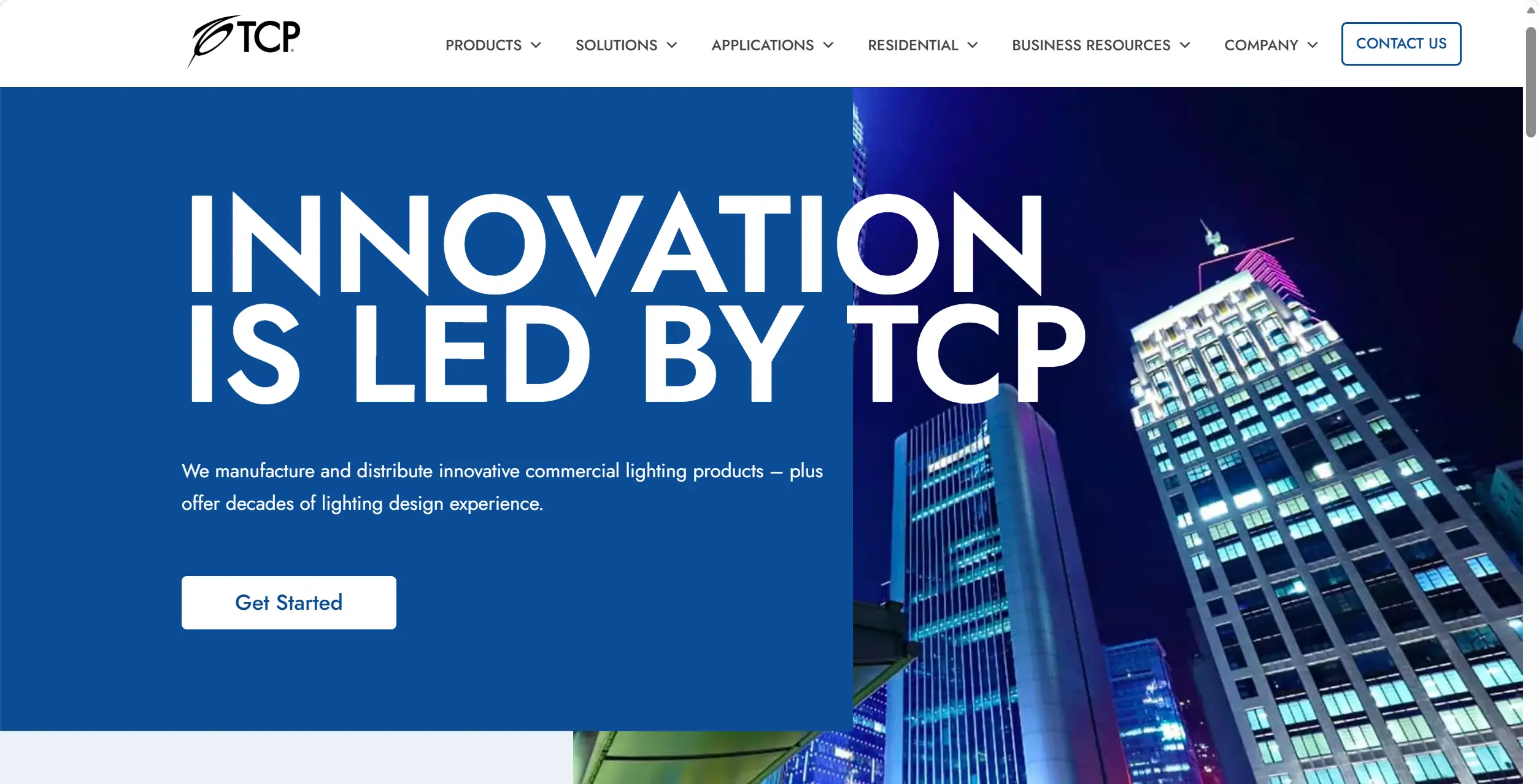
Technical Consumer Products, Inc. lists its North American headquarters in Aurora, Ohio. Its company page also states that TCP assembles lamps and fixtures in US-based facilities.
That confirms a real US operating and assembly presence. It does not confirm that every panel is domestically manufactured.
An LED panel sold by a US company may involve:
- US product design
- Overseas frames and drivers
- Imported LED boards
- US testing or packaging
- Overseas final assembly
- Domestic inventory and distribution
The customs origin depends on the actual production process—not the location of the sales office.
What the Public Records Show
TCP’s current panel and troffer portfolio includes backlit panels, volumetric troffers, retrofit kits and specialized panel products.
The published features include:
- Backlit construction
- 0–10V dimming
- IC and damp-location ratings
- Selectable wattage and CCT
- Battery and sensor options
- DLC-qualified configurations
However, TCP’s public panel pages generally focus on performance and application. They do not provide one country-of-origin statement covering every model.
At least one historical distributor record identifies the TCP HDTF4UZD3841K direct troffer as originating in China. This is useful evidence for that particular product record, but it does not prove that every current TCP panel is Chinese-made.
It also does not establish the origin of newer DT Series models, retrofit kits or special configurations.
The Bigger Risk Is an Outdated SKU
Country of origin is not the only issue.
TCP’s website contains product generations that are active, being phased out or discontinued. A general category page may continue to describe a family while individual specification pages move into a discontinued section.
This can create a procurement mistake:
- A distributor specifies an older model.
- The original SKU is no longer available.
- A newer model is quoted as an equivalent.
- The buyer reuses the old DLC, origin and performance documents.
- The replacement ships with different components or compliance status.
The new product may be perfectly acceptable. The paperwork is not automatically transferable.
For every substitution, recheck:
- Full catalog number
- Country of origin
- DLC Product ID
- Safety certification
- Driver model
- Emergency option
- Dimming range
- Warranty terms
- Photometric file
“Same brand” does not mean “same approved product.”
US Assembly May Still Be Commercially Valuable
Domestic assembly can shorten lead times, support customization and improve replacement availability.
But buyers should ask what “assembled in the USA” means for the quoted panel.
Does the US operation perform:
- Driver installation?
- LED board mounting?
- Mechanical assembly?
- Wiring and final testing?
- Packaging only?
- Configuration of imported finished fixtures?
The answer affects procurement eligibility, origin claims and potentially tariff treatment.
A marketing statement about US assembly should not be copied into a tender as “Made in USA” unless the supplier provides documentation supporting that claim for the exact SKU.
Why the Answer Matters More Under Changing Tariffs
If a TCP panel is legally of Chinese origin, it may be exposed to China-specific Section 301 duties in addition to the normal customs duty, depending on its HTS classification and the measures in force when it enters the United States.
If a panel is assembled elsewhere, that does not automatically remove the risk.
US Customs may consider:
- Where the main components were manufactured
- The complexity of final assembly
- Whether the production process created a substantially transformed product
- The origin of the component that gives the fixture its essential character
Moving basic assembly to another country is not enough by itself to guarantee a new origin.
Buyers should therefore avoid three unsupported assumptions:
- Ohio company = US origin
- Non-China assembly = no Section 301 exposure
- Vietnam shipment = tariff-free
The importer of record should confirm the classification and origin analysis before calculating landed cost.
Use the Five-Document Rule
Before approving a TCP panel for a large order, obtain five current documents:
1. SKU-Specific Specification Sheet
It must match the wattage, size, voltage, CCT and optional equipment on the quotation.
2. Country-of-Origin Declaration
Request a signed statement naming the legal origin of the finished fixture.
3. Product Label or Carton Photo
The label should show the model number, electrical ratings and origin marking where applicable.
4. Certification Record
Confirm the quoted model appears under the correct UL, ETL or other safety certification file.
5. DLC Record
Check the exact model in the current DLC Qualified Products List. A related model or product family is not enough.
For repeat orders, add an origin- and component-change notification clause to the purchase order.
A Better RFQ Question
Do not ask:
Are TCP panels made in the USA?
Ask:
Please provide the current country of origin, production location and supporting declaration for the exact TCP catalog number quoted. Also confirm whether the driver, emergency battery or controls change the origin or compliance status.
The second question produces information that purchasing, customs and project-compliance teams can actually use.
Comparing TCP With a Factory-Direct Program
TCP offers an established US brand, domestic support and a broad commercial-lighting portfolio. A factory-direct program serves a different procurement objective.
It may offer:
- Private-label packaging
- Custom wattage and lumen packages
- Controlled LED binning
- Specified driver brands
- Batch-level inspection
- Direct production visibility
- Custom cartons and manuals
- Country-of-origin documentation
When evaluating a top LED flat panel manufacturer, buyers should compare documentation control and repeat-order consistency—not only price and maximum lumens.
For companies considering Vietnam as an additional sourcing base, this list of commercial lighting and LED panel manufacturers in Vietnam provides an initial supplier shortlist.
Vietnam can diversify the supply chain, but each factory still needs to prove genuine manufacturing activity, quality control and legal origin.
Xmart supports OEM and private-label backlit LED panel production for distributors and commercial-lighting brands. Available options include selectable wattage and CCT, 0–10V dimming, emergency configurations, customized packaging and batch documentation.
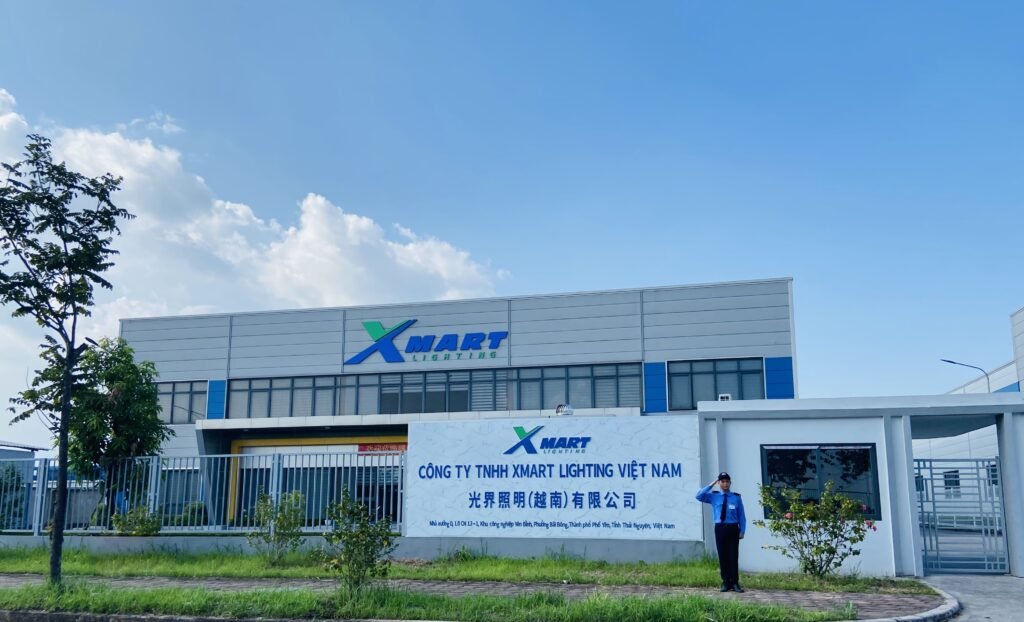
Buyers can request a model and landed-cost comparison based on their required size, certification, annual volume and destination market.
Frequently Asked Questions
Are TCP LED flat panels made in the USA?
TCP has US facilities and states that it assembles lamps and fixtures domestically. That does not establish US origin for every LED panel. Verify the exact model.
Are TCP LED panels manufactured in China?
A historical distributor record identifies at least one TCP direct troffer model as Chinese-origin. This should not be generalized to the entire current portfolio.
Does US assembly remove Section 301 tariffs?
Not automatically. Tariff treatment depends on the legal country of origin, HTS classification and production facts.
Can an old DLC listing be used for a replacement model?
No. Confirm that the exact replacement SKU is currently listed and matches the product being supplied.
What should a distributor verify on repeat orders?
Reconfirm the SKU, factory origin, driver, LED package, certification record, DLC status and product label—especially after a model transition.
Final Verdict
TCP’s Ohio presence is real, but it is not a universal Made-in-USA declaration for every TCP LED flat panel.
The available evidence supports a model-specific conclusion:
- TCP has US operations and assembly capability.
- Some historical TCP panel products have been identified as Chinese-origin.
- Current public product pages do not disclose one origin for the complete panel portfolio.
- Product transitions can change components, certifications and sourcing.
For B2B buyers, the carton label and signed SKU-level declaration matter more than the address printed at the bottom of a specification sheet.