Updated: August 2026
Short answer: No.
LED panel lights are not automatically exempt from China Section 301 tariffs simply because they are shipped, assembled or labeled in Vietnam.
If U.S. Customs and Border Protection determines that an LED panel is legally a product of Vietnam, the China-specific Section 301 tariff generally does not apply. However, the importer must be able to support that origin with the actual manufacturing process—not only a commercial invoice or Certificate of Origin.
There is another important change: since July 24, 2026, most Vietnam-origin products have been subject to a separate 12.5% Section 301 duty unless a specific exemption applies.
In other words:
Vietnam origin may remove the China-specific Section 301 layer without making the LED panel tariff-free.
This article explains what U.S. lighting importers, distributors and private-label buyers should verify before calculating landed cost.
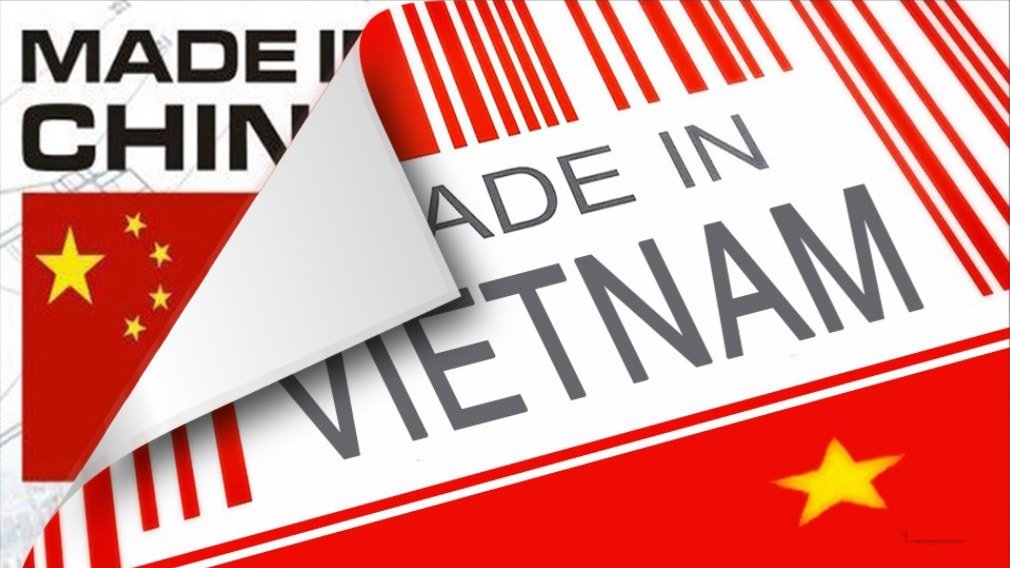
“Made in Vietnam” Is a Customs Conclusion, Not a Shipping Label
A common assumption is:
If the supplier issues a Vietnamese Certificate of Origin, the product is automatically exempt from China tariffs.
That is incorrect.
For U.S. customs purposes, the country of export and the country of origin are not necessarily the same.
A shipment can leave from Vietnam while CBP still determines that the product is Chinese-origin if the work completed in Vietnam is too limited to create a new article of commerce.
CBP generally applies a substantial transformation test. It examines whether processing in Vietnam creates a product with a new name, character or use.
This is a fact-specific decision based on the complete manufacturing process.
What Does Not Automatically Establish Vietnam Origin?
None of the following proves Vietnam origin by itself:
| Supplier claim or document | Does it automatically establish Vietnam origin? |
|---|---|
| Shipped from a Vietnamese port | No |
| Vietnamese commercial invoice | No |
| “Made in Vietnam” carton label | No |
| Certificate of Origin | No |
| Final assembly in Vietnam | No |
| Chinese components used in production | Not automatically disqualifying |
| Meaningful PCBA and light-source manufacturing in Vietnam | Stronger evidence, but still fact-specific |
A Certificate of Origin remains important, but it must be consistent with factory records, material flow and the actual production completed in Vietnam.
The LED Light Source May Matter More Than the Metal Housing
Buyers often focus on where the frame, diffuser and driver are sourced.
CBP’s LED lighting decisions suggest that the more important question may be:
Where was the functional light-producing assembly meaningfully manufactured?
In previous LED lighting rulings, CBP has considered activities such as:
- Populating printed circuit boards through surface-mount technology
- Installing LEDs and electronic components onto the PCBA
- Producing the functional light source
- Electrical and optical integration
- Programming or configuration where applicable
- Safety, aging and performance testing
- The complexity, skill and equipment required
- Whether later assembly is simple or substantial
For example, CBP rulings N347800 and N348066 found Vietnam origin for particular LED products manufactured under the processes described in those rulings.
However, those decisions are not blanket exemptions for every Vietnam-made LED panel. CBP rulings apply to their stated products, components and production facts.
When a Vietnam Origin Claim Is Stronger
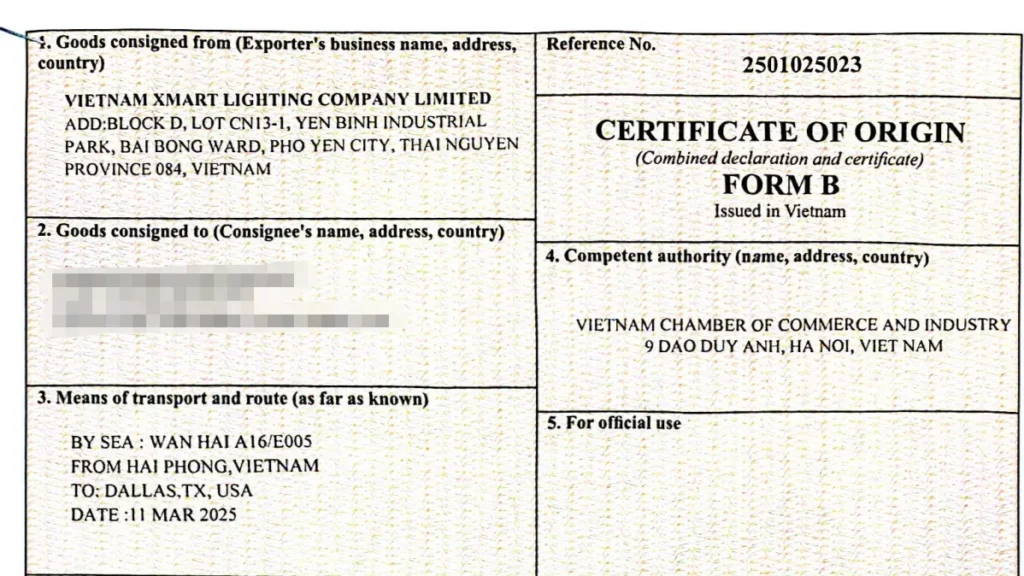
A Vietnam origin position is generally more supportable when the factory can document meaningful production such as:
- LED PCBA population in Vietnam
- SMT production records
- Electrical and optical assembly
- Driver and light-source integration
- Detailed production work orders
- Skilled manufacturing rather than repacking
- Functional, safety and aging tests
- Batch-level traceability
- Consistent factory, labeling and shipping records
The presence of Chinese components does not automatically make the finished panel Chinese-origin. The central question is whether those components undergo sufficient manufacturing in Vietnam.
When the Claim Is Weaker
Importers should be cautious when the Vietnamese operation consists mainly of:
- Installing a finished Chinese light engine into a housing
- Screwing together nearly complete imported subassemblies
- Attaching labels
- Repacking finished products
- Conducting only basic final inspection
- Routing Chinese-made goods through Vietnam without meaningful production
Changing the invoice, carton or shipping route does not change the customs origin.
False origin declarations can expose the U.S. importer—not only the overseas supplier—to duties, penalties, shipment detention and retroactive assessment.
Does Vietnam Origin Eliminate Section 301 Duties in 2026?
Not necessarily.
This is where many older tariff articles have become misleading.
On July 23, 2026, USTR announced Section 301 action covering 60 economies. The final action imposes a 12.5% Section 301 duty on products of Vietnam, subject to specified exemptions. It became applicable to covered entries on July 24, 2026. See the USTR announcement and the official final notice.
Therefore, buyers must distinguish between two different questions:
- Is the product subject to the China-specific Section 301 tariff?
- Is the product subject to another Section 301 action applicable to Vietnam?
A legally Vietnamese-origin LED panel may avoid the first while remaining subject to the second.
Are Commercial LED Panels Included in the 2026 Exemptions?
Do not assume so.
The 2026 USTR exemption annex lists several lighting classifications under heading 9405, including 9405.11.60, but the listed scope is limited to aircraft-related articles.
An ordinary 2×2 or 2×4 commercial LED flat panel should therefore not be treated as exempt merely because its HTS heading appears somewhere in the annex.
The importer must verify:
- The exact 8- or 10-digit HTS classification
- The wording of the exemption
- Any stated scope limitation
- Country of origin
- Entry date
- Other duties applicable to the same entry
USTR instructs importers to identify the correct HTS subheading before checking Section 301 coverage and rates through its Section 301 product search.
HTS Classification and Country of Origin Are Different Decisions
Importers frequently combine these questions, but they serve different purposes.
HTS classification identifies what the imported product is.
Country of origin identifies where it was legally produced.
Trade-remedy applicability determines which additional tariff programs apply.
A complete base-metal commercial LED ceiling fixture may potentially fall within heading 9405.11, but the correct classification depends on the product’s construction, function and entry condition. It should be confirmed with a licensed customs broker or through a CBP binding ruling.
The final landed-cost calculation may include:
Customs value × applicable MFN duty
- applicable Section 301 duty
- any other trade-remedy duties
- customs processing, brokerage and logistics costs
Do not calculate landed cost using the supplier’s country-of-origin statement alone.
What Should an LED Panel Importer Request?
Before approving a Vietnam sourcing program, request model-specific evidence rather than a general factory statement.
Manufacturing evidence
- Factory name and production address
- Product-specific manufacturing flow
- Bill of materials with component origins
- PCBA and SMT production records
- Production work orders
- Equipment and process photographs
- Electrical, photometric and aging-test records
Traceability evidence
- Batch or lot number system
- Model number consistency
- Product, label and carton photographs
- Packing lists and commercial invoices
- Component purchase records
- Direct-shipment documentation
- Certificate of Origin support
Compliance evidence
- UL or ETL listing information
- DLC listing where required
- Manufacturing-location consistency
- LM-79 or other applicable test documentation
- Written confirmation of material or component substitutions
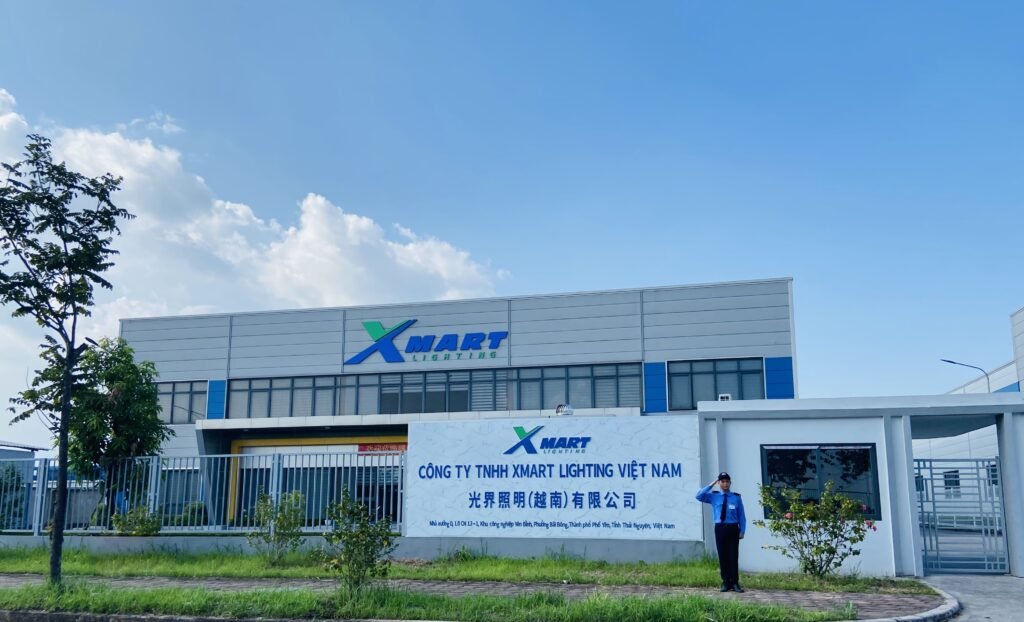
Xmart offers a Vietnam-made commercial LED panel program with Certificate of Origin and production-documentation support. Buyers can also review available certification documentation before requesting model-level records.
Seven Tariff-Origin Red Flags
Be cautious if a supplier says:
- “All Vietnam products are tariff-free.”
- “A Certificate of Origin is all you need.”
- “The factory location automatically determines origin.”
- “Chinese PCBA origin does not matter.”
- “We can change the country on the invoice.”
- “Our production process is confidential.”
- “We guarantee your final U.S. tariff rate.”
A qualified LED flat panel light manufacturer should explain what is manufactured in Vietnam, what is imported, how production is documented and which claims still require confirmation from the importer’s customs professional.
Frequently Asked Questions
Are all Vietnam-made LED panel lights exempt from China Section 301 tariffs?
No. The product must first qualify as Vietnam-origin under the applicable U.S. country-of-origin rules. Shipping or simple assembly in Vietnam is not enough by itself.
Do Chinese components automatically make the finished LED panel Chinese-origin?
No. Component origin is relevant, but CBP considers the entire manufacturing process and whether substantial transformation occurs in Vietnam.
Does a Vietnamese Certificate of Origin guarantee U.S. customs treatment?
No. It is supporting evidence, but it does not replace CBP’s origin analysis.
Are Vietnam-origin LED panels tariff-free in 2026?
No blanket tariff-free treatment should be assumed. A separate 12.5% Section 301 duty has applied to most products of Vietnam since July 24, 2026, subject to stated exemptions.
Can an LED panel supplier guarantee the final tariff rate?
No responsible supplier should guarantee it. The final determination depends on HTS classification, country of origin, entry date and current U.S. trade measures.
What is the safest approach when origin is uncertain?
Ask a licensed customs broker or trade counsel to review the model-specific production records. For recurring or high-value imports, consider requesting a binding ruling from CBP.
The Better Sourcing Question
The wrong question is:
“Are your Vietnam LED panels exempt from tariffs?”
The better question is:
“Which manufacturing operations establish Vietnam origin, what documentation supports them, and which current U.S. duties still apply to this HTS classification?”
That question exposes the difference between a genuine manufacturing program and a relabeling operation.
For model specifications, origin-supporting documents, samples and a landed-cost discussion with your customs broker, request a Vietnam LED panel quotation.
This article provides general information only and is not legal, customs or tax advice. Tariff measures and classifications can change. Importers should verify the current HTS classification, country-of-origin treatment, exclusions and applicable duties with a licensed customs broker, customs counsel or CBP before entry.