
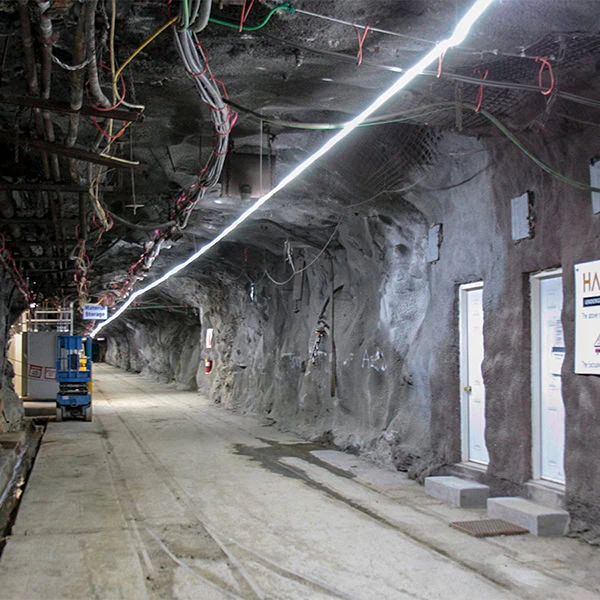
IP65 vs IP67 vs IP68 Mining LED Strip: What Actually Matters Underground
In underground lighting, “waterproof” is not a specification.
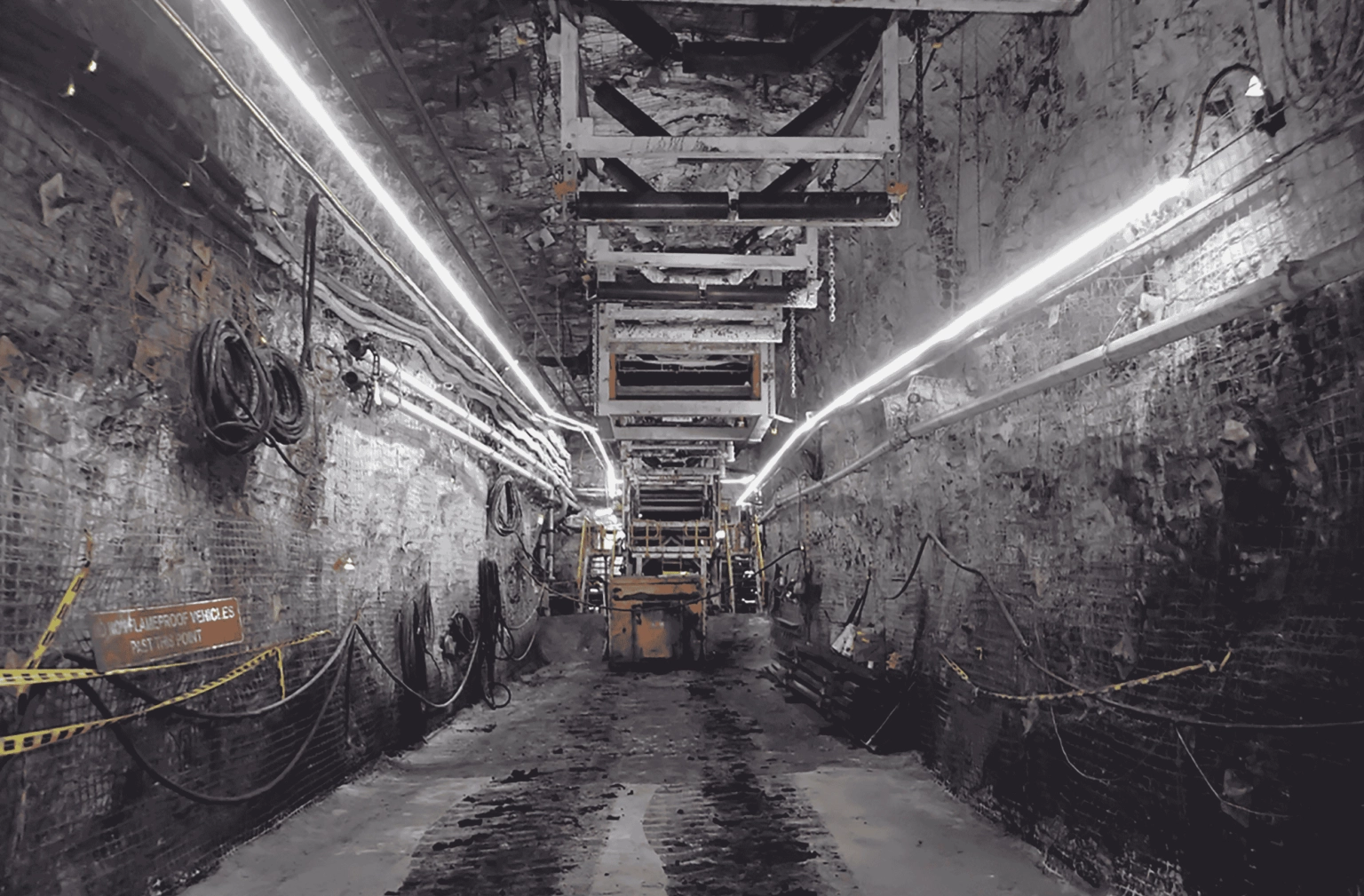
A mine tunnel may be dusty, damp, washed down, temporarily flooded or permanently submerged. These are different exposure conditions, and they require different engineering decisions.
The right IP rating is not the highest number on a datasheet. It is the rating that matches the real water risk — together with the connector, end cap, cable entry, power-supply enclosure and installation method.
Direct Answer
IP65 is commonly considered for dust and water jets, IP67 for temporary immersion and IP68 for continuous immersion under manufacturer-defined conditions. For mining and tunnel lighting, the correct choice depends on the actual exposure, not the marketing word “waterproof.”
What an IP Rating Actually Tells You
IP stands for Ingress Protection. The rating is defined by IEC 60529 and uses two digits.
First Digit
Solid Particle Protection. For industrial lighting, “6” means dust-tight protection under the defined test condition.
Second Digit
Water Protection. Describes the water-exposure test passed. It does not describe every possible wet condition.
For the underlying rating system, reference the International Electrotechnical Commission’s IP rating overview.
Essential Note: An IP rating applies to the tested product configuration. It does not automatically extend to an open cut end, an unsealed connector, a damaged cable entry or an incorrectly installed power supply.
Why IP66 Must Be Part of the Conversation
IP65, IP67 and IP68 are often compared as though they are a simple ladder. They are not.
- IP65 addresses water jets under its defined test.
- IP66 addresses more powerful water jets.
- IP67 addresses temporary immersion.
- IP68 addresses continuous immersion under conditions specified by the manufacturer.
An IP67 product has been tested for temporary immersion. That does not automatically mean it has been tested for high-pressure washdown. An IP66 product has been tested for powerful water jets. That does not automatically mean it has been tested for immersion.
| Rating | What It Addresses | Typical Underground Question | What It Does Not Automatically Prove |
|---|---|---|---|
| IP65 | Dust-tight enclosure and water-jet protection | Is the route dusty and exposed to rain, drips or light washdown? | Temporary flooding or immersion |
| IP66 | Dust-tight enclosure and powerful water-jet protection | Is high-pressure cleaning or powerful spray part of maintenance? | Temporary immersion |
| IP67 | Dust-tight enclosure and temporary immersion | Could the route experience standing water or short-term flooding? | High-pressure washdown |
| IP68 | Dust-tight enclosure and continuous immersion under stated conditions | Will the light remain below the waterline? | A universal depth, duration, liquid type or connection method |
Procurement Note: If a project needs protection from both powerful washdown and temporary immersion, ask for verified dual-rating evidence rather than assuming one rating includes the other.
Choose the Rating From the Actual Water Scenario
Evaluate the physical environment before specifying the number.
Dry, dusty underground routes
Suggested focus: Dust control, impact resistance, vibration, heat and maintenance access may be more relevant than a high immersion rating.
Damp tunnels and condensation-prone corridors
Suggested focus: Confirm sealed construction, connector protection, cable-entry detail and whether water can accumulate around the installation.
Rain, drips and routine low-pressure washdown
Suggested focus: Evaluate the actual washdown method, direction of spray and exposed connection points. IP65 may be relevant only when the complete installed system matches the exposure.
High-pressure cleaning or severe spray
Suggested focus: Check whether IP66 or another verified washdown condition is required. Do not assume IP67 covers high-pressure jets.
Temporary flooding or standing water
Suggested focus: IP67 may be relevant where temporary immersion is a realistic risk, but confirm how deep, how long and whether joints and power components are also protected.
Permanent submerged installation
Suggested focus: IP68 must be specified with exact manufacturer-declared conditions, including immersion depth, duration, water type and complete system configuration.
The best IP rating is the lowest rating that genuinely covers the verified exposure — with sufficient margin for the real installation. Overspecifying IP without defining the environment can add cost without removing the actual failure point.
“IP68” Is Incomplete Without Four More Answers
IEC 60529 allows the manufacturer to define the depth and duration conditions for IP68. That means one supplier’s IP68 claim may not represent the same immersion condition as another supplier’s IP68 claim.
- At what depth was the product tested?
- For how long was it immersed?
- In what liquid and temperature condition?
- Which parts of the system were included in the tested configuration?
Procurement Rule: Never approve IP68 from the rating alone. Request the exact test condition and confirm whether the strip, end caps, connectors, cable entries and power components are covered by the intended installation design.
What IP Ratings Do Not Tell You
A rated strip installed with an unrated connection is not a rated system.
Impact resistance
IP ratings do not measure resistance to impact. For industrial routes, check the required mechanical protection separately.
Vibration resistance
A water-tight enclosure can still fail when cable strain, vibration or movement affects the connector or mounting point.
Chemical compatibility
IP testing does not automatically prove resistance to oils, cleaning chemicals, salt, acids, alkalis or mine-specific contaminants.
UV and heat exposure
A rating for water ingress does not define resistance to sunlight, elevated ambient temperature or local heat sources.
Connector reliability
The main strip body can be protected while the connector, end cap or cable entry remains the system’s weak point.
Installation quality
Incorrect sealing, damaged extrusion, over-tightened cable ties or unsupported cable runs can compromise a correctly rated product.
Specify the Whole Lighting System, Not Only the Strip
Every connection point is a potential ingress path. Evaluate the entire line.
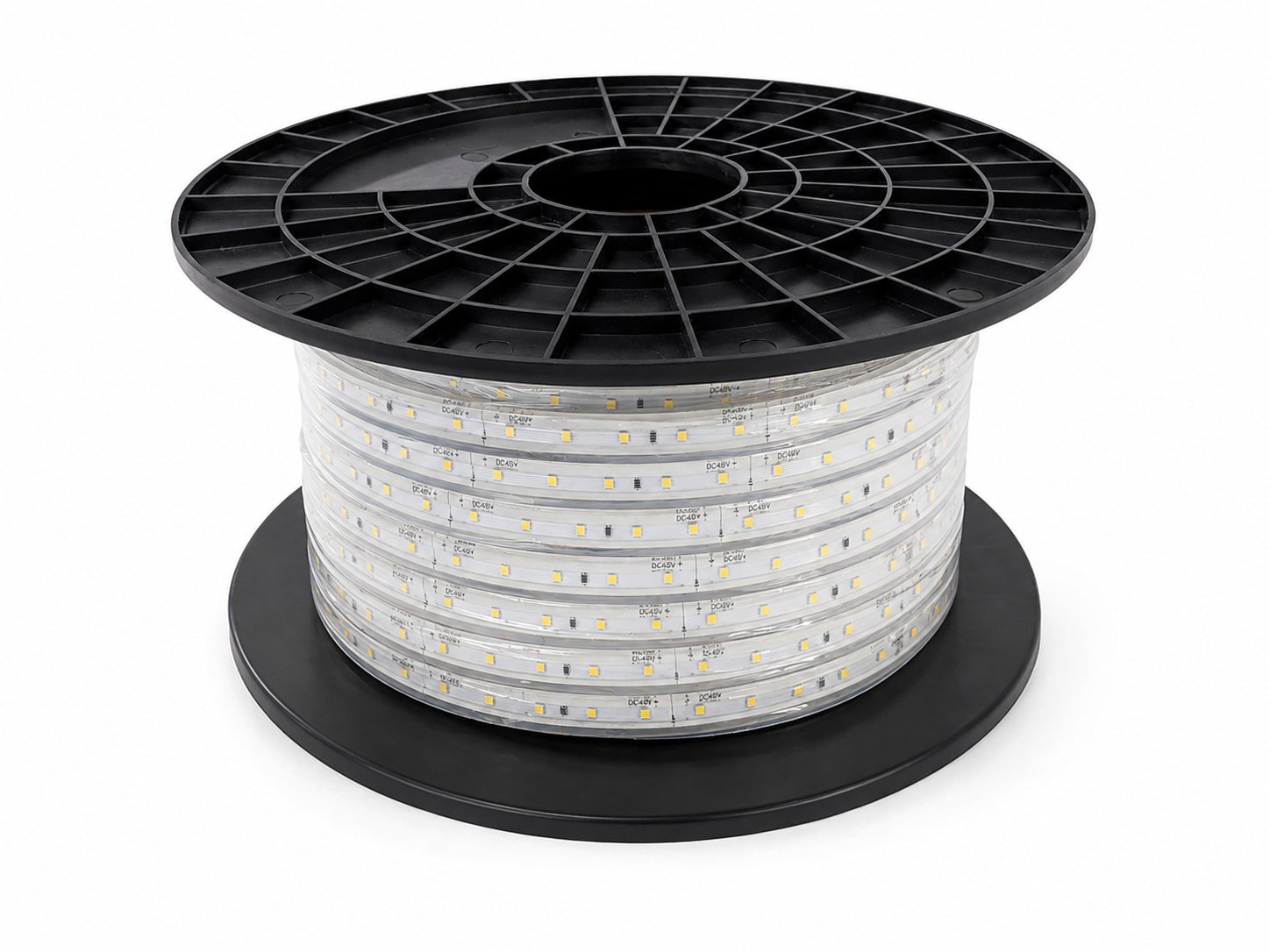
For Xmart’s industrial route product options, see the Tunnel & Mining LED Strip page.
What to Ask Before You Approve an IP-Rated Mining LED Strip
- What exact water exposure will the installation face?
- Is the exposure spray, washdown, temporary immersion or continuous immersion?
- Is high-pressure cleaning part of the maintenance routine?
- Does the product need IP65, IP66, IP67, IP68 or verified dual protection?
- What are the declared IP68 test depth and duration, if applicable?
- Is the stated rating for the strip only or for the connected installation?
- How are the end caps, connectors and cable entries protected?
- What mechanical impact, vibration and strain conditions exist?
- Are chemicals, oils, salt, dust or high temperature present?
- Can the entire system be inspected and maintained after installation?
A supplier who only answers “IP68” has not yet answered the engineering question.
Five IP Rating Mistakes That Cause Avoidable Failures
Treating IP ratings as a simple higher-is-better scale.
Selecting IP67 for high-pressure washdown without confirming IP66 performance.
Requesting IP68 without defining immersion depth, duration or liquid condition.
Checking the strip rating but ignoring connectors, end caps and power-supply enclosures.
Using “waterproof” as a purchasing requirement instead of describing the actual exposure.
IP65, IP67 and IP68 Mining LED Strip FAQs
Is IP68 always better than IP67 for mining LED strip lighting?
Does IP67 protect against high-pressure washdown?
Can I use IP65 LED strip in a tunnel?
What does IP68 mean for an LED strip?
Does the IP rating of the strip apply to connectors and power supplies?
Specify the Water Risk Before You Specify the IP Rating
A mining or tunnel lighting system should be selected from the actual route conditions — dust, washdown, standing water, immersion, vibration and maintenance access — not from a single “waterproof” label.
Send Xmart your installation photos, environmental conditions, cleaning method, route layout and required market. We can help you discuss a suitable Tunnel & Mining LED Strip configuration and the protection details that need to be considered around it.
Discuss an IP-Rated Tunnel Lighting ProjectSpecifications based on IEC 60529 guidelines. Always verify exact product capabilities against project requirements.