
Why Mining LED Strip Lights Fail Early: 9 Failures Buyers Usually Miss
A tunnel LED strip can stop performing long before the LEDs themselves reach the end of their useful life.
A dim far end, random flicker, a dead section after washdown or a strip that fails near a connector can all look like a product-quality problem. Often, the root cause sits elsewhere in the system.
In mining and tunnel installations, reliability depends on the complete chain: power supply, cable, strip, connector, sealing method, mounting detail and real operating environment.
Direct answer:
Early failure in mining LED strip lighting is commonly linked to voltage mismatch, overloaded power supplies, long-run voltage drop, trapped heat, connector or sealing failure, mechanical stress and unsuitable installation conditions. Diagnose the system before replacing the strip.
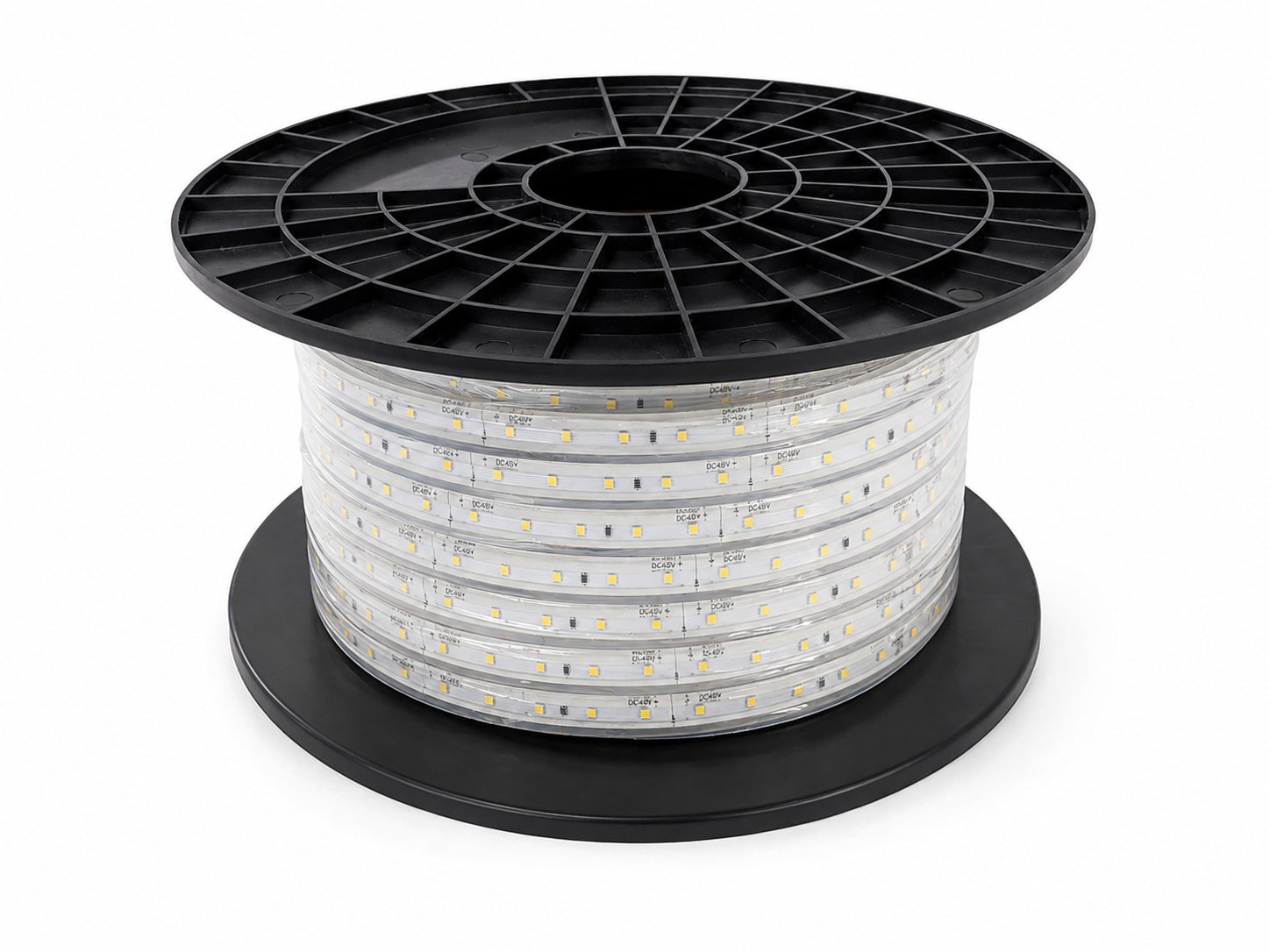
Early Failure, Lumen Depreciation and Installation Faults Are Not the Same Thing
A correct diagnosis begins with the visible symptom. Replacing a strip without identifying the system fault can repeat the same failure.
Early functional failure
The strip stops working, flickers, loses a section, develops a dead channel or becomes unstable shortly after installation.
Lumen depreciation
The strip still works, but brightness gradually reduces over time due to normal ageing, thermal conditions or long operating hours.
Installation-related fault
The product may be functional, but the system fails because of incorrect voltage, poor power-feed planning, unsuitable connectors, poor sealing, mechanical damage or incompatible controls.
Diagnostic Path
What the Symptom Usually Tells You
| Visible Symptom | Likely First Checks | Do Not Assume |
|---|---|---|
| Whole strip is off | Power supply, breaker, polarity, primary connection | Do not assume every LED failed at once. |
| Far end is dimmer | Voltage at input and far end, run length, feed cable, power-feed layout | Do not assume the strip has poor brightness. |
| Flicker appears under load | Driver capacity, dimmer/controller compatibility, loose connection, supply stability | Do not assume the LEDs are defective. |
| One short section is dead | Local strip damage, cut point, connector, mechanical stress | Do not replace the full route before locating the fault. |
| Failure appears after rain, washdown or condensation | End caps, cable entries, junctions, connector sealing and enclosure integrity | Do not rely on the strip body’s IP rating alone. |
| Colour changes along the run | Voltage drop, channel imbalance, controller or wiring issue | Do not assume colour inconsistency is always LED binning. |
| Yellowing or hot areas | Heat, trapped airflow, overdriving, incorrect installation or chemical exposure | Do not assume every discolouration is cosmetic. |
| Failure near a connector | Current rating, strain relief, vibration, sealing and installation force | Do not assume the connector is only an accessory. |
For a broader fault-by-fault reference, see Xmart’s LED Strip Troubleshooting Guide.
9 Reasons Mining LED Strip Lights Fail Early
1. Wrong System Voltage
The strip is dim, unstable, overheated or fails immediately after commissioning.
The strip voltage and power-supply output do not match, or the supply is not suitable for the selected system.
Confirm the strip voltage, power-supply output and polarity against the actual product label and project documentation.
Verify voltage compatibility before energising the full route.
2. Power Supply Sized Too Close to the Load
Flicker, thermal shutdown, unstable output or failure after the system has been operating for a period.
The power supply is operating too close to its continuous-load limit or in an unsuitable thermal environment.
Compare actual connected load with the power supply’s continuous-load specification. Check enclosure ventilation and ambient conditions.
Select a suitable driver with project-appropriate headroom and confirm thermal conditions.
3. Long-Run Voltage Drop
The first part of the route looks normal, while the far end becomes dimmer or changes colour.
Voltage is being lost through feeder cable, strip conductors, connectors or an unsuitable feed layout.
Measure voltage at the power supply, first strip connection and far end under operating load.
Plan voltage, cable size and feed points before installation. Do not treat power injection as an afterthought.
For long-route product options, visit Xmart’s Tunnel & Mining LED Strip page.
4. Heat Trapped Around the Strip
Local yellowing, reduced output, hot spots, adhesive or material degradation, or early performance decline.
The strip is operated while coiled, enclosed without sufficient heat dissipation, installed near a heat source or driven beyond the intended operating condition.
Inspect the installation surface, airflow, heat source proximity and whether the strip was tested while still on a reel.
Test unrolled strip only. Use a mounting and installation method suitable for the selected product and environment.
5. Water or Dust Entering Through the Interface
Failure occurs near end caps, connections, cable entries or after washdown, rain or condensation.
The weak point is often the installation interface, not the main strip body.
Inspect end caps, joints, cable glands, connector seals and power-supply enclosures.
Specify the complete sealing system, not only the strip’s IP rating.
6. Connector Overload or Mechanical Strain
Intermittent faults, local heating, disconnection, dead sections or failure near a joint.
The connector is not matched to current, environment, vibration or pulling force. Cable strain may be transferred directly into the connection.
Confirm connector current rating, strain relief, mounting position and vibration exposure.
Select connectors as part of the electrical system, not as an afterthought.
7. Incorrect Mounting, Bend or Support Method
Damage at bends, pulled connections, sagging, local pressure points or repeat failures in the same physical location.
The strip is bent too tightly, unsupported across long intervals, compressed by fixings or installed where moving equipment can strike it.
Review bend conditions, support spacing, fixing method and mechanical protection.
Use the approved mounting method and maintain service access.
8. Incompatible Controls, Dimmers or Electrical Environment
Flicker during dimming, unstable output, colour-channel faults or intermittent behaviour when other equipment starts.
The power supply, dimmer, controller and strip are not electrically compatible, or the installation environment is affecting the circuit.
Confirm control method, PWM compatibility, wiring layout and connection quality.
Approve the complete control chain before mass installation.
9. No Sample Approval, Batch Record or Installation Evidence
The team cannot determine whether the problem is product-specific, installation-specific or related to one delivery batch.
No agreed sample standard, no batch identification, incomplete project documentation or no commissioning record.
Confirm product model, batch or production reference, installation date, power-supply model, route zone and failure photographs.
Approve a documented sample, retain a reference piece and record the final installed configuration.
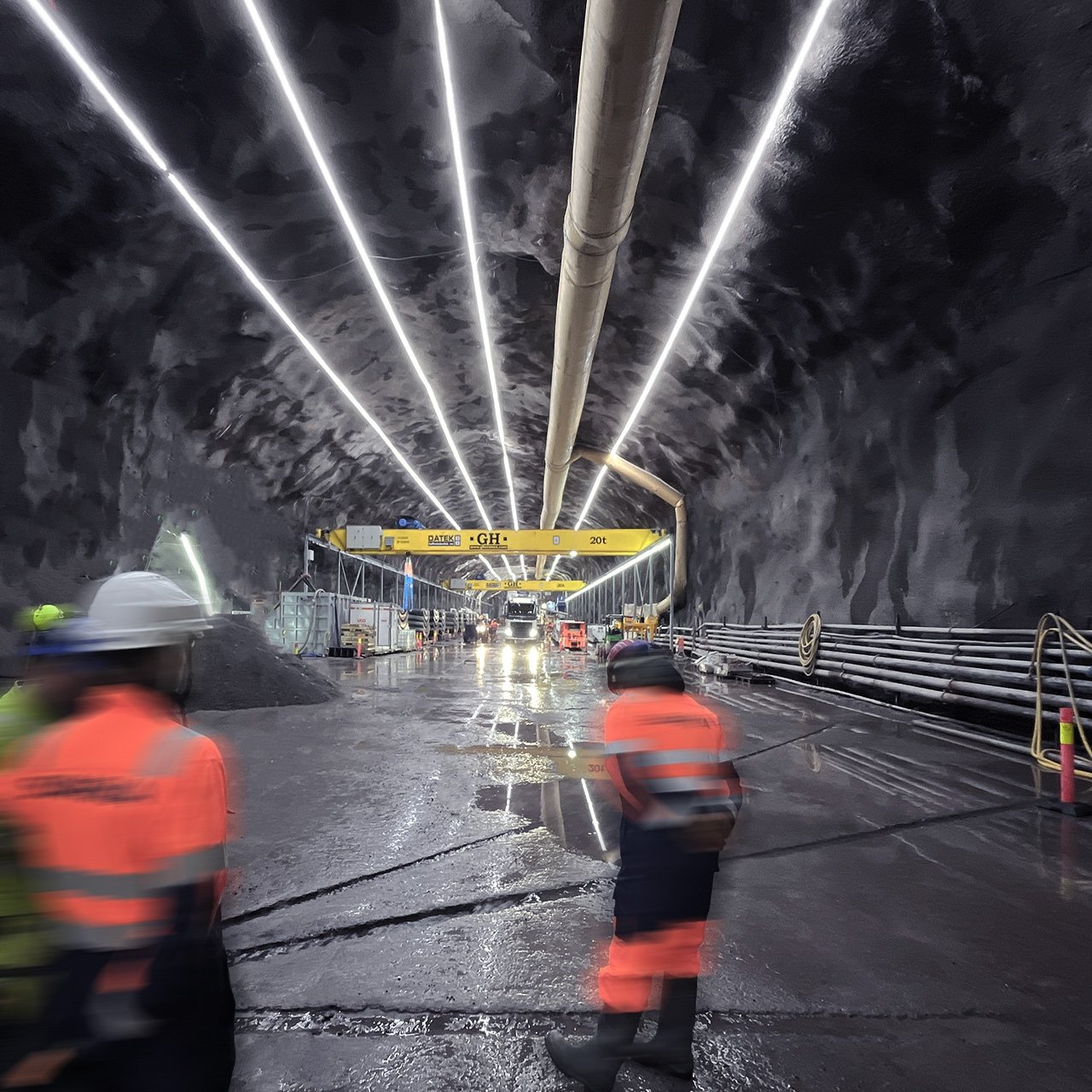
Where the Failure Usually Starts
A reliable lighting system is only as strong as its weakest interface.
A Practical Evidence Checklist for Buyers and Maintenance Teams
- Product model and stated operating voltage
- Total installed length and watts per metre
- Power-supply model, output and installation location
- Feed-cable length and conductor size
- Power-feed layout and zone locations
- Connector type and sealing method
- Installation date and operating hours
- Site conditions: dust, moisture, chemicals, vibration and temperature
- Failure location along the route
- Input, midpoint and far-end voltage readings under load
- Clear photos of the failed area and surrounding connection points
- Batch, purchase order or production reference where available
This information helps separate a product fault from an application, design or installation fault. It also allows the supplier to investigate faster and more accurately.
Nine Questions to Ask Before Approving an Industrial LED Strip Supplier
What is the verified maximum run condition for this exact model?
What strip voltage, watts per metre and power-feed method were used for that condition?
What connector and end-cap system is recommended for this environment?
What operating conditions were used for ingress, heat or mechanical testing?
Is the quoted IP rating for the strip only, or for the complete connected system?
What installation method is required to avoid mechanical damage?
What information is recorded for production batches and quality inspection?
Can the supplier provide sample approval criteria before mass production?
What evidence should be collected if a field issue occurs?
For common buying and installation questions, visit the Xmart LED Lighting FAQ Center.
Mining LED Strip Failure FAQs
Why does my mining LED strip flicker?
Flicker can be caused by an overloaded power supply, voltage drop, loose connection, incompatible dimmer or controller, unstable input power or a local connector problem. Start by checking the electrical chain rather than replacing the strip immediately.
Why is the far end of my tunnel LED strip dimmer?
Far-end dimming is commonly caused by voltage drop. Check the total connected load, route length, feeder cable, strip voltage and power-feed layout. Measure voltage at both the input and far end while the system is operating.
Does an IP-rated LED strip prevent all water-related failures?
No. The strip body may have an IP rating, but end caps, connectors, cable entries, junctions and power-supply enclosures also need protection appropriate to the real installation environment.
Why did an LED strip fail near the connector?
Connector-area faults can result from excessive current, vibration, pulling force, poor strain relief, moisture ingress or an unsuitable connection method.
What should I do before returning a failed LED strip to a supplier?
Record the model, voltage, power supply, route length, feed layout, failure location, site conditions, voltage readings and clear photographs. This gives the supplier enough evidence to investigate the real root cause.
Diagnose the System Before Replacing the Strip
If a mining or tunnel LED strip fails early, the fastest solution is rarely a blind replacement order.
Send Xmart the product model, route details, power-supply information, failure photos and measured voltage readings. We can help you identify the likely cause and discuss a more suitable Tunnel & Mining LED Strip configuration for the next installation.