
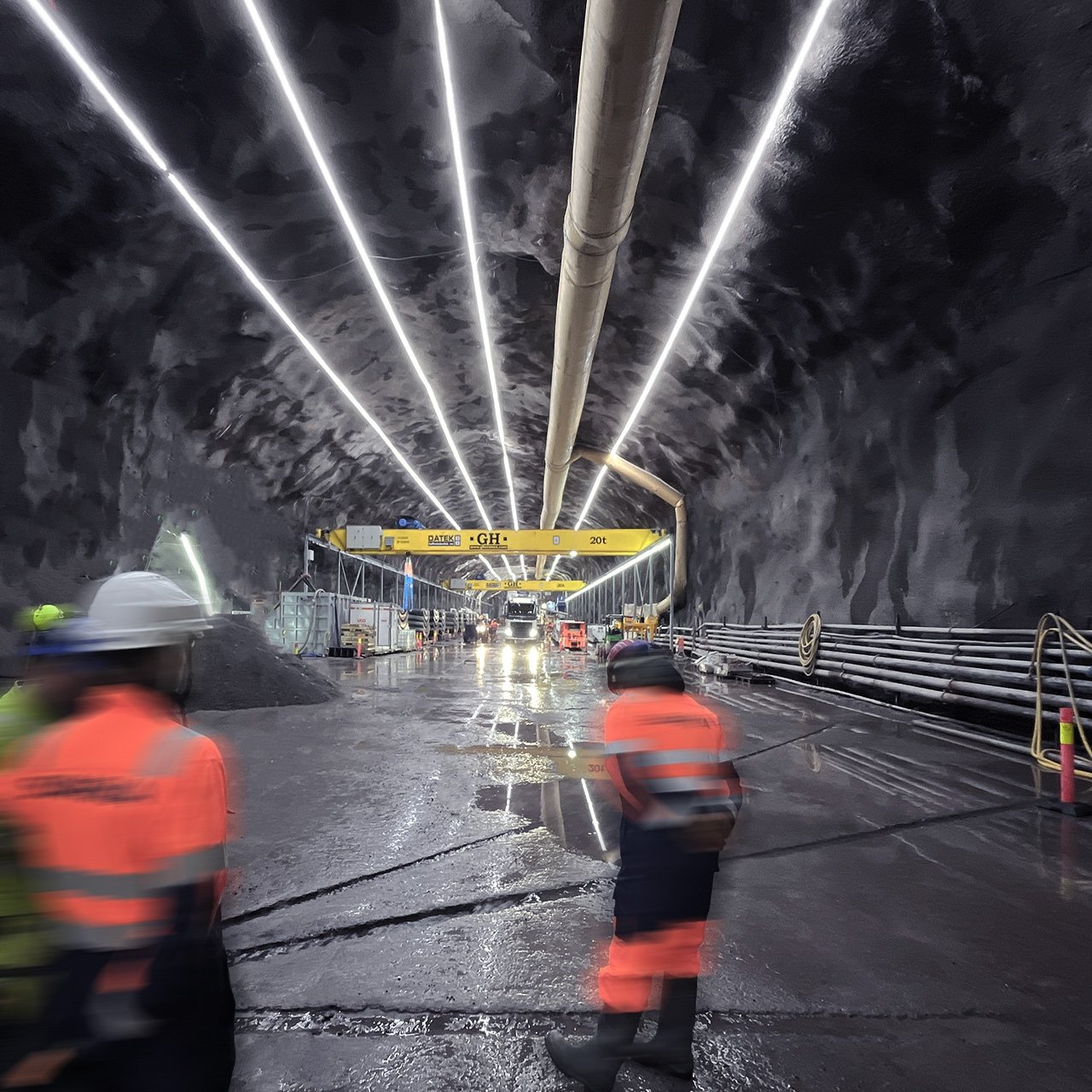
Mining LED Strip Lighting: Why Continuous Light Is Safer Than More Fixtures
A mine route can be bright and still be difficult to see through.
The problem is often not total lumen output. It is the repeated transition between bright fixtures and darker intervals, especially along tunnels, conveyors, shafts and underground access routes.
Continuous LED strip lighting does not replace every industrial luminaire. But where people need a clear, uninterrupted visual route, a connected light line can be a better design decision than simply adding more spaced fixtures.
Direct answer:
Continuous mining LED strip lighting can help reduce visible dark gaps along long linear routes. Its value depends on correct electrical design, suitable mounting, environmental protection and the role the light must perform on site.
The Wrong Metric Is Often Fixture Count
Fixture count is easy to compare on a quotation, but it does not describe how the route feels to an operator, pedestrian or maintenance team.
When fixtures are separated by distance, the route can alternate between bright points and darker zones. On long underground routes, this may create uneven visual rhythm, visual fatigue and less consistent awareness of the route ahead.
Evaluating the visual environment requires looking at the continuity of light across the entire path, rather than just measuring the peak lux directly under a single lamp.
Spaced Fixture Pattern
- Bright point
- Darker interval
- Repeated transition
- More separate mounting
Continuous Light Line
- Connected visual route
- Reduced visible gaps
- More even light rhythm
- One linear installation
Continuous Lighting Works Best When the Route Is the Task
The right lighting format depends on what people need to see. Continuous linear lighting is most useful when the route itself needs to remain visually clear over distance.
Long access routes
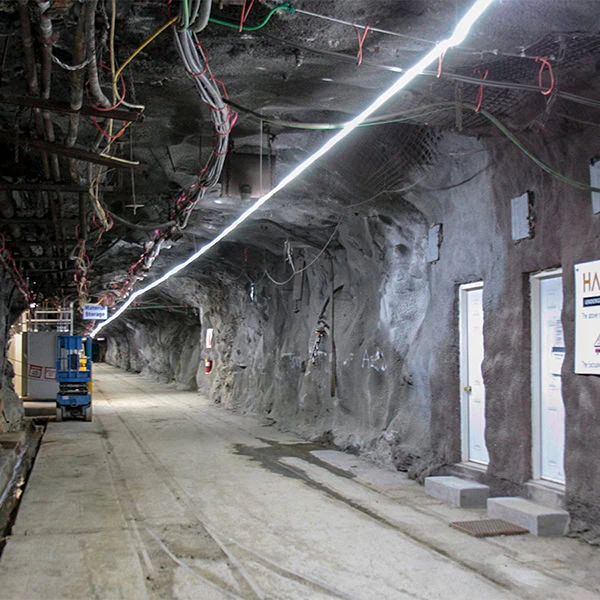
Tunnel approaches, underground corridors and service passages often benefit from a continuous light line because the route extends beyond the reach of a single local fixture.
Conveyor and inspection paths
Maintenance teams need to see the path, equipment edges and access points across a long linear area, not only one isolated work zone.
Changing construction or mine-development areas
Flexible linear systems can be useful where the lighting route needs to extend, move or be adjusted as the work front changes.
Not every application: Continuous strip lighting may not be the right primary solution for high-ceiling task areas, wide open chambers, precision inspection work or locations that require a specific certified hazardous-area product. A mixed lighting layout may be more appropriate.
Choose the Lighting Role Before Choosing the Product
Continuous LED Strip Lighting
Best role:
Long linear route guidance and general route visibility.
Useful where:
Tunnels, conveyors, access corridors, shafts and service passages.
Main design question:
How will voltage, power feeds, mounting and connections be planned over the full route?
Spaced Industrial Fixtures
Best role:
Localized task lighting or areas where light needs to reach specific work zones.
Useful where:
Workstations, equipment areas, high-ceiling spaces and broad open zones.
Main design question:
Will spacing create visible dark intervals between fixtures?
Hybrid Layout
Best role:
Projects that need both continuous route visibility and concentrated task lighting.
Useful where:
Mining workshops, loading areas, longwalls, substations and maintenance zones.
Main design question:
How will the two lighting layers work together without glare or unnecessary overlap?
The goal is not to prove that one lighting format is always better. The goal is to match the lighting pattern to the work, route and maintenance reality of the site.
Continuity Is an Electrical and Installation Decision
A continuous light line is not created by joining more strip together. It depends on whether the electrical layout and installation details support the full route.
Power-feed planning
Long routes need a planned feed layout. Power should not be added only after far-end dimming appears.
Voltage selection
24V, 36V and 48V systems serve different route lengths and loads. Higher voltage can reduce current and voltage-drop pressure, but only when the selected model and feed layout are appropriate.
Connection protection
In dusty, damp or vibration-prone environments, joints, end caps, connectors and cable entries deserve the same attention as the strip body.
Mounting and maintenance access
The installation should remain accessible for inspection, replacement and route changes. A technically correct product is not enough if the fixing method creates difficult service work.
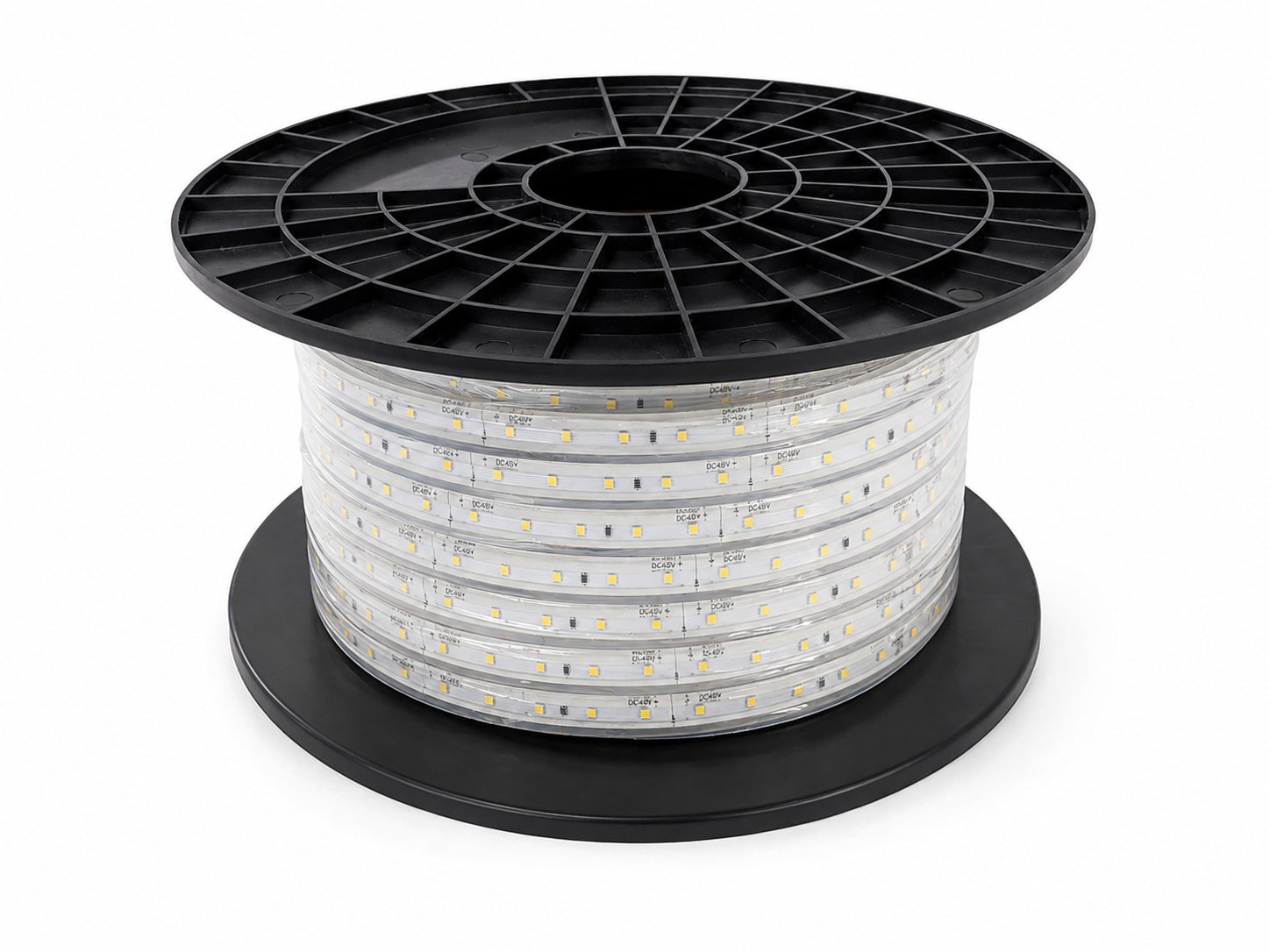
For product configurations designed for industrial routes, see Xmart’s Tunnel & Mining LED Strip system.
Three Situations Where More Continuous Light Is Not the Answer
1. The route has a power problem, not a lighting problem
If voltage drop, undersized cable, incorrect power-supply sizing or poor connectors are not addressed, adding more strip can make the system harder to manage.
2. The project needs certified hazardous-area equipment
IP protection and impact resistance do not automatically mean a product is suitable for a classified hazardous area. Confirm the exact project classification and model-specific certification before specification.
3. The site needs task lighting, not route lighting
A continuous light line can support movement and general visibility, but detailed work zones may need focused fixtures with a different distribution, mounting height or output.
For common symptoms including dimming, flicker, colour shift and connection faults, read Xmart’s LED Strip Troubleshooting Guide.
What to Define Before Planning a Mining LED Strip Installation
- Total route length and lighting zones
- Whether the route is permanent, temporary or regularly extended
- Available input power and preferred system voltage
- Required lighting role: route visibility, task light, emergency guidance or visual signalling
- Dust, moisture, vibration and cleaning conditions
- Mounting surface, fixing method and maintenance access
- Required IP, impact or project-specific compliance requirements
- Power-feed locations and cable-routing limits
- Whether the location is classified as hazardous
A route sketch, installation photos and available power information are more useful than a simple request for “X metres of LED strip.”
Continuous Mining Lighting FAQs
Why can spaced fixtures create uneven tunnel visibility?
Can continuous LED strip lighting replace all tunnel fixtures?
Does continuous LED strip lighting prevent voltage drop?
What should be checked before using LED strip lighting in a mine or tunnel?
Plan the Route, Then Select the Lighting System
If your project needs continuous lighting along a mine route, tunnel, conveyor or industrial corridor, start with the route conditions rather than the reel length.
Send Xmart your route sketch, installation photos, available input power and environmental requirements. Our team can help you review whether a Tunnel & Mining LED Strip configuration is suitable for the project.
Email: tenly@xmartlighting.com | Phone: 18520999956 | Pho Yen City, Thai Nguyen Province, Vietnam