
Cabinet Light Drivers
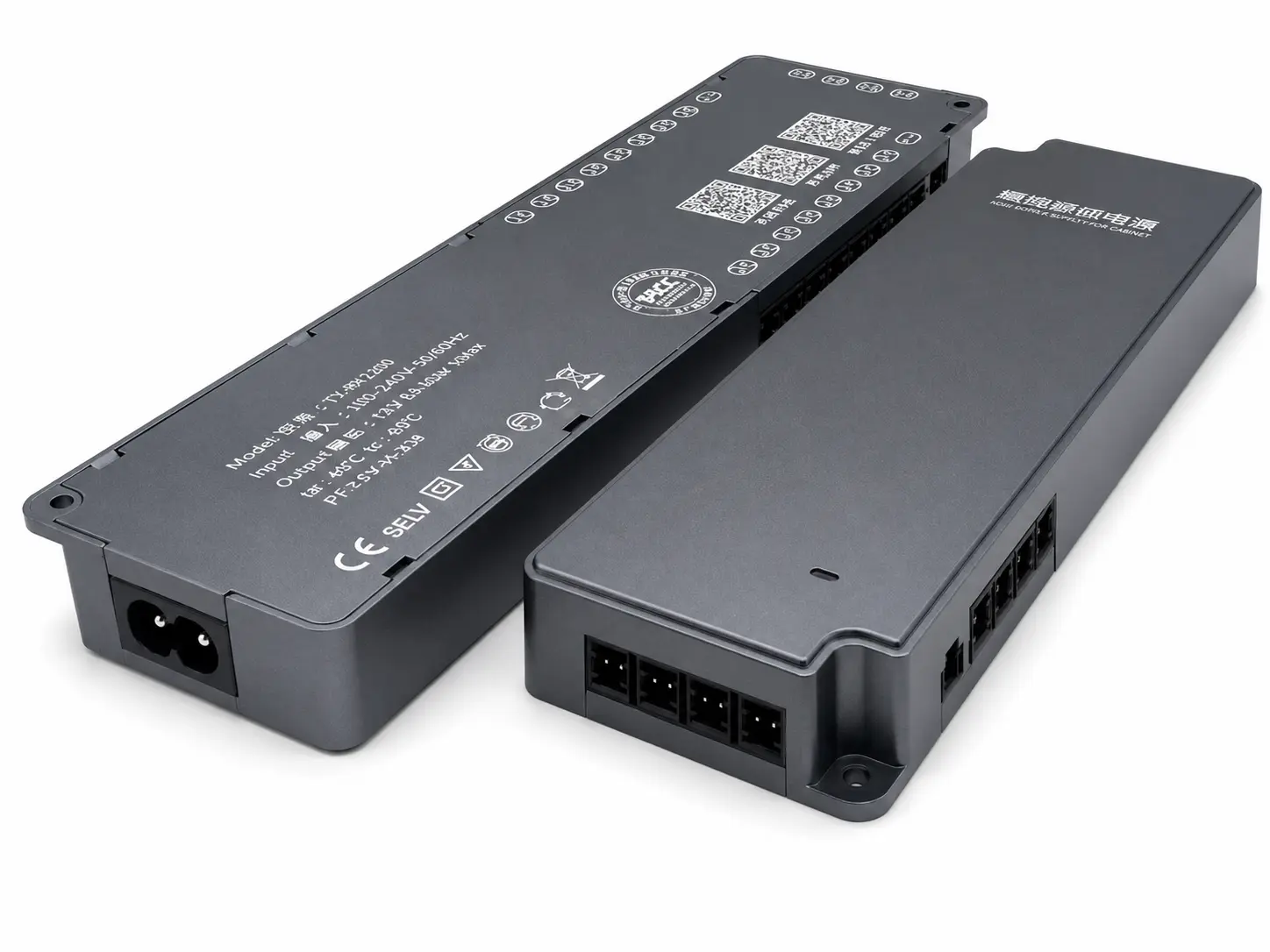
12V and 24V furniture transformers, plug-in adapters, smart drivers, and high-power cabinet lighting power supplies for LED shelf lights, cabinet linear lights, spotlights, wardrobe rail lights, magnetic track lighting, and backlit wall panels.
Explore cabinet light drivers designed for furniture and cabinet lighting systems, including 12V/24V constant-voltage drivers, plug-in cabinet adapters, smart control drivers, high-power supplies, and multi-output power systems.
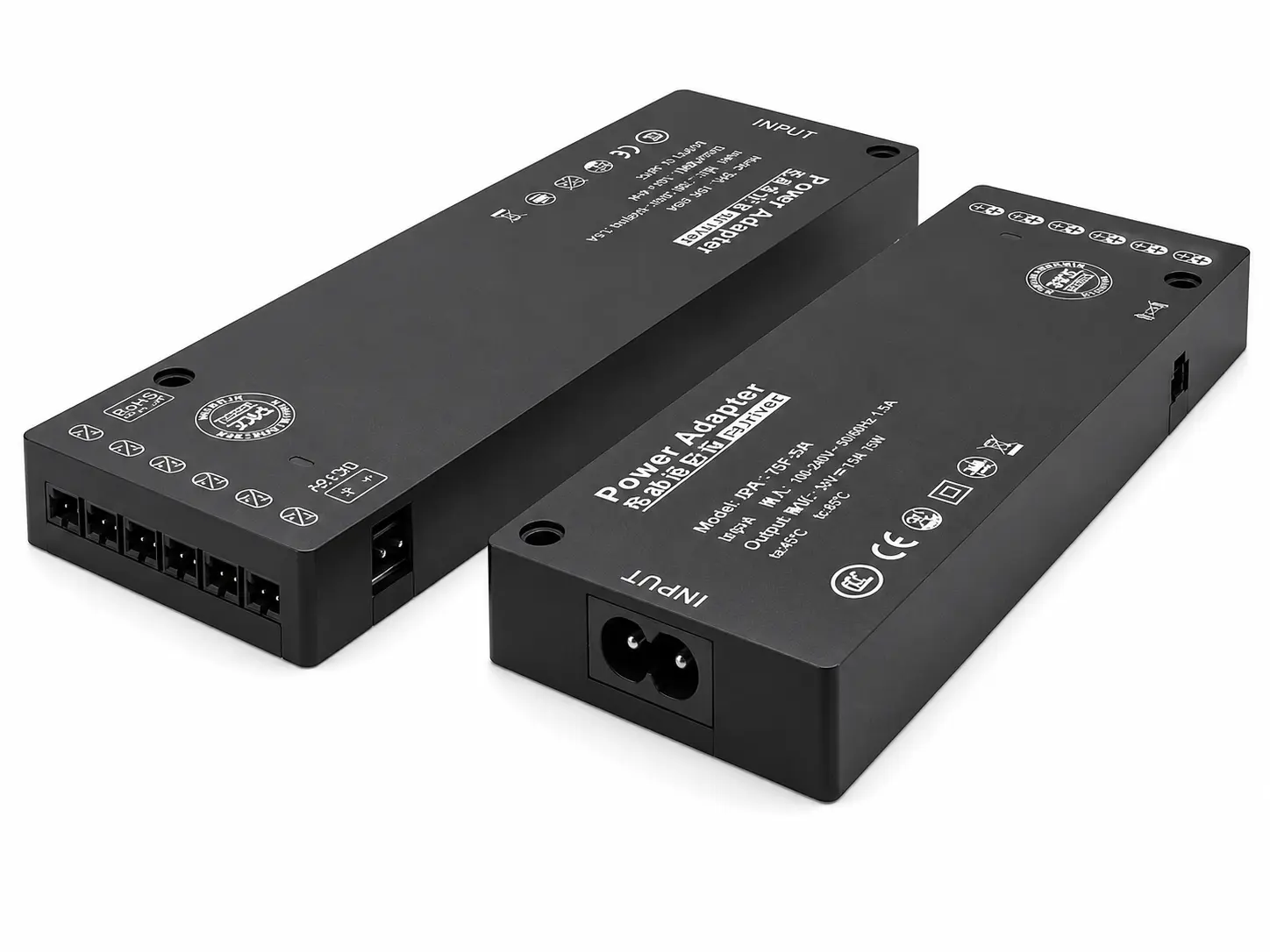
What Are Cabinet Light Drivers?
Cabinet light drivers, also called furniture transformers or cabinet lighting power supplies, are low-voltage power units used to supply stable 12V or 24V output for cabinet lighting systems.
Stable 12V / 24V Output
Provides low-voltage constant-voltage power for cabinet lighting systems.
Supports Multi-Light Cabinet Systems
Can power shelf lights, linear lights, spotlights, wardrobe rail lights, sensor lights, and backlit wall panels in one cabinet project.
Load and Margin Matching
Helps avoid overload, flicker, voltage drop, unstable dimming, or early driver failure.
Output Ports and Connector Matching
Different cabinet systems may need 4, 6, 8, 10, or 12 output ports depending on the number of lights and wiring layout.
A good cabinet light driver is not only about wattage. It must match voltage, load, wiring distance, dimming method, sensor control, connector layout, installation space, heat dissipation, safety requirements, and future maintenance access.
For sensor switches, dimmers, and control modules used with cabinet light drivers, explore Cabinet Light Sensor Switches & Controls.
Cabinet Light Drivers vs Cabinet Light Sensor Switches
Use cabinet light drivers to power the lighting system. Use cabinet light sensor switches to control the lighting behavior after the driver and cabinet lights are selected.
Cabinet Light Drivers
- ✓ What It Is: 12V / 24V furniture transformers or power supplies
- ✓ Best For: LED shelf lights, linear lights, spotlights, rail lights, magnetic track lighting, backlit wall panels
- ✓ Main Role Provide stable low-voltage power
Use Cabinet Light Drivers to supply stable low-voltage power.
Cabinet Light Sensor Switches
- ✓ What It Is: Sensors, switches, dimmers, and controllers
- ✓ Best For: Door sensors, hand-wave switches, touch dimmers, CCT control, smart cabinet lighting
- ✓ Main Role Control how the lights turn on, dim, change CCT, or respond to motion/doors
Use Controls to decide how the lights turn on, dim, change CCT, or join a scene.
How to Choose the Right Cabinet Light Driver
Follow this engineering-focused 6-step process to ensure system stability.
Confirm the Cabinet Lights
- Identify the cabinet lights that need power, such as LED shelf lights, cabinet linear lights, spotlights, wardrobe rail lights, magnetic track lighting, or backlit wall panels.
Different lights require different voltage, wattage, connectors, and wiring layouts.
Choose 12V or 24V
Use 12V for smaller cabinet lights, short wiring runs, and low-power applications. Use 24V for longer linear lights, multi-shelf systems, backlit panels, magnetic track lighting, or larger cabinet layouts.
Voltage must match the driver, light fixture, controller, and sensor system.
Calculate Total Wattage
Add the wattage of all connected cabinet lights, including each shelf light, spotlight, rail light, linear light, magnetic track module, or backlit panel.
Multiple small lights connected together can quickly increase total load.
Add Power Margin
Choose a driver with enough wattage margin instead of running it at full load. A 20–30% margin is commonly used for cabinet lighting systems.
More margin may be needed for high-power panels, long wiring runs, or enclosed driver locations.
Confirm Control Matching
Check whether the driver needs to work with door sensors, hand-wave switches, touch dimmers, CCT controllers, smart controls, or motion sensor cabinet lights.
Driver, controller, sensor, and LED light compatibility should be confirmed before sampling.
Plan Installation & Maintenance
Decide whether the project needs a plug-in cabinet adapter or a built-in driver. Confirm driver location, ventilation, output ports, connector type, wiring route, and future maintenance access.
Plug-in adapters suit samples, single cabinets, retrofit displays, and quick setup. Built-in drivers suit custom furniture, hotel projects, and repeatable cabinet lighting programs.
12V vs 24V Cabinet Light Drivers
Use 12V when the cabinet lighting system is small, short, and low-power. Use 24V when the project includes longer linear lights, multiple shelves, larger backlit wall panels, magnetic track modules, or longer wiring distance.
12V12V Cabinet Light Drivers
Better For: Small lights, short runs, lower loads.
Typical Use: Cabinet spotlights, short shelf lights, small sensor lights.
Buyer Concern Solved: Simple low-voltage power for compact applications.
Use 12V when the cabinet lighting system is small, short, and low-power.
24V24V Cabinet Light Drivers
Better For: Longer runs, higher load, larger systems.
Typical Use: Linear lights, backlit panels, magnetic track, multi-light systems.
Buyer Concern Solved: Lower voltage drop and better stability for larger projects.
Use 24V when the project includes longer linear lights, multiple shelves, or longer wiring distance.
Important: Do not mix 12V lights with 24V drivers unless the product is designed for dual-voltage input.
Cabinet Light Driver Categories
12V Cabinet Light Drivers
Best for compact cabinet lighting systems, small spotlights, short shelf lights, drawer lights, and low-power furniture lighting.
12V cabinet light drivers are suitable for small cabinet lighting systems with short wiring runs and limited total load. They are commonly used for cabinet spotlights, short LED shelf lights, small wardrobe lights, drawer lights, and compact cabinet linear lights.
- Suitable for compact cabinet lighting systems
- Can be matched with selected sensor switches and connectors
- Good for short wiring runs and low-power loads
For 12V cabinet spotlights, explore Cabinet Spotlights.
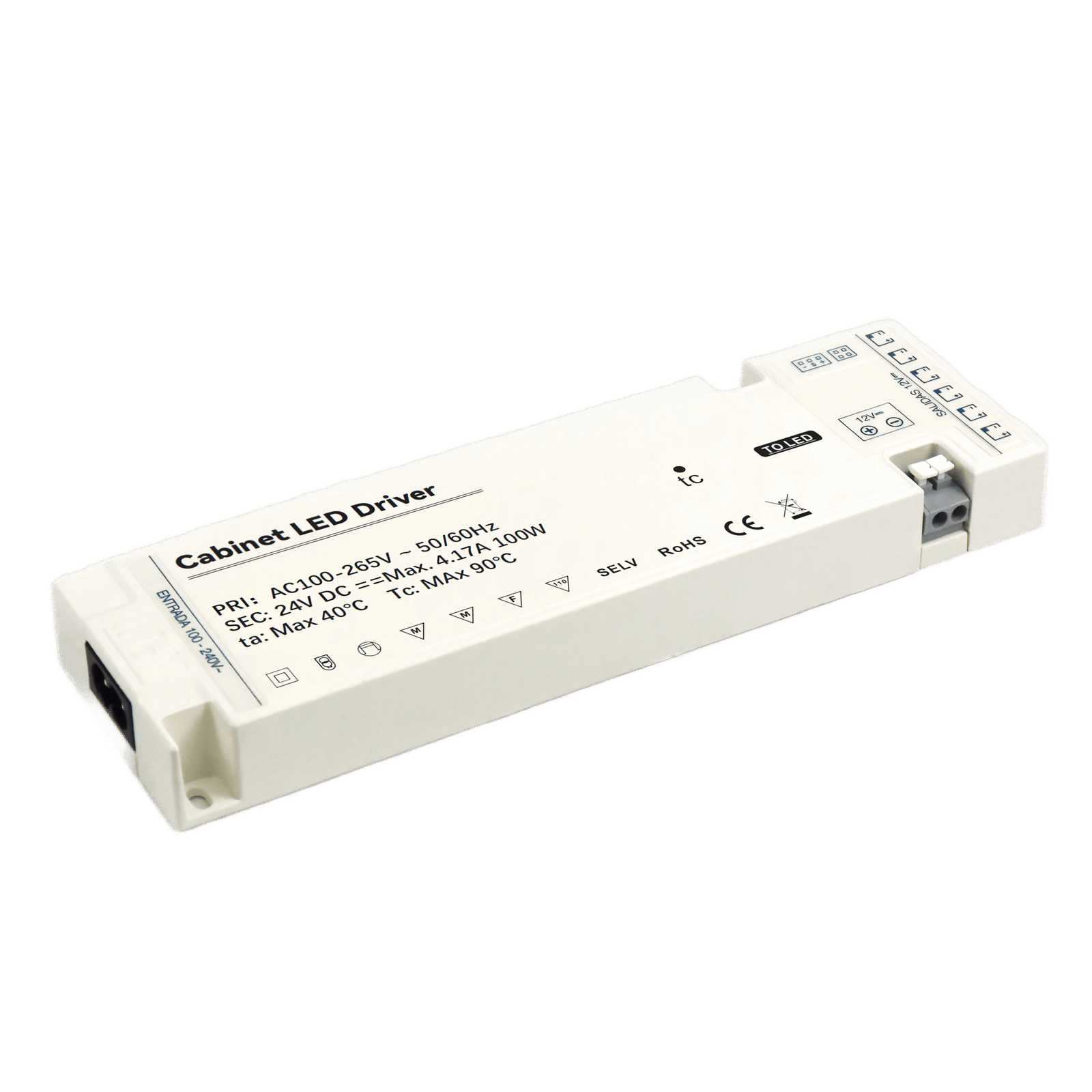
24V Cabinet Light Drivers
Best for longer linear lights, multi-shelf systems, backlit wall panels, magnetic track lighting, and larger cabinet lighting projects.
24V cabinet light drivers are recommended when the project includes longer cabinet lighting runs, higher total load, multiple shelves, backlit wall panels, or cabinet magnetic track lighting. Compared with 12V systems, 24V is often easier to manage for voltage drop and larger cabinet lighting layouts.
- Better for longer runs and higher loads
- Available with different output port options
- Suitable for cabinet linear lights, shelf lights, backlit wall panels, and magnetic track lighting
For 24V modular systems, explore Cabinet Linear Lights & Magnetic Track Lighting.
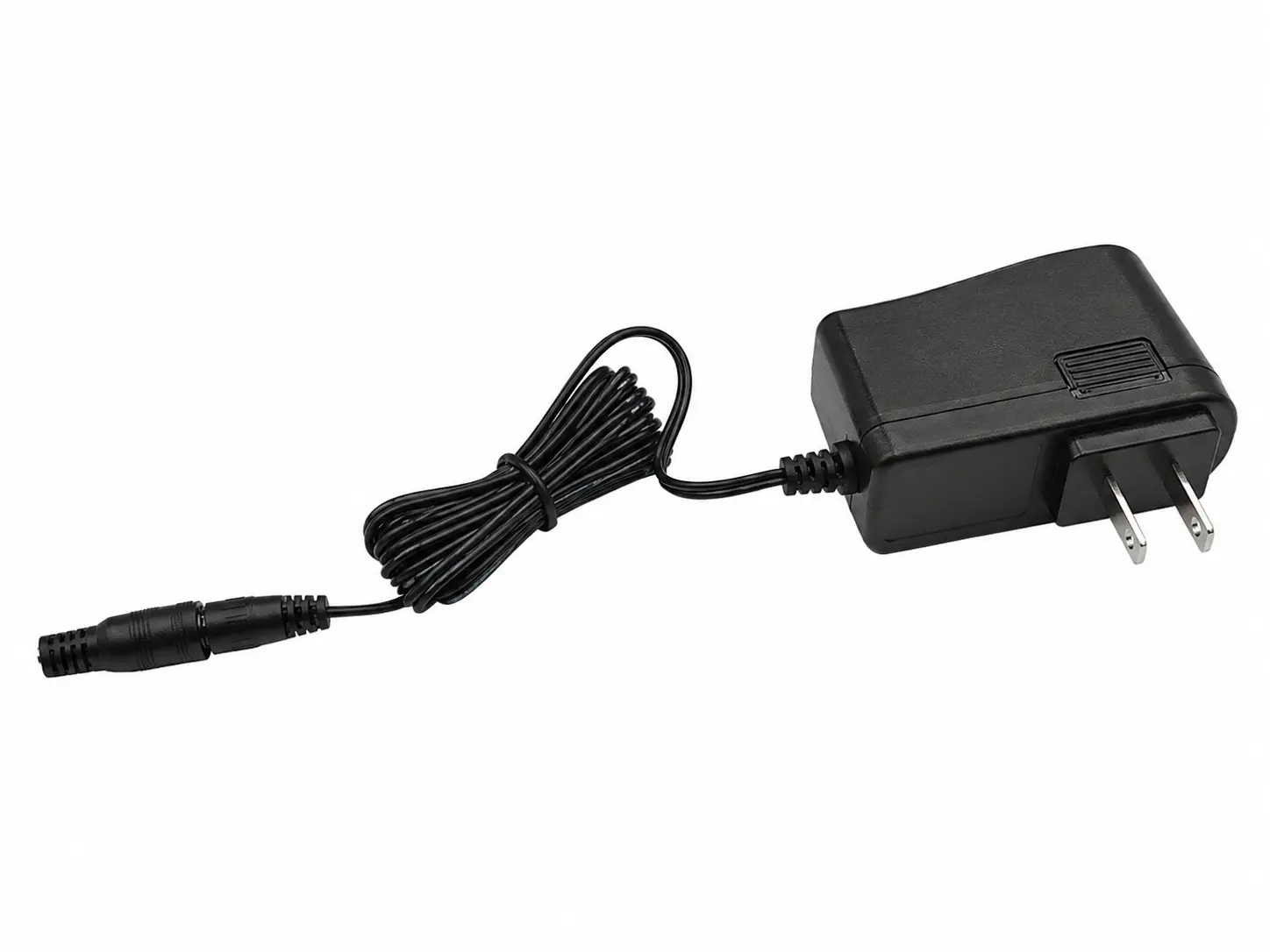
Plug-in Cabinet Light Adapters
Best for single cabinets, samples, retrofit displays, small furniture, and quick installation.
Plug-in cabinet light adapters are useful when a cabinet lighting project does not require built-in or hardwired installation. They are suitable for samples, single display cabinets, retrofit furniture, small wardrobes, temporary retail fixtures, and quick setup projects where easy replacement matters.
- Easy installation for small projects
- Works with selected 12V or 24V cabinet lights
- Suitable for single-cabinet lighting
For retrofit lighting, explore Motion Sensor Cabinet Lights.
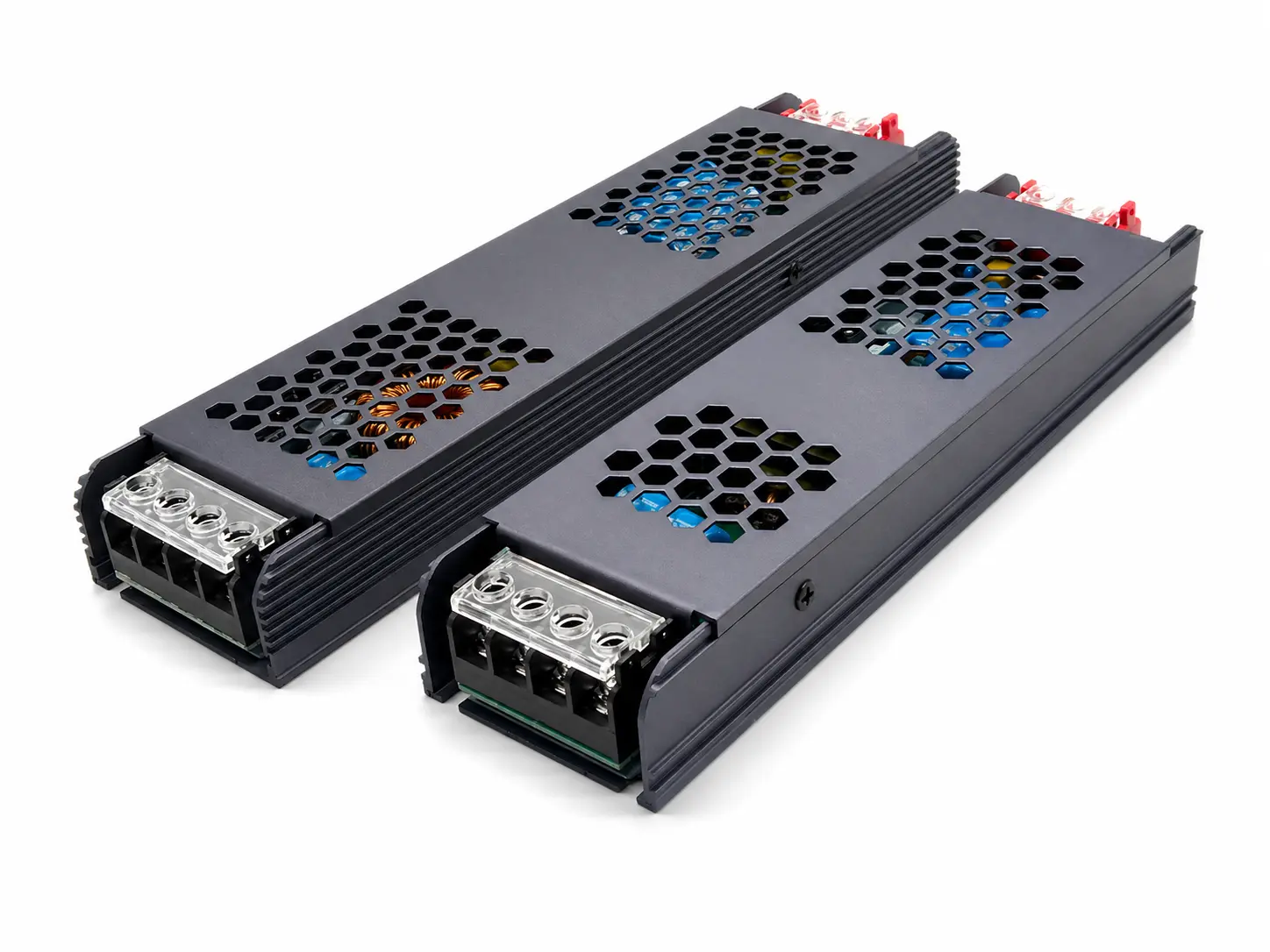
High-Power Cabinet Lighting Power Supplies
Best for backlit wall panels, cabinet magnetic track lighting, large display cabinets, retail fixtures, and multi-light cabinet systems.
High-power cabinet lighting power supplies are used when the cabinet lighting system requires higher wattage capacity. They are suitable for large backlit wall panels, multi-shelf display cabinets, cabinet magnetic track lighting, retail fixtures, and larger furniture lighting projects.
- Higher wattage capacity for larger lighting systems
- Requires planning for ventilation and maintenance access
- Suitable for backlit wall panels and magnetic track lighting
For wired systems, explore Wardrobe Rail Lights & LED Shelf Lights.
Smart Cabinet Light Drivers
Best for dimming, CCT adjustment, remote control, app control, voice control, and smart furniture lighting systems.
Smart cabinet light drivers are designed for cabinet lighting projects that require more than simple on/off power. They can support dimming, tunable white control, scene-based lighting, remote control, app control, or smart furniture integration depending on project requirements.
- Supports dimming and CCT control options
- Suitable for smart wardrobes and premium furniture
- Can be matched with compatible cabinet light sensor switches
For control matching, explore Cabinet Light Sensor Switches & Controls.
Explore by Cabinet Light Driver Application
The power foundation for various professional cabinet lighting scenarios.
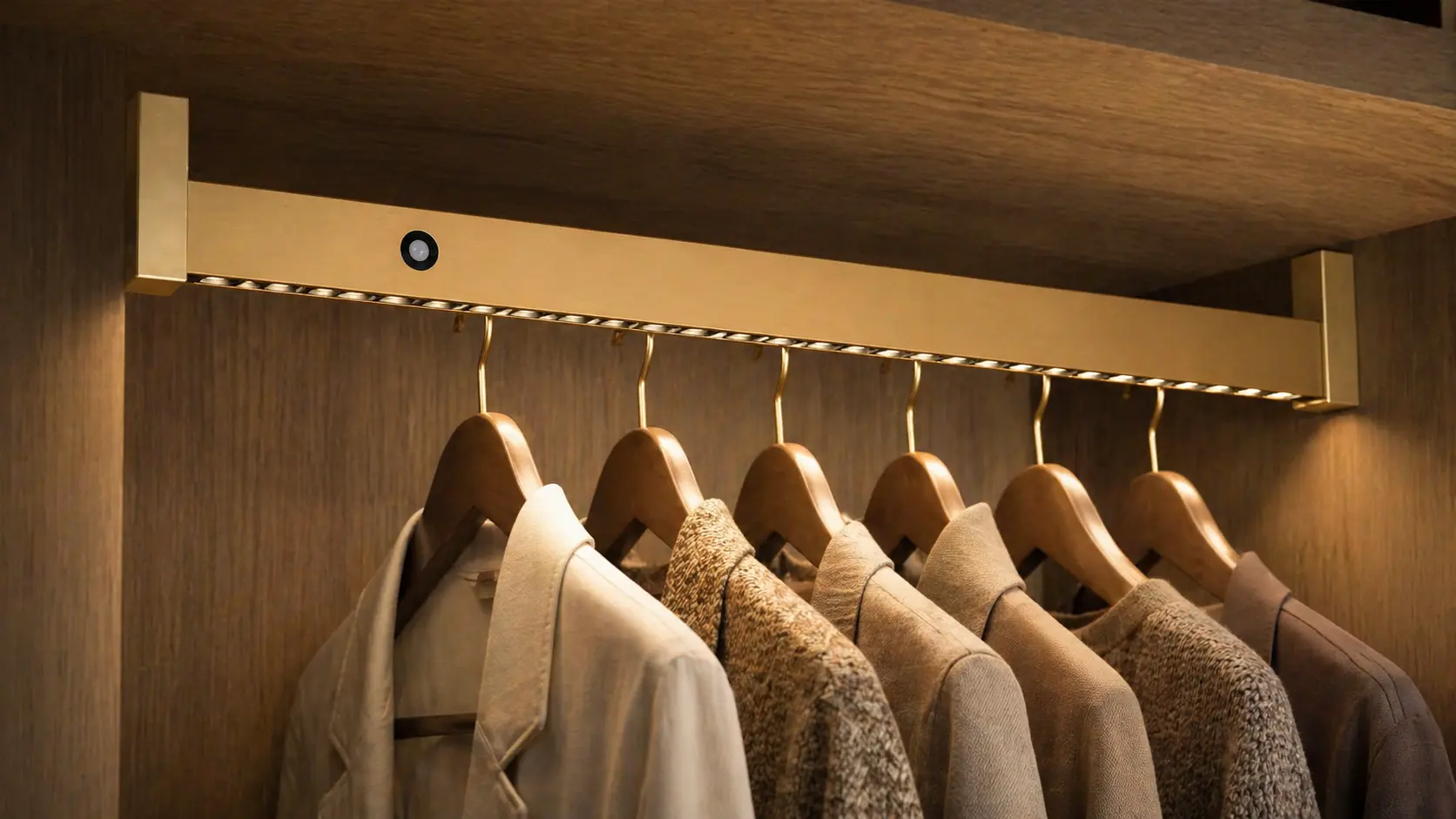
Kitchen Cabinet Lighting
Recommended: 12V or 24V cabinet light drivers, plug-in adapters for single cabinets, and hand-wave switch compatible options.
Concern: Can it support safe power for kitchens?
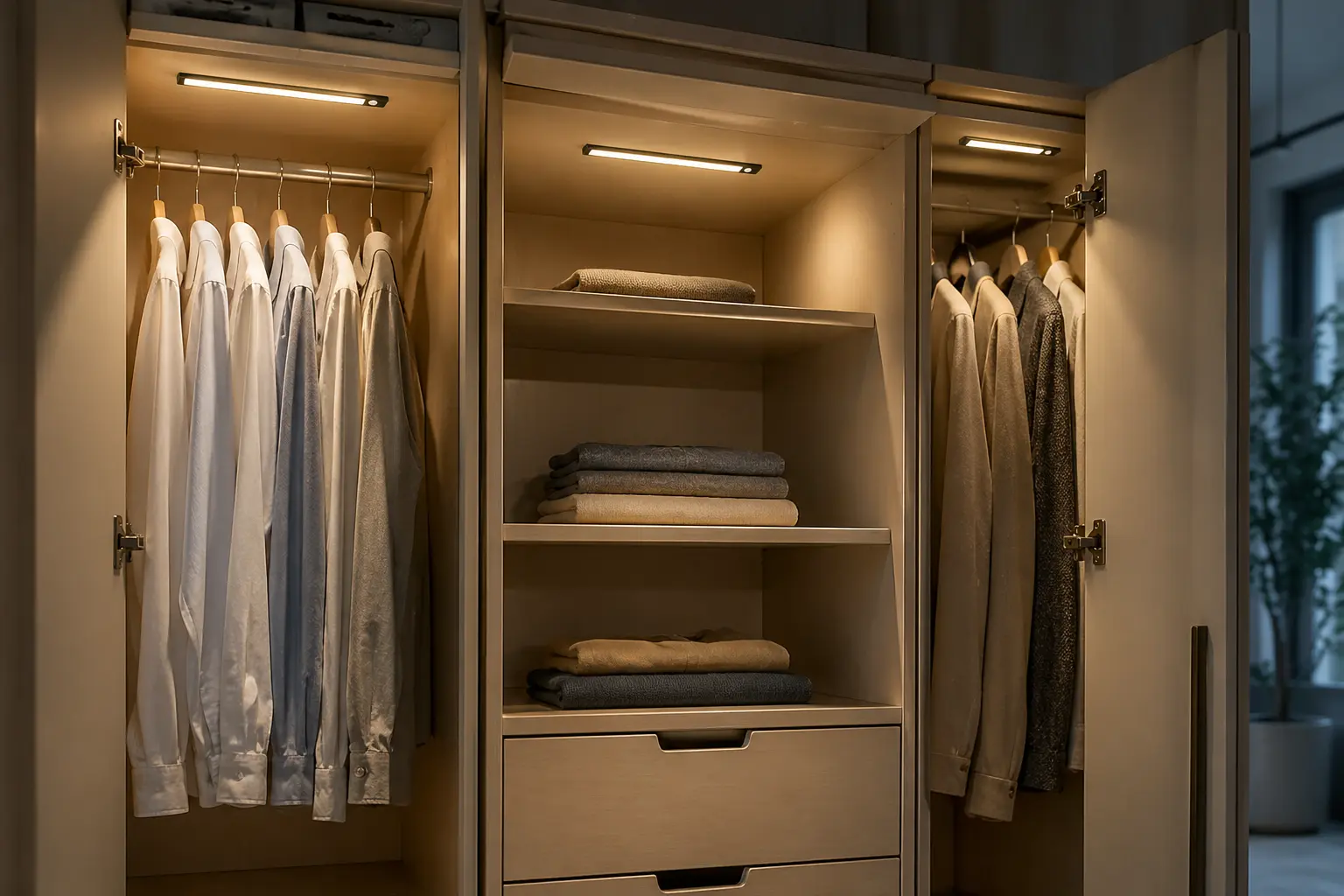
Wardrobe Lighting
Recommended: 12V/24V drivers with output port options and door sensor switch compatibility for wardrobe rail lights and shelf lights.
Concern: Can it be hidden yet accessible?
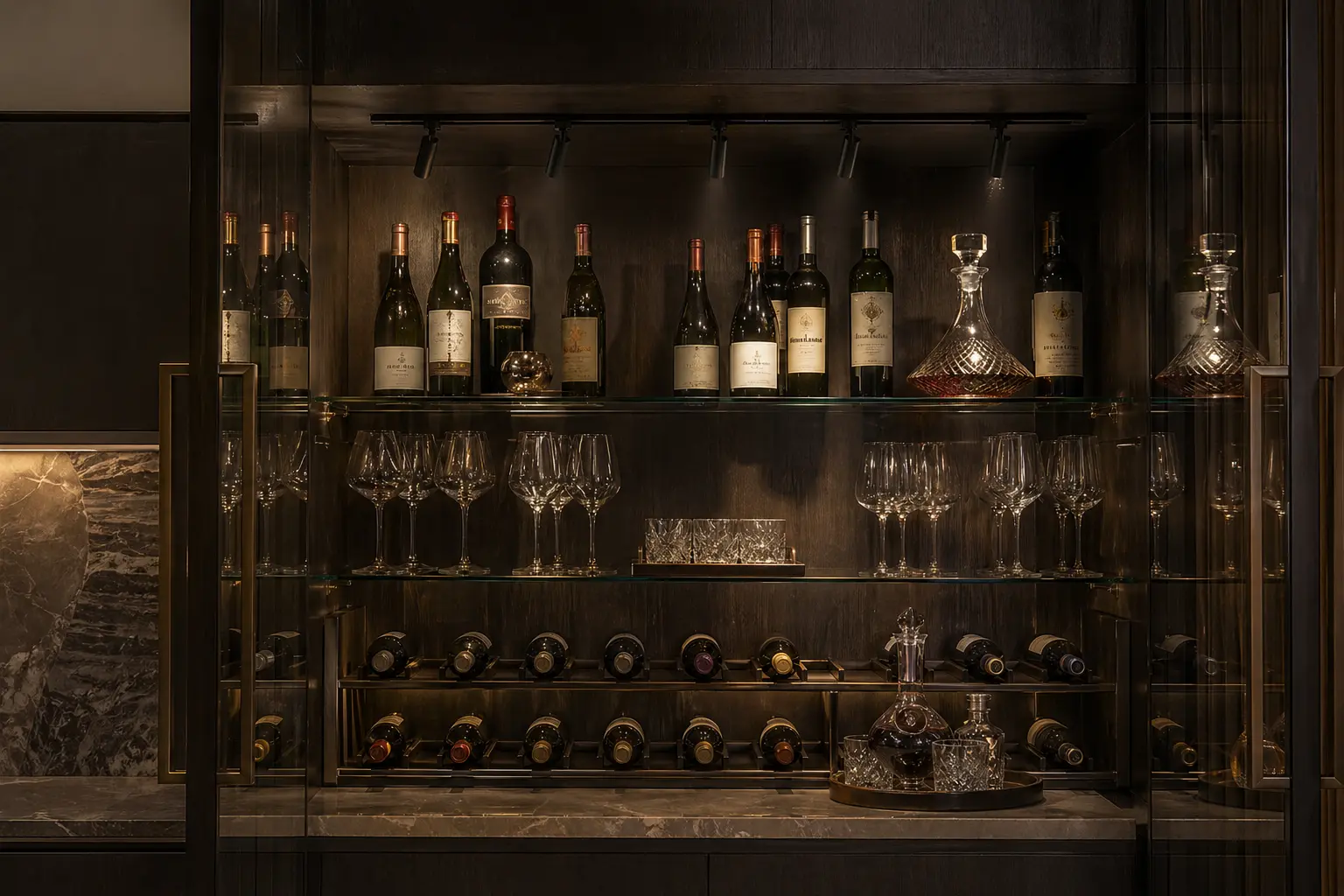
Display Cabinets
Recommended: 24V drivers, dimming-compatible options, and output port matching for shelf lights, spotlights, and glass shelf lights.
Concern: Support multiple lights without flicker?
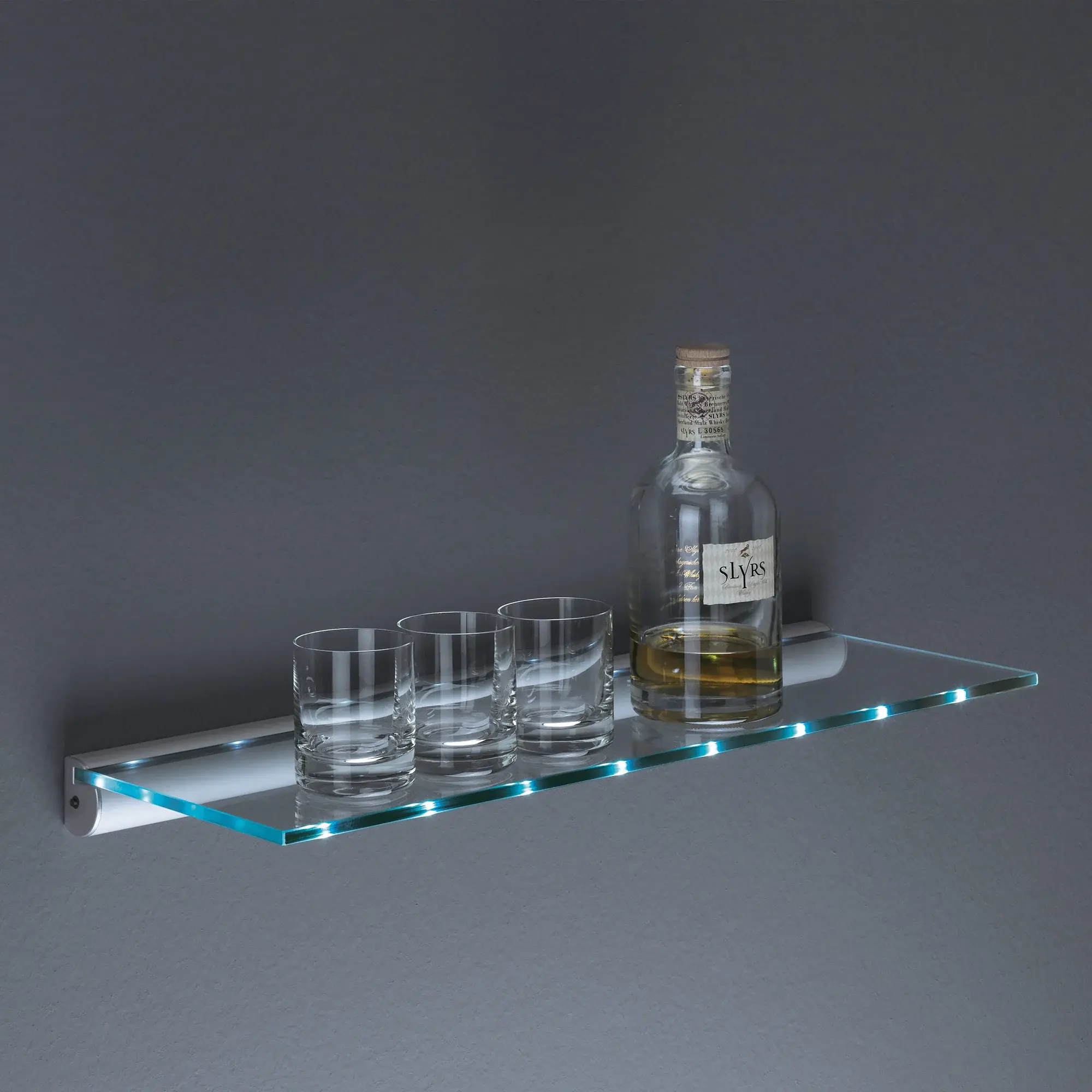
LED Shelf Lighting
Recommended: 12V or 24V cabinet light drivers with enough output ports and proper load margin for multiple shelves.
Concern: Support stable warm dimming?
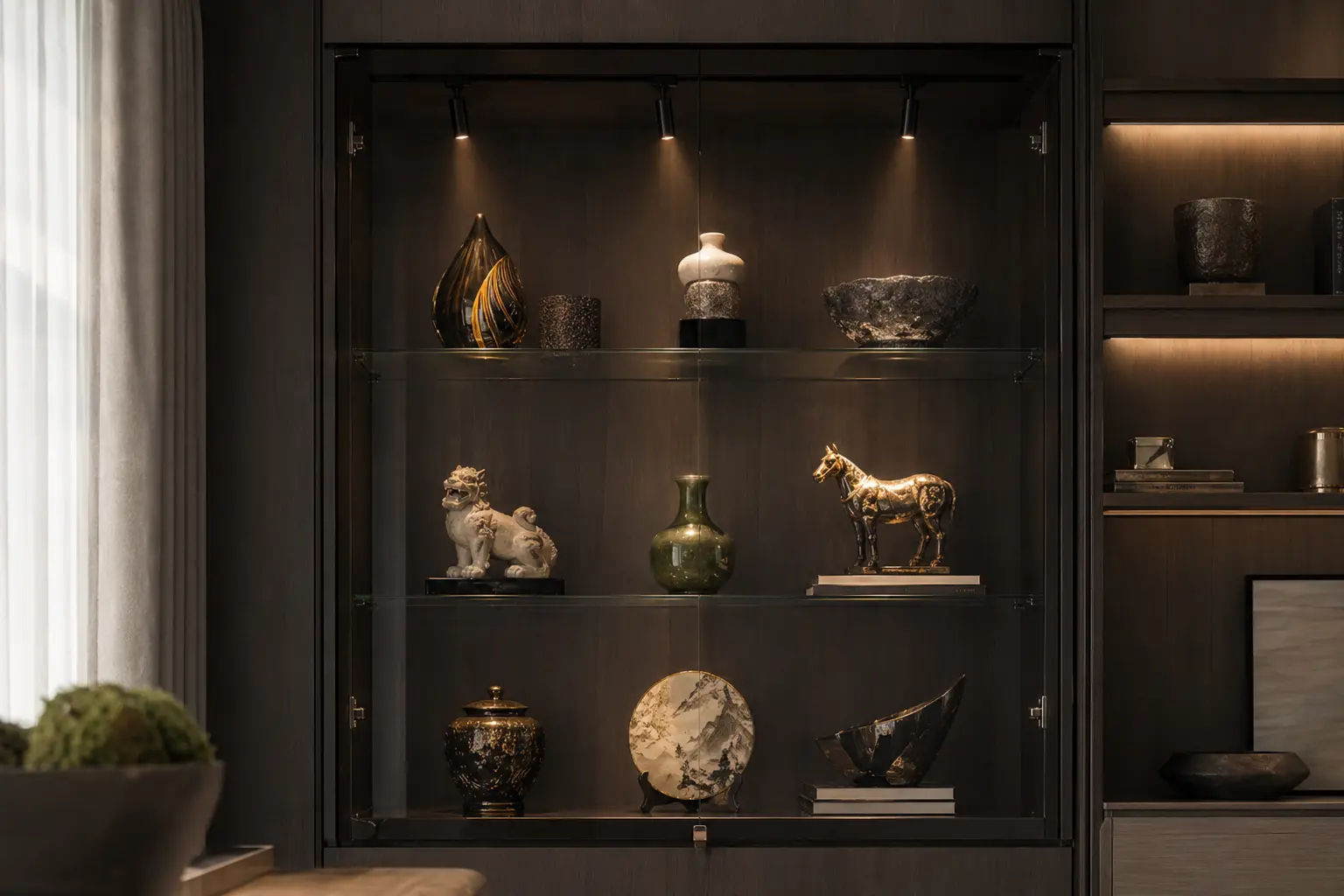
Cabinet Spotlights
Recommended: 12V cabinet light drivers for compact spotlights and output port matching when several spotlights are connected.
Concern: Is 24V better for longer runs?

Cabinet Magnetic Track Lighting
Recommended: 24V cabinet light drivers or high-power supplies depending on track length and module quantity.
Concern: Power multiple shelves evenly?
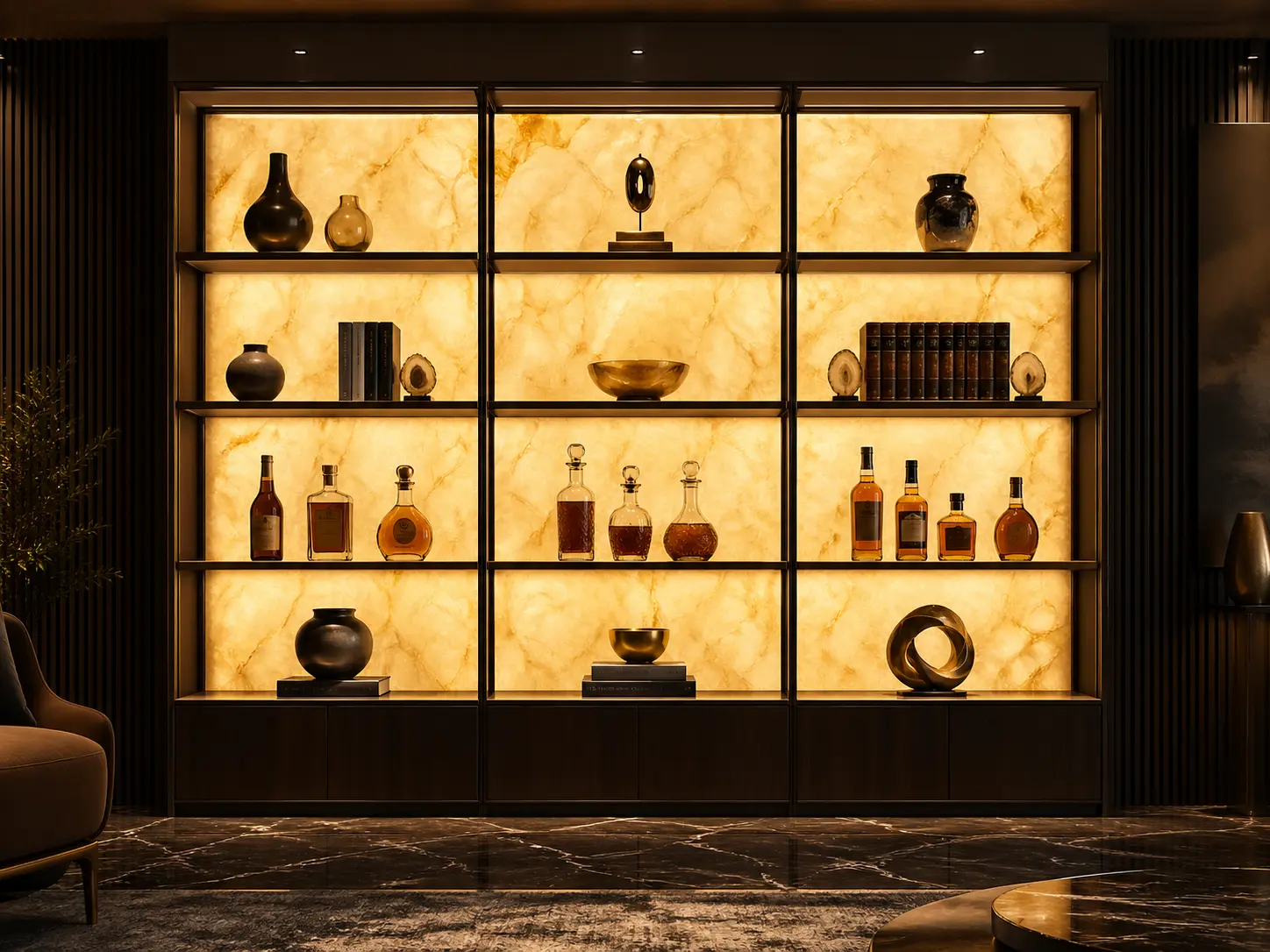
Backlit Wall Panels
Recommended: 24V or high-power cabinet lighting power supplies with proper wattage margin and heat management.
Concern: Match several small spots stably?
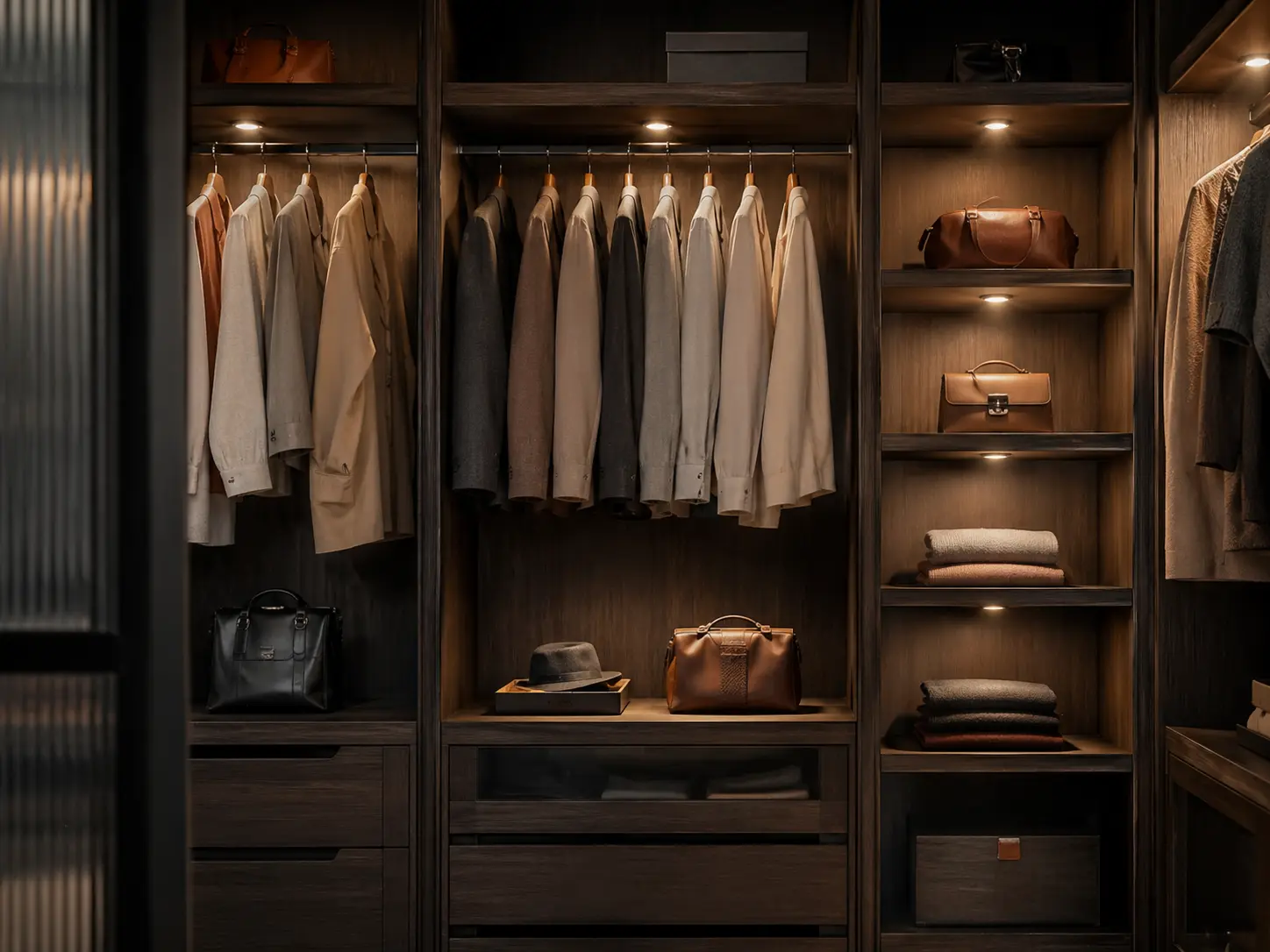
Hotel & Retail Furniture Projects
Recommended: 5-year warranty drivers, output port matching, and built-in installation for repeatable project supply.
Concern: Support track length & modules?
How to Calculate Driver Wattage
Avoid running the driver at 100% load continuously. Driver margin helps reduce heat, flicker, dimming instability, and long-term failure risk.
The Formula
Total Load = Sum of All Connected Lights
Recommended Driver Wattage =
Total Load × 1.2 to 1.3
Shelf Light System
6 shelves × 6W per shelf
= 36W total load
Linear Light System
4 meters × 9.6W/m
= 38.4W total load
Backlit Panel System
Large panel load
= 80W total load
What Buyers Should Confirm Before Choosing
Avoid common project failures by confirming these 10 factors before sampling.
1. Is the lighting system 12V or 24V?
Different cabinet lights require different voltage. 12V is common for small and short lighting runs, while 24V is better for longer runs, larger loads, and voltage drop control.
2. What is the total wattage?
Add the wattage of all connected lights, including shelf lights, spotlights, linear lights, rail lights, magnetic track modules, and backlit panels.
3. Do you need power margin?
Drivers should not run at full load continuously. A 20–30% margin is commonly used for cabinet lighting systems.
4. How many output ports are needed?
Most cabinet lighting systems use more than one light. Confirm whether the project needs 4, 6, 8, 10, or 12 output ports based on the number of connected lights, total wattage, connector type, and wiring layout.
5. Is it plug-in or built-in installation?
Plug-in adapters work well for samples, single cabinets, retrofit displays, and quick setup. Built-in drivers are better for custom furniture, hotel projects, and repeatable programs.
6. Will sensors or switches be added?
Door sensors, hand-wave switches, touch dimmers, CCT controllers, and smart controls need compatible wiring and driver matching.
7. How long is the wiring run?
Long wiring runs can cause voltage drop, especially in 12V systems. Driver position, wire gauge, voltage, and load distribution affect performance.
8. Where will the driver be installed?
9. Is it accessible after installation?
If the driver is hidden too deeply inside a cabinet or wall structure, future replacement and troubleshooting become difficult.
10. Is this for a repeatable program?
Retail fixture brands, cabinet makers, and hotel projects need repeatable driver selection, connector logic, stable supply, and consistent installation.
Sample Verification Before Bulk Orders
Sample testing should verify the whole lighting system, not only the driver label.
Confirm Voltage & Load
Check whether voltage matches all lights and whether total load is within the recommended range.
Test Power Margin
Avoid running at full load. Test with realistic lighting combinations and planned safety margin.
Check Driver + Sensor Switch Compatibility
Test dimmers, door sensors, or hand-wave switches with the selected driver and lights.
Verify Voltage Drop
Use the real or planned wire length to check whether brightness remains consistent.
Check Temp & Space
Confirm that the driver can dissipate heat properly in the planned cabinet location.
Confirm Output Ports & Connectors
Review connector type, output channels, and whether the driver can be replaced later.
Voltage Drop, Wiring Distance & Placement Matter
Many cabinet lighting problems are not caused by the LED fixture, but by driver position, wire length, or voltage selection.
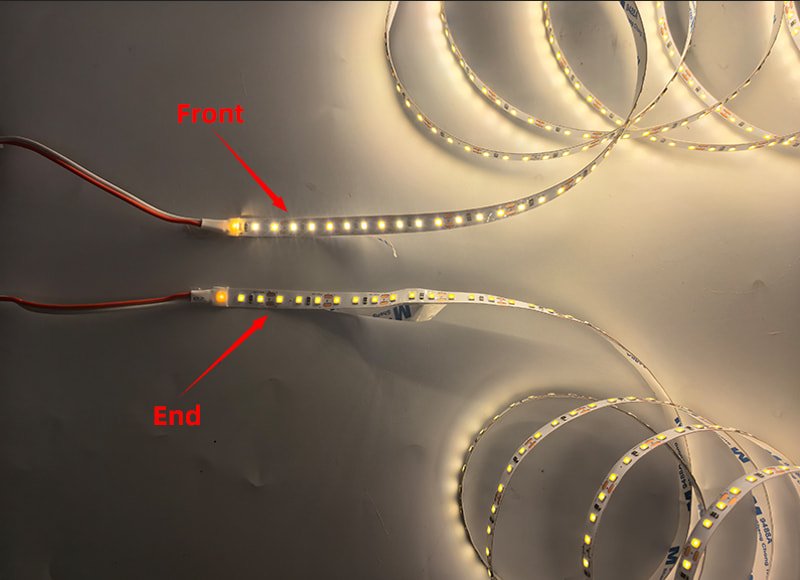
1. Long Runs Cause Voltage Drop
Longer wiring runs make the far end of linear lights or backlit panels look dimmer, especially in 12V systems.
Advantage: More even brightness, fewer end-dimming complaints.
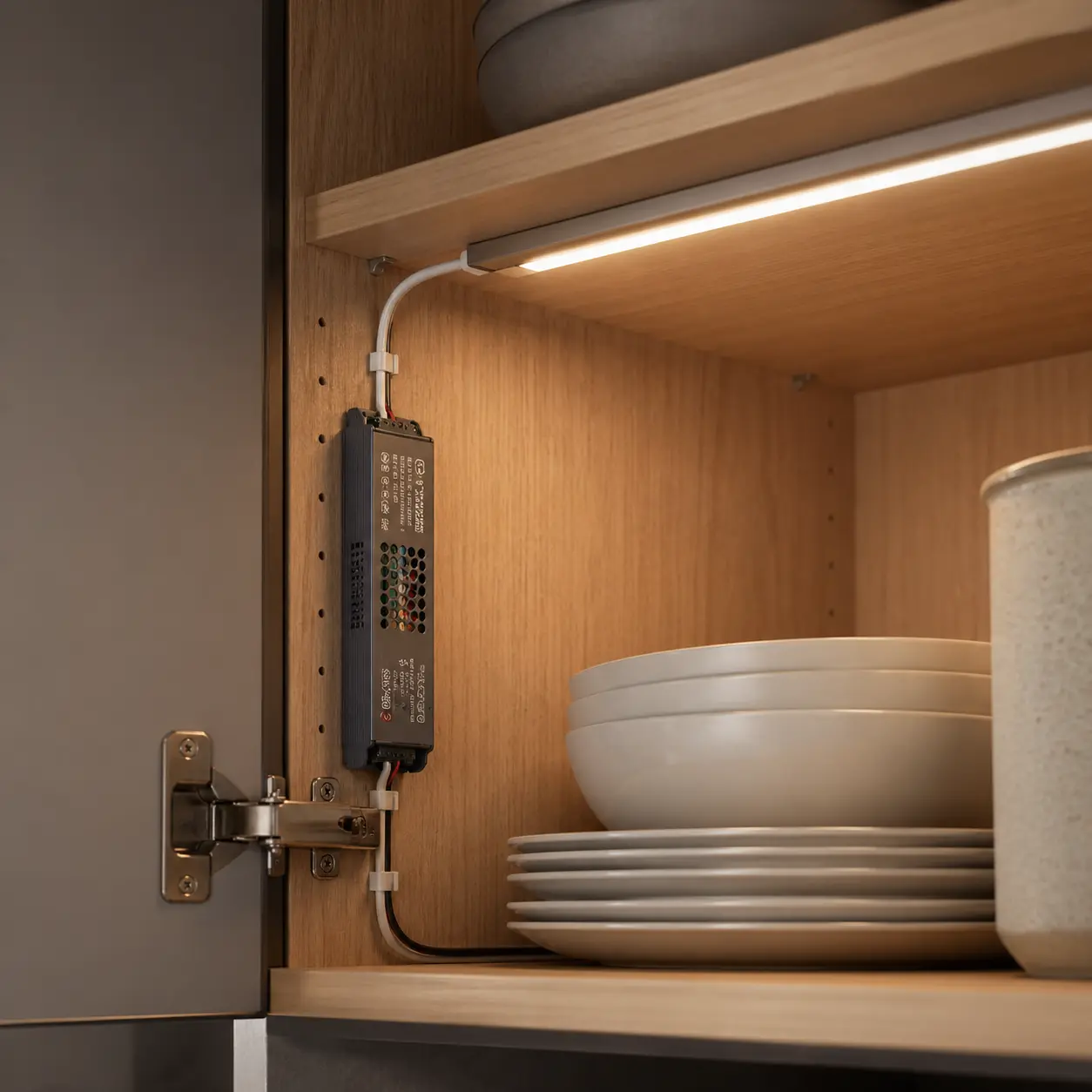
2. Driver Position Affects Stability
Driver location affects wire length, heat dissipation, maintenance access, and wiring complexity.
Advantage: Easier maintenance, cleaner wiring, better heat management.
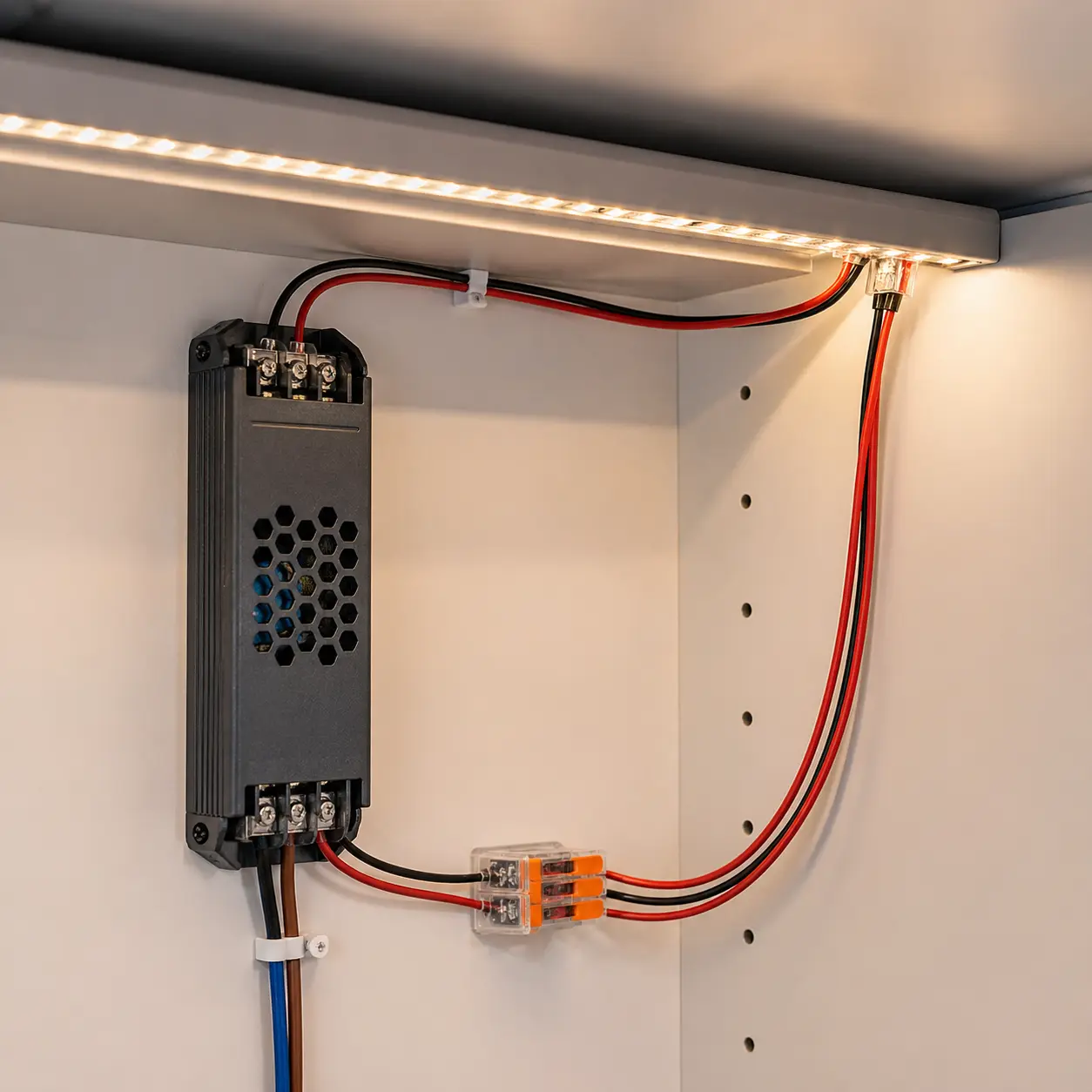
3. Wire Gauge & Connectors
Wire gauge, connector type, and output channels should match the total load and cabinet layout.
Advantage: Safer wiring, repeatable assembly, less confusion.
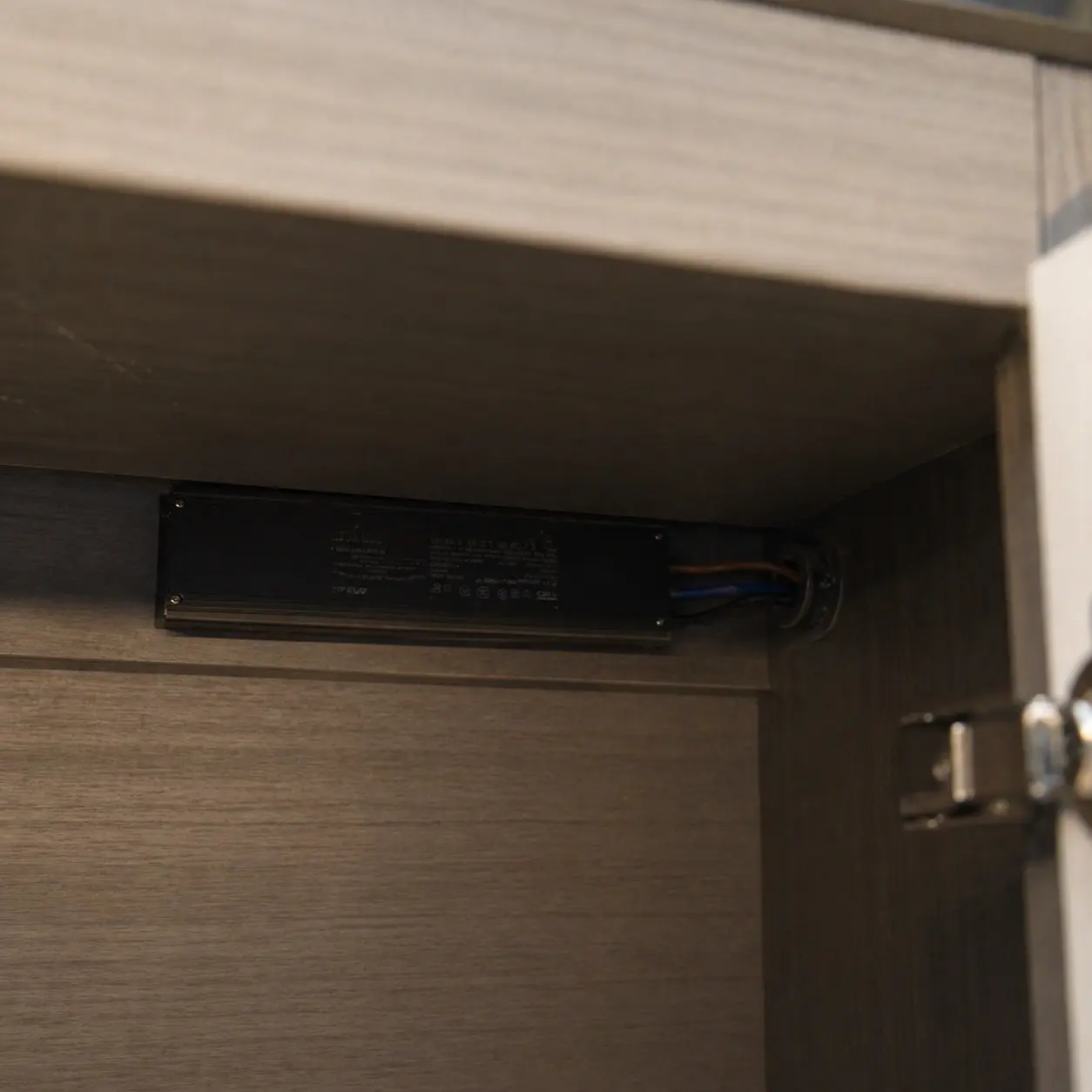
4. Control Location Planning
Dimmers, sensors, and smart controllers should be planned with the driver and wiring layout.
Advantage: Better compatibility, less rework, cleaner installation.
Not Just a Driver. A Complete Power System.
Many cabinet lighting problems are not caused by the LED fixture itself. They happen because voltage, total load, driver margin, wire length, control method, and heat dissipation were not matched from the beginning.
1. Calculate
Total Load + Power Margin
2. Select
12V/24V Driver + Wiring Layout
3. Match
Sensors / Dimmers / Control
Stable System
No flicker, safe heat, easy maintenance.
Built for Cabinet Power Systems, Not Just Display
Engineering support for cabinet makers, furniture brands, and retail fixture programs.
12V/24V Support
Support for common constant-voltage cabinet lighting systems using 12V or 24V output.
Load & Margin Matching
Better understanding of total load, power margin, multi-light systems, and stability.
Voltage Drop Planning
Help evaluate wiring distance, wire gauge, driver location, and output channels.
Control Compatibility
Support matching with sensors, touch dimmers, and smart controls. Learn more.
Application Matching
Driver matching for Shelf Lights, Linear Lights, and Backlit Panels.
Sample Testing Support
Support testing for load, dimming, connector matching, and placement before bulk.
Project Reliability
Consider heat dissipation, maintenance access, repeatable installation, and supply.
OEM/ODM Support
Support custom plug type, wiring harness, packaging, and repeatable project supply.
Which Cabinet Light Driver Fits Your Project?
| Type | Best For | Buyer Concern Solved | Main Advantage |
|---|---|---|---|
| 12V Drivers | Small cabinet lights, short runs, spotlights | Need simple low-voltage power for compact systems | Practical for low-power applications |
| 24V Drivers | Linear lights, backlit panels, larger systems | Need lower voltage drop and better stability | Better for longer runs and higher loads |
| Plug-in Adapters | Samples, retrofit cabinets, small furniture | Need quick installation without hardwiring | Easy for small projects and testing |
| Hardwired Drivers | Hotels, custom cabinets, retail fixtures | Need permanent hidden installation | Better for project-based systems |
| Dimmable Drivers | Wine cabinets, display cabinets, hotels | Need brightness adjustment and scene control | Supports adjustable atmosphere |
| Multi-output Systems | Multi-light cabinets and furniture programs | Need organized power distribution | Simplifies wiring for repeatable projects |
For complete cabinet lighting, combine Drivers with Sensor Switches & Controls, LED Shelf Lights, and Cabinet Linear Lights.
FAQ About Cabinet Light Drivers
What are cabinet light drivers?
Are cabinet light drivers different from regular power adapters?
Should I choose a 12V or 24V cabinet light driver?
How do I calculate the wattage for cabinet light drivers?
How much power margin should I leave for an LED driver?
Can one driver power multiple cabinet lights?
Do cabinet light drivers work with dimmers or sensor switches?
What causes flicker in cabinet lighting systems?
How can I reduce voltage drop in cabinet lighting?
Where should the driver be installed inside a cabinet project?
How do I avoid driver overheating inside cabinets?
Are cabinet light drivers suitable for LED shelf lights and linear lights?
Can cabinet light drivers be used for backlit wall panels?
What should I test before placing a bulk order for cabinet light drivers?
What should I confirm before sampling a cabinet light driver?
Can Xmart support OEM or private label cabinet light driver projects?
Can Xmart provide drivers with matching connectors, wiring harnesses, and control accessories?
Need Help Choosing the Right Cabinet Light Driver?
Tell us your cabinet lighting product type, voltage, total wattage, wiring length, control method, driver location, connector requirement, plug type, and target application. Our team can help recommend the right cabinet light driver solution for shelf lights, linear lights, spotlights, wardrobe rail lights, magnetic track lighting, motion sensor lights, backlit panels, and custom cabinet lighting systems.
Looking for a complete cabinet lighting system? Explore Cabinet Lighting Series, Cabinet Light Sensor Switches & Controls, LED Shelf Lights, Cabinet Linear Lights, or Backlit Wall Panels.