
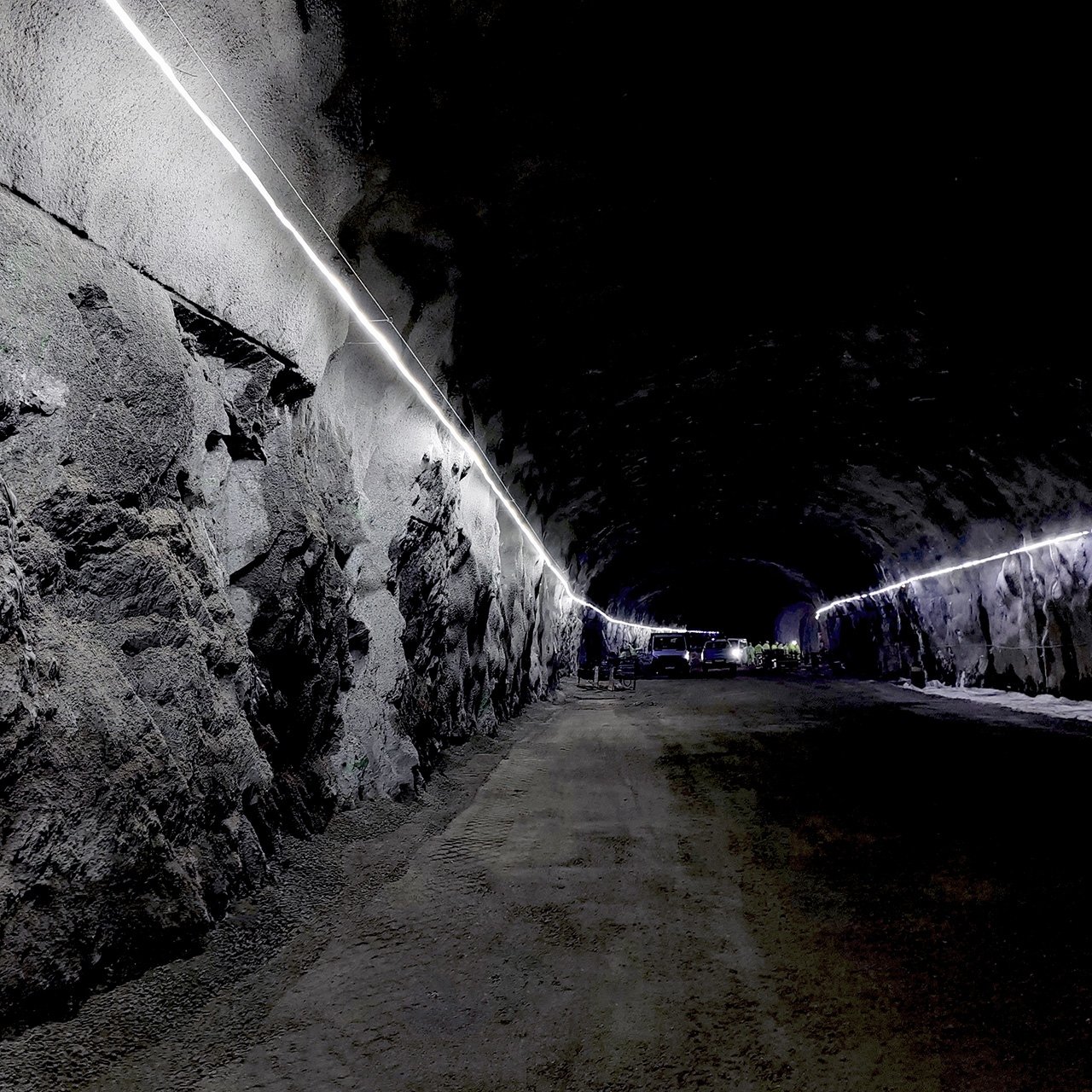
48V Tunnel LED Strip Lighting: When 24V Is No Longer the Better Choice
A 24V LED strip is not a weak option. For short routes, existing 24V infrastructure and controlled installations, it can be a practical choice.
The problem begins when a familiar voltage is forced into a route that has outgrown it.
As tunnel length, load and maintenance difficulty increase, the decision is no longer only about the price per metre. It becomes a question of current, feed points, cable routing, installation labour and long-term service access.
Direct Answer
A 48V tunnel LED strip system becomes more attractive when a route is long enough that 24V would require excessive power feeds, cable runs or installation complexity. The correct choice depends on watts per metre, route length, feed layout, available power and verified product data.
Lower Voltage Does Not Always Mean Lower Project Cost
Buyers often compare only strip price, driver price or voltage label. That misses the system cost of long routes.
When evaluating industrial lighting for extensive corridors, focusing solely on the initial component cost can lead to expensive installation and maintenance complications.
To understand true financial impact, engineers must consider the entire deployment ecosystem.
Total Project Cost =
Product + Power Supplies + Feed Cables + Connectors + Installation Labour + Commissioning + Future Maintenance Access
May Have:
- Familiar infrastructure
- Simple compatibility for shorter sections
- Higher current at the same total load
- More feed-point pressure on longer routes
May Have:
- Lower current at the same total load
- More flexibility for extended routes
- Fewer feed-point requirements in suitable designs
- Different power-supply and compliance considerations
The correct comparison is not "Which voltage costs less per metre?" It is "Which system creates the lowest practical lifetime complexity for this route?"
Why 48V Changes Long-Run Planning
Current (A) = Total Load (W) ÷ System Voltage (V)
Illustrative Example Only:
For the same 480W connected load:
-
At 24V
20A
-
At 48V
10A
Doubling the supply voltage halves the current for the same load. Lower current can reduce voltage-drop pressure in feeder cables and conductors. It can also change how many feed points are needed across a long route.
Warning: Higher voltage does not remove voltage drop. The final result still depends on feeder-cable size, cable length, strip construction, strip wattage, power-feed topology, connectors and the selected product model.
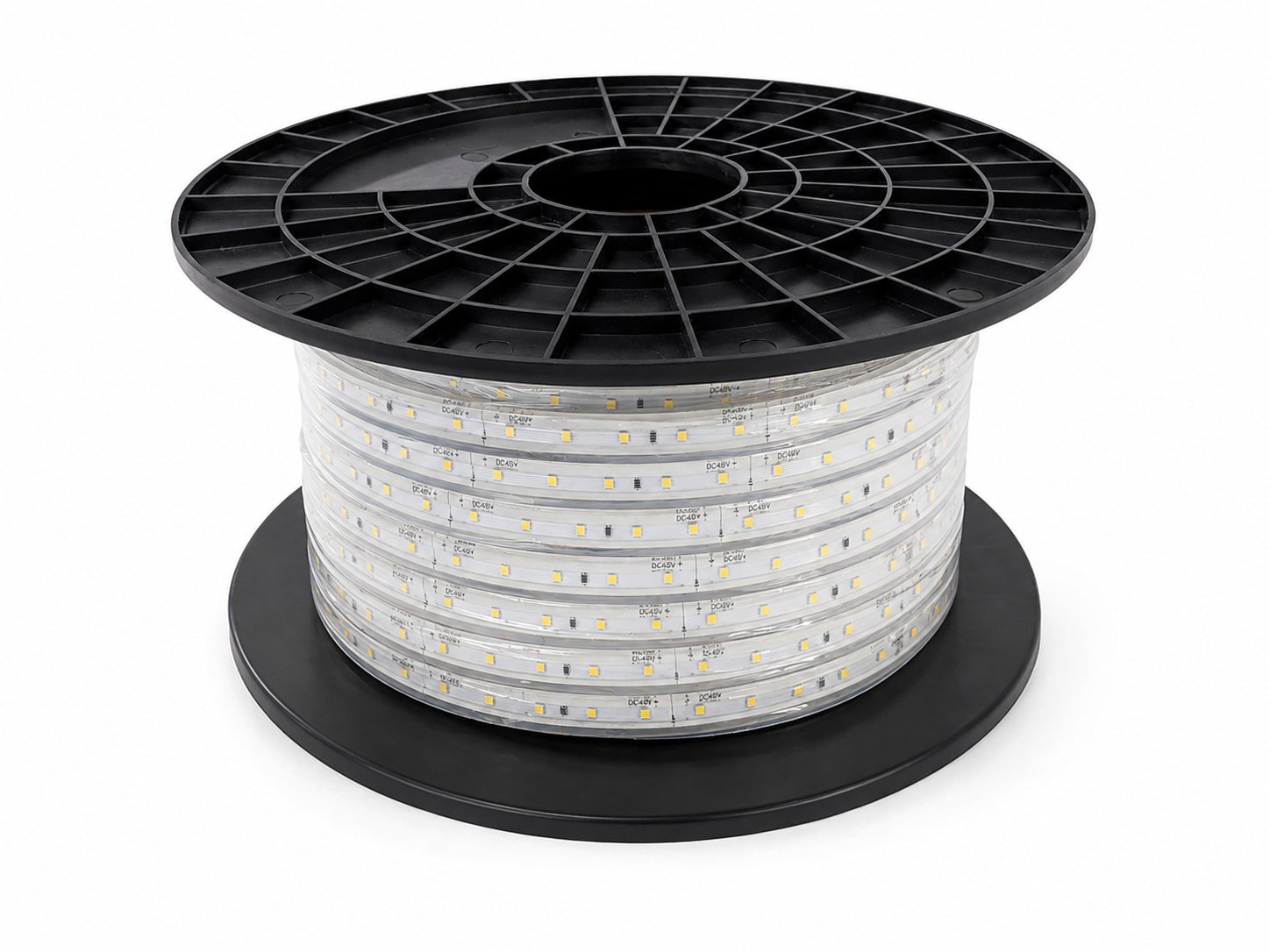
When 24V Still Makes Good Engineering Sense
A 48V system should not be specified simply because it sounds more advanced.
Short, controlled route sections
24V can be suitable where the lighting route remains within the verified operating limits of the selected model.
Existing 24V site infrastructure
If compatible 24V power and controls already exist, retaining the existing system may reduce project complexity.
Distributed local power access
If power points are already available at practical intervals, there may be no need to force a higher-voltage system.
Lower-load route sections
A lower-load service route may not create the current or voltage-drop pressure that justifies a different system voltage.
Voltage selection should follow the route design. It should not be driven by product appearance, supplier preference or a universal distance rule.
Five Signs a Tunnel Route May Need 48V
The route is long and power access is limited
When power supplies cannot be installed at frequent practical intervals, a higher-voltage system may make route planning more manageable.
The connected load is increasing
Higher wattage per metre increases current demand. As load rises, 24V layouts can require more attention to feed position and conductor losses.
Feed-point installation is expensive
Every additional power point may mean more cable routing, protection, mounting, commissioning and future maintenance access.
The route is difficult to service
In tunnels, conveyors and underground corridors, maintenance access can be more expensive than the original lighting hardware.
Output consistency matters across the full route
Where visible far-end dimming or colour change is unacceptable, the selected voltage and feed layout should be designed around consistency rather than minimum initial hardware cost.
See Xmart's Tunnel & Mining LED Strip system for available 24V, 36V and 48V configurations.
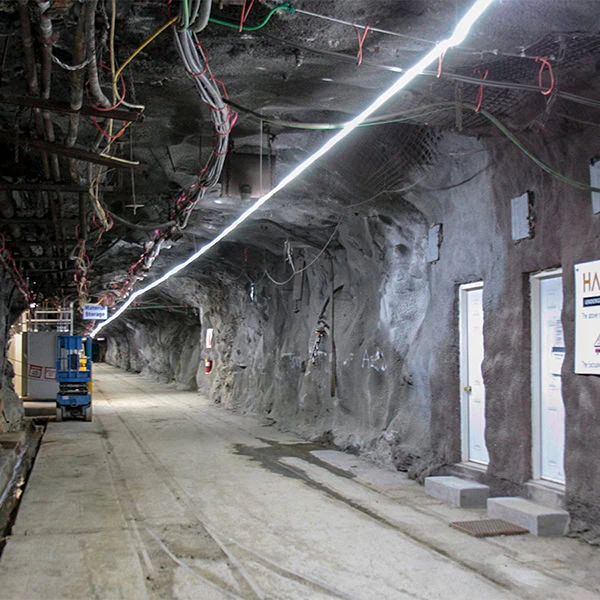
24V vs 48V: Compare the System, Not the Label
| Criteria | 24V System | 48V System |
|---|---|---|
| Current at the same load | Higher | Lower |
| Short-route compatibility | Often practical | May be unnecessary |
| Extended-route planning | Can require more feed points | Can provide more planning flexibility |
| Feeder-cable losses | More sensitive to current and cable size | Lower-current design can reduce pressure |
| Power-feed frequency | Depends on model and load; may increase on long routes | Depends on model and load; may be reduced in suitable layouts |
| Existing-system compatibility | Often useful where 24V infrastructure is present | Requires compatible power infrastructure |
| Initial decision question | Is the route short and accessible enough? | Does the route justify a higher-voltage long-run design? |
Neither system is automatically superior. Final selection should use model-specific data, actual strip wattage, planned cable runs and the project's maintenance reality.
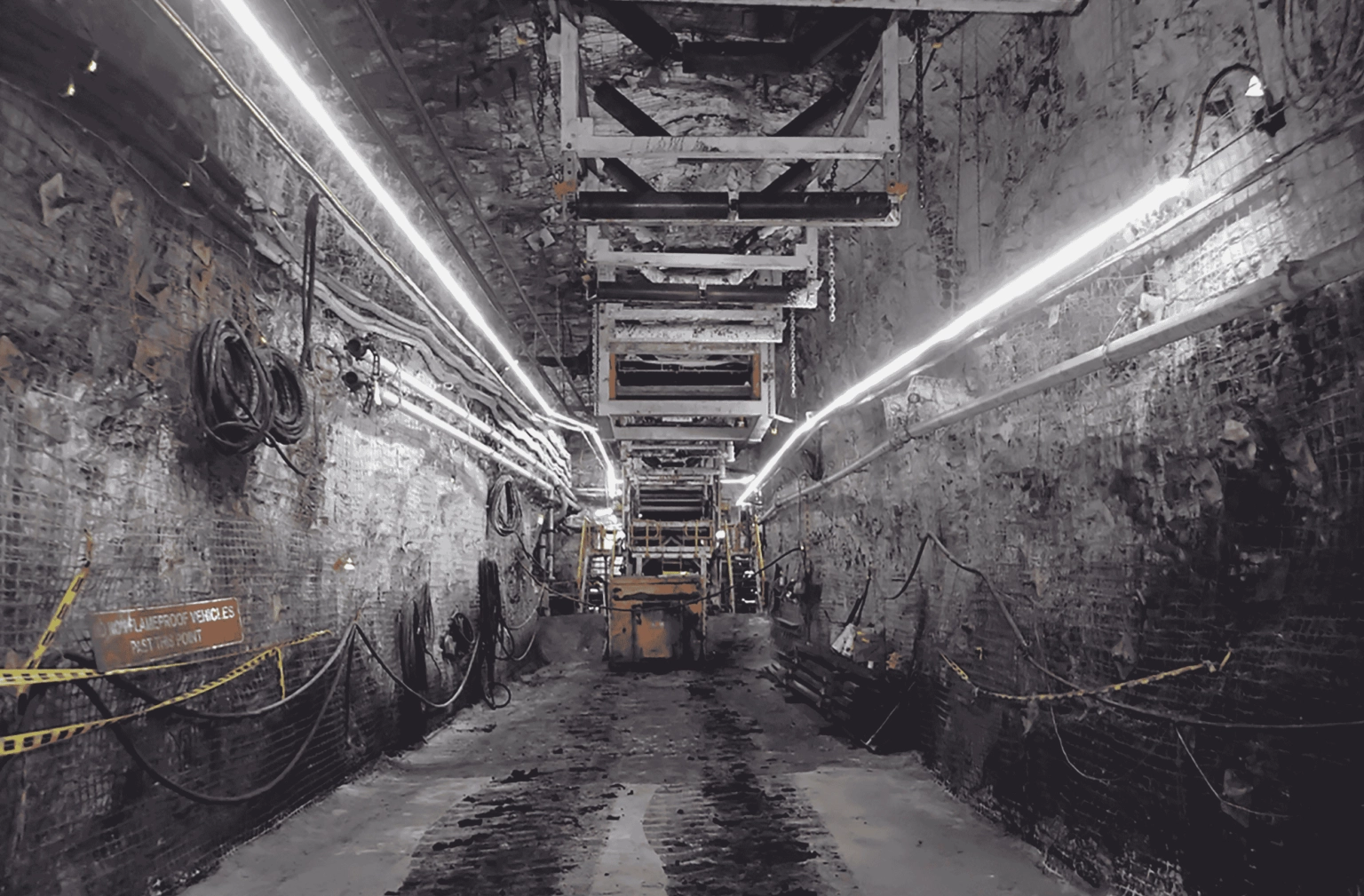
Where the selected 48V system is suitable
Why Fewer Feed Points Can Matter More Than a Lower Strip Price
Every time a power supply is added to a long industrial route, it introduces hidden costs that quickly compound:
- Power-supply mounting and protection
- Feed-cable routing
- Junction and connector work
- Installation time at height or in restricted access areas
- Testing and commissioning
- Maintenance access after handover
- Fault tracing across multiple power zones
"In a long tunnel, the cost of reaching the next power point can be more important than the cost of the strip between two power points."
What 48V Cannot Fix
A higher voltage is an engineering tool, not a magic solution. It does not replace the need for correct electrical specification.
A poor feed-cable design
48V can reduce current, but an undersized or excessively long feeder cable can still create voltage loss.
An overloaded power supply
Power-supply capacity, thermal conditions and continuous-load suitability must still be reviewed.
A weak connector or poor sealing method
The strip is only one part of the system. Connectors, end caps, cable entries and mounting points can become the earliest failure points.
A hazardous-area requirement
A 48V rating does not determine hazardous-area suitability. Confirm the exact project classification and model-specific certification before specification.
A task-lighting problem
Long-run strip lighting can support route visibility, but high-detail tasks or broad open work areas may require a different lighting distribution.
For voltage-drop symptoms and common installation faults, see the Xmart LED Strip FAQ.
How to Decide Between 24V and 48V Before Quotation
Map the route
Record route length, elevation changes, access restrictions, installation zones and available power locations.
Define the connected load
Confirm the selected strip model, watts per metre and total installed metres.
Compare feed layouts
Test whether the route is more practical with one-end, two-end, centre or segmented power feeds.
Compare total installation complexity
Include power supplies, cable runs, connection points, protection, installation labour and future access.
Validate the selected model
Use Xmart model-specific data and a final electrical review before approving the system.
Technical Note: Do not use a universal "24V maximum distance" or "48V maximum distance" in the page copy. The final maximum usable run must always be tied to the selected product and design conditions.
48V Tunnel LED Strip Lighting FAQs
Is 48V LED strip always better than 24V for tunnels?
Why can 48V reduce the number of power feeds?
Can a 48V tunnel LED strip eliminate voltage drop?
When should a project remain on 24V?
What information does Xmart need to review a 48V tunnel lighting project?
Compare the Route Before You Compare the Voltage
A 48V tunnel LED strip system is not automatically the right answer. But on a long industrial route, it may reduce electrical and installation complexity in ways that are not visible in a basic product-price comparison.
Send Xmart your route sketch, total length, available power, target brightness and planned feed locations. We can help you discuss whether a 24V, 36V or 48V Tunnel & Mining LED Strip configuration is more suitable before sampling or quotation.
Discuss a 48V Tunnel Lighting Project