
A programmable neon lighting solution for facades, events, retail, and dynamic lighting projects that need pixel-level effects instead of static color only.


Many buyers seek addressable neon not simply for "more colors," but because their projects have outgrown static RGB limitations. When a façade lighting installation requires dynamic movement, or a retail event demands precise chasing effects, standard dimming is no longer sufficient.
Building outlines and commercial spaces increasingly require programmable, segmented control rather than the entire strip changing color simultaneously. In these scenarios, the stability of the control protocol and the logic of installation become critical factors.
We provide a solution grounded in real project logic, ensuring the right balance of protocol stability, pixel density, and visual performance for demanding architectural and event environments.
An Addressable Neon Flex Strip is a flexible, diffused lighting product equipped with built-in control ICs (Integrated Circuits). Unlike standard RGB strips where the entire length changes color uniformly, addressable neon allows for the independent control of individual LEDs or specific groups of LEDs.
This technology enables sophisticated visual behaviors, including segmented zoning, chasing, flowing, and complex gradient transitions. In the industry, it is frequently referred to as digital neon flex, pixel neon flex, programmable neon flex, chasing neon flex, or magic neon flex.
Its core value lies not just in being "flashier," but in providing precise zoning control and programmable dynamic effects. For projects requiring intricate light behavior, it is the superior alternative to standard RGB neon.
Decision criteria for upgrading from static illumination to programmable pixel-level control.
Projects requiring more than uniform color changes across the entire run demand pixel-level addressing.
Essential for creating directional flow, moving gradients, and distinct visual zones within a single strip.
Transforms static architecture into dynamic displays, drawing attention and creating immersive atmospheres.
Retail and hospitality environments use programmed sequences to guide foot traffic and highlight features.
Integrators gain the ability to map specific pixels to exact architectural features for precise visual alignment.
Provides the flexibility required when lighting logic must strictly follow external DMX consoles or media servers.
Where programmable, segmented, and dynamic lighting effects replace standard static neon.
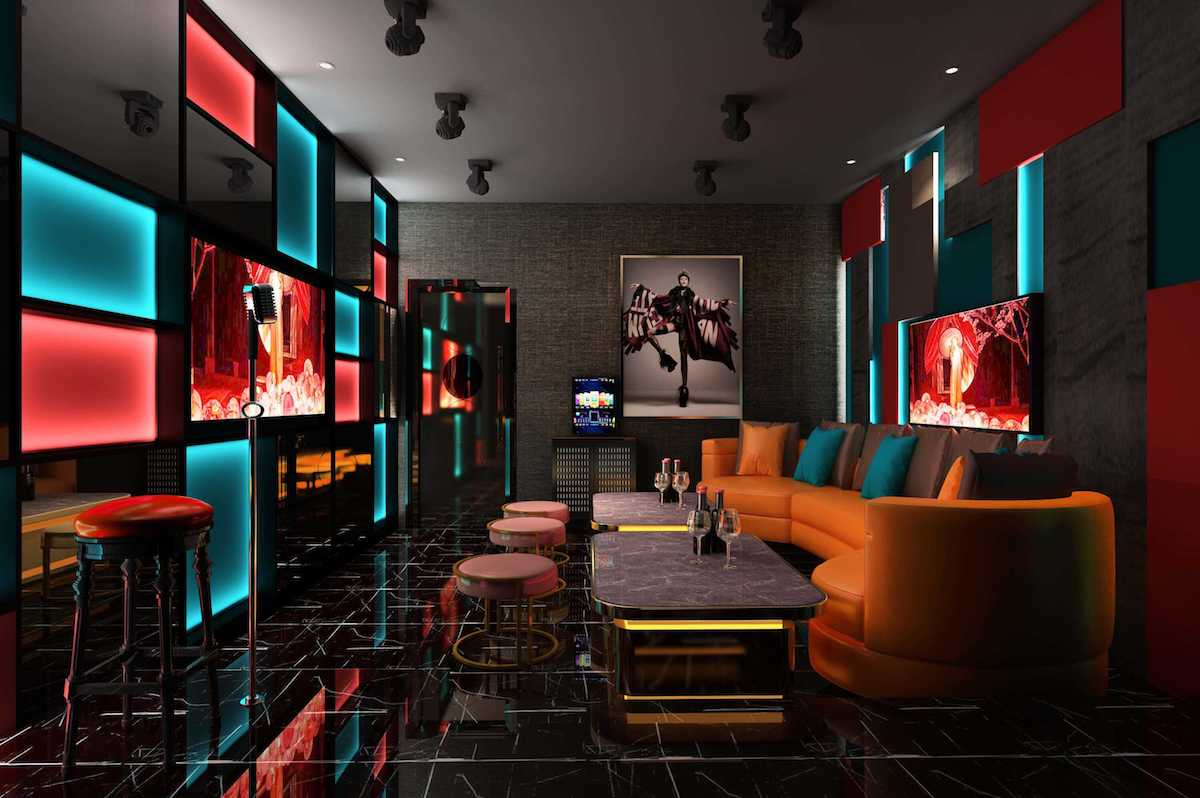
Mapping complex structures with precise pixel control.
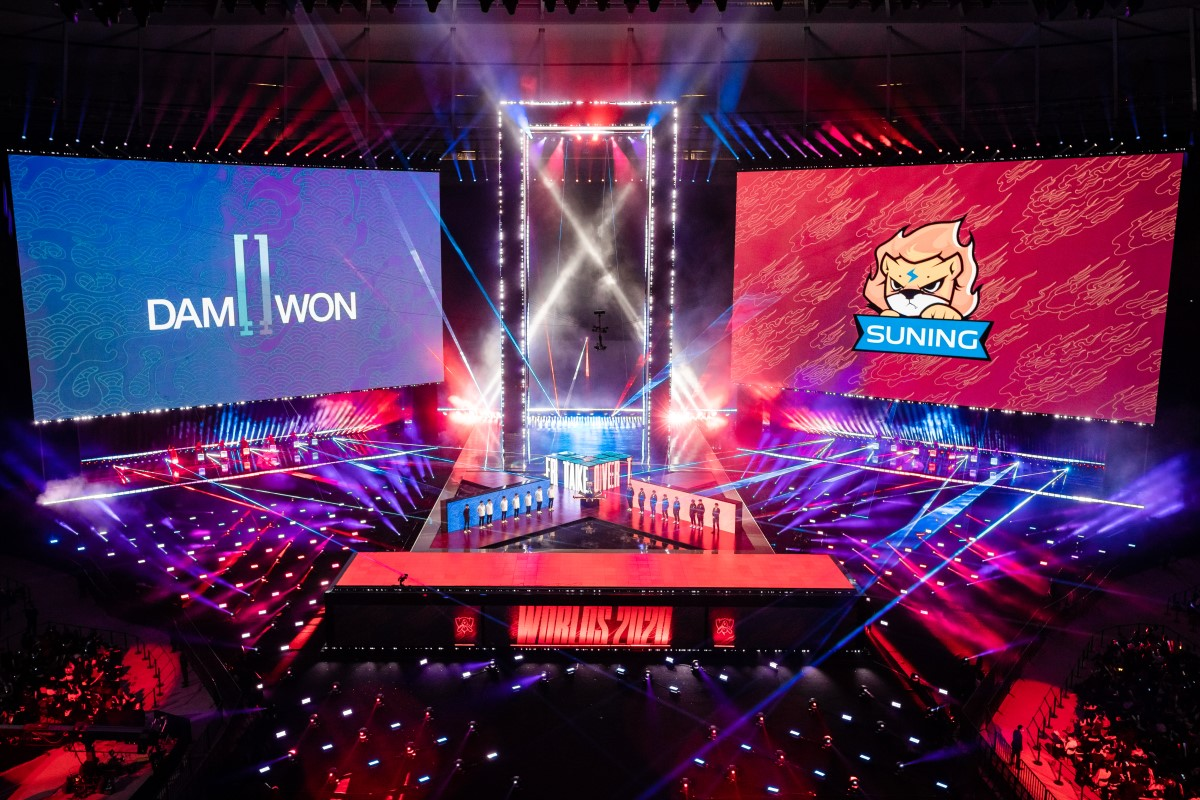
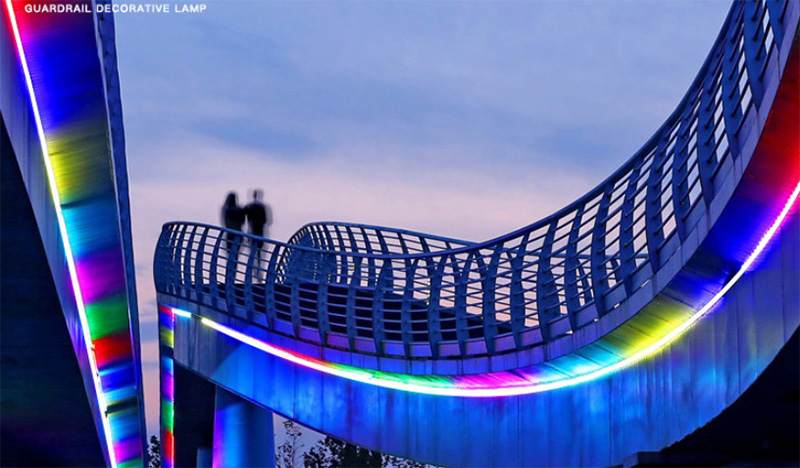
Large-scale dynamic media facades and flowing outlines.
Custom programmed sequences for artistic installations.
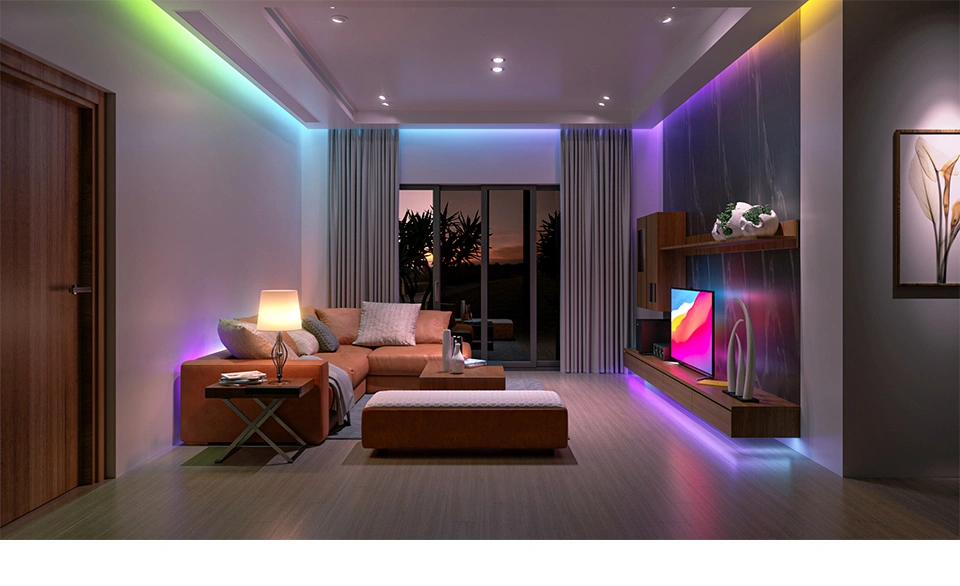
Stage designs requiring chasing and audio-reactive effects.
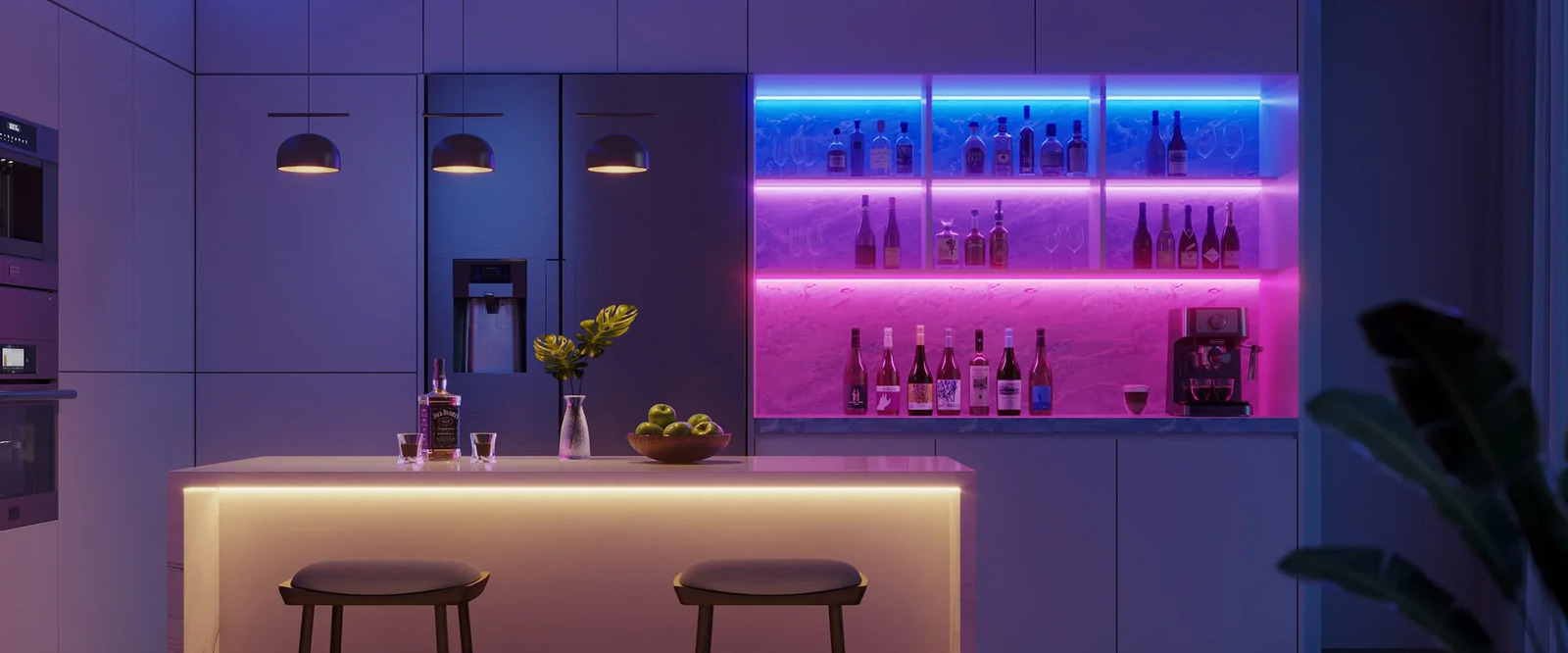
Retail spaces utilizing motion to attract and engage customers.
High-end home automation with zoned mood programming.
| Signal Type | SPI / DMX512 |
| IC Logic Models | WS2811, UCS2603, UCS2904, UCS512C2L |
| Operating Voltage | 24V DC |
| Pixel Unit Length | 100mm / 125mm (Typical) |
| Color Options | RGB / RGBW |
| Control Compatibility | Compatible with standard SPI controllers and DMX consoles/software |
| OEM / Custom Support | Custom lengths, connectors, and specific IC integration available |
Engineered for projects that demand programmable light behavior beyond simple neon outlines. Deliver pixel-level control for complex media façades, event synchronization, and dynamic segmented zoning.
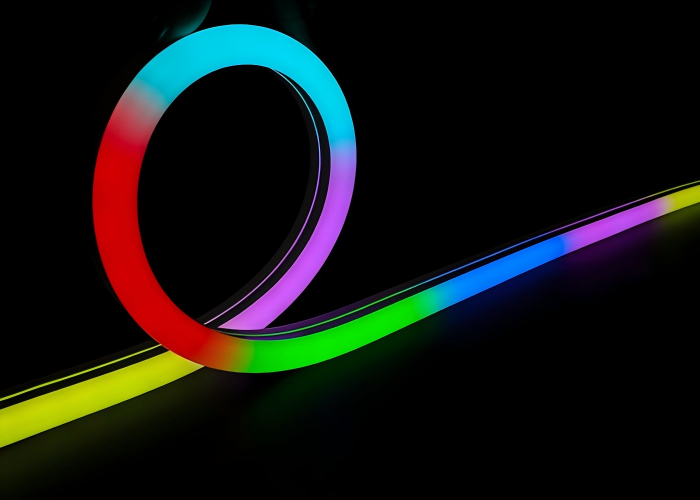
Built upon a robust protocol tailored for reliable, long-term installations. The DMX512 series features parallel signal transmission, ensuring high fault tolerance—if one pixel fails, the rest of the line continues seamlessly. Perfect for large-scale architectural lighting and professional stage events.
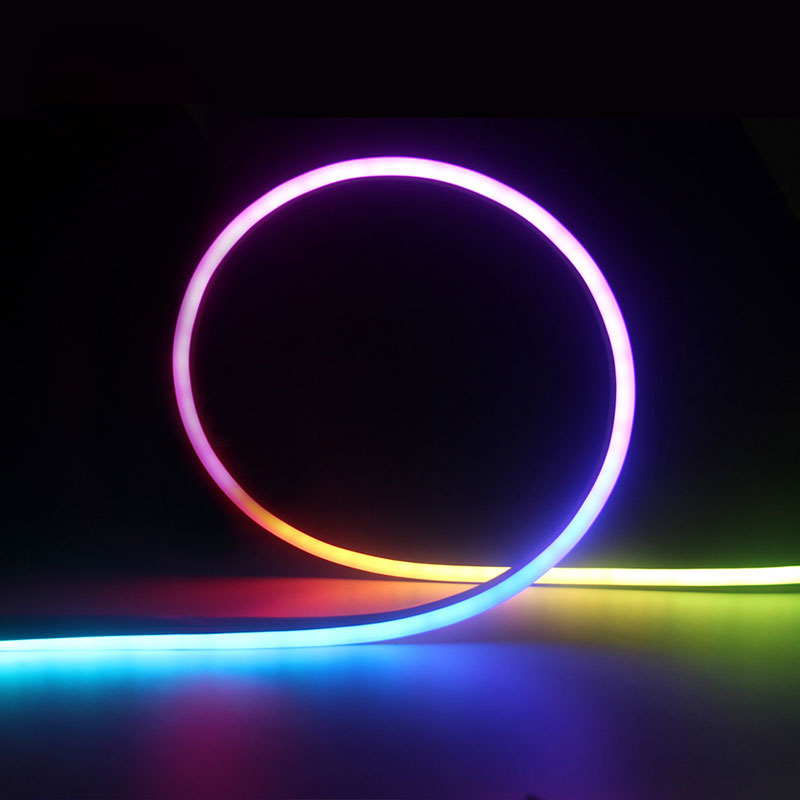
Engineered for high-speed data transmission and intricate pixel mapping. The SPI series is the ideal solution for creating fluid motion, synchronizing complex event lighting to music, and designing highly engaging, dynamic retail displays.
A critical decision matrix for integrators and buyers.
Visualizing different cross-sections to match specific installation directions and spatial constraints.
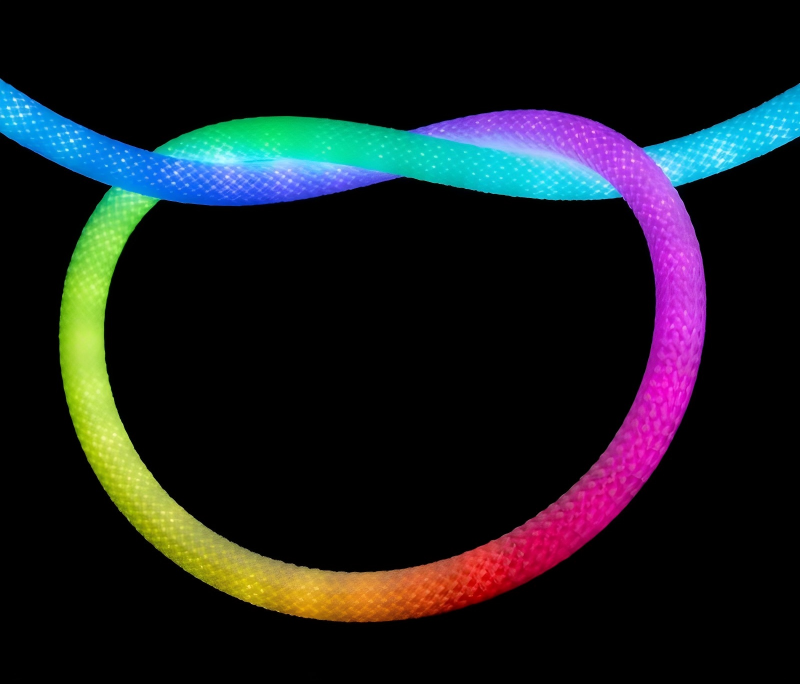
360° Round Tube Profile
Mushroom Side-Bending
Slim Side-Bending

Standard Side-Bending

Compact Top-Bending
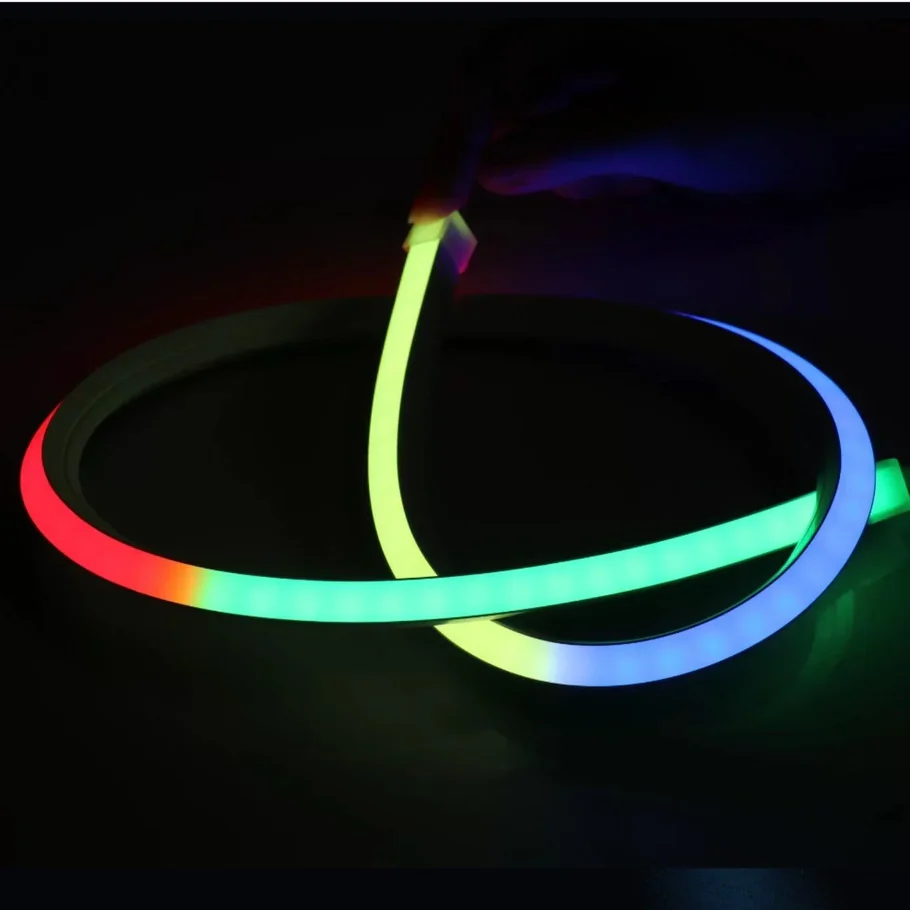
Standard Top-Bending
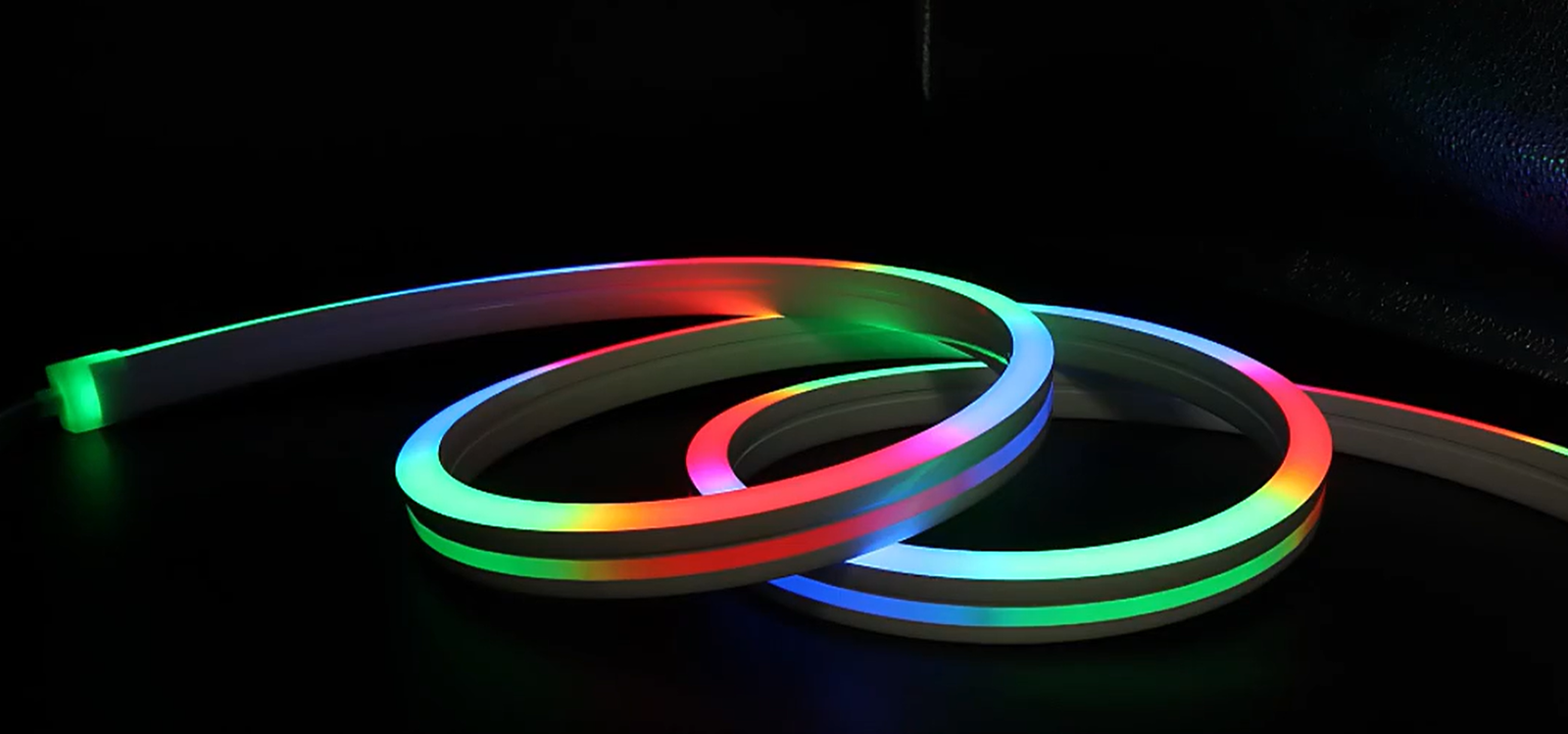
DMX Integrated Side-Bend

DMX Integrated Top-Bend
Use a DMX512 address writer to assign, verify, and test pixel addresses more efficiently during the installation and commissioning of your Addressable Neon Flex Strip.
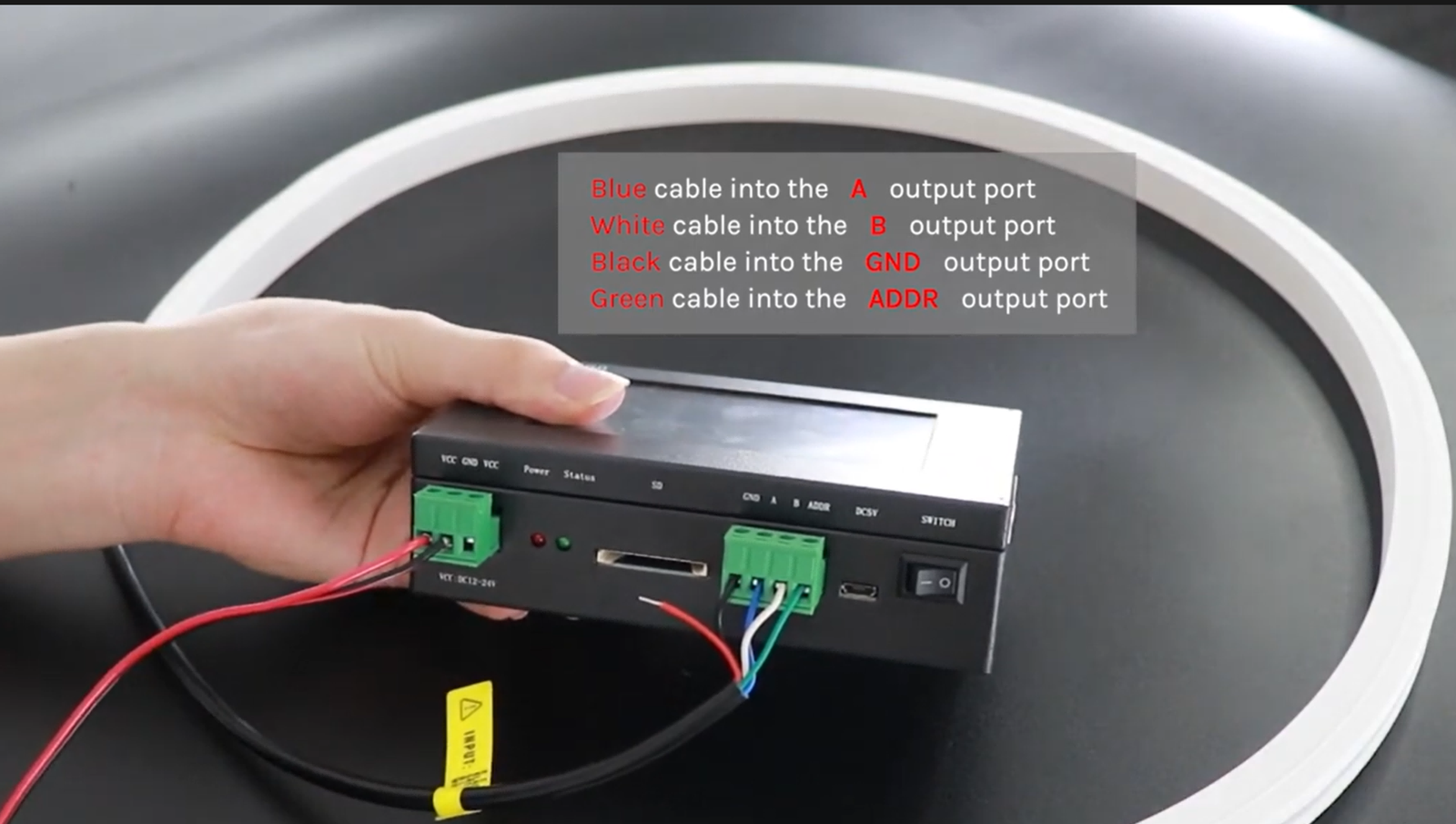
Establish a secure single-line DMX512 connection by linking the power supply, DMX console, and the strip. Ensure the GND, A, B, and ADDR lines are correctly mapped according to the addressable neon flex wiring diagram to prevent signal interference.
It is a specialized commissioning tool used to write, assign, and verify addresses directly to the IC chips inside the DMX addressable neon flex. Writing addresses accurately before full installation drastically reduces troubleshooting time.
Accurate parameter setting is vital. For standard RGB DMX neon flex, set the output to 3 channels per IC. For RGBW DMX neon flex, configure it to 4 channels per IC to ensure the white diode is independently controlled.
How do you assign addresses to addressable neon flex? Follow this standard operating procedure to ensure flawless pixel mapping and project stability.
Power the DMX512 address writer via DC5V–24V or Micro USB. Connect the data output ports to the neon flex wiring harness.
Navigate the writer's parameter settings to select the exact IC chip model embedded in your addressable neon flex strip.
Define the channel count to match the hardware: 3 channels for RGB configurations or 4 channels for RGBW setups.
Execute the 'writing address' function. The device will assign the starting DMX address and map the subsequent pixels automatically.
How do you test whether the DMX address is correct? Switch to 'test address' mode to verify that each IC responds sequentially without skipping.
Access full specifications and operation manuals for your project planning.
Addressing buyer concerns regarding long-term outdoor performance and signal integrity.
Tested for continuous data transmission without flicker.
IP67/IP68 testing including IPX3-6 and IPX8 submersion.
Salt spray and UV exposure tests for outdoor longevity.
Tensile and drop tests to ensure internal IC connections hold.
Integrating sphere and optical-image measurements.
Addressable neon flex is a flexible LED lighting product with built-in control ICs. It allows for the independent control of individual LEDs or groups of LEDs, enabling dynamic effects like chasing, flowing, and segmented color changes, unlike standard RGB neon which only changes color as a whole.
SPI is generally simpler to wire and more cost-effective, suited for smaller or indoor projects. DMX512 uses a parallel signal, meaning if one pixel fails, the rest still work. DMX512 also offers superior anti-interference, making it the standard for large-scale outdoor facade and stage lighting.
Buyers should choose RGBW when their project requires a pure, dedicated white light channel for architectural illumination, or when they need to create softer pastel colors that standard RGB LEDs cannot accurately produce.
Yes, especially DMX512 versions. They are widely used for media facades and building outlines because they allow software to map complex dynamic content and motion across the architecture.
The pixel unit length (e.g., 100mm or 125mm) determines the resolution of your dynamic effects. A shorter pixel length means more control points per meter, resulting in smoother gradients and more detailed chasing effects.
Yes, we support OEM customization including specific IC models, custom lengths, tailored connector types, and specialized profiles to meet exact project specifications.
Get expert advice on protocol selection, wiring, and product specifications for your next dynamic lighting project.